Test your knowledge about the Dec. 7, 1941, attack on Pearl Harbor, Hawaii, that took American lives and led the United States into World War II.
Source: www.war.gov
Test your knowledge about the Dec. 7, 1941, attack on Pearl Harbor, Hawaii, that took American lives and led the United States into World War II.
Source: www.war.gov
Who will “sing second” this year? See how much you know about one of the oldest college football rivalries.
Source: www.war.gov

Memorial Day weekend 2024 started with a blue sky and a mild three- to four-foot chop in the water off the Gulf Coast of Mississippi — a perfect day for a fishing competition. A team of five was about 40 miles offshore checking their sonar, and 30 seconds later the boat was gone. They were in the water struggling to pull on life jackets and grab the coolers as they bobbed up. When a boat sinks, survivors can be virtually invisible amid the vast expanse of water.
When their fishing trip went wrong, Easton Barrett had the only mobile phone and no cell service. He recorded a brief farewell, planning to put his phone in a cooler in hopes someone would find it.
Another team member activated a personal locator beacon (PLB) that had been stowed at the last minute, which sent a distress signal to the Search and Rescue Satellite-Aided Tracking (SARSAT) technology carried by multiple satellites in Earth orbit. In the SARSAT system, developed partly by NASA, an emergency signal containing the transmitter’s location is directed to the nearest available ground station.

A mission control center then alerts rescue coordination centers to mobilize search and rescue crews. For Barrett and his crew, that was a Florida Coast Guard boat.
“Ever since, I have tried to teach others about safety on the water and in the outdoors by using a PLB,” said Barrett. “If that will save one life, it’s worth the effort.”
A beacon like the one that saved his crew, a registered ResQLink PLB developed by ACR Electronics Inc. of Fort Lauderdale, Florida, also notifies the device owner’s emergency contact, indicating a distress call was activated. All emergency beacons must meet the same requirements to ensure they work when needed. Every rugged, buoyant, handheld devices have a five- to 10-year battery life.
SARSAT began operations in 1982, becoming an international collaboration in 1985. The flight and ground technologies used globally were originally developed at NASA’s Goddard Space Flight Center in Greenbelt, Maryland. Now there are 62 satellites in the program and 45 nations contributing services, from operating ground stations to providing rescue crews. More than 63,000 lives have been saved.

The Search and Rescue Satellite-Aided Tracking system developed over several decades by NASA and other government agencies saves lives on land or at sea.
One rescue in 2024 demonstrates how it all comes together.
EASTOn Barrett
ACR Customer
Source: www.nasa.gov

Less than two weeks after an Executive Order was signed to create the first United States Space Academy, NASA-led work is in full swing to make the academy a reality and shape the future of America’s aerospace workforce and leadership.
NASA Administrator Jared Isaacman chaired the first Presidential Commission on the United States Space Academy meeting on Sept. 9. Following that meeting, NASA published a Request for Information Thursday seeking input from governors or their designees interested in hosting and sponsoring the up-and-coming academy in their state.
“Our first Commission meeting made clear how much talent and commitment we have behind President Trump’s vision for the U.S. Space Academy,” said NASA Administrator Jared Isaacman. “I’m grateful to our partners across government for getting right to work. Now, with the RFI underway, states across the country have an opportunity to help us shape a legacy institution built for America’s future in space.”
Isaacman and Deputy Administrator Matt Anderson welcomed key commission members from multiple agencies and organizations to NASA Headquarters in Washington for a collaborative Commission discussion. Participants included U.S. Secretary of War Pete Hegseth, Director of the National Economic Council Kevin Hassett, Secretary of the United States Air Force Troy Meink, and U.S. Chief Technology Officer Ethan Klein, representing Director of Office and Technology Policy Michael Kratsios, along with representatives from the U.S. Office of Management and Budget, the National Security Council, and the White House.
During the meeting, commission members began working through the structure and priorities of the proposed U.S. Space Academy, including its governance, curriculum, service commitments, partnerships, and implementation.
“The location of the U.S. Space Academy is foundational to its success,” said Anderson. “We’re asking states to bring their strongest vision — the infrastructure, the partnerships, and the community that can compete with the elite options this caliber of student will have and match the boundless ambition of our future space leaders.”
The commission’s 120-day mandate to develop recommendations for President Trump on how to establish the academy and build the technical talent and leadership pipeline needed to support America’s long-term goals in space began when the President signed the Executive Order on Aug. 28.
Responses to the RFI will help inform the commission’s path forward to selecting a location for the institution and are due by 6 p.m. EDT on Monday, Oct. 26. An ambitious timeline is outlined in the request, calling for a groundbreaking no later than 2027, temporarily hosting the first 300 students in 2028, and a permanent location in operation by 2031.
Each state is allowed one submission to the Announcement via its governor’s designee. In addition to details about resources available to support the academy, input sought on the potential campus includes:
A fact sheet on the U.S. Space Academy is available on The White House website.
-end-
George Alderman / Cheryl Warner
Headquarters, Washington
202-358-1600
[email protected] / [email protected]
Source: www.nasa.gov
The Republic of Djibouti will sign the Artemis Accords during a ceremony at 11 a.m. EDT, Monday, Sept. 14, at NASA Headquarters in Washington, becoming the 72nd country signatory.
NASA Deputy Administrator Matt Anderson will host Ambassador of Djibouti to the United States Mohamed Siad Douale for the ceremony, together with U.S. State Department Assistant Secretary for African Affairs Frank Garcia.
This event is in person only. Media interested in attending must RSVP no later than 8 a.m. on Sept. 14 to: [email protected]. NASA’s media accreditation policy is online.
In 2020, during the first Trump Administration, the United States, led by NASA and the State Department, joined with seven other founding nations to establish the Artemis Accords, responding to the growing interest in lunar activities by both governments and private companies.
The accords introduced the first set of practical principles aimed at enhancing the safety, transparency, and coordination of civil space exploration on the Moon, Mars, and beyond.
Learn more about the Artemis Accords at:
https://www.nasa.gov/artemis-accords
-end-
Camille Gallo / Elizabeth Shaw
Headquarters, Washington
202-358-1600
[email protected] / [email protected]
Source: www.nasa.gov
APOD
Astronomy Picture of the Day
Discover the cosmos! Each day a different image or photograph of our fascinating universe is featured, along with a brief explanation written by a professional astronomer.

Explanation: Beautiful and bright spiral galaxy M83 lies some twelve million light-years away, near the southeastern tip of the very long constellation Hydra. Prominent spiral arms traced by dark dust lanes and blue star clusters lend this galaxy its popular name, the Southern Pinwheel. Still, reddish star forming regions that dot this cosmic pinwheel’s spiral arms have suggested another nickname, the Thousand-Ruby Galaxy. A mere 40,000 light-years across, smaller than the Milky Way, M83 is a member of a group of galaxies that includes active galaxy Centaurus A. In fact, the core of M83 itself is bright at x-ray energies, showing a high concentration of neutron stars and black holes left from an intense burst of star formation. This sharp, groundbased telescopic view also features foreground Milky Way stars and distant background galaxies.
APOD’s main NASA site is moving: From apod.nasa.gov to science.nasa.gov/apod
Tomorrow’s picture: lunar sun catcher
| Date | September 11, 2026 |
|---|---|
| Credit & Copyright | Aldo Zanetti |
| Authors & editors: | Jerry Bonnell, Robert Nemiroff, Cecilia Chirenti, Keighley Rockcliffe |
| A service of: |
ASD at NASA / GSFC, NASA Science Activation & Michigan Tech. U. |
Source: science.nasa.gov
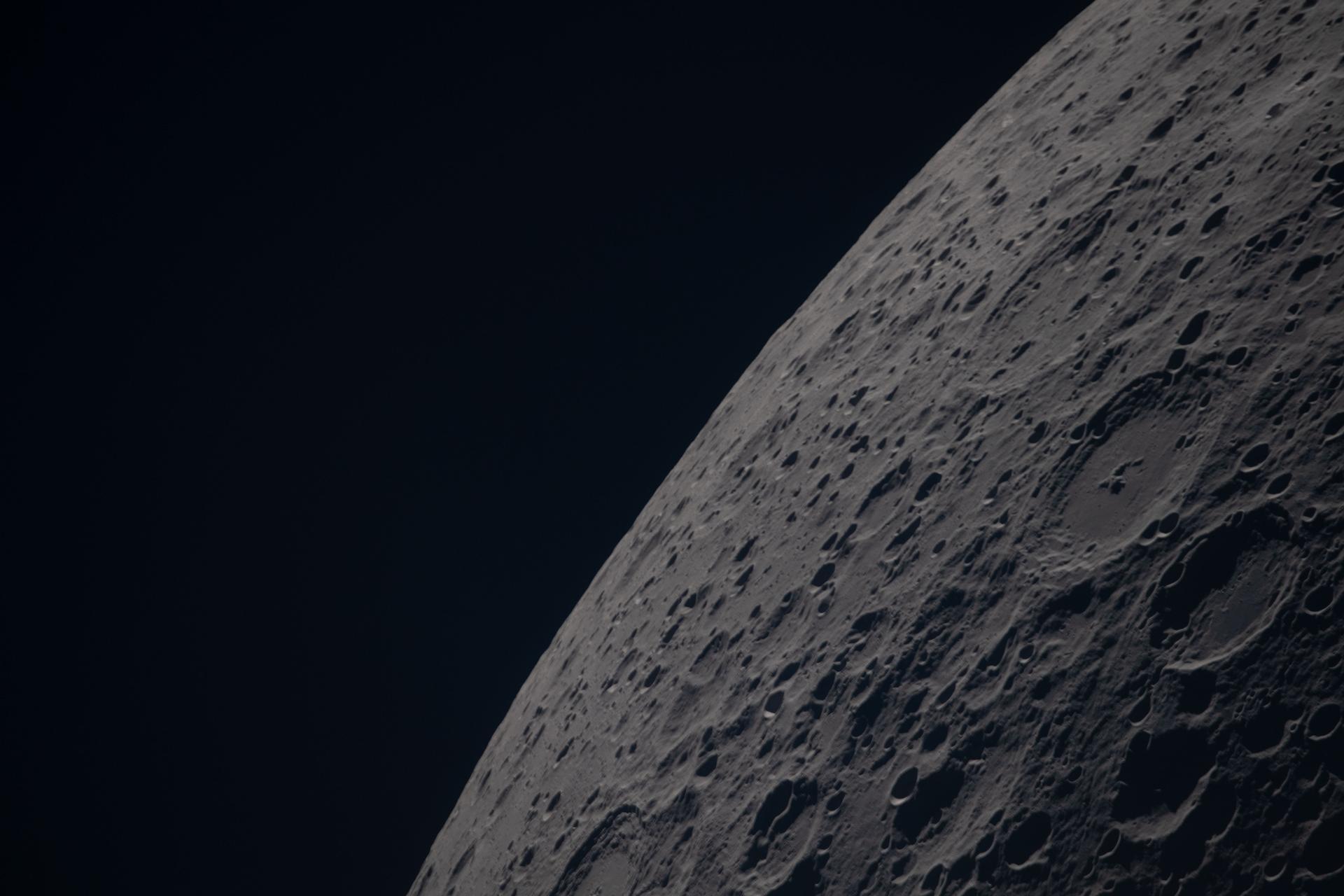
The science from every Moon rock sample, lunar dataset, and discovery produced through NASA’s Artemis program will be shared by the agency with the global scientific community. That commitment is upheld by all 71 countries that have signed the Artemis Accords, a set of principles for safe and transparent civil space exploration.
NASA put those principles into practice by hosting a two-part virtual workshop series that began July 28 and concluded Sept. 8, focusing on one key tenet of the Artemis Accords: the timely release of scientific data to the public and the international scientific community.
“As we return humans to the Moon, our Artemis efforts will help us unlock the full potential of scientific discovery through transparency, collaboration, and accessibility,” said Jacob Bleacher, chief exploration scientist at NASA. “We are making data, tools, and results freely available, and inviting the Artemis Accords partners to innovate with us and share their data as well, accelerating our understanding of lunar processes and laying the groundwork for human space exploration for the Moon, Mars and beyond.”
The two recent workshops added to discussions led by the ISRO (Indian Space Research Organisation) in May, when signatories first explored ways to advance open data practices and created common ground for deeper conversations on open data. NASA split its follow‑on discussion about data sharing into two virtual sessions, so technical experts around the world could take part.
The agency hosted its first session on open science principles and implementation practices. It promoted interoperability and collaboration among signatories and advanced reproducibility, accessibility, and transparency in scientific work, including in NASA’s Artemis program.
The second session focused on tools for open science, providing Artemis Accords signatories with a working model to reference as they build or refine their own data-sharing frameworks.
“NASA is committed to leading by example when it comes to open science,” said Andrew Mitchell, deputy chief science data officer for NASA’s Science Mission Directorate, whose office leads the agency’s open science efforts. “These workshops gave our Artemis Accords partners practical tools and a shared foundation to build on as we move forward together.”
NASA presented the Planetary Data System, one of the agency’s primary archives for planetary science data, openly available lunar data, data visualization and analysis tools, and the system’s data information model standard, offering a real-world example of how NASA structures, curates, and shares scientific data with the world.
Across both sessions, NASA shared practices developed over years of stewarding scientific data and opened the floor to technical experts across the Artemis Accords community, reflecting a deliberate effort to build alignment at the working level.
“Advances in technology help enable open science, but technology alone is insufficient,” said Mitchell. “Open science requires a shift to a more transparent and collaborative scientific process, which will increase the pace and quality of scientific progress. Scientific processes and results should be as open and repeatable as possible to encourage further study.”
In 2020, NASA and the State Department joined with seven other founding nations to establish the Artemis Accords in response to the growing interest in lunar activities by both governments and private companies. They introduced the first set of practical principles aimed at enhancing the safety and coordination between like-minded nations as they explore the Moon, Mars, and beyond, committing nations to:
By signing the Artemis Accords, nations open the door to opportunities for future lunar exploration with NASA, advancing humanity’s return to the Moon, and shaping the Golden Age of space exploration and innovation.
Learn more about the Artemis Accords at:
https://www.nasa.gov/artemis-accords
Source: www.nasa.gov

Media are invited to hear from NASA’s SpaceX Crew-12 astronauts during a news conference beginning at 2:45 p.m. EDT, Wednesday, Sept. 16, from the International Space Station.
NASA astronauts Jessica Meir and Jack Hathaway, ESA (European Space Agency) astronaut Sophie Adenot, and Roscosmos cosmonaut Andrey Fedyaev will discuss their upcoming return to Earth. Learn where to watch online:
Media interested in participating must contact the newsroom at NASA’s Johnson Space Center in Houston no later than 5 p.m., Tuesday, Sept. 15, at 281-483-5111 or [email protected]. To ask questions, media must dial into the news conference no later than 10 minutes prior to the start of the call. A copy of NASA’s media accreditation policy is online.
Crew-12 joined Expedition 74/75 crew members aboard the space station and contributed to hundreds of experiments to prepare for human exploration beyond low Earth orbit and to benefit humanity on Earth. Research included studying pneumonia-causing bacteria to improve cardiovascular treatments, on-demand intravenous fluid generation for future space missions, and how physical characteristics may affect blood flow during spaceflight.
The crew will depart the space station after the arrival of Crew-13 and a short handover period. Ahead of Crew-12’s return, mission teams will review weather conditions at the splashdown sites off the coast of California prior to departure from station.
For more than 25 years, people have lived and worked continuously aboard the International Space Station, advancing scientific knowledge and making research breakthroughs not possible on Earth. The space station helps NASA understand and overcome the challenges of human spaceflight, expand commercial opportunities in low Earth orbit, and build on the foundation for long-duration missions to the Moon, as part of the Artemis program, and to Mars.
Learn more about the International Space Station, its research, and crew, at:
-end-
Joshua Finch
Headquarters, Washington
202-358-1100
[email protected]
Anna Schneider
Johnson Space Center, Houston
281-483-5111
[email protected]
Source: www.nasa.gov

Two galaxies merge at a furious rate in this Aug. 25, 2026, image of the II Zw 096 system. This and several other images of both visually and scientifically interesting galaxies were released by NASA’s Chandra X-ray Observatory and other telescopes.
Chandra X-ray data (magenta) pinpoint powerful black hole activity and hot gas, while optical data (blue and white) from NASA’s Hubble Space Telescope and infrared data from NASA’s James Webb Space Telescope illuminate vast stellar nurseries hidden behind interstellar dust. Systems like II Zw 096 show us how powerful galaxy collisions shaped the early universe.
See more galaxy photos from Chandra.
Image credit: X-ray: NASA/CXC/SAO; Optical: NASA/ESA/STScI; Infrared: NASA/ESA/CSA/STScI; Image Processing: NASA/CXC/SAO/L. Frattare and J. Major
Source: www.nasa.gov
How do scientists studying space with data from a telescope hundreds of thousands of miles away know that what they are seeing is real? A new NASA project, Artifact InSPECtor, invites you to find out – and by doing so, to help missions like Euclid and NASA’s new Nancy Grace Roman Space Telescope answer fundamental questions about our universe.
“It’s really cool that we can help teach computers new skills,” said nine-year-old Maeve F. after trying out Artifact InSPECtor. Participants of all ages, including those as young as Maeve, can visit the project to learn how they can contribute to science by training artificial intelligence to remove errors in telescope data.
Here’s how it works.
The Euclid space telescope, a powerful observatory built by ESA (European Space Agency) with critical contributions from NASA, is collecting light from millions of distant galaxies across the universe. It will soon be joined by NASA’s Nancy Grace Roman Space Telescope, a complementary observatory that will capture a similar number of galaxies after it begins science operations, but at different distances and densities across the sky. Together, these telescopes promise to help scientists answer questions about the expansion of the universe and dark energy – the mysterious force causing this expansion.
To collect data to answer these questions, each telescope uses a special instrument called a spectrograph that works like a prism: it splits the light from each galaxy, even very distant ones, into a rainbow of colors. By studying these rainbow patterns, called spectra, scientists can figure out how far away each galaxy is, what kinds of stars it contains, and even information about the supermassive black holes at their centers.
But before that can happen, there’s a problem to solve.
Telescope data contains many “artifacts” – the general name scientists use for signals that come from things other than real astronomical objects like galaxies or stars. Artifacts can be created by light glinting off the telescope’s housing, cosmic rays striking the detector, quirks in the camera or electronics, or other sources. It’s a bit like when a smudge on your phone’s camera lens shows up in a photo, or when a glare from the Sun blocks part of your picture.
To find and remove these artifacts, astronomers have created artificial intelligence (AI) tools that learn to recognize them, similar to how your phone recognizes faces in photos. But recognizing artifacts in data from relatively new instruments is challenging work for the AI, which doesn’t always distinguish them accurately
That’s where you come in! As a volunteer with Artifact InSPECtor, you’ll look at real space telescope data from Euclid and, starting in early 2027, the Nancy Grace Roman Space Telescope. The project will teach you how to recognize artifacts in data from these telescopes. The work you do will then be used to improve the instructions guiding the AI tool. Working together, you, the AI, the scientists, and these powerful space telescopes will learn more than ever before about how our universe works.
If you want to teach computers new skills and help discover the mysteries of dark energy, use your smartphone, tablet, or computer to visit Artifact InSPECtor and begin today: https://go.nasa.gov/3Uyrguy.

Source: science.nasa.gov