Heading Home: NASA’s SpaceX Crew-12 Concludes Station Science Mission

5 Min Read

Heading Home: NASA’s SpaceX Crew-12 Concludes Station Science Mission
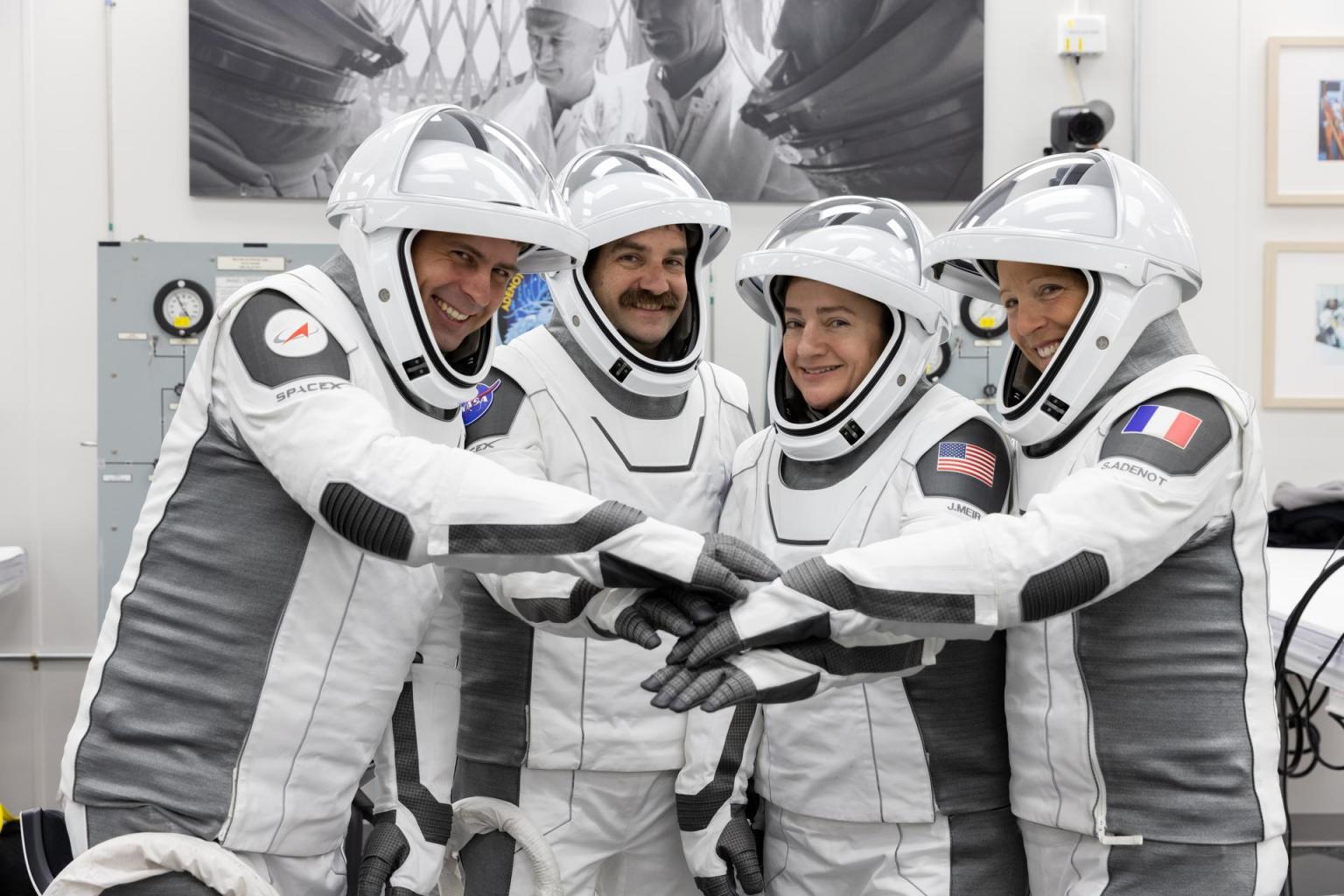
NASA’s SpaceX Crew-12 astronauts stand side by side in their spacesuits with face shields raised. They extend their arms forward, stacking their hands together in a team huddle while smiling. Pictured at the Neil A. Armstrong Operations and Checkout Building at Kennedy Space Center ahead of their Feb. 13, 2026 launch to the International Space Station, from left to right: Roscosmos cosmonaut Andrey Fedyaev, NASA astronauts Jack Hathaway and Jessica Meir, and ESA astronaut Sophie Adenot.

NASA’s SpaceX Crew-12 mission is ending, with the crew scheduled to return in early October. NASA astronauts Jessica Meir and Jack Hathaway, ESA (European Space Agency) astronaut Sophie Adenot, and Roscosmos cosmonaut Andrey Fedyaev will head home from the International Space Station after supporting research that benefits life on Earth and prepares humans for missions into deep space.

Here’s a look back at some of their accomplishments:

Orbital transit
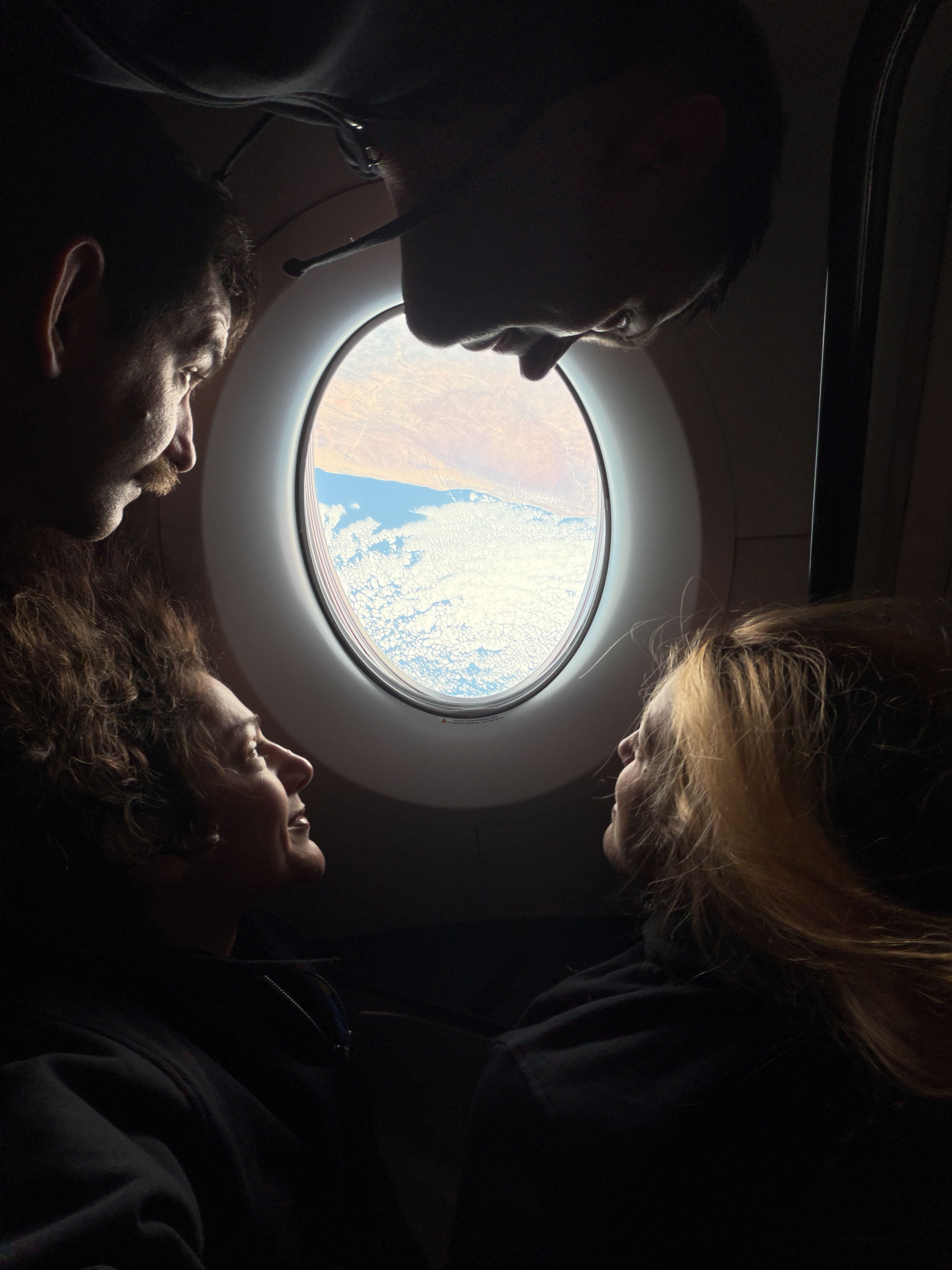
NASA’s SpaceX Crew-12 crew members surround an oval-shaped window aboard a SpaceX Dragon, looking out at clouds above blue water and a tan landmass. From the left, rotating clockwise around the image are NASA astronaut Jack Hathaway, Roscosmos cosmonaut Andrey Fedyaev, ESA (European Space Agency) astronaut Sophie Adenot, and NASA astronaut Jessica Meir. Their faces are illuminated by sunlight streaming through the window.
NASA/ESA

The crew members look out the window of a Dragon spacecraft during their journey to the space station, a destination that offers a unique vantage point to observe both Earth and the cosmos. Research in microgravity allows the scientific community to experiment through a new perspective, from changes in how cells behave to how materials take shape, space offers new paths to scientific discovery.

Learn more about research in microgravity.

Crystalline clues
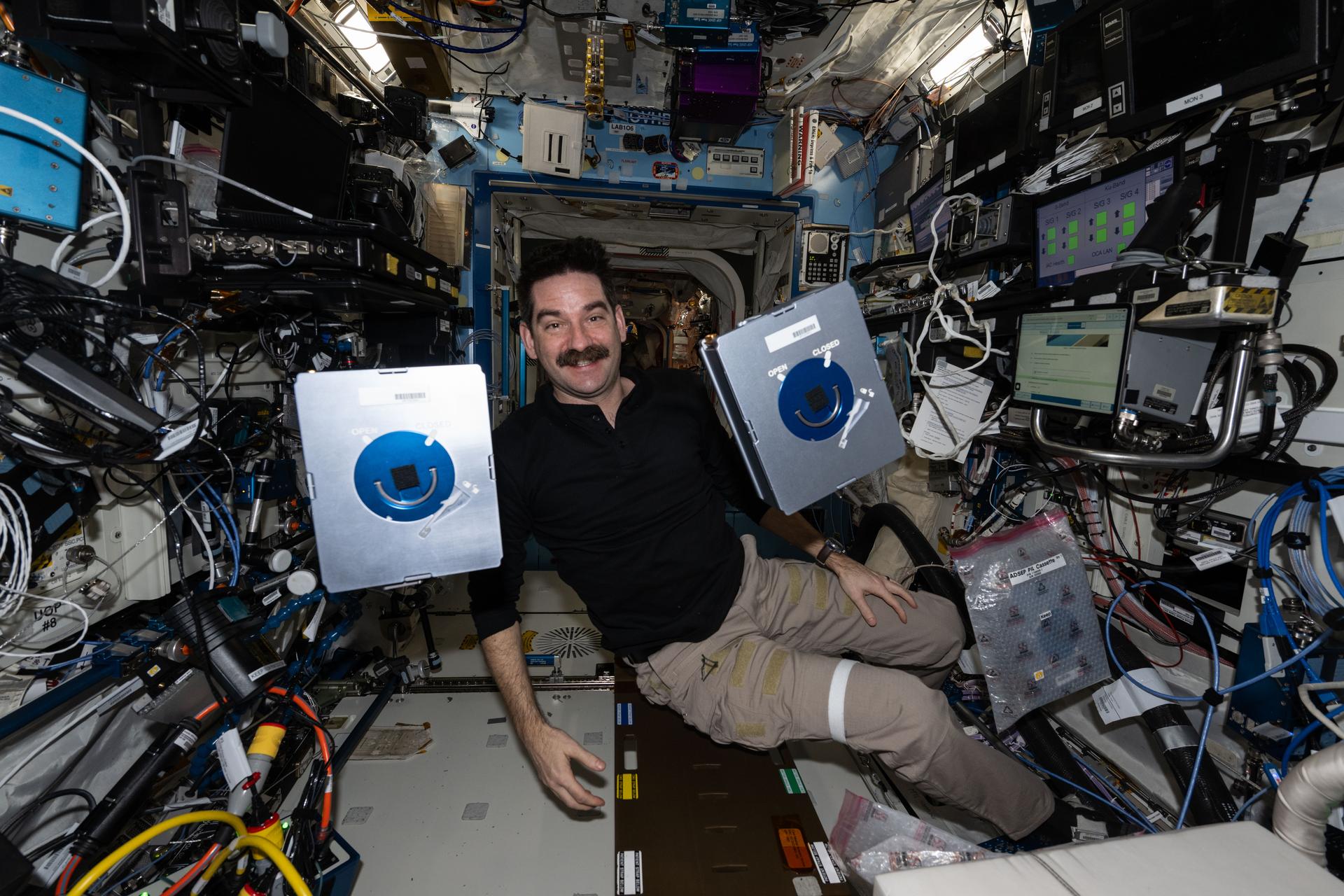
NASA astronaut Jack Hathaway floats and smiles at the camera, his face framed by two metallic silver boxes. Around him, the International Space Station’s walls are densely packed with wires, tubes, computer screens, and other hardware.
NASA/Jessica Meir

Hathaway floats alongside hardware used for crystal growth experiments aboard the orbiting laboratory. Microgravity reveals new details about crystal structures, helping researchers improve the quality and stability of pharmaceuticals. Here, cancer-targeting treatments are crystallized to better understand their properties and help advance cancer therapies on Earth.

Learn more about the Pharmaceutical In-space Laboratory (ADSEP-PIL-15).

Boosting quantum science
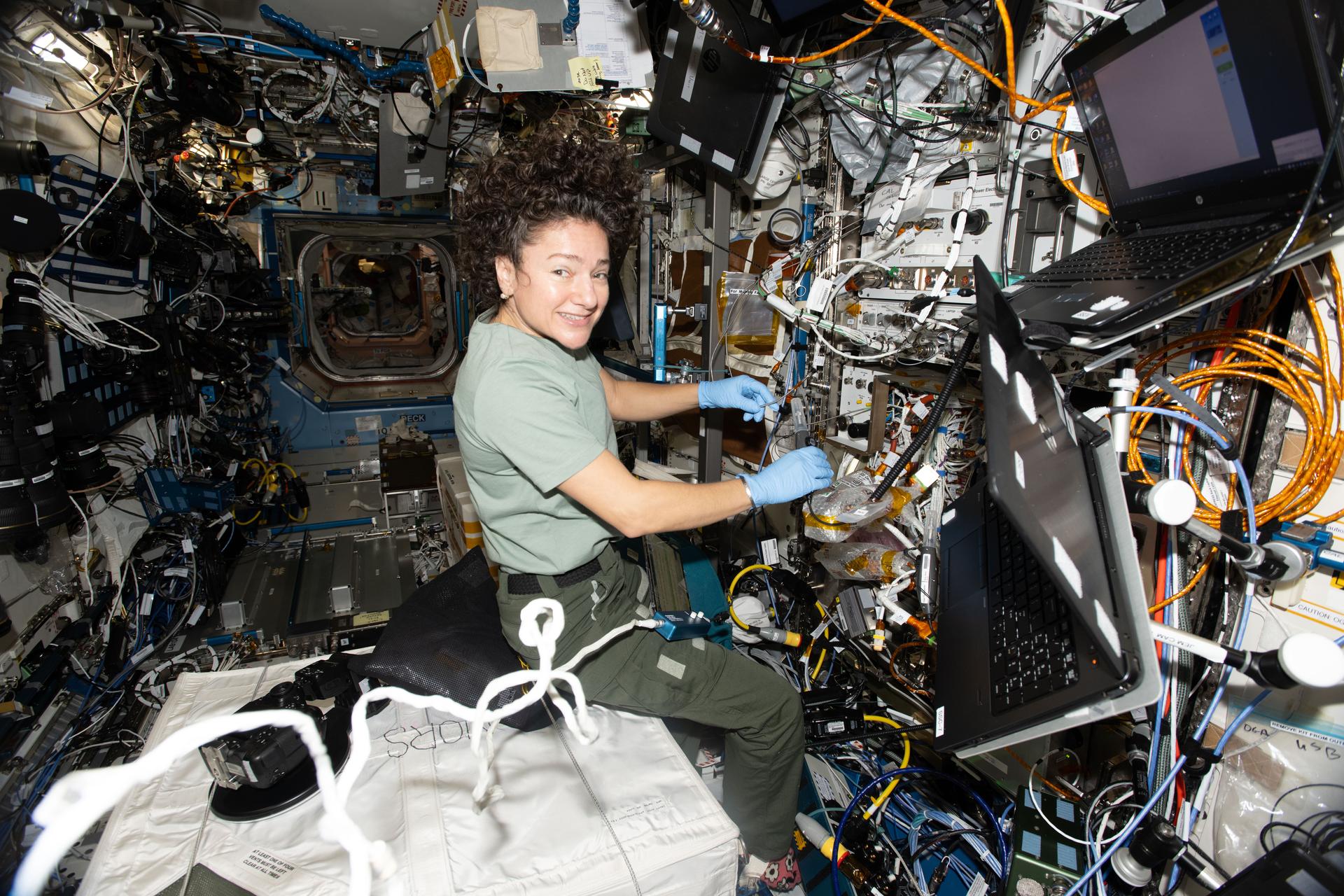
NASA astronaut Jessica Meir wears blue gloves and smiles at the camera while working with equipment aboard the International Space Station. Cables, tubes, and hardware cover the wall around her, and two laptops are mounted to her right. She rests on a large white padded container, giving her a seated appearance in microgravity.
NASA/Jack Hathaway

Meir works with cables that deliver light used to cool, trap, and study atoms inside the Cold Atom Lab. In microgravity, ultracold atoms can be observed for longer periods, giving scientists a window to peer into the quantum realm. A recent upgrade to the facility increases the number of atoms produced, providing more data to advance quantum technologies such as solar cells and the components that power cell phones and computers.

Learn more about the Cold Atom Lab.

Branching beyond bone loss
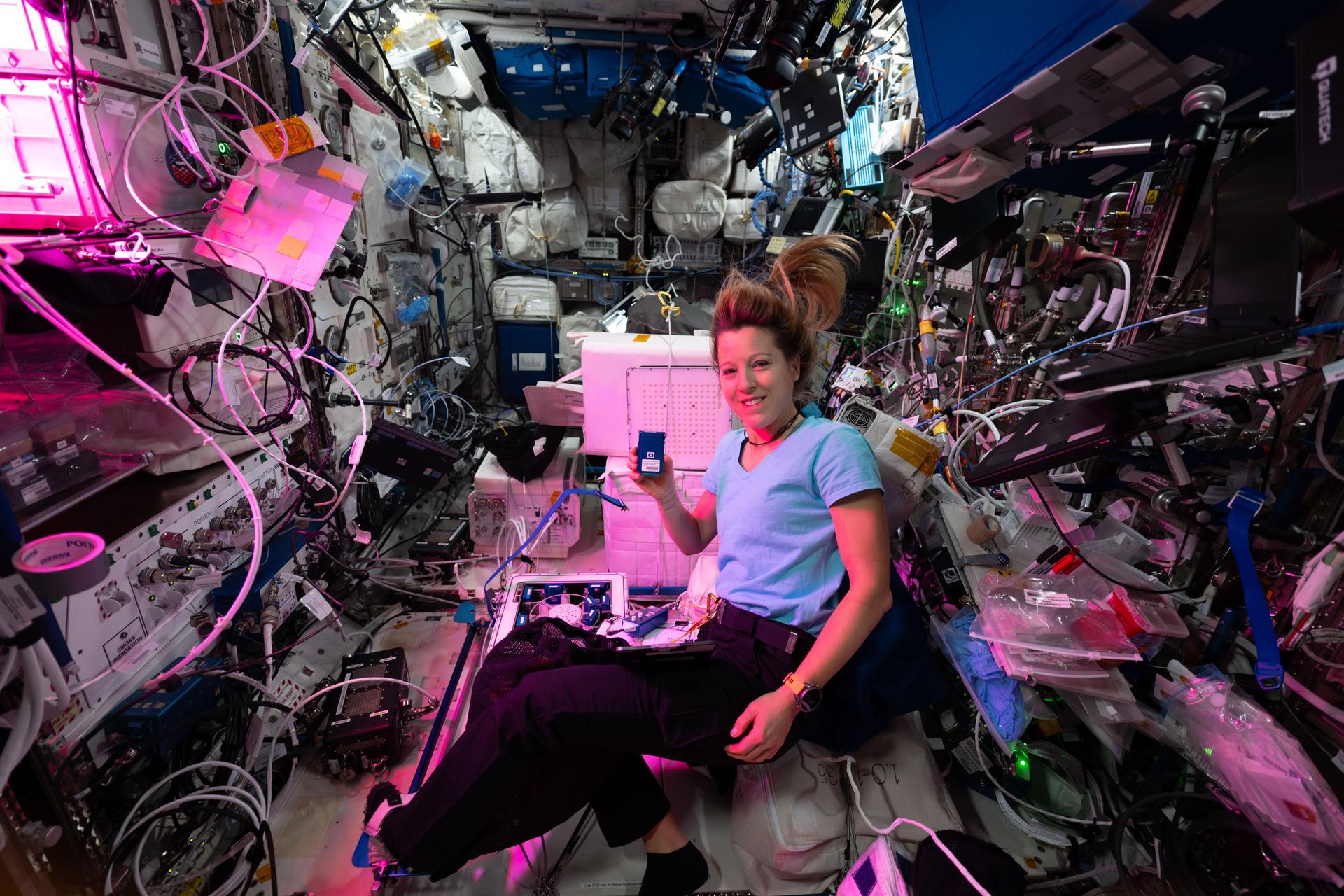
ESA (European Space Agency) astronaut Sophie Adenot floats on the International Space Station, surrounded by wires, compartments, and plastic packages. There is a pink light emanating from the left side of the image and it shines on Sophie and the objects around her. She smiles and holds up a blue, metallic rectangle in her hand.
ESA/Sophie Adenot

Adenot holds a small container that houses a bone scaffold made from wood, designed to mimic the structure of real bones and support the growth of bone cells. Since microgravity can accelerate bone loss, it offers a unique opportunity to test how well the scaffold promotes bone regeneration. Insights from this study could protect future space explorers and provide new treatment options for patients with osteoporosis, a disease that affects more than 200 million people globally.

Learn more about Green Bone.

In-space suspension
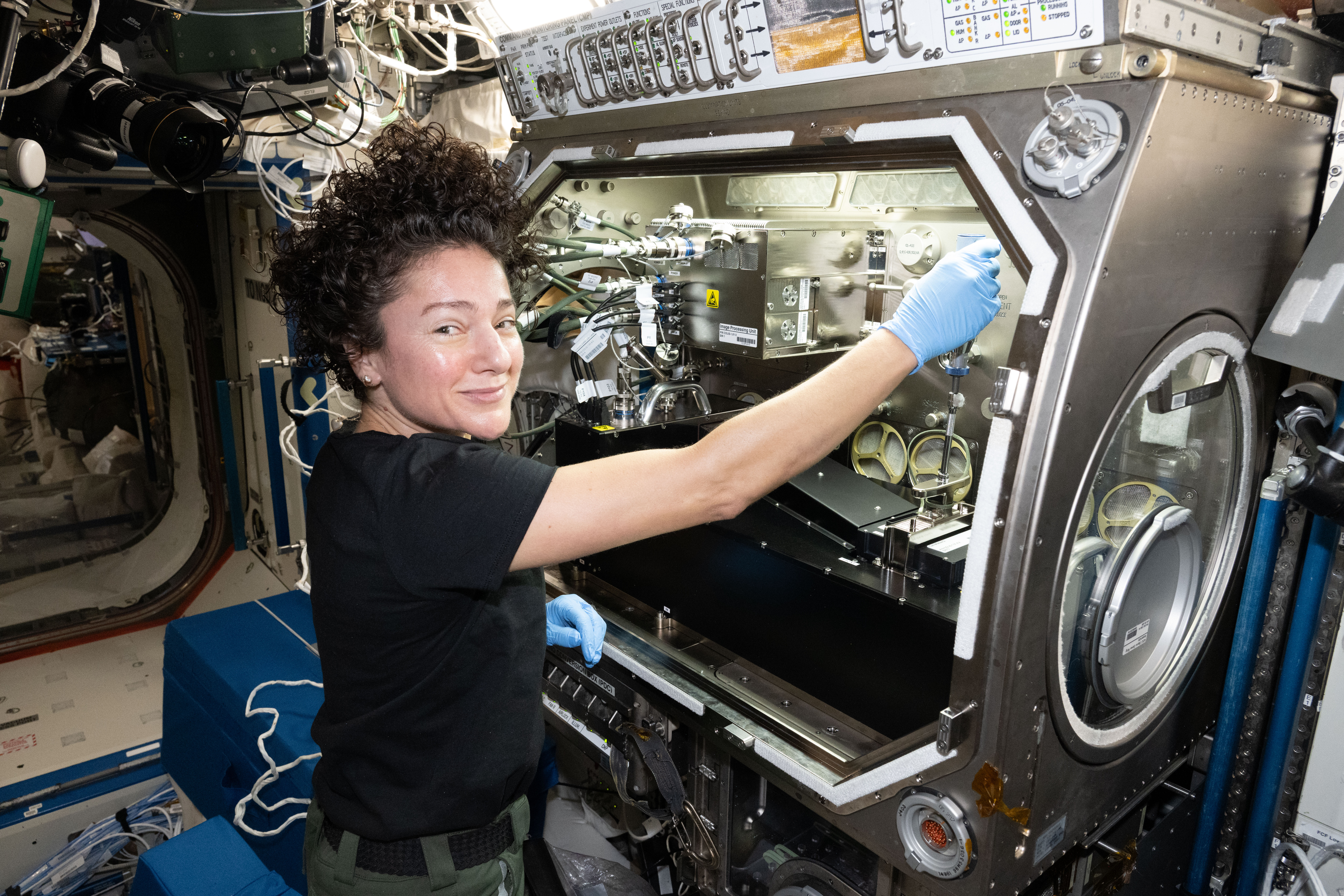
NASA astronaut Jessica Meir smiles at the camera in front of the rectangular Microgravity Science Glovebox aboard the International Space Station. Wearing blue gloves, she reaches into the open compartment, which contains experiment hardware surrounded by metallic panels, cables, and tubing.
NASA

Meir sets up hardware for an investigation that studies soft materials made from tiny particles suspended in water. In microgravity, scientists can study how these particles interact and assemble into structures differently than they do on Earth. Understanding these interactions could help scientists fine-tune the texture, stability, and performance of materials used for growing plants, 3D printing, and producing pharmaceuticals.

Learn more about Colloidal Solids.

Decoding microbial secrets
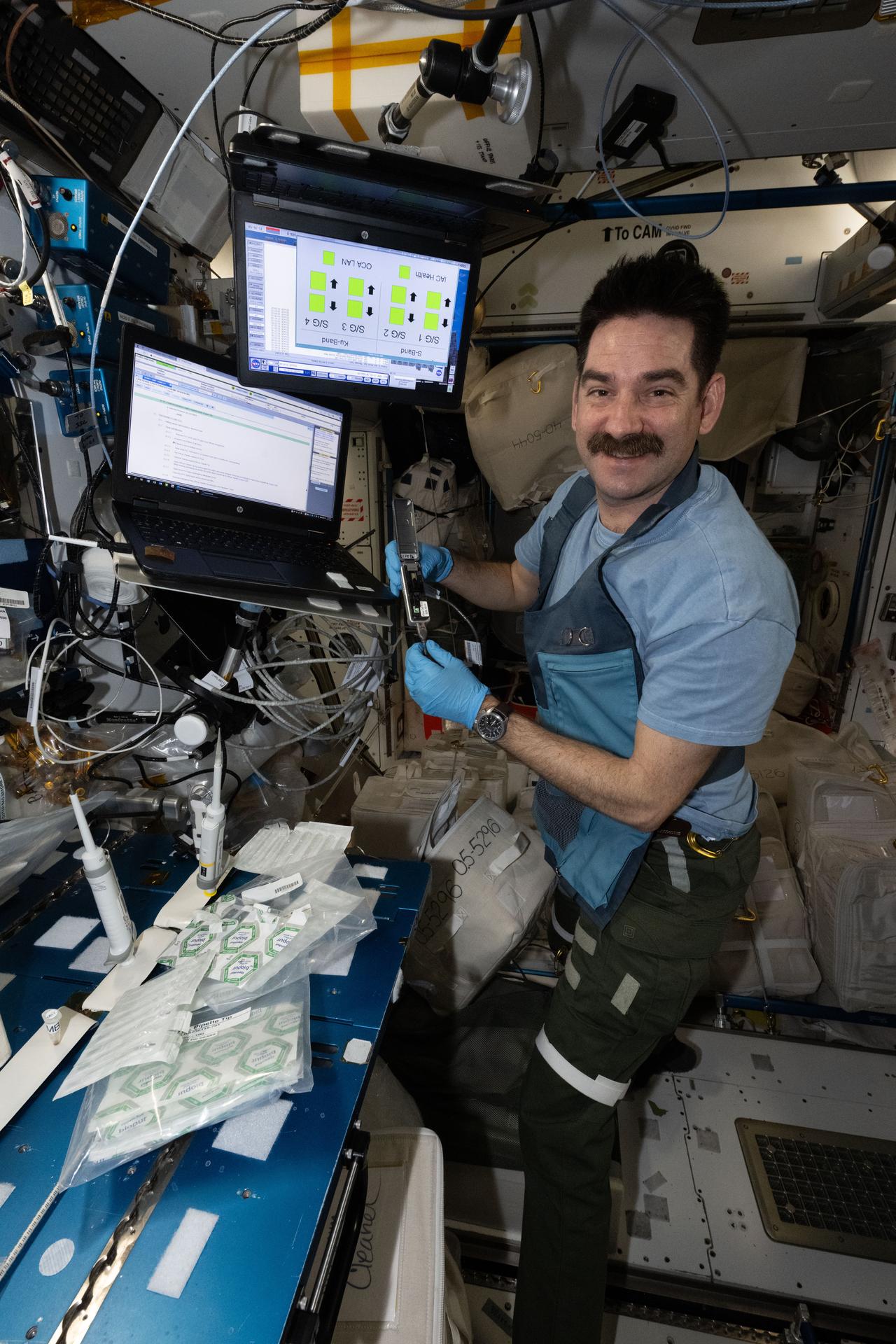
NASA astronaut Jack Hathaway works aboard the International Space Station. He is wearing blue gloves while holding a metallic device with a hinge at its center. To his left are several plastic packages and a pipette, with two laptop screens mounted above the work area.
NASA/Jessica Meir

Hathaway holds equipment to test for antibiotic-resistant bacteria aboard the space station. Some bacteria can withstand antibiotics, starvation, and disinfection, making them a concern in closed environments like spacecraft. Sequencing DNA in microgravity can reveal how resilient microbes adapt to space, helping scientists identify countermeasures to manage antibiotic‑resistant bacteria during exploration missions while also advancing efforts to combat resistance on Earth.

Learn more about CS-05A: Genomic Enumeration of Antibiotic Resistance in Space (GEARS).

Fresh delivery
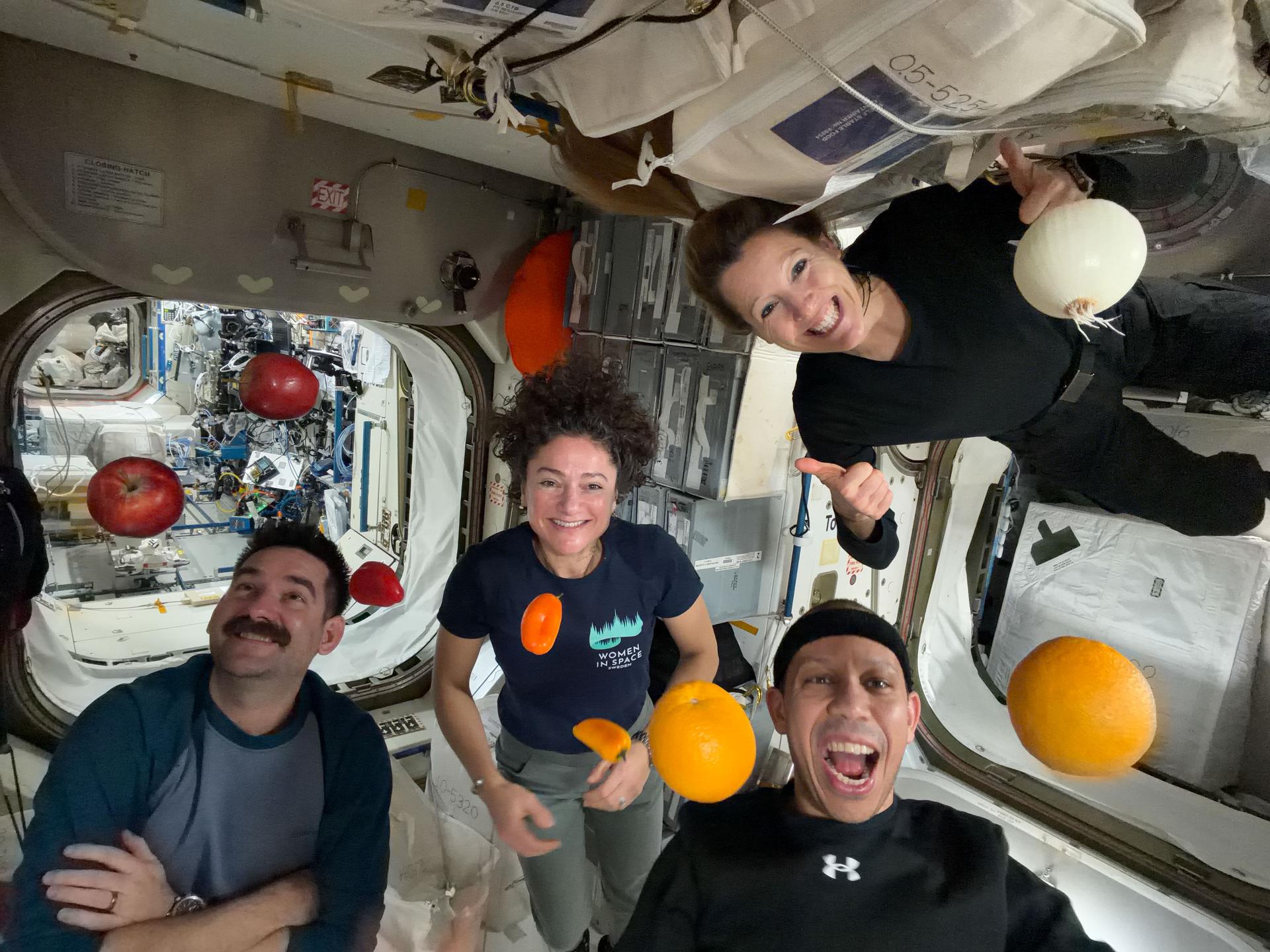
Expedition 74 crew members smile as fresh produce floats around them aboard the International Space Station. From left are NASA astronauts Jack Hathaway, Jessica Meir, and Chris Williams, with ESA (European Space Agency) astronaut Sophie Adenot at upper right. Fresh tomatoes, oranges, peppers, and a white onion float around the crew.
NASA/Chris Williams

Expedition 74 crew members smile among fresh produce delivered aboard NASA’s Northrop Grumman Commercial Resupply Services 24 mission. Cargo flights bring critical supplies, fresh food, sweet treats, and new science to the space station. The Cygnus XL spacecraft also delivered many research projects, including an instrument that could improve space-weather modeling and a project that could help protect gut-microbiome stability on future exploration missions.

Reshaping cartilage
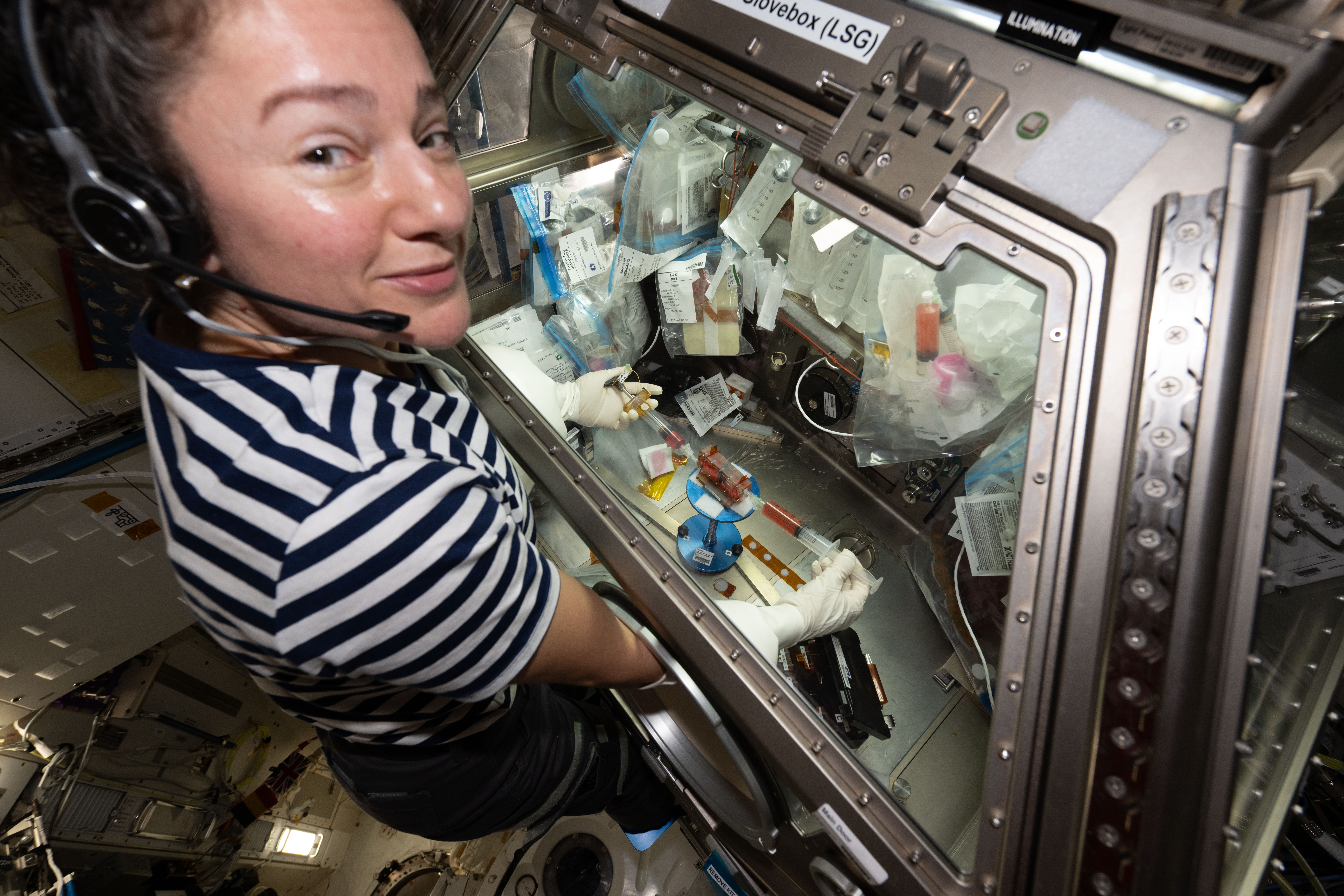
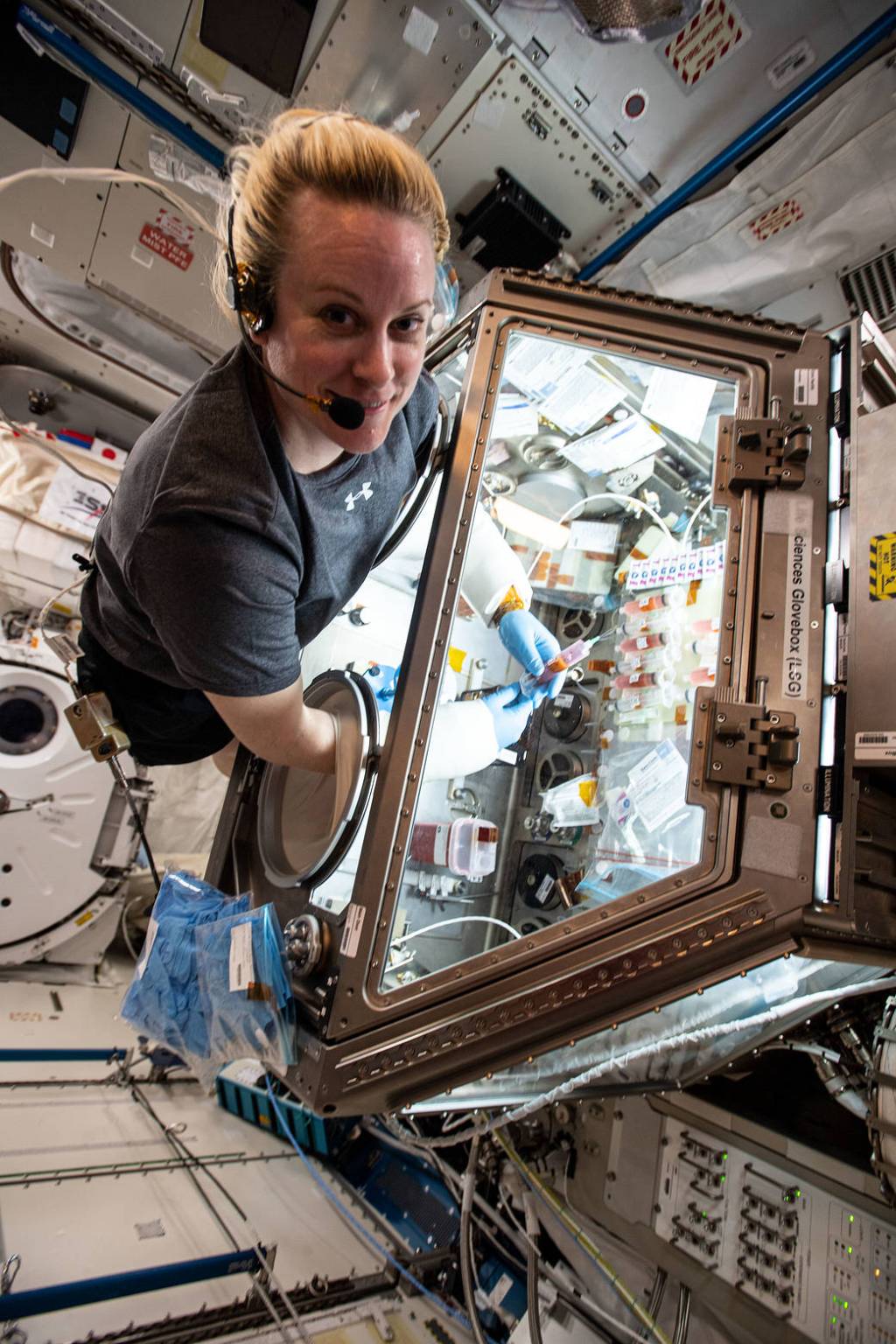
NASA astronaut Jessica Meir works in the Life Sciences Glovebox aboard the International Space Station. She inserts her hands into the glovebox’s built-in white gloves to handle research materials inside the enclosed metallic workspace, where clear plastic bags, small containers, and other experiment materials surround her hands.
NASA

Meir works on an investigation that studies how engineered cartilage tissue develops in microgravity, which may help scientists produce medical implants that more closely resemble natural cartilage. For millions of people with cartilage injuries, space-grown tissue could offer treatment options that don’t require transplanting cartilage from another part of the body.

Learn more about Biomimetic Tissue Engineering in Microgravity for Cartilage using Aggregate Rejuvenation, Tension, and Self-Assembly (BEM-CARTS).

Printing meets metal
ESA (European Space Agency) astronaut Sophie Adenot carefully guides the Metal 3D Printer into place aboard the International Space Station. She uses both hands to position the large, enclosed, rectangular printer into its slot, surrounded by cables and other station hardware.
NASA

Adenot installs the Metal 3D Printer aboard the orbital complex. Several small metal parts have already been 3D printed in microgravity and returned to Earth, where their quality is evaluated against those made on the ground. Producing metal parts on demand in space could give future crews the ability to make or replace what they need far from Earth, reducing reliance on spare parts and resupply missions.

Learn more about Metal 3D Printer.

Vital fluids
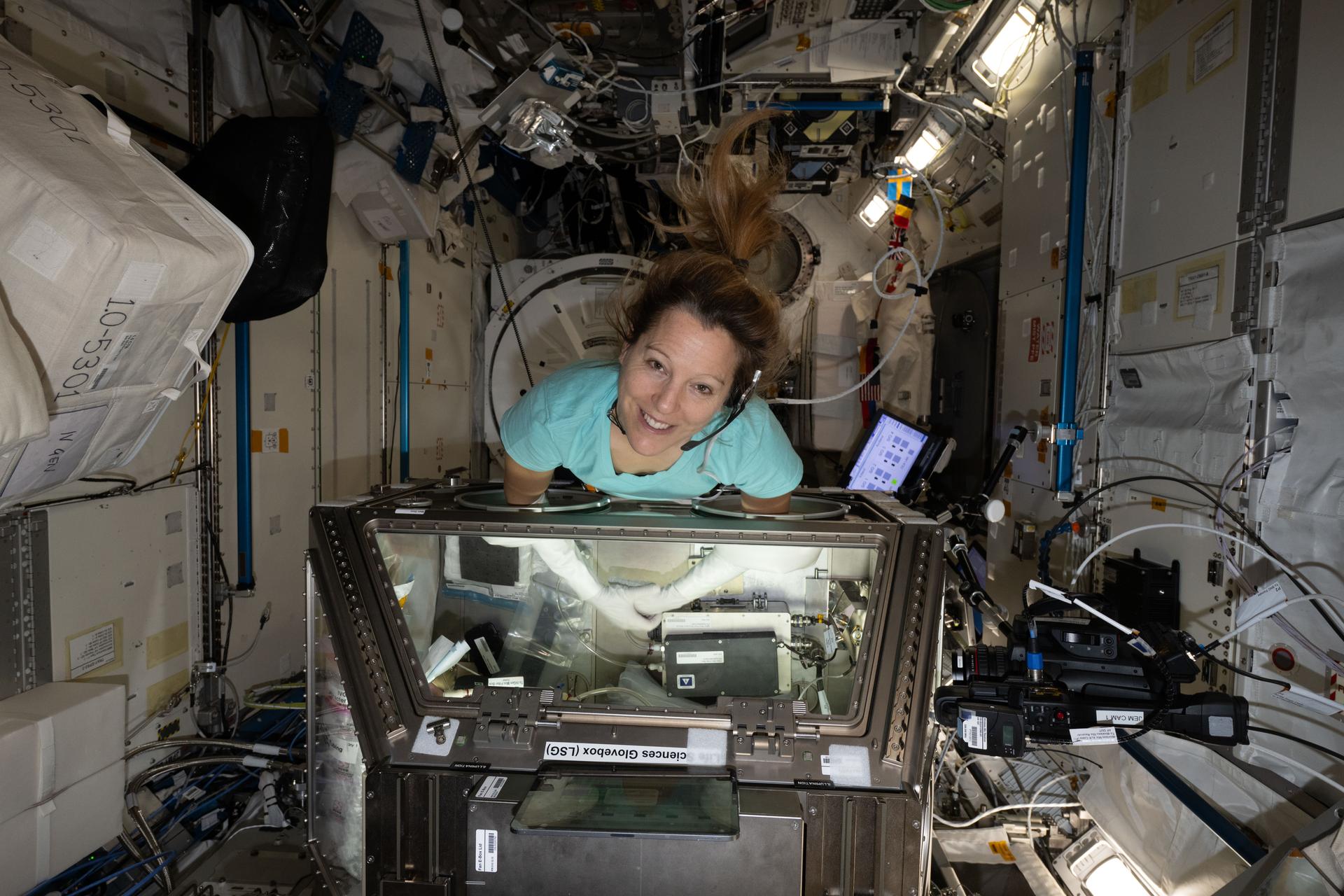
ESA (European Space Agency) astronaut Sophie Adenot smiles at the camera as she reaches inside the large, rectangular Life Sciences Glovebox aboard the International Space Station. Her ponytail floats above her head as she leans into the open compartment, surrounded by reflective silver panels, cables, tubing, and equipment.
NASA/Jessica Meir

Adenot works to produce intravenous (IV) fluid on demand in microgravity. Commercial IV fluids expire after about 16 months and carrying them on long-duration missions adds weight and takes up valuable space. This system could provide a critical medical resource when resupply is limited and improve access in remote areas or during emergencies on Earth.

Learn more about Intravenous Fluid Generation – Mini (IVGEN Mini).

Multiplying stem cells
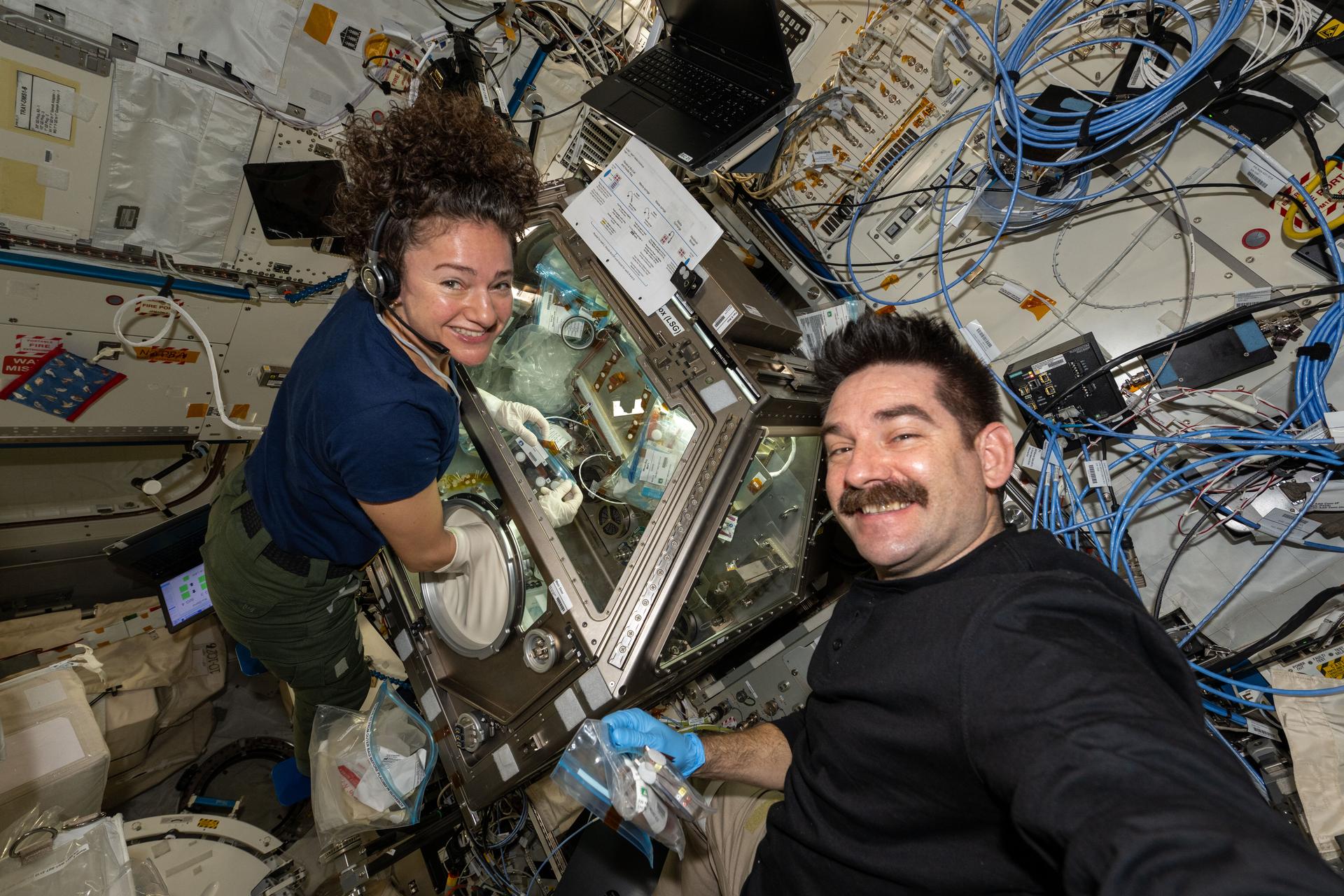
NASA astronauts Jessica Meir (left) and Jack Hathaway (right) smile at the camera as Hathaway takes a selfie aboard the International Space Station. Meir wears blue gloves while performing operations inside the Life Sciences Glovebox, surrounded by metallic panels, cables, and equipment.
NASA

Hathaway takes a selfie as Meir conducts a stem cell investigation in space. Microgravity can help produce larger numbers of clinical-grade stem cells that retain their ability to transform into other cells. Cells used in this experiment could help rebuild blood and immune systems after chemotherapy, advancing care for leukemia and other blood diseases on Earth.

Learn more about the Hematopoietic Stem Cell Expansion in Space: Pathfinder Investigation (InSPA-StemCellEX-H2).

Training bone cells

NASA astronaut Jack Hathaway smiles while holding a rectangular metallic box in both hands, about the size of a shoe box. There is a large white box in front of him, and an opening to another area of the International Space Station is visible behind him.
NASA/Jack Hathaway

Hathaway holds an experiment container that uses bone marrow cells to study how microgravity affects bone and muscle. The research uses structures that mimic parts of bone marrow, and some samples are exposed to vibrations that simulate exercise. Tracking changes in these cells could reveal new ways to combat bone and muscle loss during spaceflight and support bone health on Earth.

Learn more about 3D Bone Marrow Analog.

Details

Last Updated

Oct 01, 2026

Source: www.nasa.gov

NASA Awards Enterprise Logistics Support Services Agreements

Credit: NASA

Editor’s Note: This release was updated on Oct. 2, 2026, to clarify company names.

NASA selected 16 companies to provide Enterprise Logistics Support Services under new agreements that will standardize requirements, improve reporting, and streamline the management of costs and resources.

The $1.4 billion blanket purchase agreements will support equipment and property management, transportation, disposal, product support, flight hardware support operations, equipment maintenance and repair, export control, move operations, flight hardware, and other material purchases.

Under the General Services Administration’s One Acquisition Solution for Integrated Services Plus multiple-award blanket purchase agreements, NASA has the discretion to use firm-fixed-price, time-and-materials, labor-hour, or hybrid contract types.

The five-year base ordering period begins Thursday and runs through Sept. 30, 2031. It is followed by three optional one-year ordering periods and a six-month option to extend.

The companies selected are:

  • Akima Facilities Operations LLC
  • Akima Global Logistics LLC
  • Alutiiq Operations Services LLC
  • ASR International Corporation
  • ASRC Federal Administrative Services LLC
  • ASRC Federal Professional Services LLC
  • IAP World Services Inc.
  • KBR Wyle Services LLC
  • Leidos Inc.
  • LogiCore Corporation
  • Prime Response Inc.
  • S&K Applied Solutions LLC
  • TechTrans International Inc.
  • Tetra Tech Inc.
  • TRAX International Corporation
  • Yulista Support Services LLC

For more information about NASA and its programs, visit:

https://www.nasa.gov

-end-

Jennifer Dooren / Jessica Taveau
Headquarters, Washington
202-358-1600
[email protected] / [email protected]

Jamie Mettler
Stennis Space Center, Miss.
228-813-6490
[email protected]

Details

Last Updated

Oct 02, 2026

Editor
Jessica Taveau

Source: www.nasa.gov

APOD: 2026 October 2 – The Complete Sharpless Catalog: 313 Nebulas

APOD

Astronomy Picture of the Day

Discover the cosmos! Each day a different image or photograph of our fascinating universe is featured, along with a brief explanation written by a professional astronomer.

313 separate images of nebulae that resemble a variety of shapes and brightnesses. Some are dim and whispy, others are bright and create structure. Each image traces the complex behavior of interstellar gas.

The Complete Sharpless Catalog: 313 Nebulas

Explanation: What does it take to image hundreds of nebulas? Today’s image contains the entire Sharpless Catalog of H II Regions, totaling 313 objects. Zoom in and explore! You may spot fan favorites like the Eagle (Sh2-49), Heart (Sh2-190), and Orion (Sh2-281) Nebulas. Despite its name, this catalog contains more than the glow of ionized hydrogen that makes up H II regions. There are planetary nebulas (the Medusa Nebula, Sh2-274) and supernova remnants (the Spaghetti Nebula, Sh2-240) as well. Astrophotographer Bing Xin traversed the dark skies of Eastern China and Inner Mongolia to catch them all. Narrowband filters that primarily capture light from ionized hydrogen and oxygen as well as red-green-blue filters were used. Each object took 2 to 6 hours to capture, with the entire catalog taking around 800 hours to complete! Which object is your favorite?

APOD’s email for image submissions has changed. Please see: APOD Submissions
Tomorrow’s picture: just Curiosity

Date: October 2, 2026
Credit: Bing Xin
Authors & editors: Keighley Rockcliffe, Robert Nemiroff, Jerry Bonnell, Cecilia Chirenti
A service of: ASD at NASA / GSFC,
NASA Science Activation & Michigan Tech. U.

Source: science.nasa.gov

NASA Opens Applications for Next Class of Flight Directors

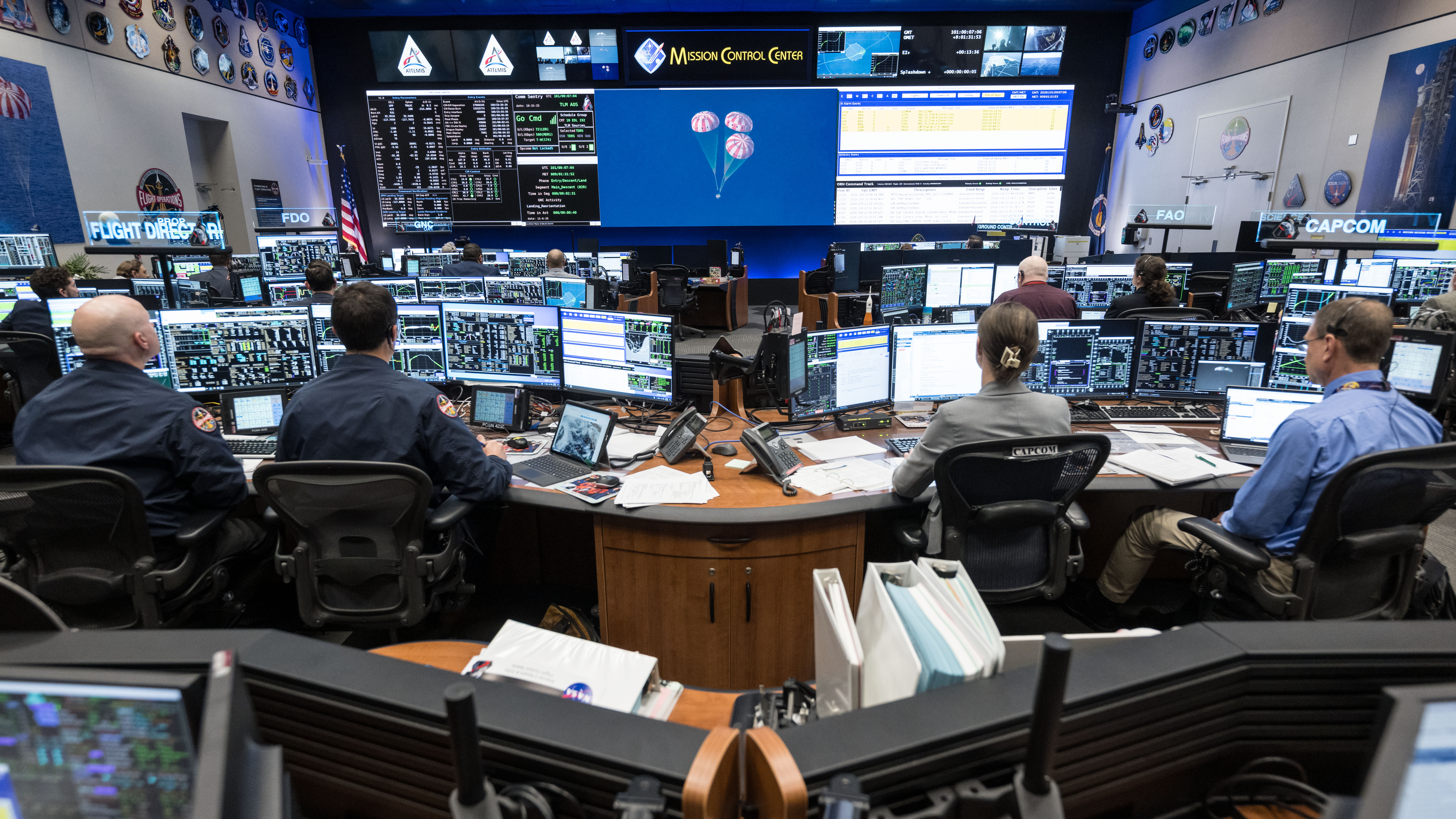
 The Artemis II flight control team is pictured in the White Flight Control Room in mission control at NASA’s Johnson Space Center in Houston on April 10, 2026, for the splashdown and recovery of the Artemis II mission.
Credit: NASA/Robert Markowitz

NASA is seeking leaders for one of the most esteemed positions on Earth for human spaceflight: flight director in mission control at the agency’s Johnson Space Center in Houston. This role is critical to advancing American leadership in space exploration, as NASA paves the way for a sustained human presence on the Moon.

Applications for new flight directors are open now through Monday, Oct. 12. U.S. citizens can apply at:

https://www.usajobs.gov/GetJob/ViewDetails/886788000

Those chosen as NASA flight directors will lead human spaceflight missions to the International Space Station, Artemis missions to the Moon, and, eventually, the first human missions to Mars.

Flight directors lead teams of flight controllers, astronauts, and commercial and international partners in real-time mission execution and risk management. In preparation for a mission, flight directors collaborate with engineering, safety, and program partners to ensure operational plans align with spacecraft capabilities and mission objectives.

“We are working in an exciting, pivotal time as we continue supporting operations to the International Space Station while building the next phase of human spaceflight with Artemis and Moon Base missions, preparing to go farther than ever before,” said Emily Nelson, chief flight director at Johnson. “Accomplishing these ambitious goals requires flight directors who are expert integrators, bringing together a broad range of teams and disciplines into a clear, unified mission effort. This integral role exemplifies the best of innovation and teamwork.”

To be considered, flight director candidates must be U.S. citizens with a bachelor’s degree from an accredited institution in engineering, biological science, physical science, computer science, or mathematics. They also will need substantial related, progressively responsible professional experience, including time-critical decision-making experience in high-stress, high-risk environments. Although many NASA flight directors have previously been flight controllers working in mission control, it is not a prerequisite to apply.

NASA plans to announce selections by the end of the year. The new flight directors will receive extensive training in flight control and spacecraft systems, as well as operational leadership and risk management.

Learn more about NASA flight directors and the application process at:

go.nasa.gov/BeAFlightDirector

-end-

Rachel Kraft
Headquarters, Washington
202-358-1100
[email protected]

Anna Schneider / Mary Pfister
Johnson Space Center, Houston
281-483-5111
[email protected] / [email protected]

Details

Last Updated

Oct 02, 2026

Source: www.nasa.gov

NASA Model Wing Lights Up During First Pressure Sensitive Paint Tests

2 min read

Preparations for Next Moonwalk Simulations Underway (and Underwater)

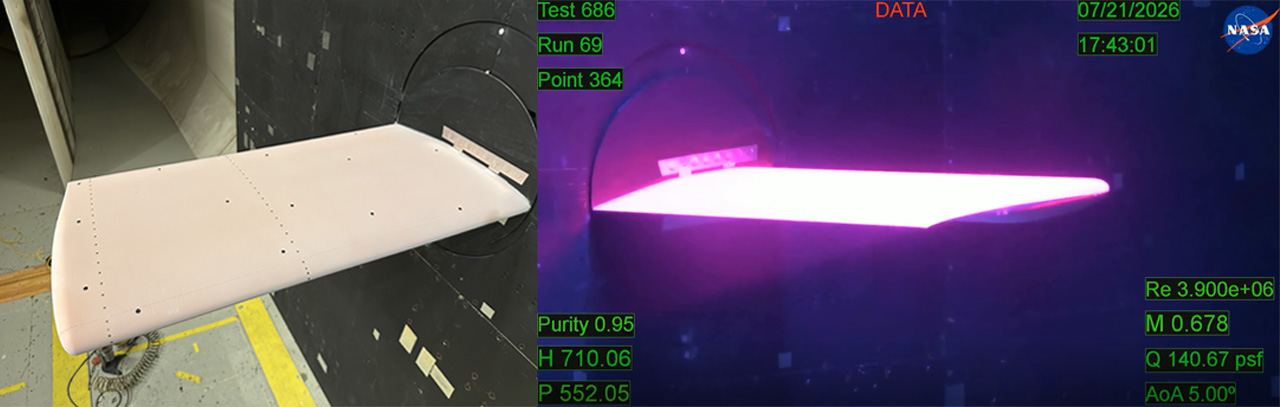
Side‑by‑side images showing a wing-like test article mounted in a wind tunnel. The left image displays the pale, unlit test article attached to instrumentation inside the tunnel. The right image shows the same article under aerodynamic heating, glowing bright pinkish‑purple as test data parameters appear around it, including readings for pressure, temperature, Mach number, and angle of attack.
Left: The Benchmark Supercritical Wing not illuminated in unsteady Pressure Sensitive Paint inside the Transonic Dynamics Tunnel at NASA’s Langley Research Center. Right: The Benchmark Supercritical Wing illuminated in unsteady Pressure Sensitive Paint during testing inside the Transonic Dynamics Tunnel at NASA’s Langley Research Center.
Left: NASA/Sarah Peak | Right: NASA

Groundbreaking tests at NASA’s Langley Research Center in Hampton, Virginia, are paving the way for new wind tunnel capabilities for designing the aircraft technologies of the future. 

In a first-of-its-kind test in NASA Langley’s Transonic Dynamics Tunnel, researchers used unsteady Pressure Sensitive Paint to study how air flows around a standard wind tunnel model known as the Benchmark Supercritical Wing. As the team observed the test, the paint’s special capabilities made the model wing glow pink-purple when exposed to special ultraviolet lights, while high-speed cameras captured every detail. 

The test combined two valuable NASA tools. NASA’s benchmark wings don’t represent a particular type of aircraft, rather they are meant as universal models to help researchers improve computer modeling using wind tunnel data.  

Unsteady pressure sensitive paint is a specialized coating that varies in brightness according to how much pressure the air flow applies to the wing. High-speed cameras capture those changes, providing data for computer models. For years, NASA researchers at centers including Langley and the agency’s Ames Research Center in California’s Silicon Valley have been working to integrate the paint into wind tunnel tests for aircraft and rockets. NASA researchers consider the paint a vital tool and expect to find many more wind tunnel applications in the future.  

This test marked the technique’s first use on a large-scale, freely moving model in a low‑oxygen environment, an achievement made possible by the Transonic Dynamic Tunnel’s unique testing capabilities. 

This milestone opens the door for upcoming tests on flexible aircraft models that are designed to bend and adapt during flight to improve efficiency. It also lays the foundation for better simulations and designs as NASA advances the future of flight. 

Source: www.nasa.gov

La NASA abre solicitudes para próxima promoción de directores de vuelo

El equipo de control de vuelo de Artemis II, en la Sala Blanca de Control de Vuelo del centro de control de misiones del Centro Espacial Johnson de la NASA, en Houston, el 10 de abril de 2026, durante el amerizaje y la recuperación de la misión Artemis II.
Crédito: NASA/Robert Markowitz

Lee esta nota de prensa en inglés aquí.

La NASA busca líderes para uno de los puestos más prestigiosos de la Tierra en el ámbito de los vuelos espaciales tripulados: director de vuelo en el control de misión del Centro Espacial Johnson de la agencia, en Houston. Esta función es fundamental para reforzar el liderazgo estadounidense en la exploración espacial, a medida que la NASA allana el camino hacia una presencia humana sostenida en la Luna.

El plazo para presentar solicitudes está abierto desde ahora hasta el lunes 12 de octubre. Los ciudadanos estadounidenses pueden presentar su solicitud en (información en inglés):

https://www.usajobs.gov/GetJob/ViewDetails/886788000

Las personas seleccionadas como directores de vuelo de la NASA dirigirán misiones tripuladas a la Estación Espacial Internacional, misiones Artemis a la Luna y, más adelante, las primeras misiones tripuladas a Marte.

Los directores de vuelo dirigen equipos de controladores de vuelo, astronautas y socios comerciales e internacionales en la ejecución de misiones en tiempo real y en la gestión de riesgos. Durante los preparativos de una misión, los directores de vuelo colaboran con los equipos de ingeniería, seguridad y programas para garantizar que los planes operativos se ajusten a las capacidades de la nave espacial y a los objetivos de la misión.

“Estamos en un momento apasionante y decisivo, ya que seguimos dando soporte a las operaciones en la Estación Espacial Internacional mientras construimos la próxima etapa de los vuelos espaciales tripulados con las misiones de Artemis y Base Lunar, y nos preparamos para llegar más lejos que nunca”, dijo Emily Nelson, jefa de directores de vuelo en el centro Johnson. “Alcanzar estos ambiciosos objetivos requiere directores de vuelo que sean expertos en integración, capaces de reunir una amplia variedad de equipos y disciplinas en un esfuerzo de misión claro y unificado. Esta función esencial representa lo mejor de la innovación y el trabajo en equipo”.

Para ser considerados, los candidatos a director de vuelo deben ser ciudadanos estadounidenses y contar con una licenciatura de una institución acreditada en ingeniería, ciencias biológicas, ciencias físicas, informática o matemáticas. También necesitarán una amplia experiencia profesional afín y de responsabilidad creciente, que incluya la toma de decisiones críticas en entornos de alta presión y alto riesgo. Aunque muchos directores de vuelo de la NASA han sido antes controladores de vuelo en el control de misión, no es un requisito para presentar la solicitud.

La NASA prevé anunciar las selecciones antes de que termine el año. Los nuevos directores de vuelo recibirán una amplia formación en control de vuelo y sistemas de naves espaciales, así como en liderazgo operativo y gestión de riesgos.

Obtén más información sobre los directores de vuelo de la NASA y el proceso de solicitud en (información en inglés):

go.nasa.gov/BeAFlightDirector

-fin-

Rachel Kraft / María José Viñas
Sede central, Washington
202-358-1100
[email protected] / [email protected]

Anna Schneider / Mary Pfister
Centro Espacial Johnson, Houston
281-483-5111
[email protected] / [email protected]

Details

Last Updated

Oct 02, 2026

Related Terms

Source: www.nasa.gov
NASA’s DAVINCI Probe Can Stand the Heat

An engineering model of the DAVINCI descent probe.
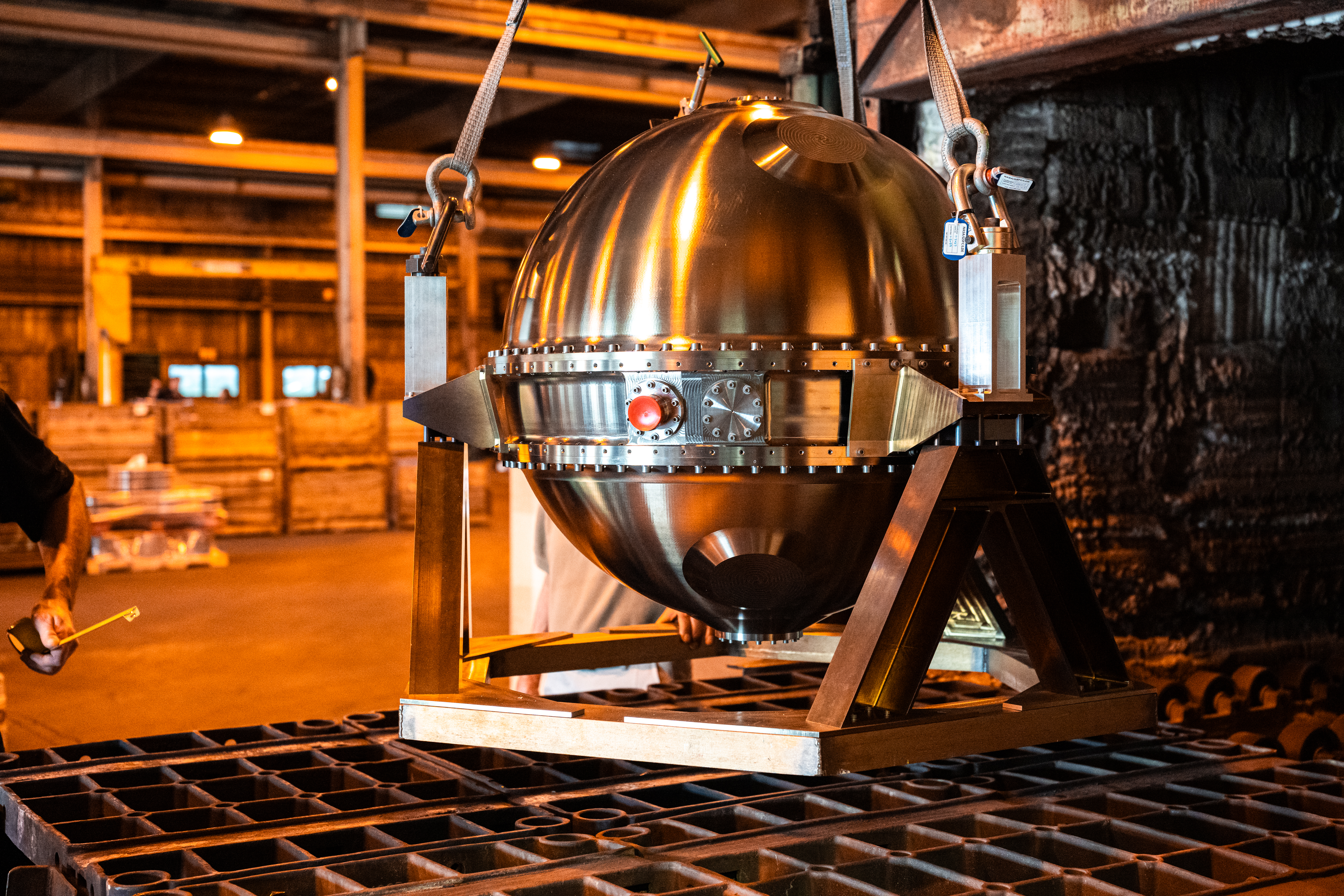
An engineering model of NASA’s DAVINCI (Deep Atmosphere Venus Investigation of Noble gases, Chemistry, and Imaging) descent probe passed a key test that ran from Aug. 28 to Sept. 10, showing it can survive the extreme temperatures of Venus.
NASA/Mike Guinto

The engineering development unit for NASA’s DAVINCI (Deep Atmosphere Venus Investigation of Noble gases, Chemistry, and Imaging) probe is photographed prior to a major thermal evaluation.

The DAVINCI team put the yoga ball-sized vessel into a ceramic-lined chamber with heat-scorched walls and ratcheted up the temperature to 869 F, or 465 C, over the course of about an hour — the same pace the probe will heat up during its descent to the surface of Venus.

DAVINCI will study the origin, evolution, and present state of Venus in unprecedented detail to help determine whether it was once wet and habitable, like Earth.

Read more about the test.

Image credit: NASA/Mike Guinto

Source: www.nasa.gov

10 Things: Movie Night

2 Min Read

10 Things: Movie Night

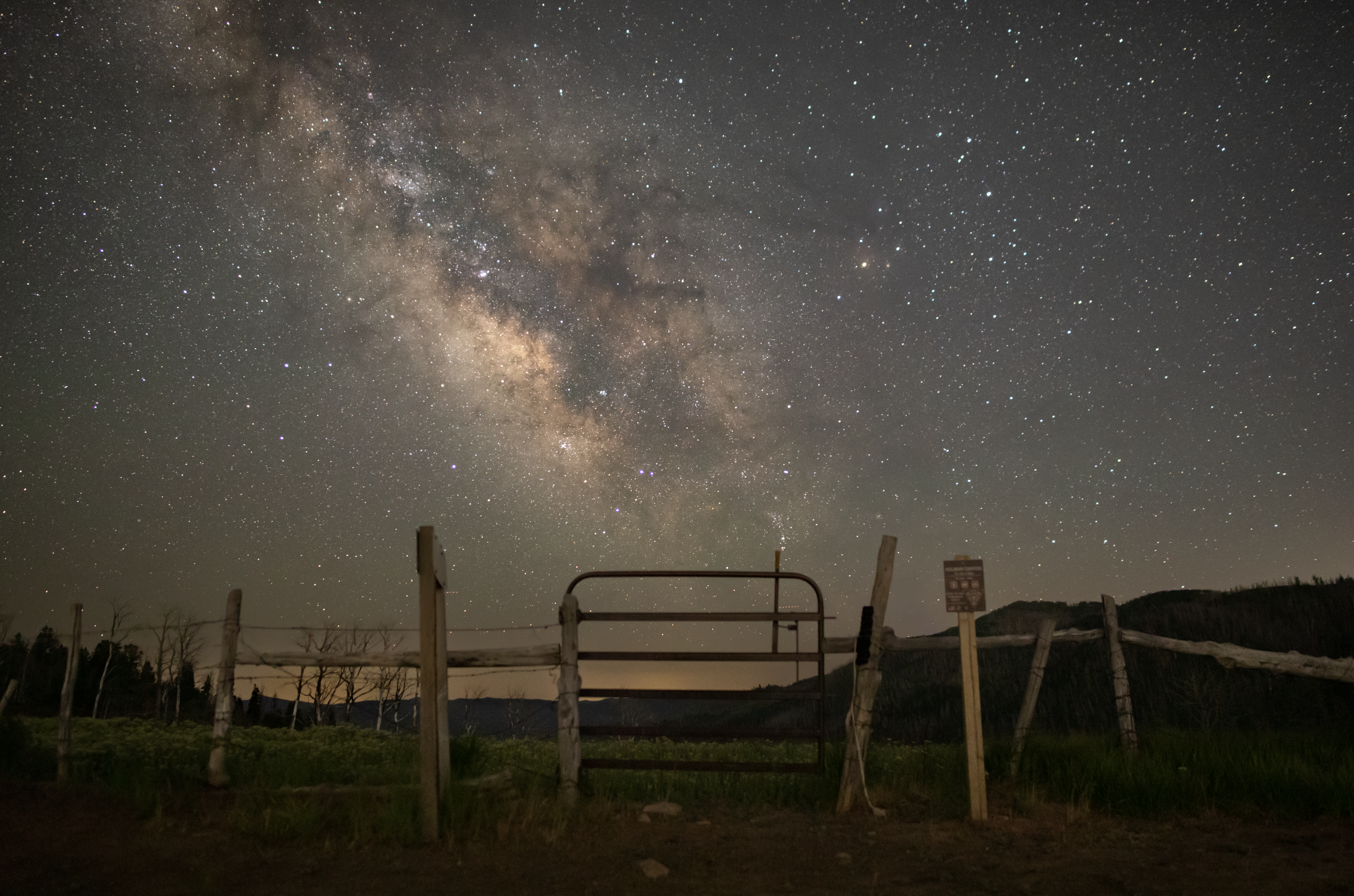
The bright, dusty band of the Milky Way galaxy stretches across a star-filled night sky. In the foreground, a rustic wooden fence and a closed metal gate stand on a grassy field, with dark hills silhouetted in the distance.

Join Us for Movie Night with NASA

NASA’s mission is to pioneer the future in space exploration and scientific discovery. NASA+ documentaries allow you to come along for the ride. It’s free. It’s on demand. And no subscription is required. Grab some popcorn and come along for the journey.

Other Worlds: Europa

Cosmic Dawn

Planetary Defenders

Our Alien Earth: The Lava Tubes of Mauna Loa, Hawai’i

Our Alien Earth: Greece

Other Worlds: Titan

NASA Explorers: Sample Return

NASA Explorers: Space School

Listen to the Universe

Space Out!

You’ve explored Earth, tracked asteroids, visited distant worlds, and listened to the universe. It’s time to relax with some tunes and images of Earth’s beautiful Moon.

Details

Last Updated

Oct 02, 2026

Related Terms

Source: science.nasa.gov

Rains Swamp the Gandak River


September 20, 2026
September 29, 2026

A false-color satellite image shows the Gandak River before the flooding on September 20, 2026.
NASA Earth Observatory / Lauren Dauphin

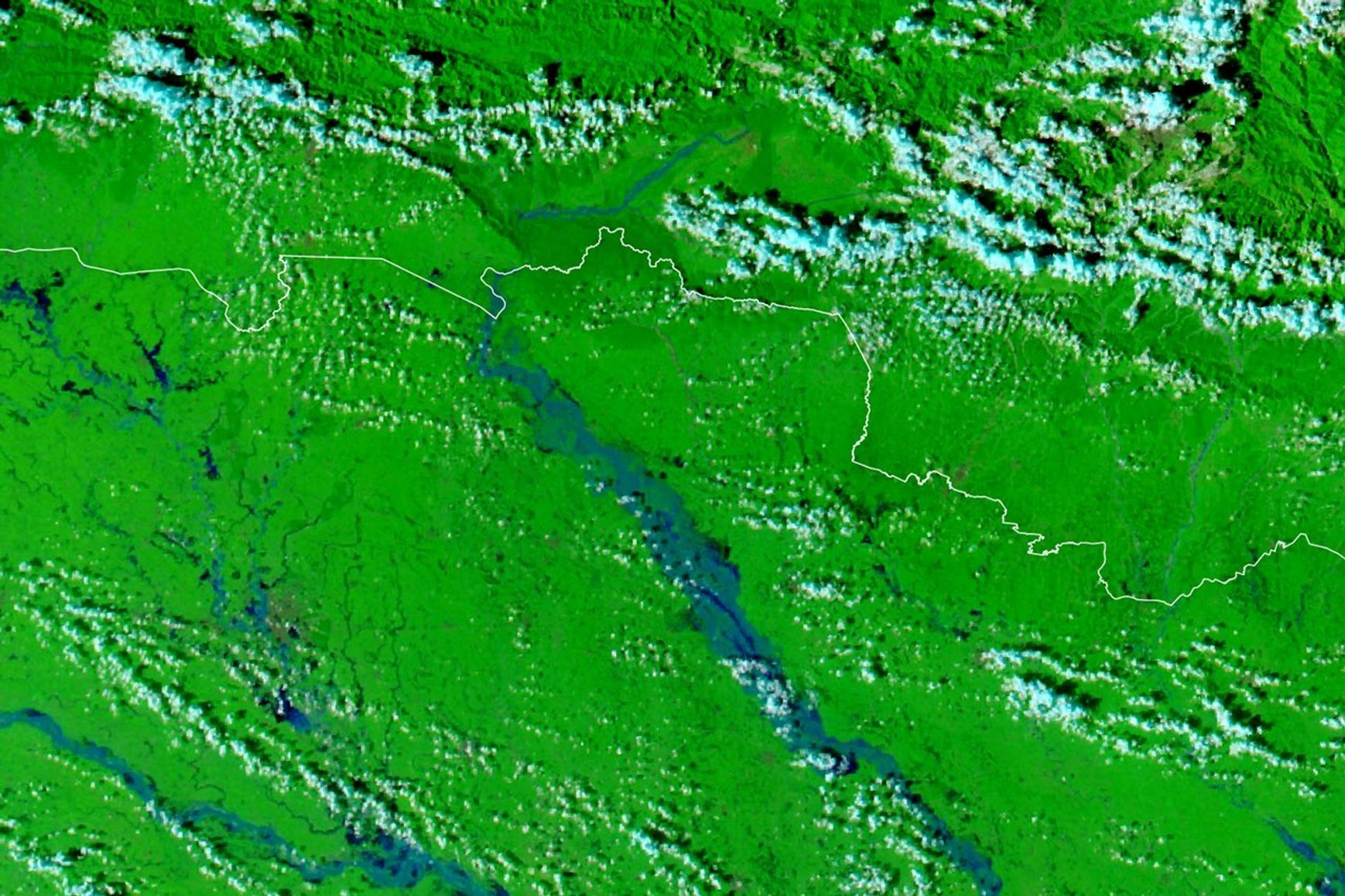
A false-color satellite image shows the same area during the flooding on September 29, 2026. The river appears much wider.
NASA Earth Observatory / Lauren Dauphin

A false-color satellite image shows the Gandak River before the flooding on September 20, 2026.
NASA Earth Observatory / Lauren Dauphin

A false-color satellite image shows the same area during the flooding on September 29, 2026. The river appears much wider.
NASA Earth Observatory / Lauren Dauphin


September 20, 2026

September 29, 2026


Storms drenched Nepal’s mountainous Lumbini and Gandaki provinces with waves of torrential rain between September 24 and 27. The deluge, arriving late in the monsoon season, triggered landslides and pushed the Gandak River, also called the Narayani, to record levels in both Nepal and India.

With runoff streaming into the braided river system, water overtopped and breached embankments in several areas, inundating farmland and settlements along the river for hundreds of kilometers. As authorities assessed the full extent of the damage, news reports indicated that flooding and landslides had affected hundreds of villages and displaced thousands of people.

Images captured by MODIS (Moderate Resolution Imaging Spectroradiometer) on NASA’s Terra and Aqua satellites on September 20, 2026 (left), and September 29, 2026 (right), show the extent of the flooding. The false-color images combine observations of infrared and visible light (MODIS bands 7-2-1) to make it easier to distinguish the water. Floodwater appears blue; vegetation is bright green; clouds are light blue.

In many areas, water inundated seasonal fields on low-lying deposits of sand and silt within the river’s channel, called diara, where flooding is expected. However, it also breached embankments and flooded several settled areas, including parts of Bagaha, Areraj, and Fulia Khand.

Data from Nepal’s Department of Hydrology and Meteorology indicated that a gauge in Devghāṭ reached as high as 11.94 meters on September 27, the highest since measurements began there in the 1960s. According to news reports, gauges in India along the Gandak that set new high-water marks included Bagaha, Dumariaghat, Rewaghat, and Lalganj.

NASA has several tools and datasets available for tracking rainfall and flooding. Among them are Worldview, FLOOD Viewer, and the GPM IMERG Global Viewer. 

NASA Earth Observatory images by Lauren Dauphin, using MODIS data from NASA EOSDIS LANCE and GIBS/Worldview. Story by Adam Voiland.

References & Resources

You may also be interested in:

Stay up-to-date with the latest content from NASA as we explore the universe and discover more about our home planet.

Lake Powell Drops to Record-Low Levels

4 min read

Snow drought and unusually warm temperatures in the Colorado Basin in 2026 helped drive down reservoir water storage in the…

Article

Low Water at San Carlos Reservoir

4 min read

Drought and water releases drained the Arizona reservoir to levels that have led to widespread fish deaths.

Article

Elephant Butte Reservoir Runs Low

3 min read

Drought in the Rio Grande basin contributed to New Mexico’s largest reservoir dwindling to its lowest level in decades.

Article

Source: science.nasa.gov