NASA’s Hubble, Webb Find Far-out Solar System Objects ‘Remember’ Past

5 min read

NASA’s Hubble, Webb Find Far-out Solar System Objects ‘Remember’ Past
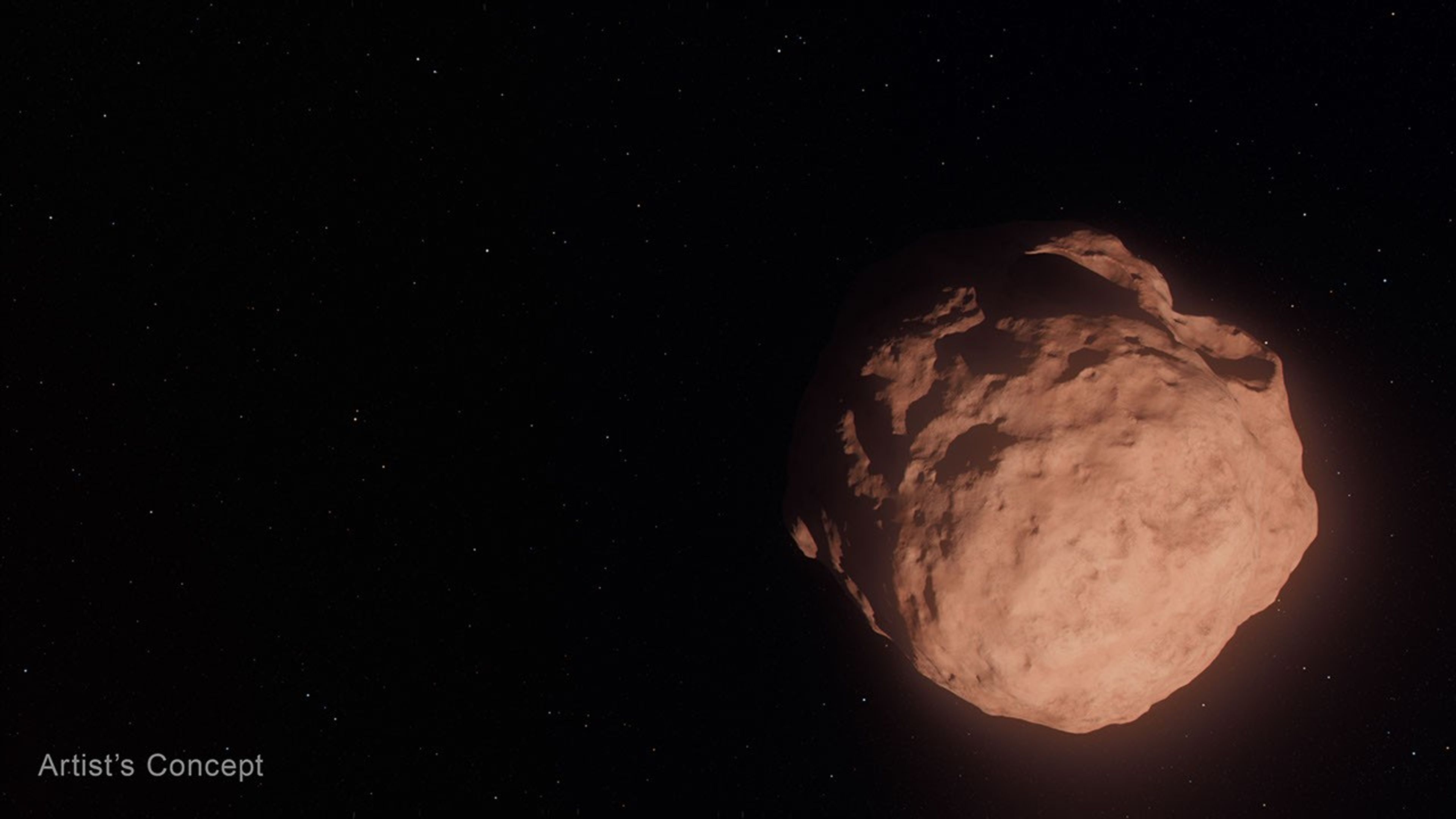
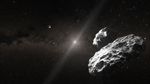
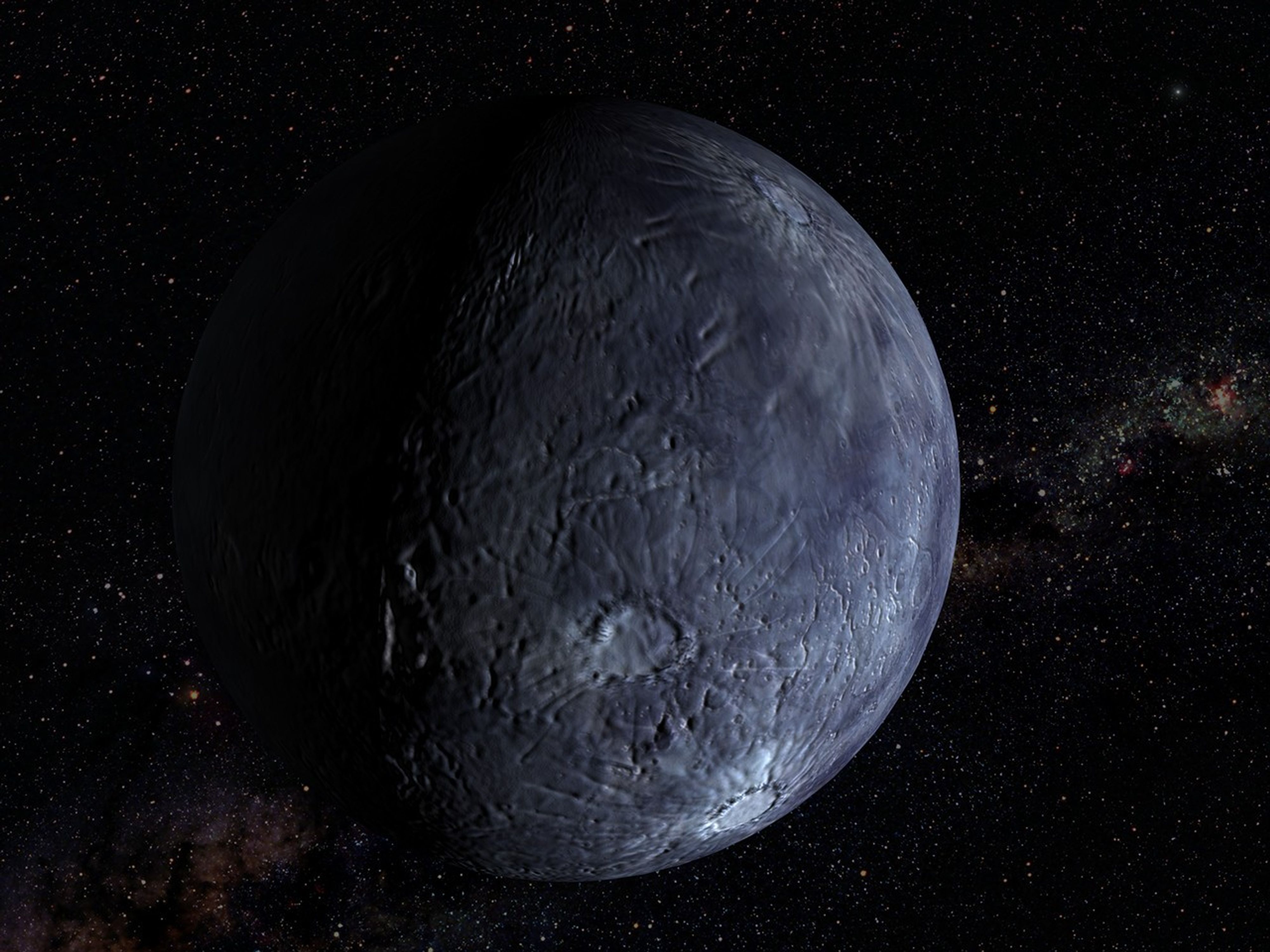
An illustration of a roughly spherical, rocky object against a black background speckled with distant, white stars. The object is the color of red clay and is pockmarked with craters and other geological scars. At the bottom left corner of the illustration in gray lettering is the label “Artist’s Concept.”
This artist’s concept depicts a Trans-Neptunian Object, a small, faint, icy body orbiting the Sun beyond the orbit of Neptune. These objects are so small that even with NASA’s Hubble and Webb space telescopes, they appear only as tiny points of light.
Artwork: NASA, ESA, Leah Hustak (STScI)

For the first time, scientists used the joint power of NASA’s Hubble and James Webb Space Telescopes to study some of the most far-flung bodies in our solar system, Trans-Neptunian Objects (TNOs). Some of these are the smallest and faintest ever directly seen. The researchers unexpectedly found fewer small TNOs than they expected, and that the colors of these bodies followed the same relationships as their larger family members.

These objects are typically small, faint, icy bodies orbiting the Sun beyond the orbit of Neptune. Most are more than 100 million times dimmer than objects visible to the unaided eye. In two complementary papers published Tuesday in The Astronomical Journal, teams analyzed the color, composition, and size distribution of 27 newly discovered tiny, dim TNOs. 

This class of small bodies offers the best view into an early stage of planet-building, when a disk of dust and pebbles in orbit around the Sun coalesced into city-sized “planetesimals” — the solid building blocks that clump together to form planets — but had not yet merged into full-sized worlds.  Beyond Neptune, this second stage never happened, leaving behind a frozen population of planetesimals.

In the deepest TNO survey to date, teams led by PhD candidates from the University of Victoria in Canada, under the guidance of the National Research Council of Canada, and Northern Arizona University in Flagstaff examined a patch of sky simultaneously with Hubble, observing the TNOs’ visible light, and Webb, observing their infrared light. The team of researchers measured the objects’ colors, which are like a fingerprint of the surface composition, as well as their sizes and determined their orbits. 

In the coordinated observations, the teams studied two different types of TNOs. The first, dynamically “cold” TNOs, are on their original, relatively circular orbits around the Sun in the plane of the solar system. The second type, dynamically “hot” TNOs, formed between the current locations of Uranus and Neptune but were pushed outward where they are today when the outer gas giants migrated early in the solar system’s history. Today they reside in highly elliptical orbits and move in and out of the plane of our solar system.

NASA’s Goddard Space Flight Center; Lead Producer: Paul Morris

Prior to these observations, astronomers thought that small TNOs from both hot and cold populations would have undergone many collisions, changing their surfaces compared to larger TNOs. But that’s not what the observations showed. Instead, the small bodies look like their larger counterparts. This implies that collisions are not changing the surfaces significantly—perhaps because there are fewer collisions than expected, or because the TNOs somehow retain their primordial, pre-collision compositions. The teams are still trying to unravel this mystery.

“You could imagine a scenario where getting knocked around and fragmented would change the surface composition, and then you would see a different surface color for tiny TNOs compared to their larger siblings. So it’s really fascinating to see that the smallest objects are somehow ‘remembering’ and preserving the history of how they were made,” said Northern Arizona University PhD candidate Anastasia Morgan, who led the study of color and composition

“These dynamically ‘hot’ TNOs retain a signature of where they were born, even though they’ve been orbitally scrambled since then,” said co-author David Trilling of Northern Arizona University.

Both the “hot” and “cold” populations seem to keep the same colors as when they were formed, with little change since the birth of the solar system. 

The Webb data also allowed researchers to measure the number of objects of each size. They found that the overall size distributions for both populations were surprisingly similar.

“It’s very interesting that the process of planetesimal formation ends up producing the same distribution of sizes for both cold and hot populations, despite forming in different regions of the early solar system. The process seems to be insensitive to disk conditions, producing similar planetesimal sizes whether the disk is hot or cold, and dense or fluffy,” said University of Victoria PhD candidate Marielle Eduardo, who led the study on size distribution

Researchers also found fewer of these very small bodies than they expected based on some planet formation models. Webb discovered 27 new, remarkably dim TNOs, one so faint it is equivalent to standing on Earth and seeing a small swarm of fireflies on the Moon. The smallest one they observed has a diameter of about 3 miles (5 kilometers), which is about five times smaller than what is possible to detect with the most sensitive ground-based telescopes.

This project would not have been possible without Hubble and Webb working together to detect and characterize these TNOs. With Hubble’s sensitivity in visible light and Webb’s in infrared, the space telescopes provide more insights than either can on its own.

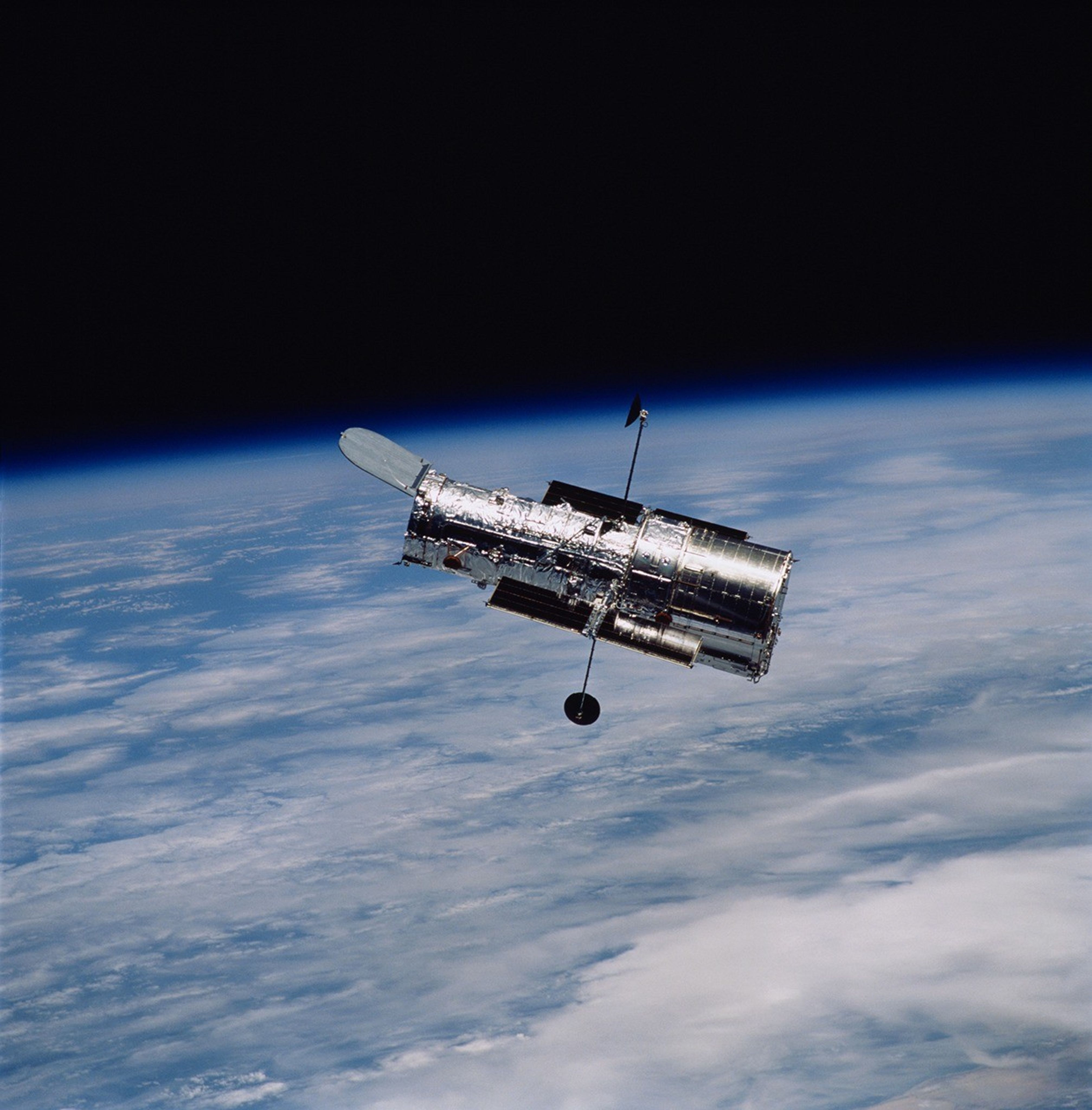
The Hubble Space Telescope has been operating for over three decades and continues to make ground-breaking discoveries that shape our fundamental understanding of the universe. Hubble is a project of international cooperation between NASA and ESA (European Space Agency). NASA’s Goddard Space Flight Center in Greenbelt, Maryland, manages the telescope and mission operations. Lockheed Martin Space, based in Denver, also supports mission operations at Goddard. The Space Telescope Science Institute in Baltimore, which is operated by the Association of Universities for Research in Astronomy, conducts Hubble science operations for NASA.

The James Webb Space Telescope is the world’s premier space science observatory. Webb is solving mysteries in our solar system, looking beyond to distant worlds around other stars, and probing the mysterious structures and origins of our universe and our place in it. Webb is an international program led by NASA with its partners, ESA (European Space Agency) and CSA (Canadian Space Agency).

To learn more about NASA’s space telescopes, visit:
https://science.nasa.gov/universe

Details

Last Updated

Sep 09, 2026

Editor
Andrea Gianopoulos
Contact

Media

Claire Andreoli
NASA’s Goddard Space Flight Center
Greenbelt, Maryland
[email protected]

Ann Jenkins, Christine Pulliam
Space Telescope Science Institute
Baltimore, Maryland

Source: science.nasa.gov

NASA, IBM Launch AI Foundation Model for Lunar Science

6 min read

NASA, IBM Launch AI Foundation Model for Lunar Science

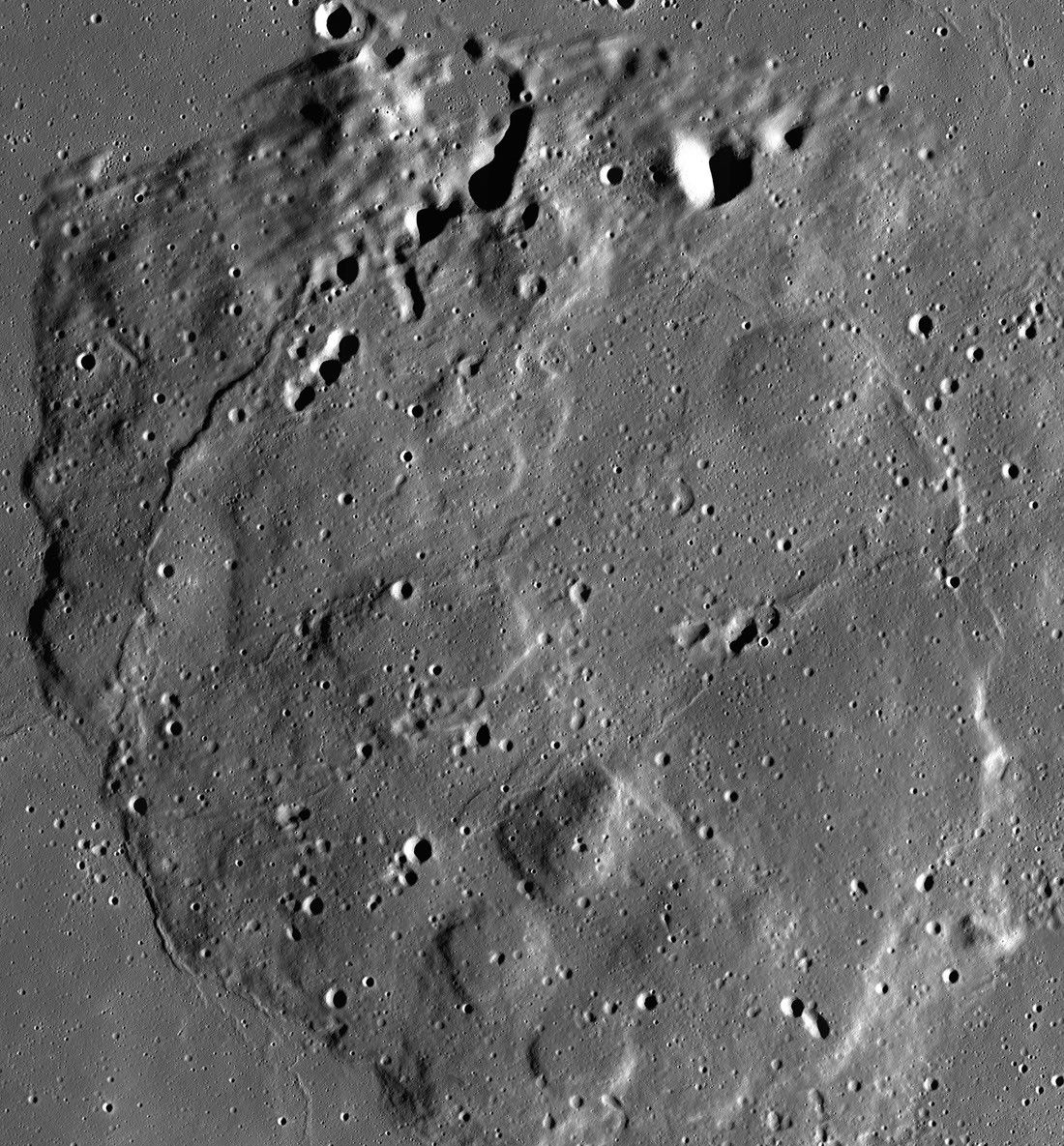
Overhead satellite mosaic showing Mons Rümker, a large, rounded volcanic mound on the Moon's surface surrounded by flat, dark lunar plains. The terrain is marked with impact craters of various sizes, with sharp sunlight casting deep, dark shadows along crater rims and the bumpy, elevated boundaries of the volcanic feature.
A 10-image mosaic captured by NASA’s Lunar Reconnaissance Orbiter’s Narrow Angle Camera between June 2012 and April 2016 showing the volcanic feature Mons Rümker and its surrounding mare plains.
NASA/GSFC/Arizona State University

NASA is bringing artificial intelligence to the study of the Moon, helping researchers transform how they analyze the Moon’s surface. In an ongoing collaboration with IBM Research and several academic institutions, NASA has launched the NASA-IBM Lunar Foundation Model, among the first open-source AI models built specifically for lunar science. The model, trained primarily on data from NASA’s Lunar Reconnaissance Orbiter (LRO), is hosted publicly on Hugging Face for anyone to use, with the complete codebase available on GitHub for testing and experimentation.

The NASA-IBM Lunar Foundation Model supports the next generation of lunar science by helping researchers quickly analyze vast quantities of data to better understand the Moon’s surface. Using the model as a mapping tool, researchers can rapidly develop actionable strategies for evaluating the Moon’s rugged surface, understanding its geological past, and planning future lunar research.

“NASA has spent decades building an extraordinary scientific record of the Moon, but collecting data is only part of the job,” said Kevin Murphy, chief science data officer and acting chief data and AI officer at NASA Headquarters in Washington. “We also have to make data easier for scientists to explore and use. The NASA-IBM Lunar Foundation Model shows what’s possible when we bring AI to NASA’s petabytes of scientific data. That’s a real opportunity we see with AI: turning large-scale data into new discoveries.”

Unlike traditional models that require building and training specialized algorithms from scratch for specific tasks, foundation models are pre-trained on vast, unlabeled datasets. The broad knowledge they acquire through pre-training allows them to generalize across multiple scientific domains through quick fine-tuning, making foundation models both versatile and efficient in accelerating scientific research.

The NASA-IBM Lunar Foundation Model shows what’s possible when we bring AI to NASA’s petabytes of scientific data.

Kevin Murphy

NASA Chief Science Data Officer and Acting Chief Data Officer/Chief AI Officer

Data collected by NASA’s LRO over the past 17 years was well-suited for training this foundation model because it covers most of the lunar surface in detail. The data produced from the LRO mission is larger than all other NASA planetary missions combined, capturing an almost seamless, high-resolution mosaic of the entire Moon. The NASA-IBM model was trained on roughly 2 million image tiles from this dataset, comprising more than 1 million high-resolution camera images at 1-meter resolution and nearly 964,000 multispectral images at 100-meter resolution. The model also was trained on high-resolution Moon imagery and terrain data from multiple other missions such as NASA’s GRAIL (Gravity Recovery and Interior Laboratory), NASA’s Lunar Prospector, and JAXA’s (Japan Aerospace Exploration Agency) Selenological and Engineering Explorer.

Because the foundation model is already pre-trained on this dataset, planetary scientists can adapt the model to many different lunar research tasks such as mapping craters, spotting young volcanic features, and estimating where ice may exist near the lunar poles by using only small amounts of labeled data. For researchers who study the Moon’s polar ice, the NASA-IBM model can help them estimate where ice patches are likely to be stable, on and below the surface. Dark areas like the Moon’s permanently shadowed regions remain cold enough to trap and preserve ice for up to billions of years. Studying these areas offers insight into the Moon’s history and presents an opportunity to map potentially usable resources for future space exploration.

The NASA-IBM model reproduces patterns of lunar ice prospectivity (scaled from blue to yellow), shown at four locations (left) near the Moon’s pole. Top row: reference ice prospectivity map of Mons Mouton near the lunar south pole; bottom row: predictions from the NASA-IBM model. The NASA-IBM model preserves many fine-scale prospectivity patterns in the reference data.
The NASA-IBM model reproduces patterns of lunar ice prospectivity (scaled from blue to yellow), shown at four locations (left) near the Moon’s pole. Top row: reference ice prospectivity map of Mons Mouton near the lunar south pole; middle row: predictions from the ConvNeXt model; bottom row: predictions from the NASA-IBM model. The NASA-IBM model preserves many fine-scale prospectivity patterns in the reference data.
NASA/IBM Research

While the Moon is thought to no longer be volcanically active, it once experienced dynamic geological processes. For researchers studying lunar volcanism, the NASA-IBM model accelerates the identification of unusual looking volcanic features known as irregular mare patches. Because these structures appear relatively young, they challenge established timelines for lunar cooling, and mapping them could help scientists piece together a more accurate understanding of the Moon’s thermal evolution.

The model also can map surface features, such as craters, more efficiently than manual methods. Every crater is formed by an impact, making crater counts and measurements essential for dating the lunar surface and reconstructing solar system history. The foundation model helps speed up the process of identifying and measuring craters, allowing scientists to focus on interpreting findings and determining their implications for exploration.

Side-by-side lunar surface images showing automated crater detection before and after a rocket impact. Numerous craters across the gray, terrain are enclosed in light blue bounding boxes. In the right image, a newly formed dark crater surrounded by bright ejecta is highlighted with a prominent red square bounding box.
These Lunar Reconnaissance Orbiter images show the Moon’s surface near Einstein crater before (left) and after (right) a SpaceX rocket body impact. The NASA-IBM Lunar Foundation Model detected existing craters (blue outlines) and highlighted the newly formed impact crater (red box). Because the post-impact image was excluded from pre-training, this test demonstrates how the model can be fine-tuned to recognize novel surface changes between observations. This approach can help scientists automatically detect natural impacts and surface changes across vast lunar datasets, though varying lighting conditions between orbits may influence smaller crater visibility.
NASA/IBM Research

Overall, the model matched or exceeded the performance of several other strong baseline models across all evaluated tasks, achieving comparable results on crater mapping and segmentation of irregular mare patches, while demonstrating a clear advantage on estimating polar ice stability.

The NASA-IBM Lunar Foundation Model is part of the agency’s Office of the Chief Science Data Officer’s strategy for AI for science — a larger, ongoing collaboration between NASA and IBM aimed at using advanced AI to explore our planet and solar system. It joins a growing collection of AI models developed through this partnership, including:

  • The Prithvi Models: a family of models pre-trained on Earth observation data and designed to support applications such as disaster monitoring, flood mapping, crop yield prediction, and hurricane prediction.
  • The Surya Model: a heliophysics model trained on high-resolution solar observation data to predict space weather phenomena such as solar flares which can disrupt power grids and satellite operations.

Within NASA, the Impact AI team at the agency’s Marshall Space Flight Center in Huntsville, Alabama, collaborated with scientists in the agency’s Science Mission Directorate Planetary Science Division, NASA’s Goddard Space Flight Center in Greenbelt, Maryland, and NASA’s Ames Research Center in California’s Silicon Valley, to build the NASA-IBM model. The model is an example of open science in action, uniting experts from NASA, industry, and academia to turn raw data into a resource for lunar discovery. To support the global research community, the team released comprehensive machine learning-ready pre-training datasets and benchmark collections alongside the model, which is integrated into the open-source TerraTorch toolkit. Supported by a companion paper available on Hugging Face, this open release ensures reproducible research and equips scientists worldwide to build, compare, and refine AI models for the future of lunar exploration.

The science team, assembled by NASA Headquarters, included experts from the Universities Space Research Association in Huntsville, Alabama; the SETI Institute in Silicon Valley, California; the University of Maryland, Baltimore County in Catonsville, Maryland; Howard University in Washington, D.C.; NASA’s Science Mission Directorate Planetary Science Division; NASA Ames; and NASA Goddard.

For more information about NASA’s strategy of developing foundation models for science, visit:

https://science.nasa.gov/artificial-intelligence-science

Source: science.nasa.gov

APOD: 2026 September 13 – Comet NEOWISE Rising over the Adriatic Sea

APOD

Astronomy Picture of the Day

Discover the cosmos! Each day a different image or photograph of our fascinating universe is featured, along with a brief explanation written by a professional astronomer.

Comet NEOWISE Rising Over the Adriatic Sea

Explanation: This sight was worth getting out of bed early. Just over four years ago, Comet C/2020 F3 (NEOWISE) rose before dawn to the delight of northern sky enthusiasts awake that early. Up before sunrise on July 8th, the featured photographer was able to capture in dramatic fashion one of the few comets visible to the unaided eye this century, an inner-Solar System intruder that has become known as the Great Comet of 2020. The resulting video detailed Comet NEOWISE from Italy rising over the Adriatic Sea. The featured time-lapse video combines over 240 images taken over 30 minutes. The comet was seen rising through a foreground of bright and undulating noctilucent clouds, and before a background of distant stars. Comet NEOWISE remained unexpectedly bright for over a month, with its ion and dust tails found to emanate from a nucleus spanning about five kilometers across.

APOD’s main NASA site is moving: From apod.nasa.gov to science.nasa.gov/apod
Tomorrow’s picture: open space

Date September 13, 2026
Credit & Copyright Paolo Girotti
Authors & editors: Robert Nemiroff, Jerry Bonnell, Cecilia Chirenti, Keighley Rockcliffe
A service of: ASD at NASA / GSFC,
NASA Science Activation & Michigan Tech. U.

Source: science.nasa.gov