CHAPEA Mission 2 Crew Reflects After 378 Days on Simulated Mars 

6 Min Read

CHAPEA Mission 2 Crew Reflects After 378 Days on Simulated Mars 
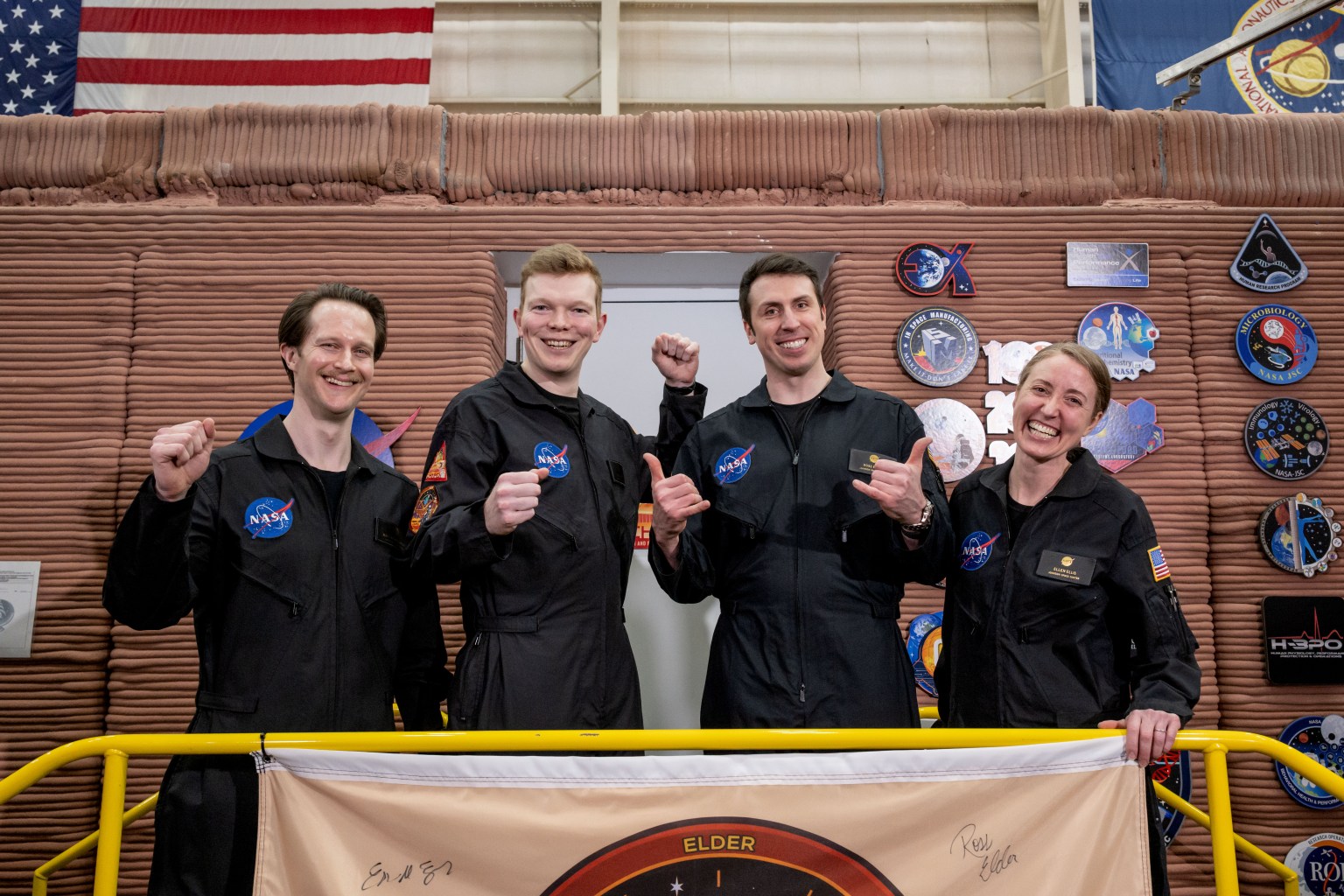
Four people stand in front of a brown building wearing black flight suits.

The CHAPEA (Crew Health and Performance Exploration Analog) Mission 2 crew egress from their simulated Mars habitat, completing their mission on Oct. 31, 2026, at NASA’s Johnson Space Center in Houston.

Credits:
NASA/James Blair

After 378 days without windows, the sounds of the outside world, or real-time calls with family and friends, four research volunteers stepped out of NASA’s Mars Dune Alpha habitat on Oct. 31, completing the agency’s second yearlong Mars surface simulation. 

Ross Elder, Ellen Ellis, James Spicer, and Matthew Montgomery entered the roughly 1,700-square-foot, 3D-printed habitat at NASA’s Johnson Space Center in Houston on Oct. 19, 2025, for CHAPEA (Crew Health and Performance Exploration Analog) Mission 2. 

The crew participated in simulated Marswalks, robotic operations, habitat maintenance, exercise, and crop cultivation. 

“Their work means more than completing a mission,” said Johnson Director Vanessa Wyche. “It is about preparing for the challenges of human exploration beyond Earth, gathering the knowledge we need to protect crew health and performance, and paving the way for future missions to the Moon and, one day, Mars.” 
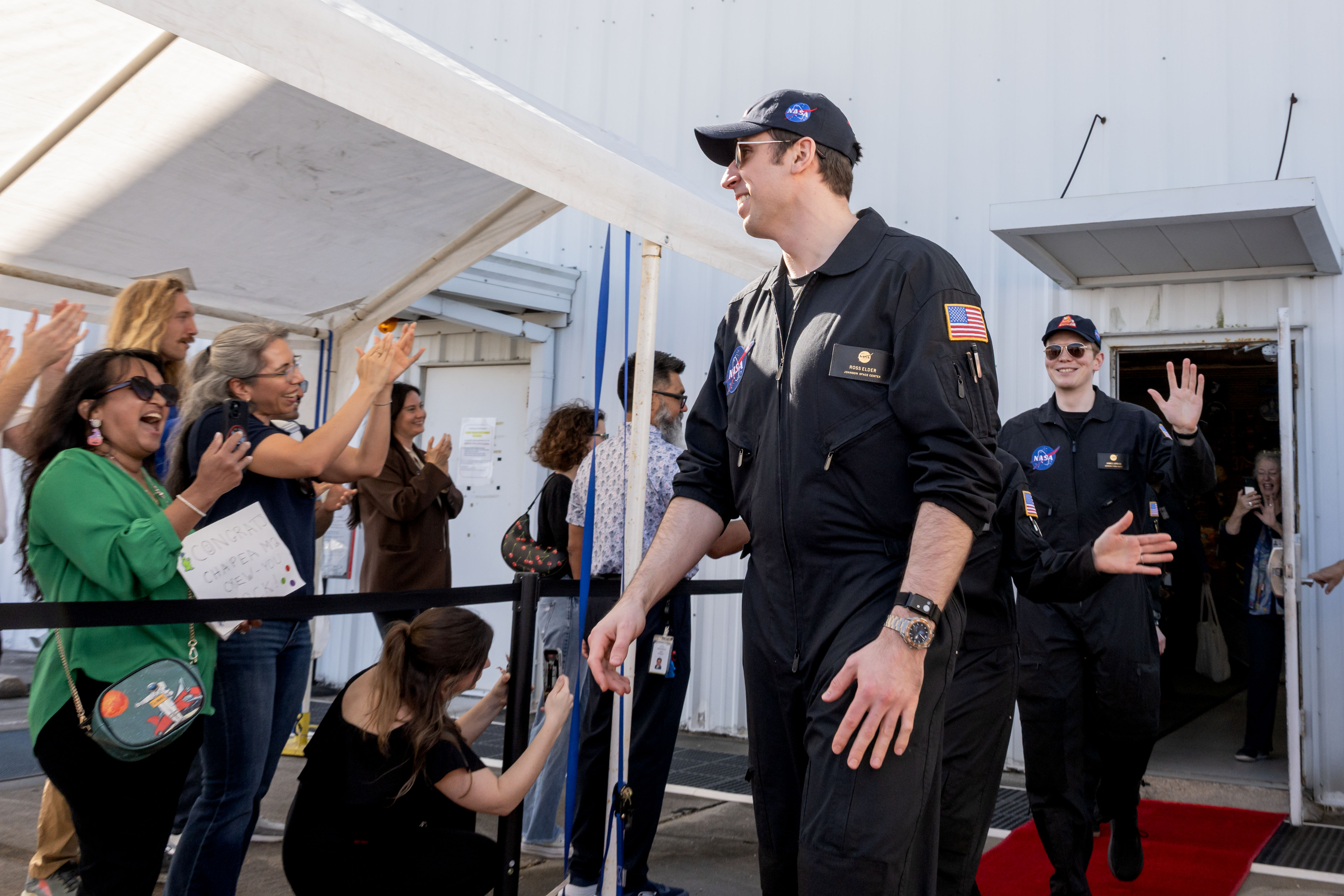
Family, friends, and colleagues welcome the CHAPEA Mission 2 crew as they exit the building housing the Mars Dune Alpha habitat on Oct. 31, 2026.
NASA/James Blair

NASA astronaut Jack Hathaway put the crew’s time in isolation into perspective: While they were inside the habitat, he completed a 237-day mission aboard the space station and returned to Earth.  

During that same period, the Artemis II astronauts traveled around the Moon and set the record for the farthest humans have traveled from Earth. NASA also celebrated 25 years of continuous human presence aboard the International Space Station on Nov. 2, 2025. 

“The reality of what you guys did here required immense physiological and psychological strength, teamwork, and human grit,” Hathaway said. 

Supported by researchers and ground teams across the agency, the CHAPEA crew collected health and performance data while navigating limited resources and communication delays of up to 22 minutes each way.  

Ross Elder: Commander and Test Pilot 
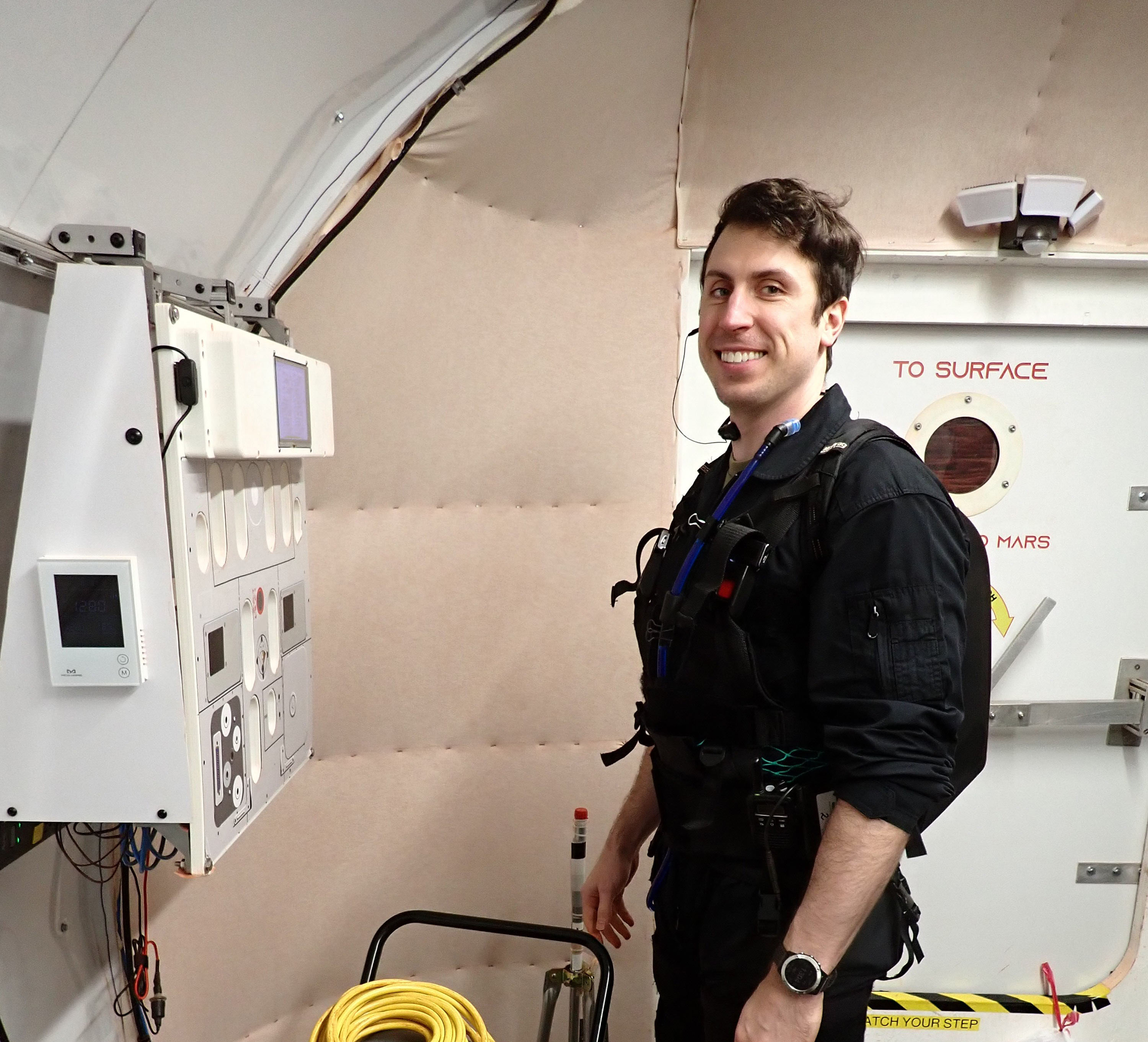
A man wearing a black training suit equipped with sensors and a communications headset stands inside a spacecraft habitat simulator.
Ross Elder, CHAPEA Mission 2 commander, prepares for a simulated Marswalk in the habitat’s airlock.

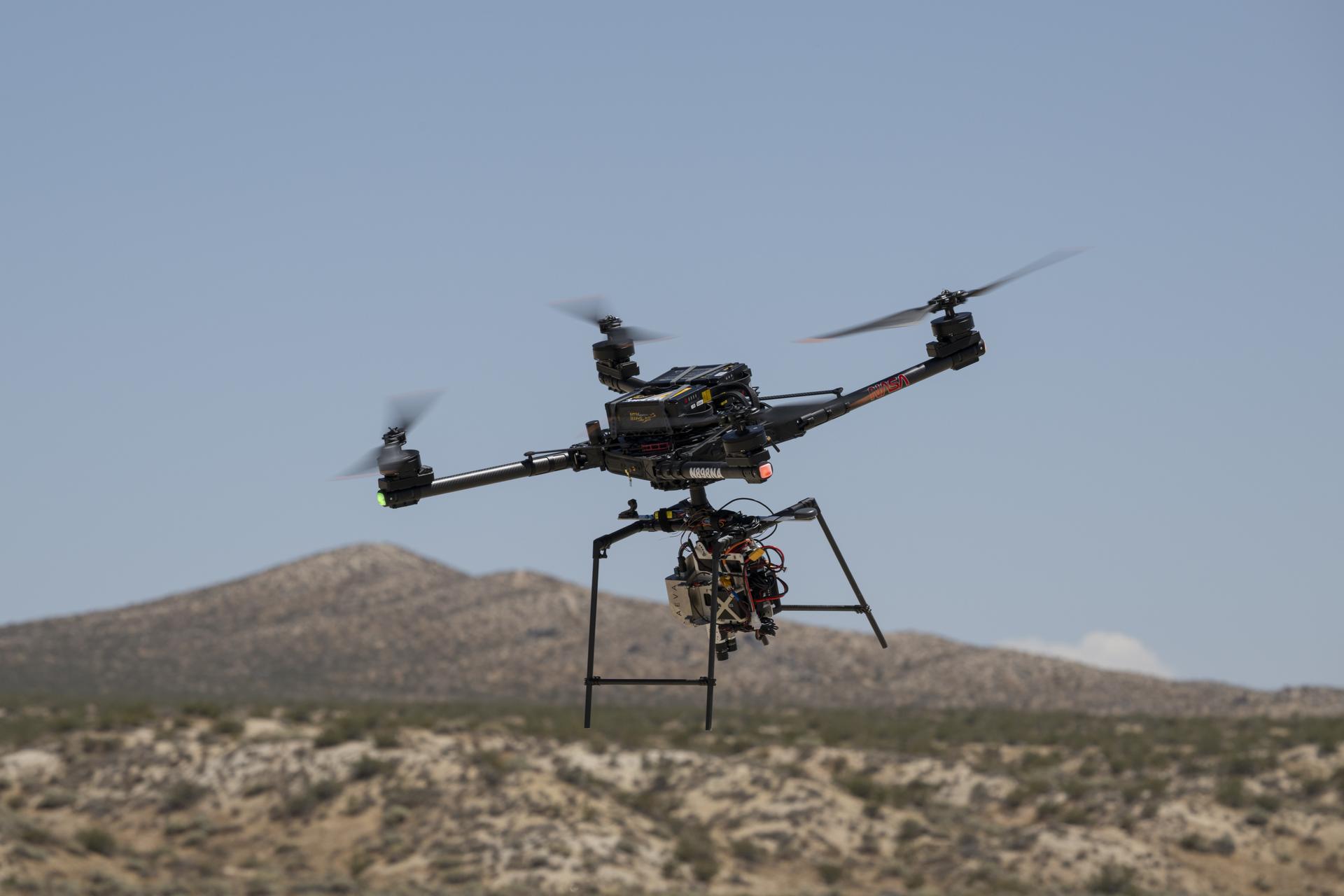
Elder brought a U.S. Air Force experimental test pilot’s approach to leading the crew. He found simulated Marswalks and robotic exploration “uncannily similar” to operating as part of a flight. From inside the habitat, crew members remotely operated a drone and a rover to survey terrain and identify or collect rock samples.  

The demanding Marswalk schedule also sharpened his understanding of the physical preparation future explorers will need. Preparing suits, completing airlock procedures, and making long traverses took time and stamina. He emphasized nutrition, exercise, and rest as essential to sustaining that pace. 

His steadfast leadership and mission focus drew praise at egress for keeping the team motivated and improving. For Elder, seeing his crewmates combine their strengths was a highlight of the mission. 

“The real magic has been the privilege and pleasure of seeing everyone come together, with the makings of one of the finest teams I’ve ever been a part of,” Elder said.  

Ellen Ellis: Medical Officer and Tactical Thinker 
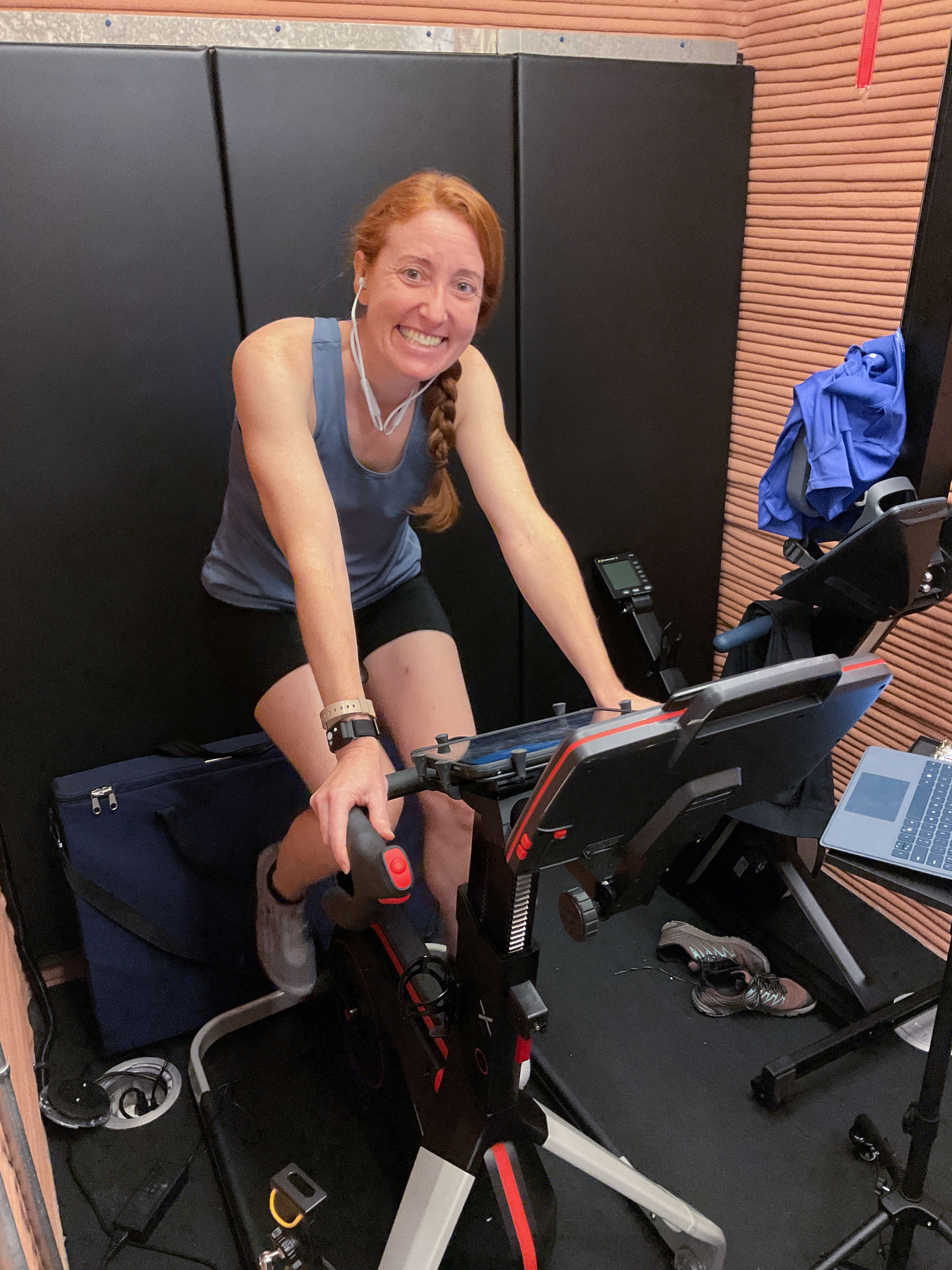
Ellen Ellis, CHAPEA Mission 2 medical officer, exercises on a stationary bike inside the habitat.

Ellis, a U.S. Space Force officer with experience at the National Reconnaissance Office, brought a background in military operations and systems engineering. As medical officer, she helped organize biological sample collections and prepare supplies for the crew’s health research.  

As procedures became familiar, she emphasized the discipline needed to follow every step carefully. She also enjoyed solving problems with the tools available. “There is a kind of tactical creativity that I find energizing,” she said. 

Contributing to human spaceflight research helped sustain her motivation. So did the relationships with her crewmates. “It would be difficult to convince someone who has never lived in isolation that most days, I don’t feel isolated. I have three teammates that I rely on every day to get through the mission.” 

She also credited exercise, behavioral health, nutrition, and medical specialists for their coordinated support throughout the mission. 

“When I look back on the mission, the most salient point I’ve learned is that a future Mars crew requires a highly integrated ground team,” Ellis said. 

James Spicer: Flight Engineer and Systems Specialist 
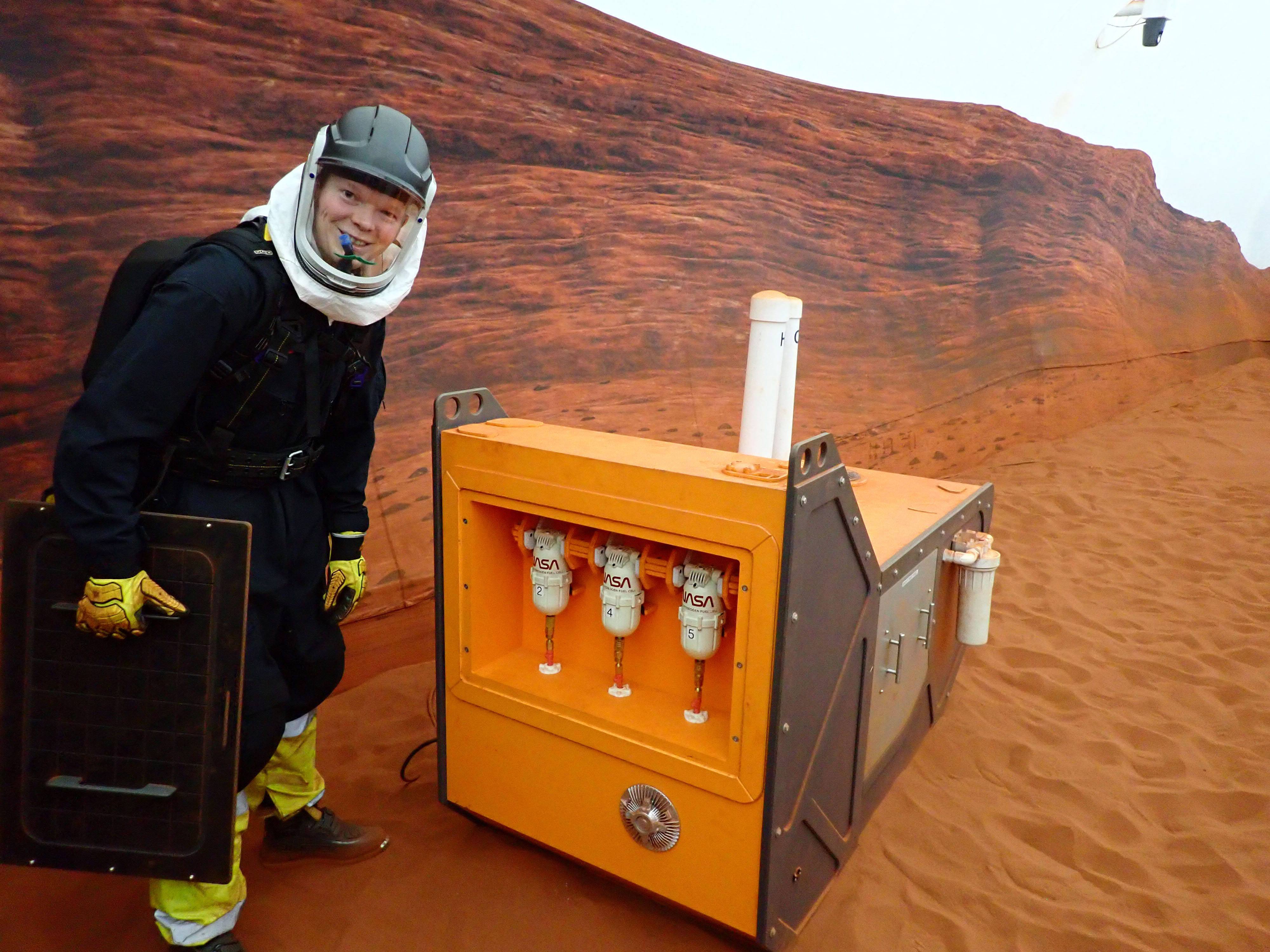
A participant wearing a helmeted training suit stands beside an orange scientific instrument in a Mars habitat simulator.
James Spicer, CHAPEA Mission 2 flight engineer, conducts a maintenance activity outside the habitat during a simulated Marswalk.

Spicer brought experience in satellite communications and spacecraft development to the habitat’s maintenance work. At egress, he was thanked for keeping its systems running smoothly and described as the “flight engineer extraordinaire and resident data scientist.” 

He compared the year to living aboard a submarine or boat, where limited supplies and space shaped daily decisions. The crew tracked consumables from dish soap to respirator filters and carefully managed food and water. 

The crew had access to resources that provided news, and Spicer was surprised by how little he missed constant news and social media updates. The break from distractions helped him focus on the mission. 

Inside the habitat, stories and jokes around the kitchen table brought laughter to demanding days. He told his crewmates they had made the year “not a chore, but a joy.” 

“We’re inspired every day knowing that the data we’re generating is informing Martian mission planning and increasing the safety, health, performance, and comfort of future Martian crews,” he said. 

Matthew Montgomery: Science Officer and Versatile Engineer 

Matthew Montgomery, CHAPEA Mission 2 science officer, displays vegetables harvested from the habitat’s hydroponic crop system.

Montgomery brought experience in hardware engineering, robotics, technology startups, and independent films. At egress, he was described as the “Swiss Army knife of crewmates” for his technical knowledge and problem-solving skills. 

He helped crewmates identify rock samples collected during simulated Marswalks and set up the habitat’s 3D printing capabilities. His background in indoor agriculture also carried into a seed-germination experiment that used a control and simulated Martian soil.  

Maintaining a consistent data set remained a priority. Montgomery learned to investigate anything that gave him pause, describing instances when speaking up helped identify concerns with equipment, safety, and data quality. 

He also learned to give himself more grace when an outcome fell short.  

At egress, he credited the crew’s different perspectives with producing solutions stronger than any member could have developed alone. 

“It’s really the people that make exploration possible,” he said. 

Looking Toward Mars 
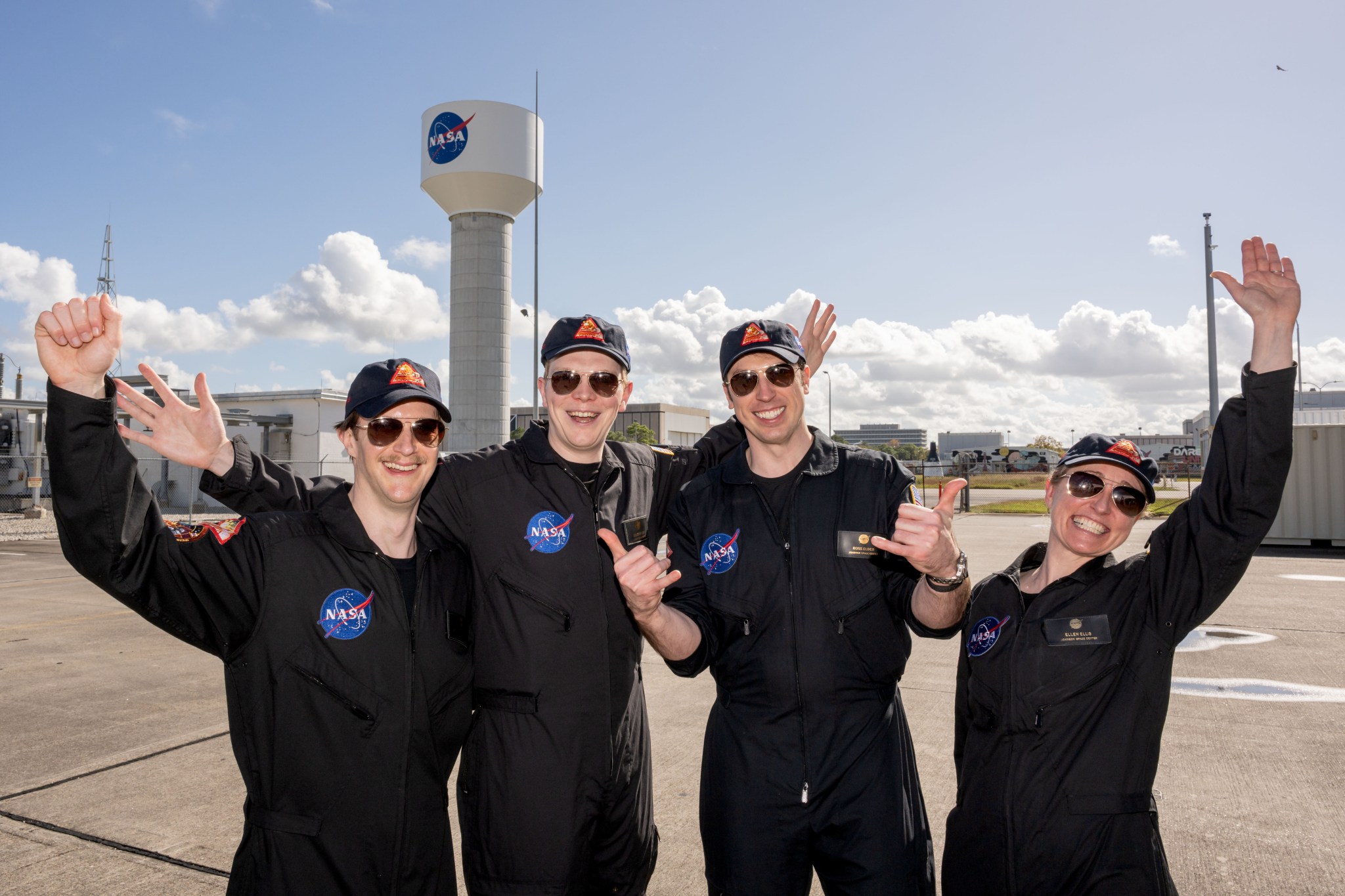
Four people wearing black hats, sunglasses, and jumpsuits stand outside. They have their arms raised in jubilant poses. They are all smiling.
The CHAPEA Mission 2 crew celebrates after stepping outdoors for the first time in 378 days on Oct. 31, 2026, at NASA’s Johnson Space Center.
NASA/James Blair

Two weeks of post-mission evaluations and debriefs will help researchers interpret the crew’s data alongside their experiences. The study builds on the first CHAPEA mission, which concluded July 6, 2024.  

Grace Douglas, CHAPEA’s principal investigator, said the research will help NASA weigh human health and performance risks against resources, including crew time, communication capacity, and food and water system designs. She also noted that many resource challenges facing space explorers mirror problems on Earth. 

Sara Whiting, CHAPEA project scientist, said the data comes as NASA plans how astronauts will live and work at the Moon Base, humanity’s first lunar outpost near the Moon’s South Pole. 

“This is really the now moment for this kind of data,” she said. 

About the Author

Sumer Loggins

Sumer Loggins

Source: www.nasa.gov

NASA’s ESCAPADE Completes Powered Earth Flybys, Now En Route to Mars

NASA’s two ESCAPADE (Escape and Plasma Acceleration and Dynamics Explorers) spacecraft have each successfully completed a powered Earth flyby, using Earth’s gravity in combination with a sustained engine burn to slingshot themselves toward Mars. With these successful maneuvers complete, the twin spacecraft are on target to reach the Red Planet in September 2027.

“This is the first time NASA has used a powered Earth flyby to propel a spacecraft toward Mars, and we’ve now executed this maneuver twice, flawlessly, in just two days,” said Asal Naseri, acting associate flight director for the Heliophysics Division at NASA Headquarters in Washington.

In November 2026, each of NASA’s two ESCAPADE (Escape and Plasma Acceleration and Dynamics Explorers) spacecraft executed a powered flyby of Earth, combining Earth’s gravity with an engine burn, to slingshot itself toward Mars. The first spacecraft made its closest approach around 5 a.m. EST on Saturday, Nov. 7, and the second did so two days later, around 6 a.m. EST on Monday, Nov. 9. In this animation, each spacecraft’s approximately 9-minute trans-Mars injection burn appears as an orange arc along the spacecraft’s trajectory.
Advanced Space/Matt Bolliger

The two ESCAPADE spacecraft launched from Cape Canaveral Space Force Station in Florida on Nov. 13, 2025, when Earth and Mars were on opposite sides of the Sun. So instead of heading straight for the Red Planet, as most other Mars missions have done, both spacecraft entered a “loiter” or “Earth-proximity” orbit. They charted a first-of-its-kind, kidney-bean-shaped course around a place in space about a million miles from Earth called Lagrange point 2, which is a gravitational balancing point on the opposite side of Earth from the Sun. Then they headed back toward Earth to perform this gravitational slingshot maneuver around our planet once Earth and Mars were favorably aligned.

The ESCAPADE mission is pioneering a unique path to get to Mars. After launch in November 2025, the two ESCAPADE spacecraft looped around the Earth-Sun Lagrange point 2 (L2), in an “Earth-proximity” or “loiter” orbit that allowed the spacecraft to return to Earth in November 2026 and use our planet’s gravity to slingshot themselves to Mars.
Advanced Space/Matt Bolliger

“With this loiter orbit and Earth flyby, ESCAPADE is pioneering a new strategy for getting to Mars,” said Jeff Parker of Advanced Space, lead mission designer. “This method provides the flexibility to launch almost anytime and then use Earth’s gravity to get a boost to Mars, rather than waiting every two years to launch there directly when the planets are aligned.”

The first ESCAPADE spacecraft completed its close approach to Earth and its approximately 9-minute trans-Mars injection burn — the engine firing that commits the spacecraft to its path to Mars — at 5 a.m. EST on Nov. 7, when it was about 1,000 miles above the planet’s surface. The second spacecraft followed suit two days later, completing its close approach and engine burn at 6 a.m. EST on Nov. 9, when it was about 650 miles above the planet’s surface.

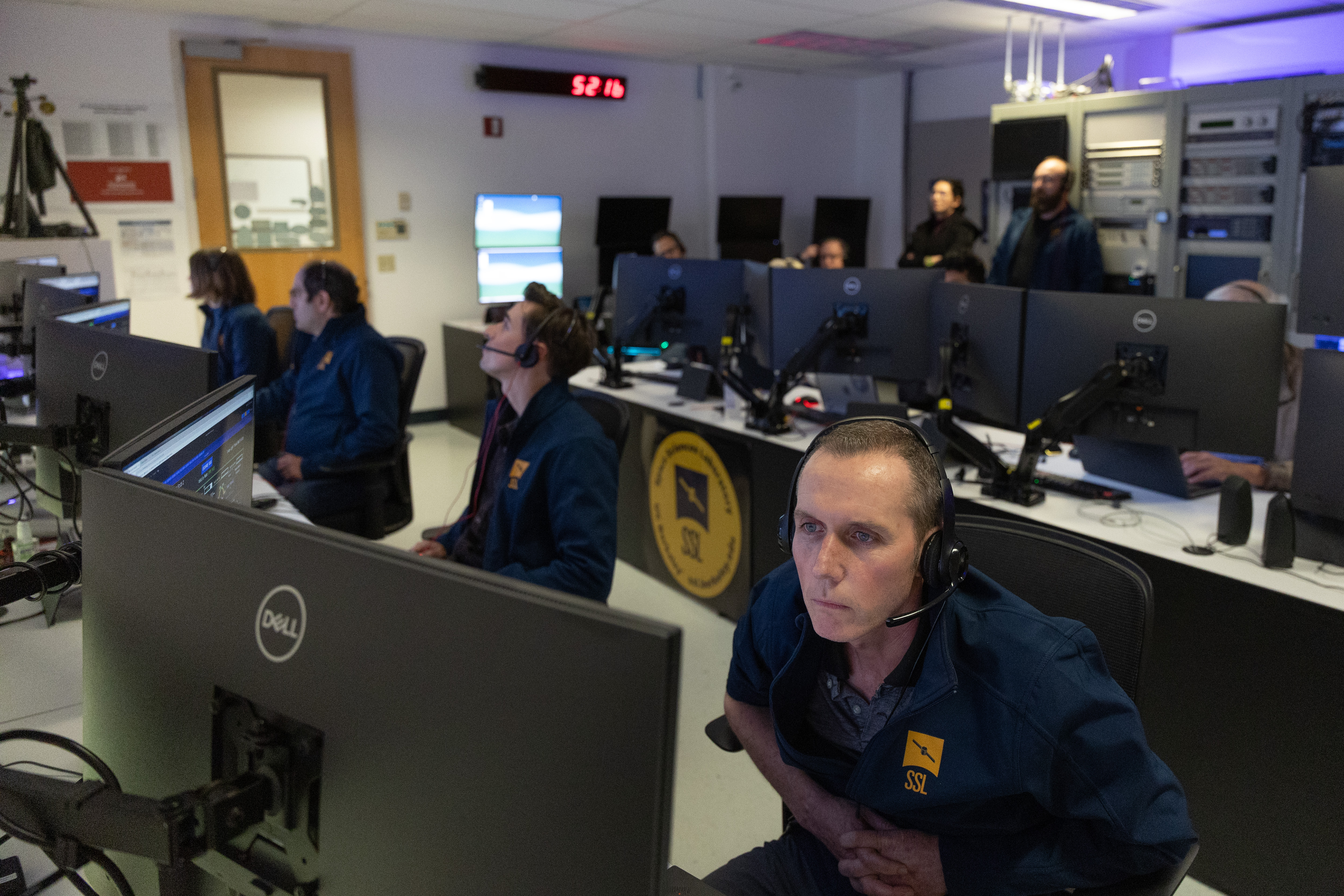
Several people, most wearing blue jackets with an SSL logo on them, sit or stand behind two rows of computer monitors, some of them looking at the monitors with a sense of anticipation.
In the mission operations center at the University of California, Berkeley’s Space Sciences Laboratory (SSL), Robert Lillis, ESCAPADE’s principal investigator (bottom right), awaits a signal after the first spacecraft performed an engine burn that initiated a powered Earth gravity assist on Nov. 7, 2026. Also pictured in the foreground (from left to right) are SSL aerospace engineer Sasha Courtade, SSL mission operations manager Mark Lewis, and SSL mission operations engineer Brett Bonelli.
Alan Toth/UC Berkeley Space Sciences Laboratory

These powered flybys of Earth set both spacecraft on course for their 10-month cruise to Mars, culminating with their Mars orbit insertion burns planned for Sept. 7 and Sept. 9, 2027. Once in orbit around Mars, the two spacecraft will fly in formation to study how a million-mile-per-hour stream of material flowing from the Sun, known as the solar wind, interacts with the Martian environment and how that drives atmospheric loss at Mars.

“By better understanding how the solar wind affects the Martian environment, ESCAPADE’s findings could help us plan and prepare for future human exploration of the Red Planet,” said Michele Cash, ESCAPADE program scientist at NASA Headquarters.

The twin ESCAPADE spacecraft have already taken some science observations during their loiter orbit as they flew multiple times through Earth’s magnetotail, a part of our planet’s magnetic environment that gets stretched away from Earth, opposite the Sun, by the solar wind. During the 10-month trip to Mars, the spacecraft also will be able to study the dynamics of the solar wind between Earth and Mars.

Along the way, the spacecraft will perform a series of trajectory correction maneuvers to adjust their path and ensure they are on a precise course to rendezvous with Mars in September 2027.

With ESCAPADE’s trans-Mars injection burns complete, the two spacecraft (represented by the central, teal arc) are traveling away from Earth (represented by the inner, blue orbit) and headed toward Mars (represented by the outer, red orbit).
Advanced Space/Matt Bolliger

When they reach Mars, two days apart, each spacecraft will fire its engine for about 11 minutes to slow down and enter orbit around the planet. The spacecraft then will take several months to maneuver into their first science formation, where they will follow one another in the same orbit to study how the planet’s environment changes with time and location. Science operations are expected to begin in June 2028.

Six months later, the two spacecraft will shift into different orbits, with one traveling farther from Mars to observe the incoming solar wind and the other staying closer to the planet to study how Mars responds to the solar wind in real time. That science campaign is scheduled to last five months.

“This will be the first science mission to choreograph two orbiters around Mars, and the first time we will be able to make coordinated observations of the Martian environment from two different locations simultaneously,” said ESCAPADE’s principal investigator, Rob Lillis of the University of California, Berkeley.

Funded by NASA’s Heliophysics Division, ESCAPADE is part of the agency’s SIMPLEx (Small Innovative Missions for Planetary Exploration) program, which supports missions that explore the solar system in innovative ways with smaller budgets.

The University of California, Berkeley’s Space Sciences Laboratory leads the mission with key partners Rocket Lab; NASA’s Goddard Space Flight Center in Greenbelt, Maryland; Embry-Riddle Aeronautical University; Advanced Space; and Blue Origin.

“The ESCAPADE mission continues the scientific legacy of historical Mars missions with a dedicated team driving new innovations for its journey to and at the Red Planet,” said Skyler Kleinschmidt, ESCAPADE program executive at NASA Headquarters.

Keep Exploring

Discover More Topics From NASA

Source: science.nasa.gov

MAX POWER: NASA’s Inaugural Aerospace Expo Ignites America’s Future

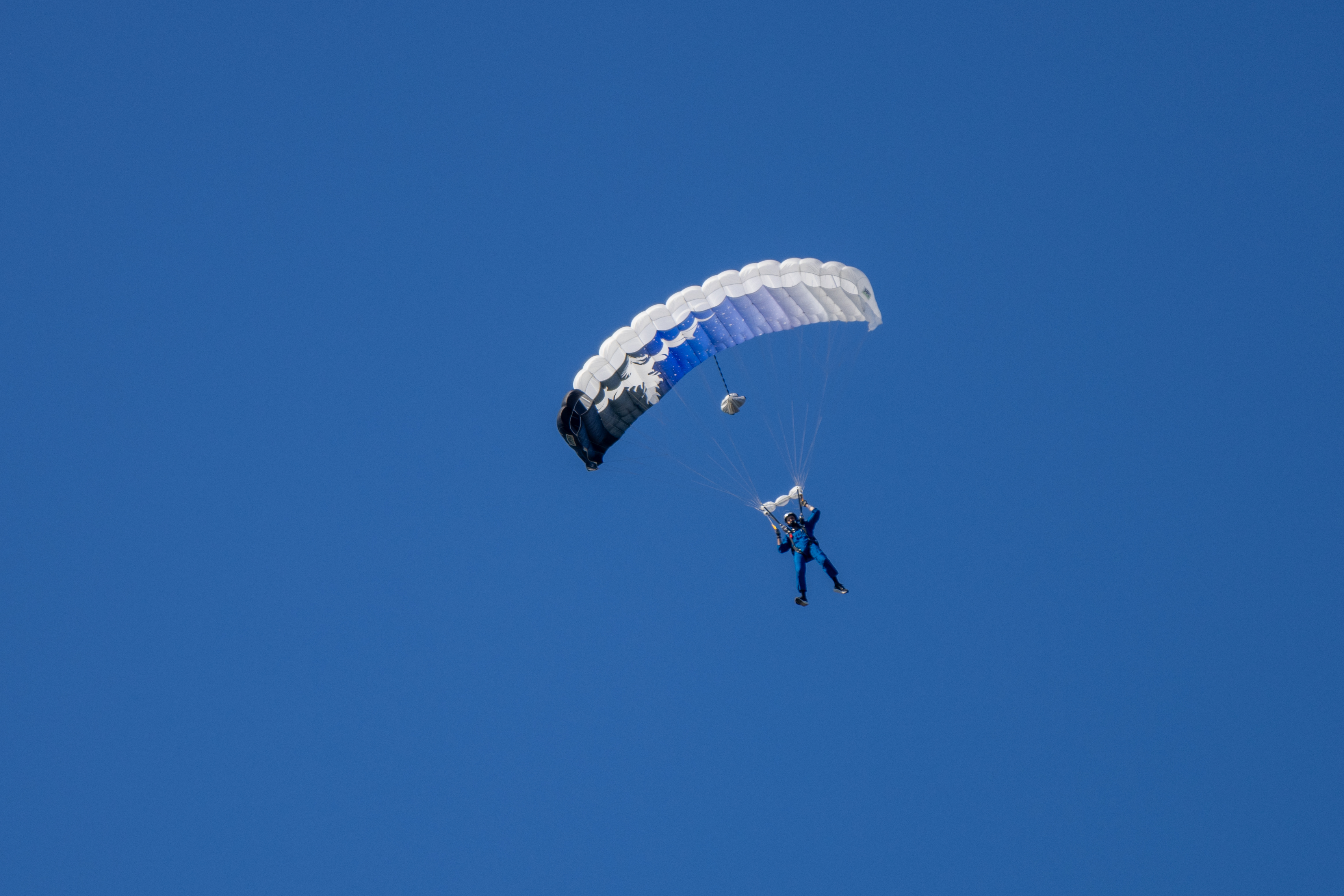
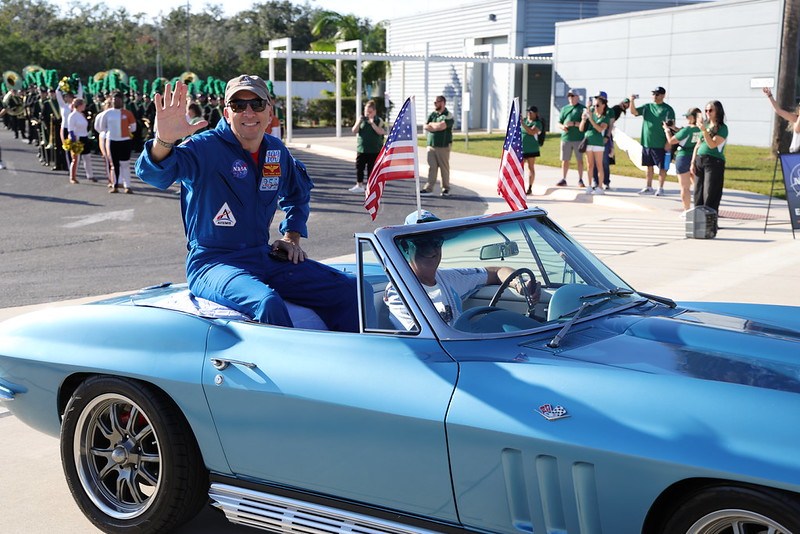
NASA Administrator Jared Isaacman skydives into the agency’s MAX POWER expo and air show on Saturday, Nov. 7, 2026, at NASA’s Kennedy Space Center in Florida. The agency’s inaugural MAX POWER is an aerospace festival celebrating the past, present, and future of flight and space exploration in honor of America’s 250th anniversary.
Credit: NASA/Jonathan Shaban

Thousands gathered over several days in early November to experience MAX POWER – NASA’s first exhibition of America’s superiority in space, aeronautics, and technology on and around the agency’s Kennedy Space Center in Florida. The multi-day, family-friendly event honored the nation’s 250th anniversary and served as a culmination of the agency’s Inspiration Tour.

Among the many highlights, NASA welcomed President Donald J. Trump to MAX POWER, which featured flyovers and a skydive from NASA Administrator Jared Isaacman, and announced a new X-plane, astronaut candidate recruitment, a student Moon Base challenge, and discussed the agency’s latest lunar exploration plans.

“It was a great week at NASA Kennedy, where we were joined by the President and federal, state, international, and industry leaders,” said Isaacman. “During our nation’s 250th birthday, the year of Artemis II’s voyage around the Moon, we were thrilled to invite the public out to see the rockets, the landers, the rovers, and the technology that will return astronauts to the lunar surface and build the base, not to mention witness a wonderful airshow that included NASA research aircraft and was headlined by the U.S. Air Force Thunderbirds.”

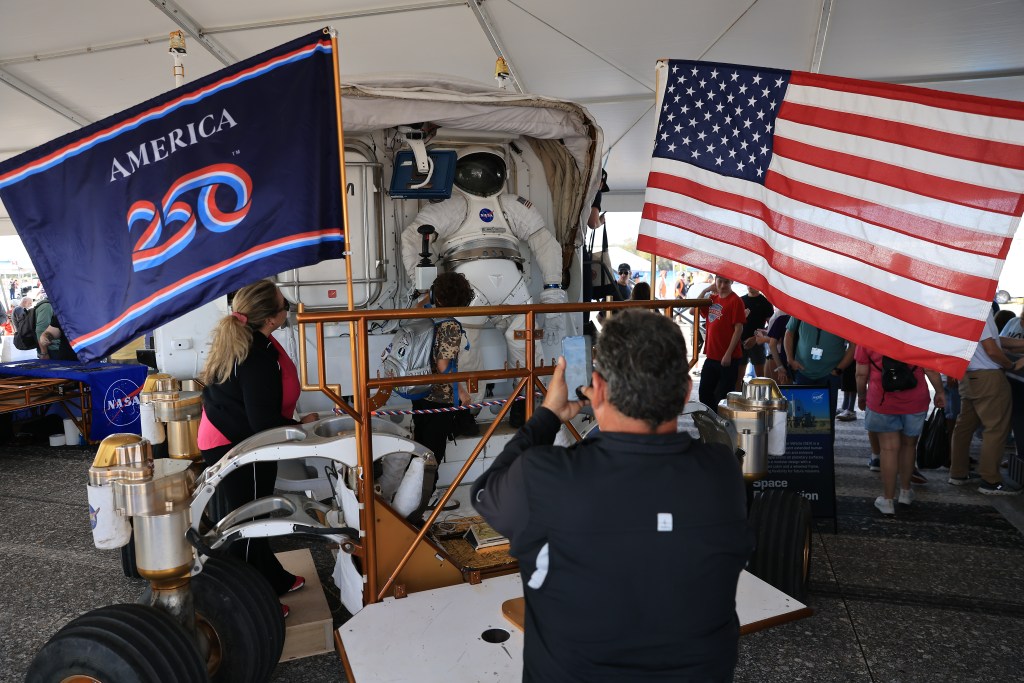
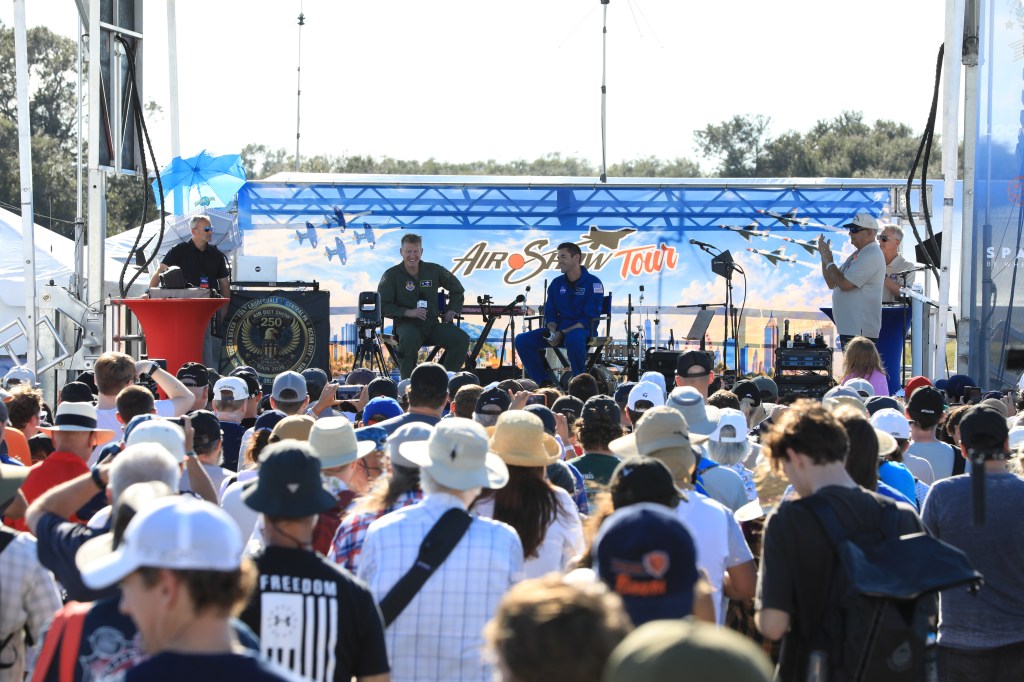
Through multiple park experiences, NASA and external collaborators at UP.Summit, Air Dot Show, Purpose Entertainment, and Delaware North each hosted a variety of private and public events Nov. 4-8. Teams showcased the newest aircraft, rovers, autonomous vehicles, and technologies defining the future of air and space. Astronauts, scientists, engineers, pilots, and subject matter experts were on hand for a variety of moderated discussions, appearances, and more.

Some of the key announcements made at MAX POWER included:

  • NASA opened astronaut applications through Thursday, Dec. 3, seeking future explorers to fly Artemis and low Earth orbit missions, and help build humanity’s first lunar outpost.
  • NASA also challenged students to a $1 million competition to design innovative solutions for the Moon Base, giving participants an opportunity to develop necessary skills for careers in the space industry while helping advance new concepts for Moon Base technologies.
  • Agency leadership announced numerous awards, task orders, and selections involving 12 companies to advance development of the Moon Base, marking significant progress toward establishing humanity’s first permanent presence on the lunar surface. The announcements spanned transportation, technology, and science initiatives, including moving forward with development of PROMISE, NASA’s nuclear-powered lunar rover.
  • Isaacman unveiled the agency’s newest X-plane, the X-70 Fractal, an experimental aircraft which could revolutionize crewed flight with its maneuverability and flight-control technology.

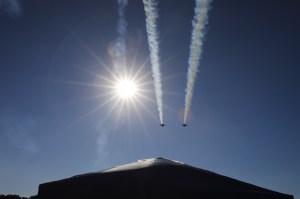
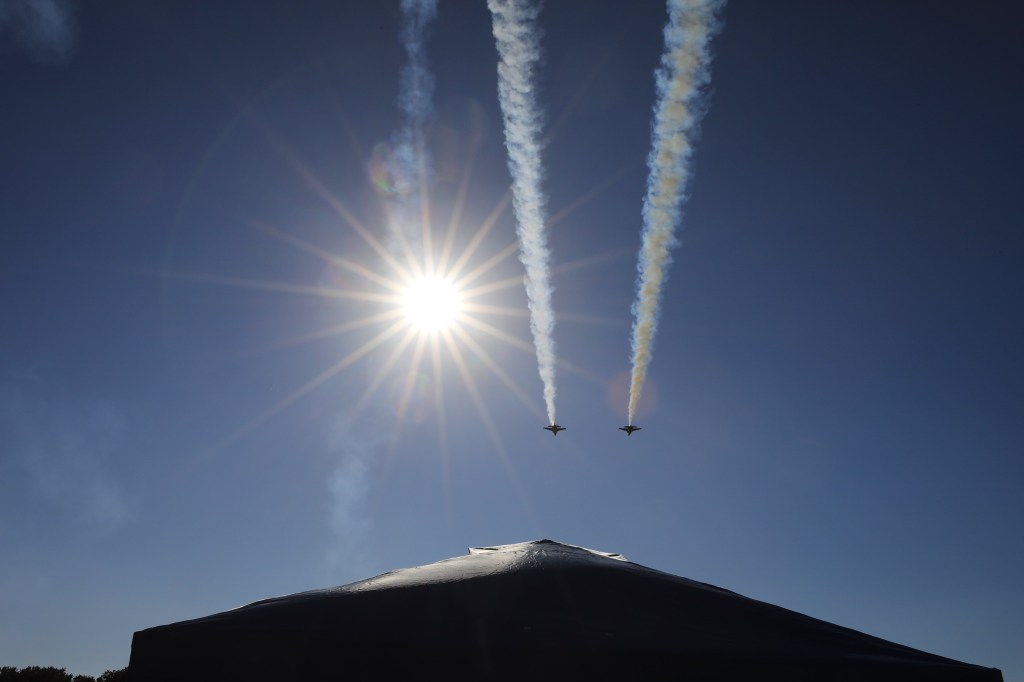
While guests journeyed between three park locations on the ground at NASA Kennedy’s historic Shuttle Landing Facility, T-38s, F-5s, and an ER-2 sped overhead during four flyovers, several of which were piloted by Isaacman. Some guests also were invited to a black-tie gala featuring agency leadership remarks and panel discussions with Apollo and Artemis astronauts.

NASA’s Artemis III crew members also took to the stage during the astronaut announcement, previewing their test flight in low Earth orbit in 2027. NASA astronauts Randy Bresnik, Frank Rubio, and Andre Douglas, as well as ESA (European Space Agency) astronaut Luca Parmitano all will fly aboard Orion, will launch on the SLS (Space Launch System), to test docking and rendezvous capabilities with the Blue Origin Blue Moon lander and SpaceX Starship lunar lander test articles, respectively, laying the groundwork to land astronauts on the Moon in 2028.

Finally, while this expo was the first for NASA, there is much more to come. As part of a public/private partnership, NASA and its partners also announced CAPEWEEK: The Great American Aerospace and Technology Expo at Kennedy. The new annual expo will debut March 27 through April 2, 2028, at Kennedy’s Shuttle Landing Facility, with a footprint expected to ultimately grow upward of 500,000 people.

“It was an educational and inspirational event, with a student Moon Base science challenge, a call for more NASA astronauts, and the unveiling of a new X-plane,” said Isaacman. “All credit goes to the NASA workforce and our partners, doing the work each day to bring the NASA missions to reality, and events like this so successful. So much so that we are doing it again, only bigger. CAPEWEEK begins in 2028.”

To learn more about NASA’s missions, visit:

https://www.nasa.gov

Source: www.nasa.gov
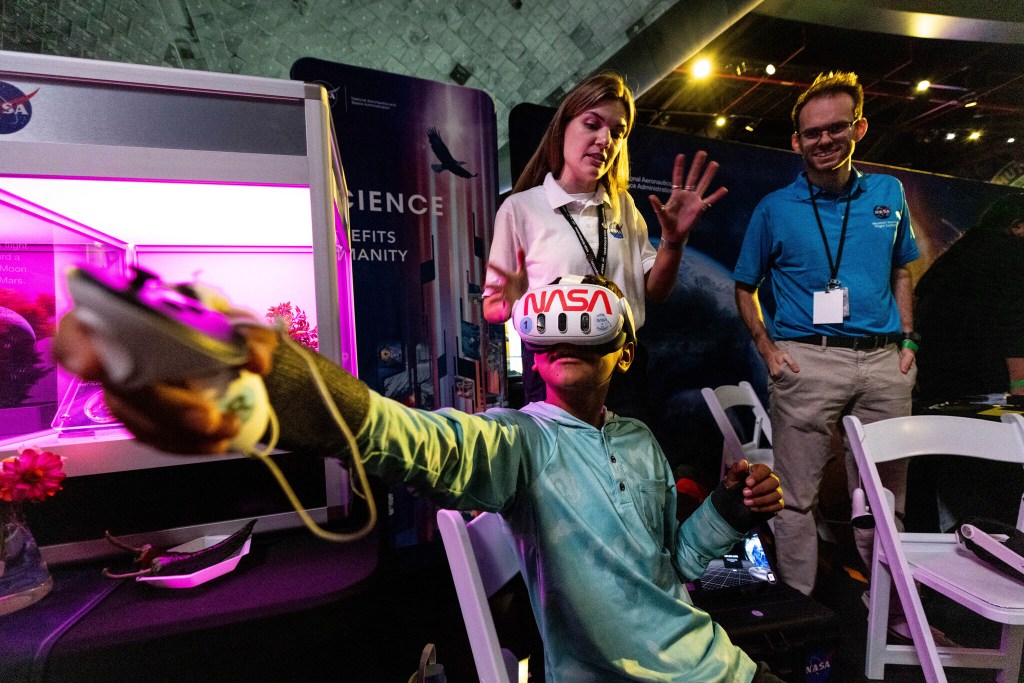
Astronauts Across Generations Share the Stage

This image was taken during the 2026 Artemis Celebration Gala in the Apollo/Saturn V Center at the Kennedy Space Center Visitor Complex on Friday, November 6, 2026. Photo provided courtesy of Purpose Entertainment
From left: NASA astronauts Randy Bresnik, Luca Parmitano, Russell “Rusty” Schweickart, Frank Rubio, and Bob Hines onstage at the Artemis Celebration Gala at NASA’s Kennedy Space Center Visitor Complex in Merritt Island, Florida, on Nov. 6, 2026.
Purpose Entertainment/Shanna Lockwood

On Nov. 6, 2026, Purpose Entertainment hosted the Artemis Celebration Gala at NASA’s Kennedy Space Center Visitor Complex in Merritt Island, Florida. Held on the eve of NASA’s MAX POWER event, the gala celebrated the explorers, innovators, and visionaries advancing the next era of human spaceflight.

The event honored the successful completion of the agency’s Artemis II mission, marking a historic milestone in America’s return to deep space exploration. As one of the signature events concluding the nation’s 250th anniversary celebration, the gala commemorated the achievements of Artemis II while looking ahead to humanity’s return to the lunar surface through the Artemis campaign.

Source: www.nasa.gov
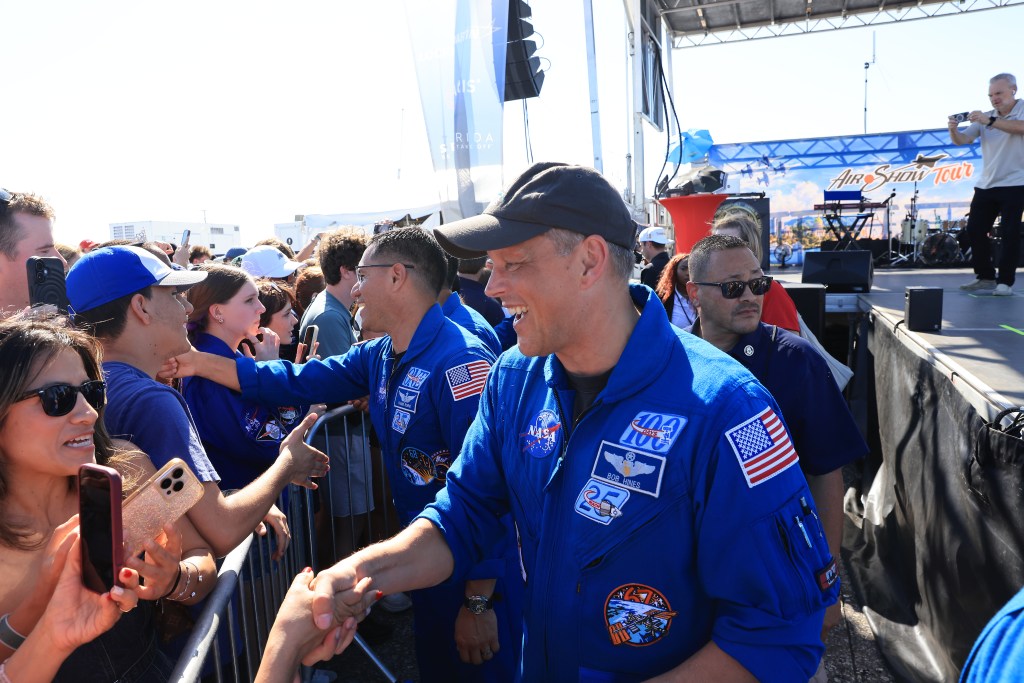
La NASA destina un millón de dólares al reto estudiantil Base Lunar

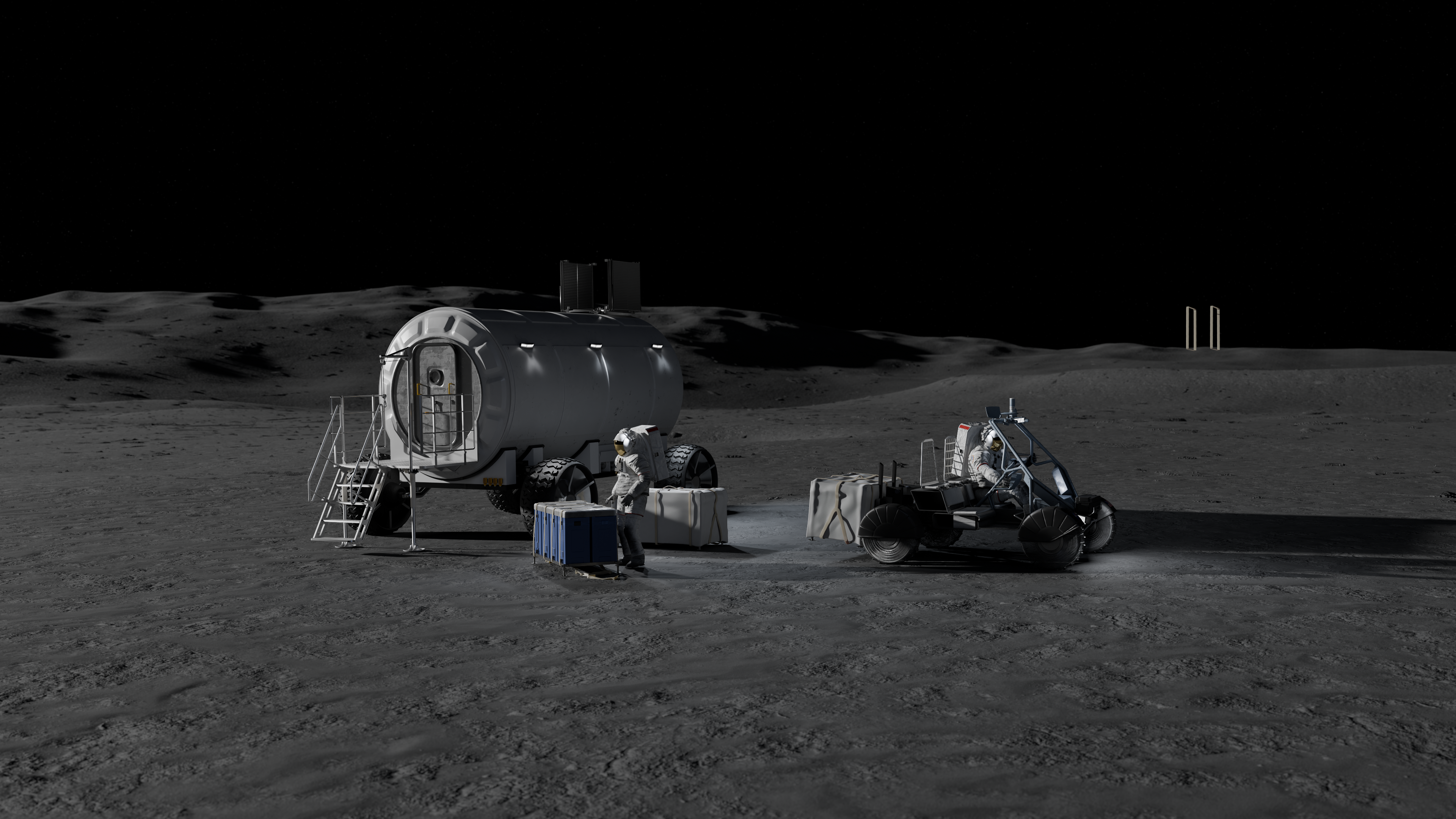
Representación artística en la que se muestran astronautas, hábitats, rovers, sistemas de energía y operaciones de carga que permiten mantener actividades humanas continuadas en la Base Lunar, situada cerca del Polo Sur lunar.
Crédito: NASA

Read this release in English here.
El domingo 8 de noviembre de 2026, la NASA anunció la convocatoria del reto estudiantil Base Lunar, dotado con un millón de dólares, durante un acto de MAX POWER celebrado en el Complejo de Visitantes del Centro Espacial Kennedy, en Florida. En el marco de una edad de oro de la ciencia, la competición invita a equipos de estudiantes de escuelas secundarias y centros de educación superior de Estados Unidos a aportar diseños para la Base Lunar.

“Buscamos estudiantes dispuestos a pensar de forma creativa, a trabajar en equipo y a abordar problemas reales relacionados con el futuro de la NASA en la Luna”, dijo el administrador de la NASA, Jared Isaacman. “No hace falta esperar hasta la graduación para contribuir. La curiosidad, la creatividad y la voluntad de afrontar problemas difíciles sin respuestas obvias son precisamente las cualidades que necesitamos mientras construimos lo que viene a continuación”.

La NASA está construyendo la Base Lunar, donde los astronautas vivirán, trabajarán y explorarán la región del Polo Sur lunar. La presencia humana permanente en la Luna allana el camino para futuras misiones tripuladas a Marte y requiere talento procedente de diversos sectores y ámbitos.

“A medida que construimos y diseñamos los cimientos de la Base Lunar, queremos aprovechar todo el ingenio y la innovación para tener en cuenta cada aspecto que nuestros exploradores puedan necesitar para vivir y trabajar allí”, afirmó Carlos García-Galán, director del programa Base Lunar. “Los estudiantes aportan precisamente las ideas audaces que estamos buscando, y estoy deseando descubir su enfoque. En definitiva, la Base Lunar es para ellos, las personas que vivirán en un mundo en el que los seres humanos estarán en la Luna para quedarse”.

Este reto, que consta de varias fases, refuerza el compromiso de la NASA con el desarrollo de las competencias técnicas del personal aeroespacial del futuro. Los equipos de estudiantes diseñarán soluciones innovadoras para la Base Lunar en seis categorías: generación y almacenamiento de energía, construcción, sistemas de soporte vital, movilidad en la superficie, redes de comunicaciones y seguridad de los astronautas. La iniciativa ofrece a los participantes la oportunidad de adquirir las aptitudes necesarias para una carrera en la industria espacial, al tiempo que contribuye al avance de nuevos conceptos tecnológicos para la Base Lunar.

Los participantes deben inscribirse en el reto a través de la plataforma NASA STEM Gateway, en inglés. El plazo de inscripción está abierto hasta el 25 de enero de 2027.

“Los estudiantes son la siguiente generación de exploradores e innovadores. Sus perspectivas únicas son fundamentales para ayudarnos a imaginar un futuro lejos de la Tierra, y me entusiasma ver la creatividad y el ingenio que suscitará este reto”, dijo Elaine Ho, administradora asociada de la Oficina de Participación en STEM de la sede central de la NASA en Washington.

El reto estudiantil Base Lunar aborda parámetros medioambientales y de diseño de misiones reales para la vida y las operaciones en la superficie lunar. Los trabajos solicitados reflejan destrezas propias del sector (estudios comparativos, propuestas conceptuales y presentaciones a las partes interesadas), lo que permite a los participantes de formación técnica, profesional y de diversas ramas académicas desarrollar capacidades relevantes para su carrera sin necesidad de contar con experiencia previa en ingeniería o en el ámbito técnico.

La Oficina de Participación en STEM diseñó el reto en colaboración con el programa Base Lunar. El Institute of Competition Sciences (Instituto de Ciencias de la Competición) lo gestiona mediante un contrato con el Centro de Excelencia de la NASA para la Innovación Colaborativa, dependiente de la Dirección de Misiones de Investigación y Tecnología de la agencia.

Para obtener información detallada y en inglés sobre el reto, los requisitos de participación y las bases oficiales, visita:

https://moonbasechallenge.org
-fin-

George Alderman / Cheryl Warner / María José Viñas
Headquarters, Washington
+1 202-358-1600
[email protected] / [email protected] / [email protected]

Nilufar Ramji / Kenna Pell
Johnson Space Center, Houston
+1 281-483-5111
[email protected] / [email protected]

Details

Last Updated

Nov 09, 2026

Related Terms

Source: www.nasa.gov

NASA Advanced Mid-Power Electric Rocket Challenge

1 min read

Preparations for Next Moonwalk Simulations Underway (and Underwater)

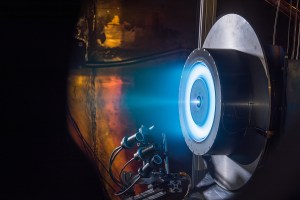
blue glow emanates from a ring-like Hall-effect Thruster
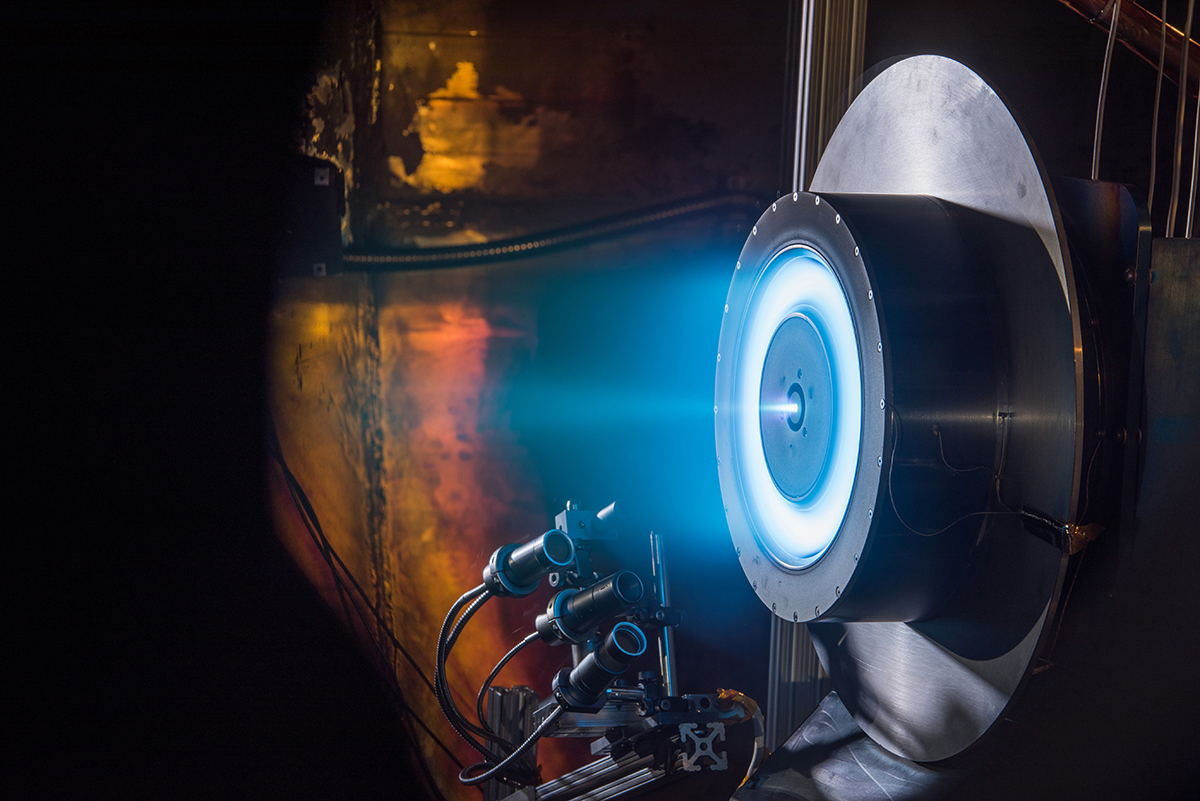
This Hall-effect thruster, shown being tested at Glenn Research Center, turns electricity and inert gas into force that could propel a spacecraft. Orbion Space Technology was founded to bring the high efficiency of these thrusters to small commercial satellites, and the company sought the center’s help to make that a reality.
Credit: NASA

Mid-power (3-7 kW) Hall effect thruster systems have been identified by government and industry stakeholders as critical capabilities for satellite, defense, and exploration missions. Given the need for this capability, NASA is launching the Advanced Mid-Power Electric Rocket (AMPERE) Challenge.

The NASA AMPERE Challenge invites U.S. commercial companies to develop and demonstrate mid-power Hall effect thruster prototypes. Through this challenge, NASA aims to accelerate the maturation of electric propulsion capabilities, validate real-world performance in NASA test facilities, and build the foundation needed to support future NASA and commercial missions. The challenge is open to companies incorporated in and maintaining a primary place of business in the United States.

Award: $500,000 in total prizes. Up to two winning teams can each receive up to $250,000 in cash prizes, plus access to NASA testing and technology, across three phases.

Registration Open Date: November 9, 2026

Registration Close Date: January 27, 2027

For more information including registration, rules, and eligibility, visit: https://ampere.nasatechmaturation.org/

Source: www.nasa.gov

NASA’s Chandra Finds Source of Star’s Mysterious Outbursts

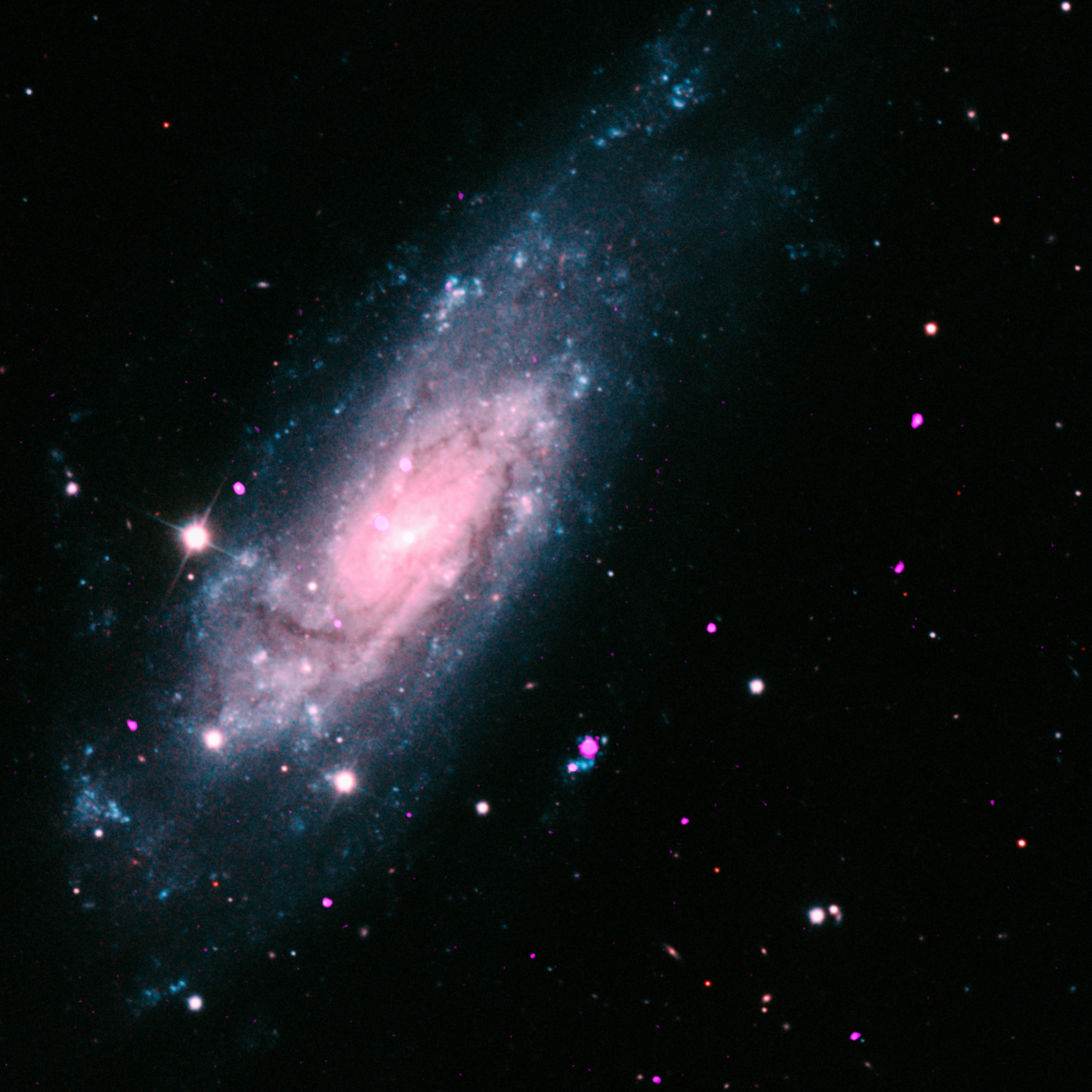
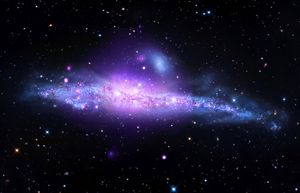
A composite NASA Chandra X-ray and Sloan Digital Sky Survey (SDSS) optical image of the galaxy NGC 4559 located about 30 million light-years from Earth. The Chandra data shows X-ray point sources represented in purple, and the SDSS data shows the galaxy and foreground and background objects in red and blue. The luminous blue variable and supernova impostor AT 2016blu is in the middle of the small square.
X-ray: NASA/CXC/Univ. of Virgina/M. Aghakhanloo et al.; Optical: SDSS; Image Processing: NASA/CXC/SAO/P. Edmonds

Using NASA’s Chandra X-ray Observatory, astronomers have discovered what is triggering repeated outbursts from a giant, unstable star.

A new study, published Monday in the latest issue of The Astrophysical Journal, details the discovery of a previously hidden companion object that keeps pulling material away from the massive star every 113 days as they orbit one another. This partner is either a stellar-mass black hole, or the dense collapsed core of a massive star called a neutron star.

This is the first X-ray detection of one of this class of erupting stars. It is also the first of these objects found with a black hole or neutron star companion.

The volatile star, known as AT 2016blu, is in the spiral galaxy NGC 4559, located about 30 million light-years from Earth. Astronomers estimate the mass of this star is at least 33 times that of the Sun.

“For 15 years, astronomers have been watching this star get really bright and then dim again on a regular basis,” said Mojgan Aghakhanloo of the University of Virginia in Charlottesville, who led this study. “Until we were able to get Chandra data at the right time, we couldn’t figure out what was making this happen.”

The star AT 2016blu is a type of luminous blue variable, which are hot, massive stars characterized by changes in brightness. Eta Carinae, for example, is a particularly well-known luminous blue variable.) AT 2016blu is a special type of luminous blue variable that undergoes rapid and repeated increases in brightness. The spikes in brightness are so extreme that they resemble supernova explosions, where a massive star collapses onto itself and material then hurtles outward into space. However, unlike in a supernova explosion, the star is not destroyed, so AT 2016blu is also referred to as a “supernova impostor.”

Between 2012 and 2026, astronomers detected at least 27 bursts of optical light, or light in wavelengths that are visible to our eyes, from AT 2016blu roughly every 113 days.

“This star’s behavior was confusing at first because it kept acting like a supernova, but clearly it’s not because it keeps surviving these outbursts about three times a year,” said co-author Núria Torres-Albà, also of the University of Virginia. “To understand the cause of these eruptions, we realized we needed X-ray data, timed so that we’d observe the star when it was in an outburst.”

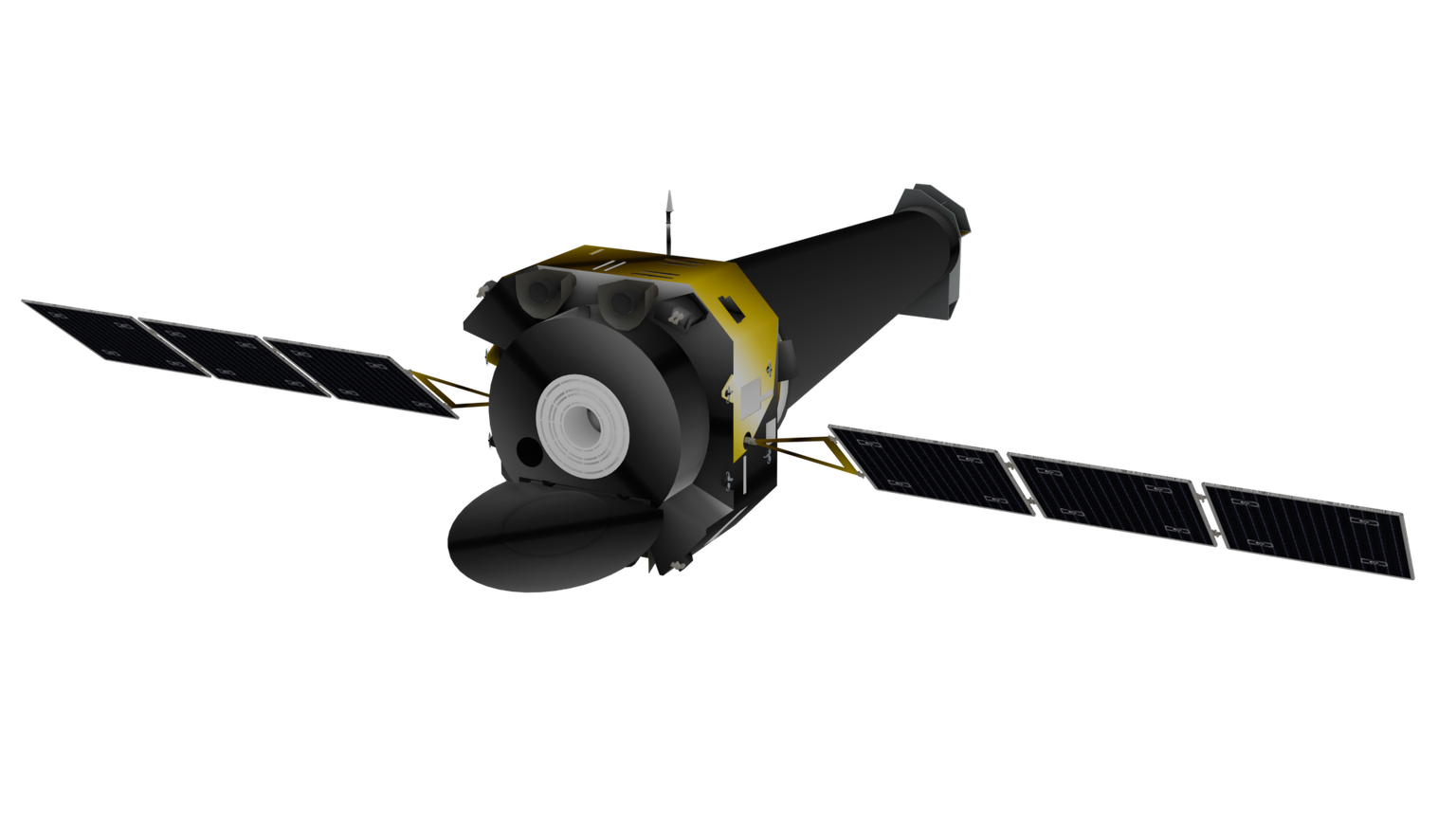
The team used Chandra because it is the only X-ray telescope with sharp enough vision to distinguish AT 2016blu from another nearby bright X-ray source.

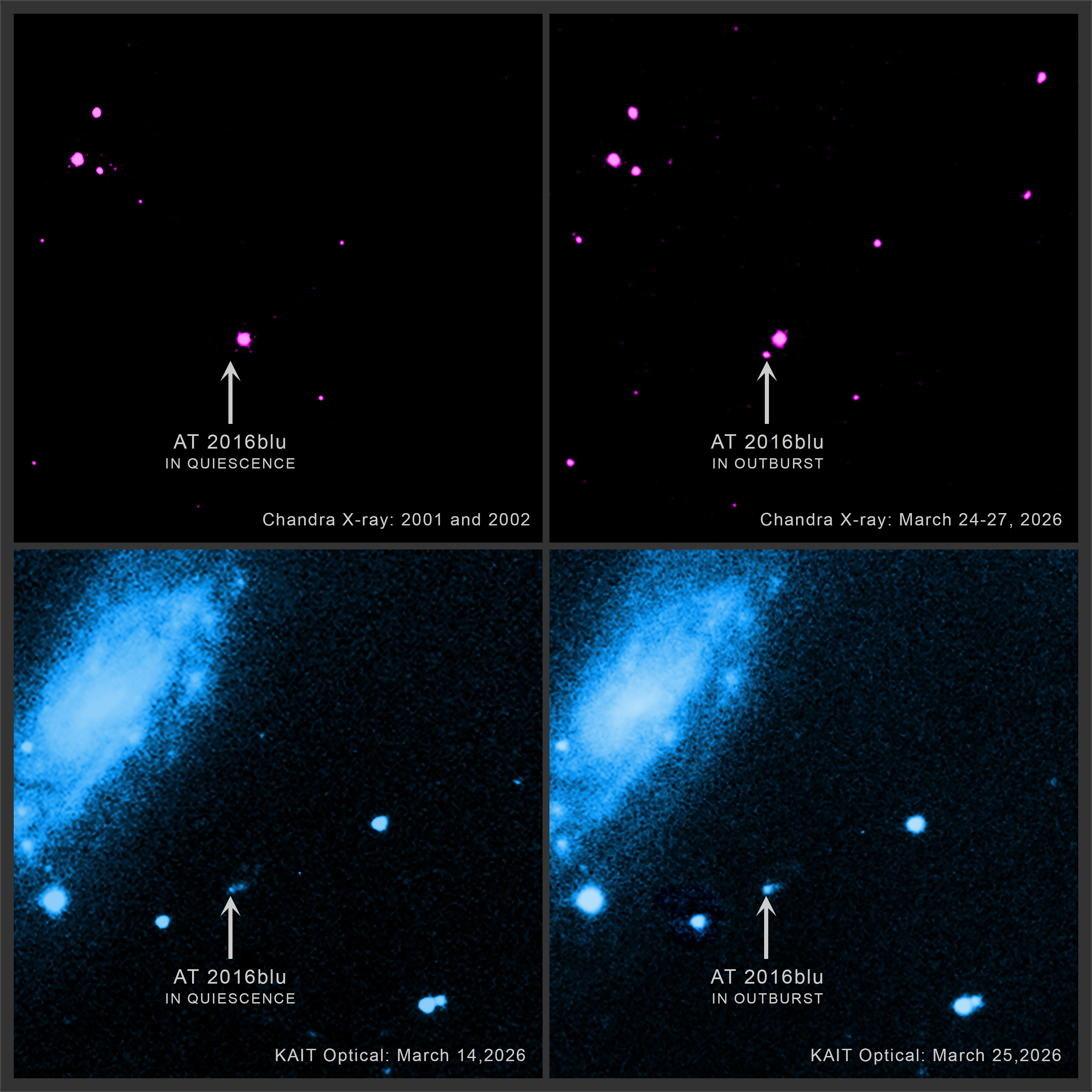
Images showing AT 2016blu in outburst and quiescence. The top-left image shows optical data obtained March 14, 2026, by the Katzman Automatic Imaging Telescope (KAIT), when AT 2016blu was in quiescence, or not in outburst, and the top-right image shows KAIT data from March 25, 2026, when the source was in outburst. The bottom-left image shows NASA’s Chandra X-ray data obtained in 2001 and 2002, before AT 2016blu’s first observed outburst in 2012, and the bottom-right image shows Chandra data obtained between March 24 and March 27, 2026.
X-ray: NASA/CXC/Univ. of Virgina/M. Aghakhanloo et al; Optical: NSF/KAIT

“We suspected that the bright repeating flashes at optical wavelengths might actually be powered by periodic blasts of high-energy X-rays,” said co-author Nathan Smith of the University of Arizona in Tucson. “The dense gas surrounding the system is heated by the X-rays and then glows in the optical. So, we needed to plan the Chandra X-ray observations carefully to be simultaneous with an optical outburst.”

Chandra data from March 2026 revealed that AT 2016blu was at least 100 times brighter in X-rays than in Chandra data from 2001 to 2002, which is before the outbursts began. The best explanation for this is that material from the star is falling onto a neutron star or black hole during the closest approach in their oval-shaped orbit around one another. When they come close together, material ejected by the star gets captured by the black hole or neutron star. The material orbits at very high speeds close to the speed of light, getting so hot that it shines brightly in X-rays.

AT 2016blu is bright enough in X-rays to be classified as a candidate of ultra-luminous X-ray source. These are rare, bright X-ray sources found with telescopes like Chandra that astronomers have yet to fully understand. Scientists’ current thinking is that some of them contain neutron stars, and others have black holes.

These new observations suggest there could be a link between ultra-luminous X-ray sources and the kind of violent stellar eruptions seen in AT 2016blu, especially because many ultra-luminous X-ray sources undergo large changes in X-ray brightness.

The discovery of this system may also help studies of stars that change in brightness before they undergo supernova explosions. Astronomers suspect that much of this behavior may be caused by systems containing a massive star orbiting a compact object or another massive star.

To collect the optical data, the team used the Katzman Automatic Imaging Telescope, the Las Cumbres Observatory Global Supernova Project , and observations from the American Association of Variable Star Observers, including those from more than 30 amateur astronomers, to monitor the star’s brightness.

When these observations showed that the star was in outburst in early 2026, Chandra observations were triggered and obtained in March 2026 as part of its “Target of Opportunity” program designed to take account of special events.

NASA’s Marshall Space Flight Center in Huntsville, Alabama, manages the Chandra program. The Smithsonian Astrophysical Observatory’s Chandra X-ray Center controls science operations from Cambridge, Massachusetts, and flight operations from Burlington, Massachusetts.

To learn more about Chandra, visit:

https://nasa.gov/chandra

Visual Description

This release features a composite image of a spiral galaxy with a giant, unstable star at its outer edge. Using Chandra, astronomers have discovered the star’s previously hidden companion, which triggers luminous outbursts every 113 days.

The spiral galaxy is NGC 4559. Shown at a sharp angle in the composite image, its flat pink and milky blue face tilts toward our upper left. Sitting near the outer edge of the dense spiral, near the center of the frame, is a small group of pink and blue dots. This group is outlined with a white square, enlarged and annotated in supporting images.

The smallest pink dot in the square is AT 2016blu, a massive star some 33 times the size of our Sun. For over 15 years astronomers have been watching this star get bright and then dim again in optical light on a regular basis. Chandra’s X-ray observations suggest that a hidden companion object, either a stellar mass black hole or a neutron star, is pulling material from AT 2016blu every 113 days as they orbit one another. This captured material gets so hot that it shines brightly in X-rays.

Other pink and blue specks within the white square and enlargement are unresolved stars or star clusters, too distant to be related to the movement of material between AT 2016blu and its hidden but influential neighbor.

Details

Last Updated

Nov 09, 2026

Editor
Lee Mohon
Contact
Megan Watzke
Joel Wallace
Location
Marshall Space Flight Center

Source: science.nasa.gov

La NASA busca a la próxima generación de astronautas

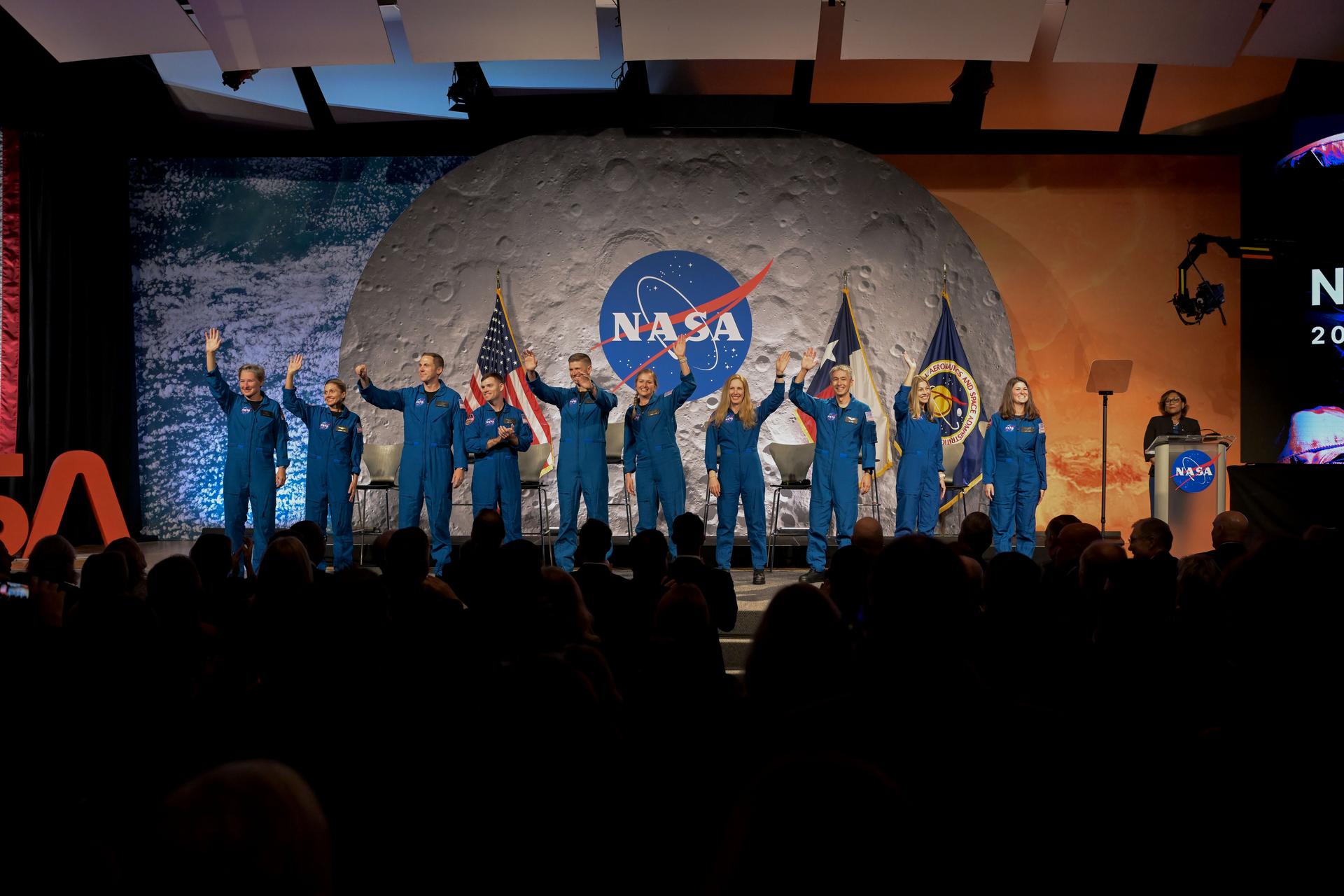
A group of astronaut candidates in blue flight suits wave to the audience on stage, with a NASA logo and image of the Moon behind them.
La NASA anunció su promoción de candidatos a astronautas de 2025 el 22 de septiembre de 2025 en el Centro Espacial Johnson de la agencia, en Houston.
Crédito: NASA/Helen Arase Vargas

Read this release in English here.
La NASA busca a los exploradores que ayudarán a escribir el próximo capítulo de los vuelos espaciales tripulados.

Ya está abierto el plazo de inscripción para la próxima promoción de astronautas de la agencia, que se incorporarán a la NASA en un momento en el que Estados Unidos regresa a la Luna, construye la Base Lunar y sienta las bases para las primeras misiones tripuladas a Marte.

La próxima generación de astronautas se entrenará para operar en la superficie lunar, vivir y trabajar fuera de la Tierra, y llevar a cabo misiones que ampliarán los límites de la exploración con seres humanos más lejos que nunca.

Los ciudadanos estadounidenses interesados en formar parte del cuerpo de astronautas tienen hasta las 11:59 p.m. EST (hora del este) del jueves 3 de diciembre para enviar la documentación completa de su solicitud a:

https://go.nasa.gov/3WyvlQi

“Este es un momento extraordinario para incorporarse al cuerpo de astronautas de la NASA”, afirmó el administrador de la agencia espacial, Jared Isaacman. “Las personas que seleccionemos podrían pisar la Luna, vivir y trabajar en la Base Lunar, y ayudar a desarrollar los sistemas y operaciones que, en última instancia, llevarán a las tripulaciones a Marte. Esas misiones exigirán excelencia técnica, buen criterio, trabajo en equipo y valentía. El cuerpo de astronautas de la NASA siempre ha recurrido a estadounidenses excepcionales con la disposición de asumir retos extraordinarios al servicio de la nación. Si quieres unirte a esa tradición, ven a ayudarnos a escribir el próximo capítulo de la mayor aventura de la humanidad”.

La NASA prevé realizar su selección definitiva a finales de 2027 para comenzar la capacitación de la próxima promoción de candidatos a astronautas.

“La ventana de oportunidad está abierta. La misión nos espera. Y lo único que falta en la mayor aventura en la que se ha embarcado la humanidad eres tú”, afirmó Matt Anderson, administrador adjunto de la NASA.

La agencia abrió por última vez la convocatoria en 2024. De entre más de 8.000 candidaturas, en 2025 se seleccionaron 10 candidatos a astronautas, que actualmente están completando casi dos años de capacitación.

“Para quienes presentan su candidatura, convertirse en astronauta de la NASA es más que una oportunidad profesional”, afirmó Scott Tingle, astronauta jefe y presidente de la Junta de Selección de Astronautas del Centro Espacial Johnson de la NASA, en Houston. “Es una oportunidad para formar parte de un legado de exploradores que han ampliado los límites del conocimiento y desempeñar un papel en las misiones que marcarán el futuro de la humanidad en el espacio. La próxima generación de candidatos a astronautas podría ayudar a escribir la historia, al tiempo que inspira a futuros científicos, ingenieros y exploradores”.

Desde la década de 1960, la NASA ha seleccionado a 370 personas para capacitarlas como candidatos a astronautas en sus misiones, cada vez más exigentes. La agencia cuenta actualmente con 32 astronautas en activo, y los candidatos seleccionados se unirán a sus filas para formarse en caminatas espaciales, geología lunar, manejo de aeronaves de alto rendimiento y mucho más.

Los requisitos básicos para presentar la candidatura incluyen la ciudadanía estadounidense y un título de maestría en un campo STEM —como ingeniería, ciencias biológicas, ciencias físicas o informática— obtenido en una institución acreditada. El requisito del título de maestría también puede cumplirse mediante:

  • Haber completado al menos dos años de estudios en un programa de doctorado en un campo técnico pertinente de ingeniería, ciencias biológicas, ciencias físicas, informática o matemáticas.
  • Haber obtenido un título de doctor en medicina, doctor en medicina osteopática, asistente médico, doctor en práctica de enfermería, enfermero de familia o cualquier otra titulación médica relacionada.
  • Haber completado, o estar matriculado actualmente en, un programa de la Escuela de Pilotos de Pruebas reconocido a nivel nacional, siempre que dicho programa se complete antes de julio de 2027. Si la Escuela de Pilotos de Pruebas es el único título técnico superior, se exigirá haber completado una licenciatura en un campo STEM, como ingeniería, ciencias biológicas, ciencias físicas o informática.

Los candidatos también deben contar con al menos tres años de experiencia profesional relacionada tras haber obtenido la titulación requerida.

En el caso de los pilotos, el requisito de experiencia profesional puede cumplirse mediante la siguiente experiencia de vuelo:

  • Aviones a reacción de alto rendimiento: 750 horas como piloto al mando.
  • Otras aeronaves de ala fija: 1.500 horas de vuelo en total, incluidas 750 horas como piloto al mando.
  • Aeronaves de ala giratoria: 1.000 horas de vuelo en total, incluidas 300 horas como piloto al mando.

Para los médicos, el periodo de residencia puede contabilizarse como parte del requisito de experiencia profesional y debe completarse antes de julio de 2027.

Los candidatos a astronautas deben superar el examen médico de la NASA para vuelos espaciales de larga duración y demostrar sólidas habilidades de liderazgo, trabajo en equipo y comunicación.

Desde sus inicios, el cuerpo de astronautas de la NASA ha representado lo mejor del ingenio, la destreza y la determinación estadounidenses, llevando a cabo misiones que logran lo casi imposible y ampliando el conocimiento de la humanidad sobre la Tierra, la Luna y más allá.

Como parte de una edad de oro de innovación y exploración, la NASA enviará a astronautas en misiones cada vez más complejas cerca del Polo Sur lunar para explorar la Luna como nunca antes se había hecho. Además de aportar beneficios económicos e impulsar los avances científicos a través de sus misiones Artemis, la NASA establecerá una presencia humana duradera en la superficie lunar y sentará las bases para la primera misión tripulada a Marte.

Para obtener más información en inglés sobre el proceso de solicitud y lo que implica ser astronauta de la NASA, visita:

go.nasa.gov/astro2026

-fin-

George Alderman / Cheryl Warner / María José Viñas
Sede central, Washington
+1 202-358-1600
[email protected] / [email protected] / [email protected]

Anna Schneider
Centro Espacial Johnson, Houston
+1 281-483-5111
[email protected]

Details

Last Updated

Nov 09, 2026

Related Terms

Source: www.nasa.gov