New Crops, Health Research Proposals to Help NASA Advance Exploration

NASA has selected 12 new investigations to help support human explorers in space. Six will help advance the ability to produce food off-planet, while another six advance the understanding of how unique conditions associated with space exploration can impact the health and physiology of astronauts.  

The six food-focused investigations, supported by the agency’s Space Crops grants, advance NASA’s goal of harnessing the power of plants to enhance quality of life for humans in space, as well as to enable lunar and Mars exploration. Four of the space crops proposals focus on studies of edible plants and how their growth, physiology, and associated microbial communities are affected by environmental conditions in space or on other planetary bodies.

Another proposal involves understanding mechanisms by which certain plant species, called resurrection plants, can withstand extreme, dry conditions. The last space crops proposal builds on previous studies on the International Space Station to uncover functions of algal genes, segments of DNA controlling algae survival, whose expression is modified by spaceflight. Such studies can help scientists integrate biological-based solutions into space life-support systems.

The second set of six proposals fall under the agency’s Biological and Physical Sciences Division’s focus on precision health, which seeks to unravel the mechanisms by which space exploration affects health and well-being. One proposal studies how lunar dust exposure impacts respiratory, immune, and inflammation responses.  A second proposal identifies repurposed drugs that can mitigate the effects space travel has on health and physiology.

Two more of the research proposals look at how radiation combined with other stressors affects age-relevant characteristics seen in various organ and physiological systems. The final two proposals assess molecular and cellular changes induced by stressors in space that can alter gene expression or protein function. The research will identify ways to mitigate health issues and develop early-warning detection systems to notify crew of potential concerns.

The principal investigators who conduct the space biology studies come from 10 institutions across eight states. Nine of the awards are for investigators who are receiving funding from the Space Biology Program for the first time.

Selected Space Crops Investigations

  • Jannell Bazurto, University of Minnesota
    Cultivating the Cosmos: Investigating Plant-Microbe Dynamics for Sustainable Space Farming
  • Miranda Haus, Michigan State University
    Investigating Legume Crop Rotations and Microbial Interactions in Regolith Simulants
  • Andrew Settles, NASA Ames Research Center
    Genetic Mitigation of Spaceflight Stressors on Production of Chlamydomonas
  • Christopher Taylor, Ohio State University
    Hydroponic Microbes in a Low Carbon, High-Radiation Environment; Identifying the Genetic Determinants of Water- and Plant-Associated Microbial Survival in Extraterrestrial Environments
  • Robert VanBuren, Michigan State University
    Leveraging the Natural Resilience of Resurrection Plants for Space Bioregenerative Systems
  • Shuyang Zhen, Texas A&M AgriLife Research
    Environmental Optimization and Cultivar Selection to Enhance Dwarf Tomato Growth and Stress Tolerance for Space Agriculture

Selected Precision Health Investigations

  • Archana Dhasarathy, University of North Dakota
    Epigenetic Memory as an Adaptive Mechanism to Microgravity and Radiation Exposure
  • Andrij Holian, University of Montana
    Contribution of Aging to Particle-Induced Chronic Inflammation
  • Mert Gur, University of Pittsburgh
    Probing Pathogenic Mutations Under Spaceflight-Relevant Stressors Via All-Atom Molecular Dynamics Simulations
  • Grace O’Connell, University of California
    Persistent Spine Health Impacts of Microgravity and Radiation Following Recovery
  • Satoshi Okawa, University of Pittsburgh
    Investigating Space Flight-Induced Brain-Heart Axis Aging and Identifying Repurposed Drugs to Mitigate Its Effects
  • Sanghee Yun, Ph.D., The Children’s Hospital of Philadelphia
    Spaceflight-Relevant Hypercapnia Effects on Space Radiation- and Social Isolation-Induced Biological Aging: A Systems Biology Analysis of Multiple Aging Hallmarks

When fully implemented, more than $7 million in grant money will be awarded throughout fiscal years 2026-2030. These awards were made in response to research proposals submitted to ROSES-2024: Program Element E.9: Space Biology Research Studies (NNH24ZDA001N-SBR).

To learn more about NASA’s biological and physical research in space, visit: https://science.nasa.gov/biological-physical/

Biological & Physical Sciences Division

  • NASA’s Biological and Physical Sciences Division pioneers scientific discovery and enables exploration by using space environments to conduct investigations not possible on Earth. Studying biological and physical phenomenon under extreme conditions allows researchers to advance the fundamental scientific knowledge required to go farther and stay longer in space, while also benefitting life on Earth.

Source: science.nasa.gov
APOD: 2026 September 14 – Where Your Elements Came From

APOD

Astronomy Picture of the Day

Discover the cosmos! Each day a different image or photograph of our fascinating universe is featured, along with a brief explanation written by a professional astronomer.

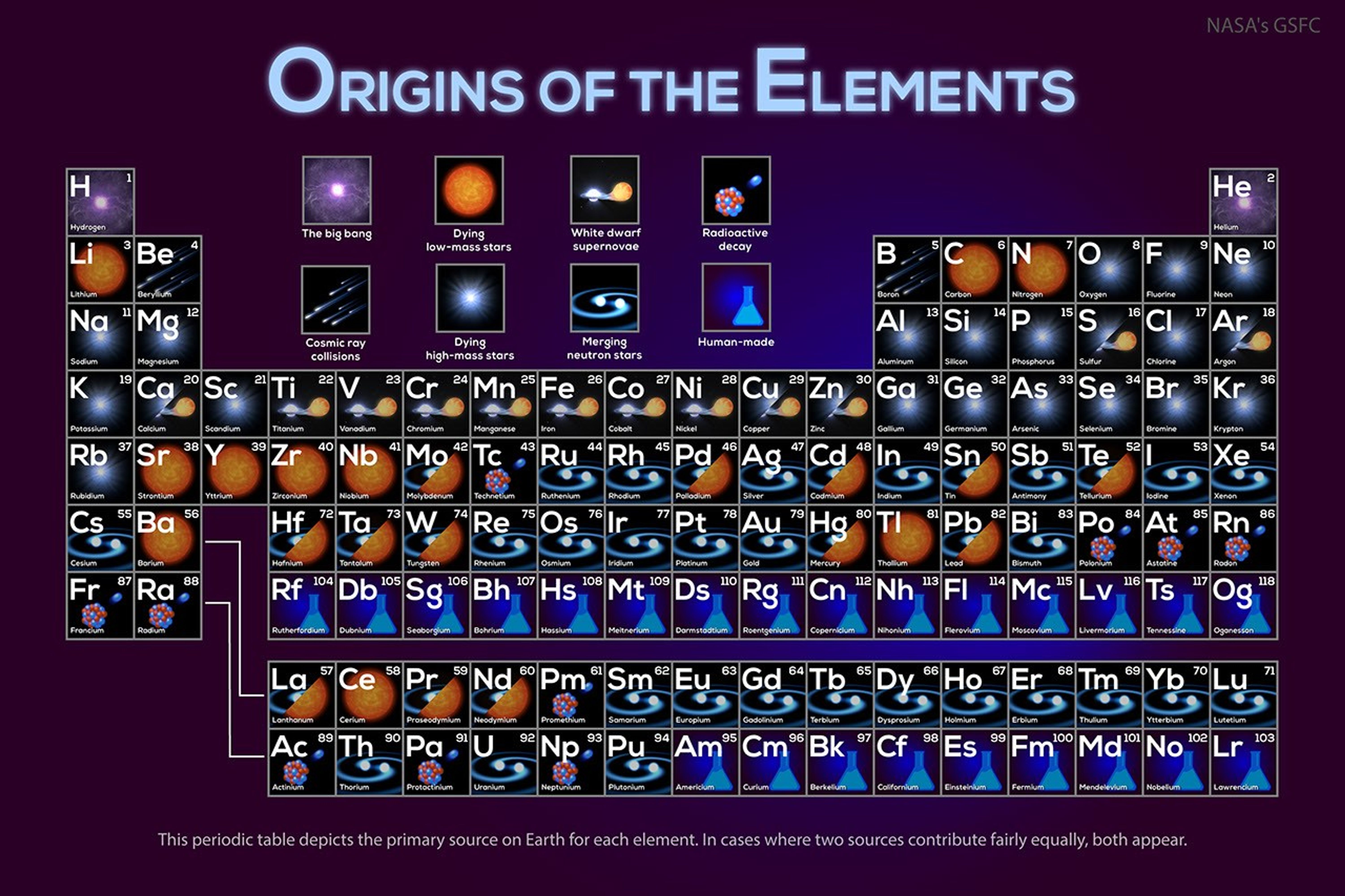
A table with each entry being a separate element. The entries depict where each element comes from (i.e., the big bang, stellar deaths, etc).

Where Your Elements Came From

Explanation: The hydrogen in your body and present in every molecule of water came from the Big Bang. There are no other appreciable sources of hydrogen in the universe. The carbon in your body was made by nuclear fusion in the interior of stars, as was the oxygen. Much of the iron in your body was made during supernovas of stars that occurred long ago and far away. The gold in your jewelry was likely made from neutron stars during collisions that may have been visible as short-duration gamma-ray bursts or gravitational wave events. Elements like phosphorus and copper are present in our bodies in only small amounts but are essential to the functioning of all known life. The featured periodic table is color coded to indicate humanity‘s best guess as to the nuclear origin of all known elements. The sites of nuclear creation of some elements, such as copper, are not really well known and are continuing topics of observational and computational research.

APOD’s main NASA site is moving: From apod.nasa.gov to science.nasa.gov/apod
Tomorrow’s picture: Sun triple

Date: September 14, 2026
Credit: NASA GSFC‘s SVS
Authors & editors: Robert Nemiroff, Jerry Bonnell, Cecilia Chirenti, Keighley Rockcliffe
A service of: ASD at NASA / GSFC,
NASA Science Activation & Michigan Tech. U.

Source: science.nasa.gov
Summer Training: Catching Up With NASA’s Astronaut Candidates

3 min read

Preparations for Next Moonwalk Simulations Underway (and Underwater)

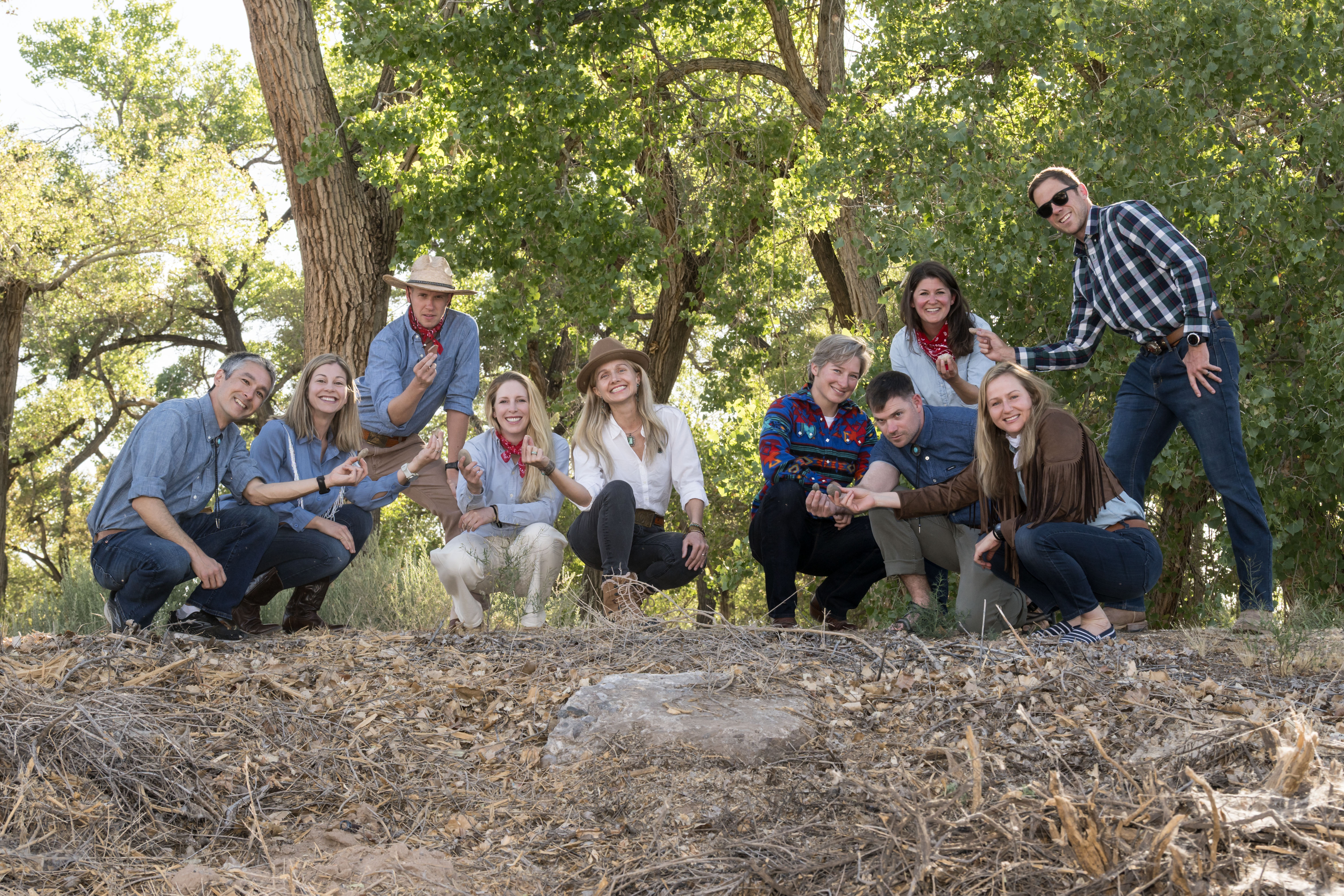
A group of 10 men and women wearing assorted jeans and button-down shirts hold up rock samples, with a forest in the background.
The members of NASA’s 2025 Astronaut Candidate Class pose with rock samples collected during their geology training at the Rio Grande del Norte National Monument, New Mexico, in May 2026.
NASA/Helen Arase Vargas

Did you spend part of your summer camping, hiking, at the pool, or in an aircraft? So did NASA’s 2025 Astronaut Candidate Class.

The 10 candidates have been working their way through a comprehensive and rigorous training program since the agency introduced them to the public on Sept. 22, 2025, from NASA’s Johnson Space Center in Houston. They are approximately halfway through the nearly two-year training program, which will equip them for missions to low Earth orbit, the Moon, and ultimately, Mars.

Geology Studies

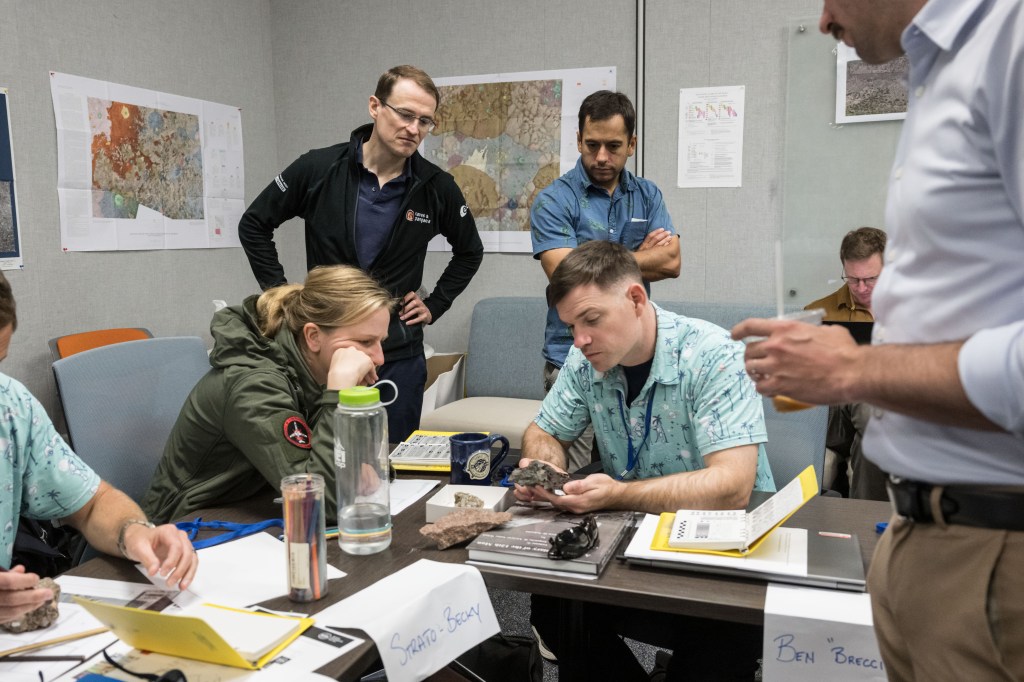
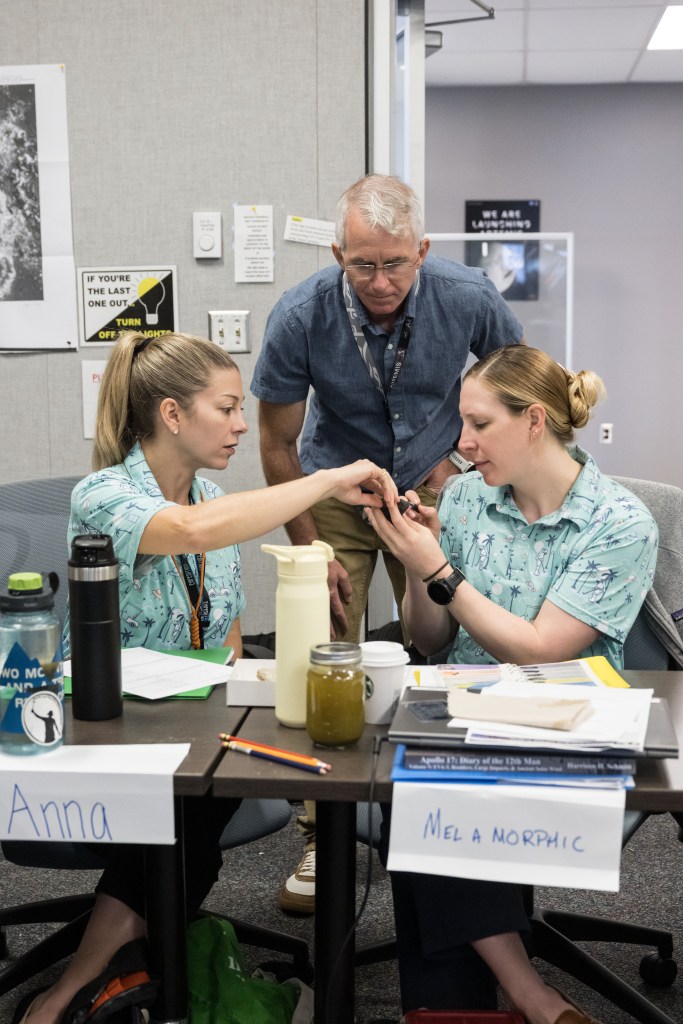
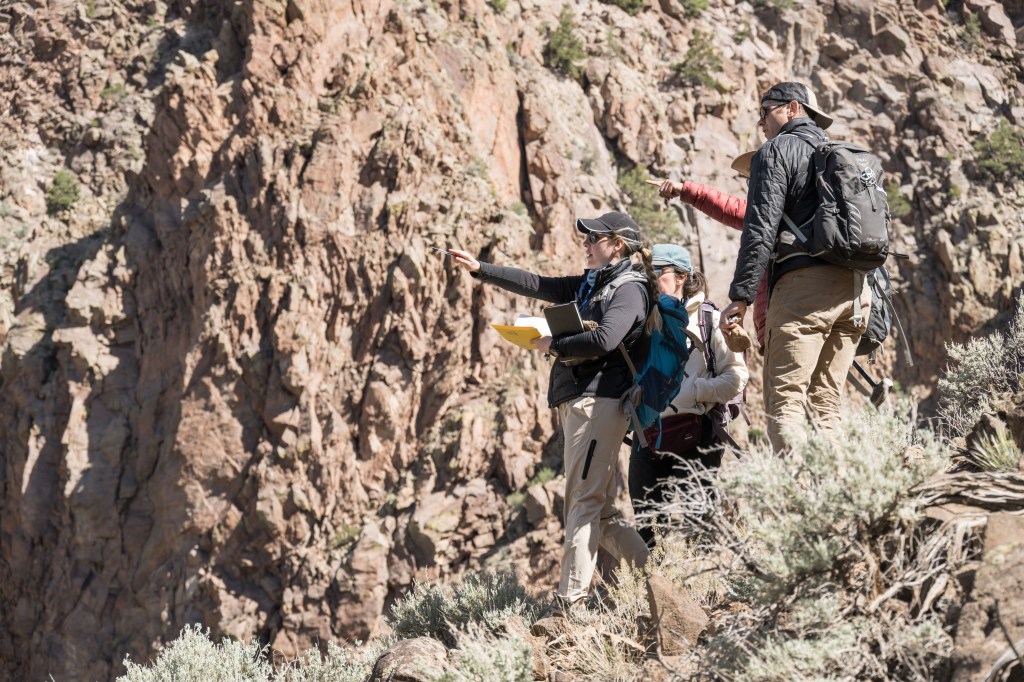
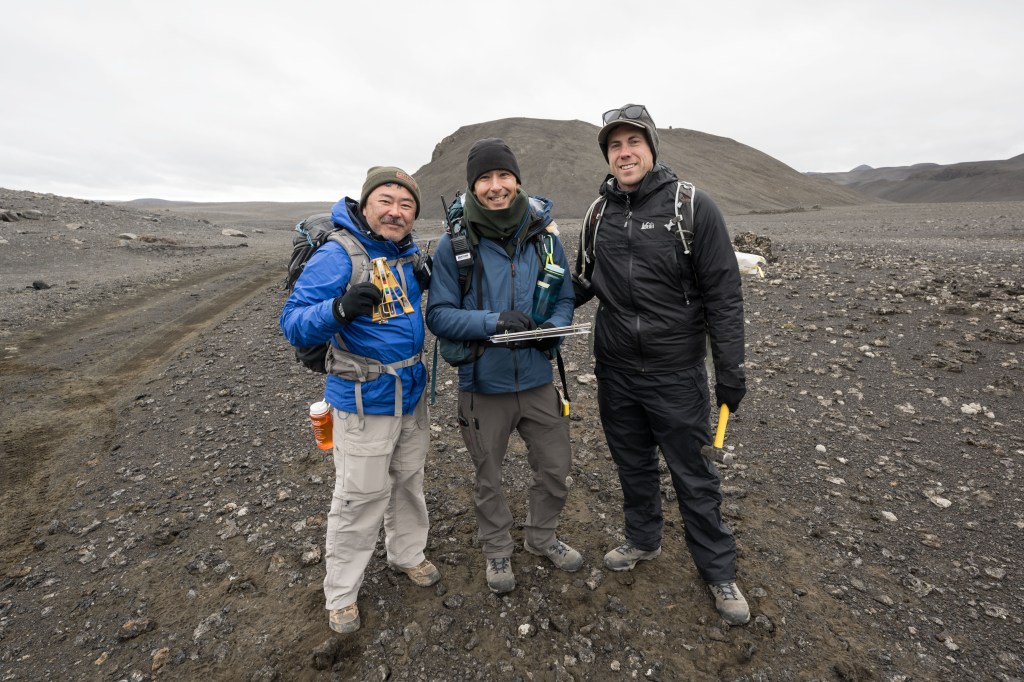
Since the astronaut candidates can one day be assigned to a future Artemis mission to the lunar surface, geology courses are an important part of their training. In May, candidates completed classroom trainings at Johnson before venturing to the Rio Grande del Norte National Monument in New Mexico for additional classroom instruction and training in the field. Several candidates also joined NASA astronauts and Artemis mission support teams for geology field training in Iceland in July. They practiced geologic observations, sampling with tools, navigation, and teamwork, all skills and processes that translate directly to Artemis lunar missions.

Flight Training

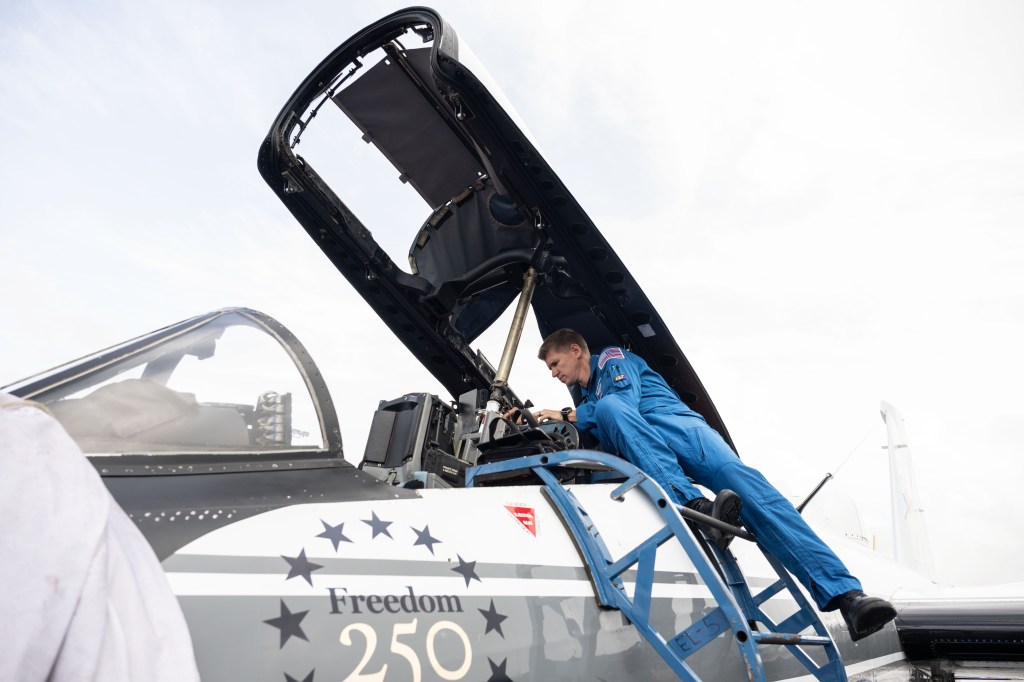
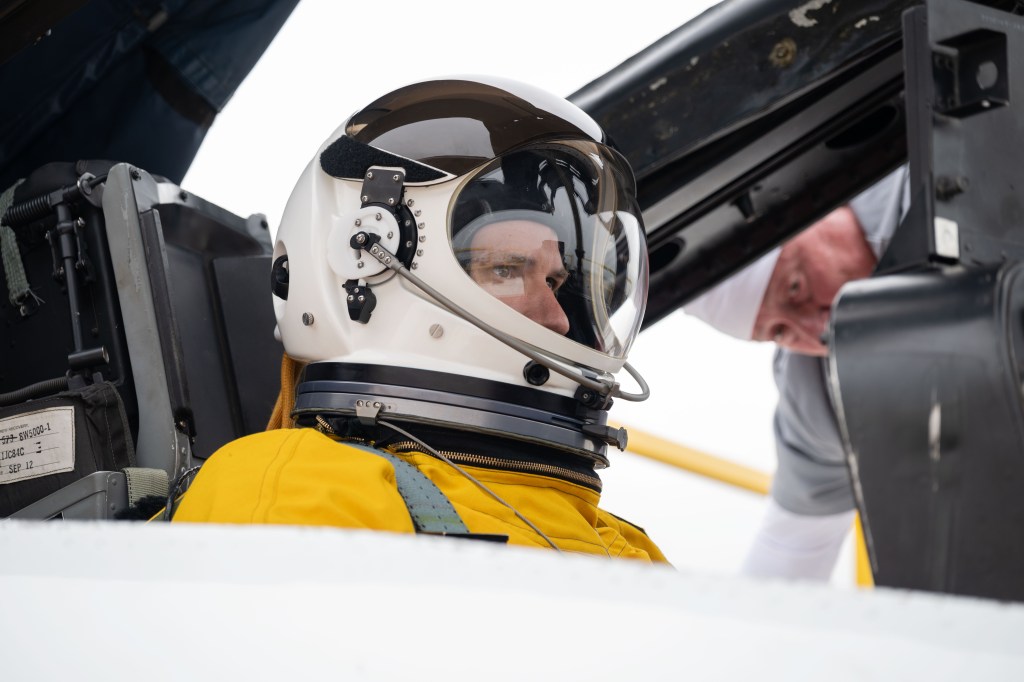
Whether learning to become a pilot or sharpening their existing piloting skills, astronaut candidates train in aircraft to build confidence, coordination, adaptability, and resilience in high-stakes environments. This summer, that training included flights on NASA’s WB-57s – a trio of long-range, high-altitude airplanes that have flown research missions since the 1960s. The class also began flying NASA’s T-38 supersonic jets.

Altitude Chamber Runs

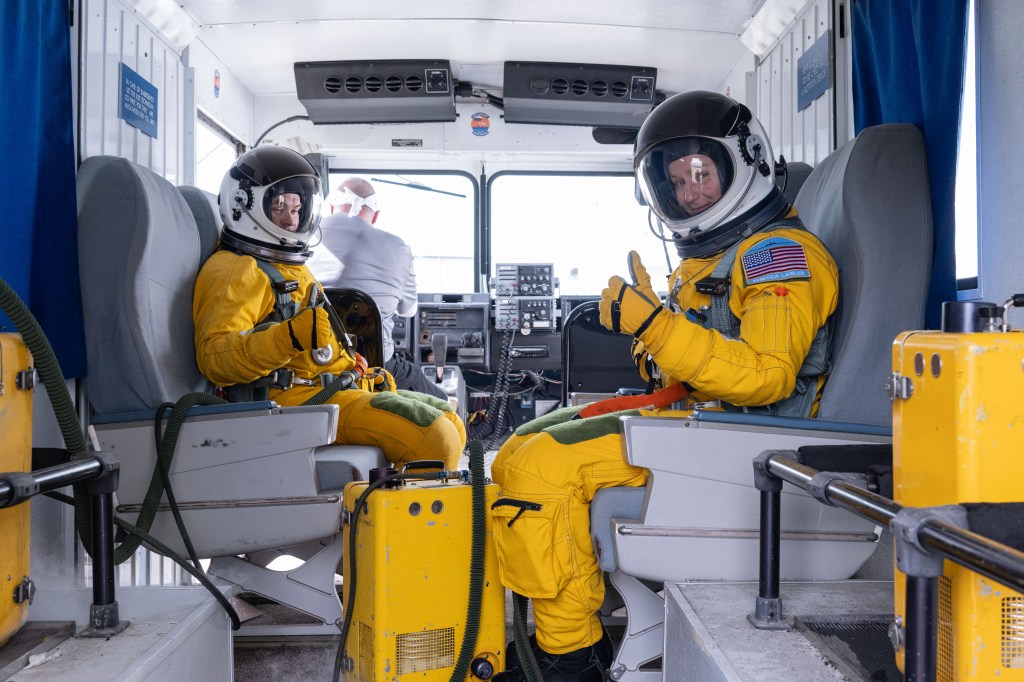
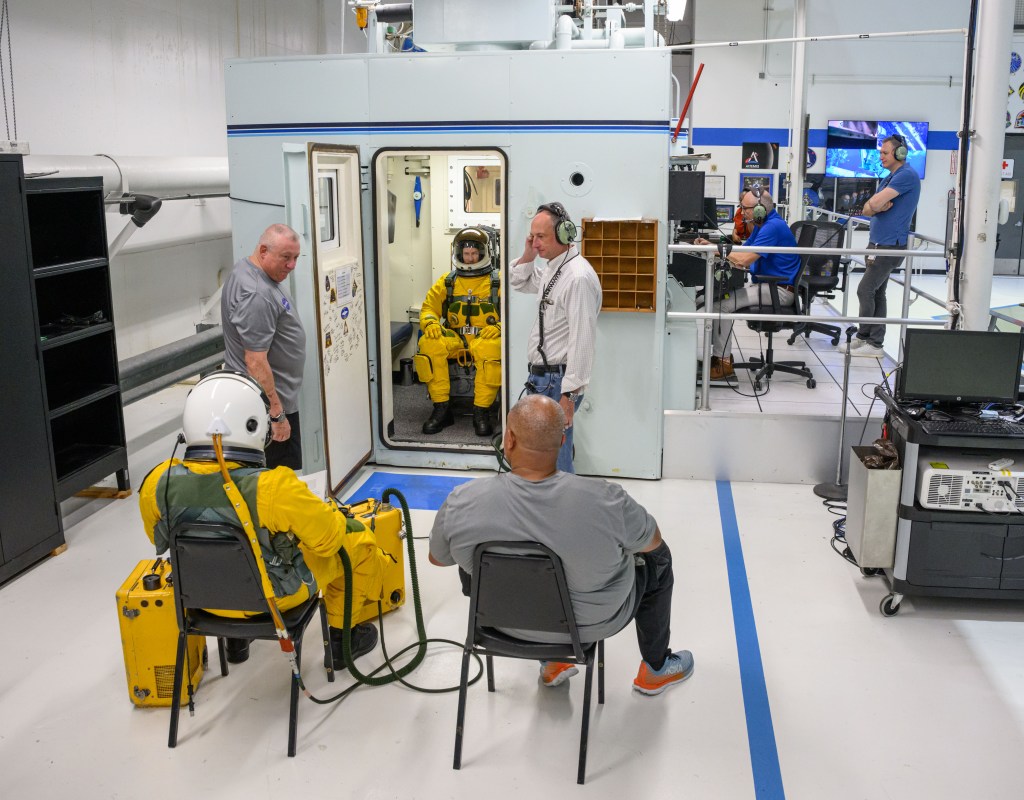
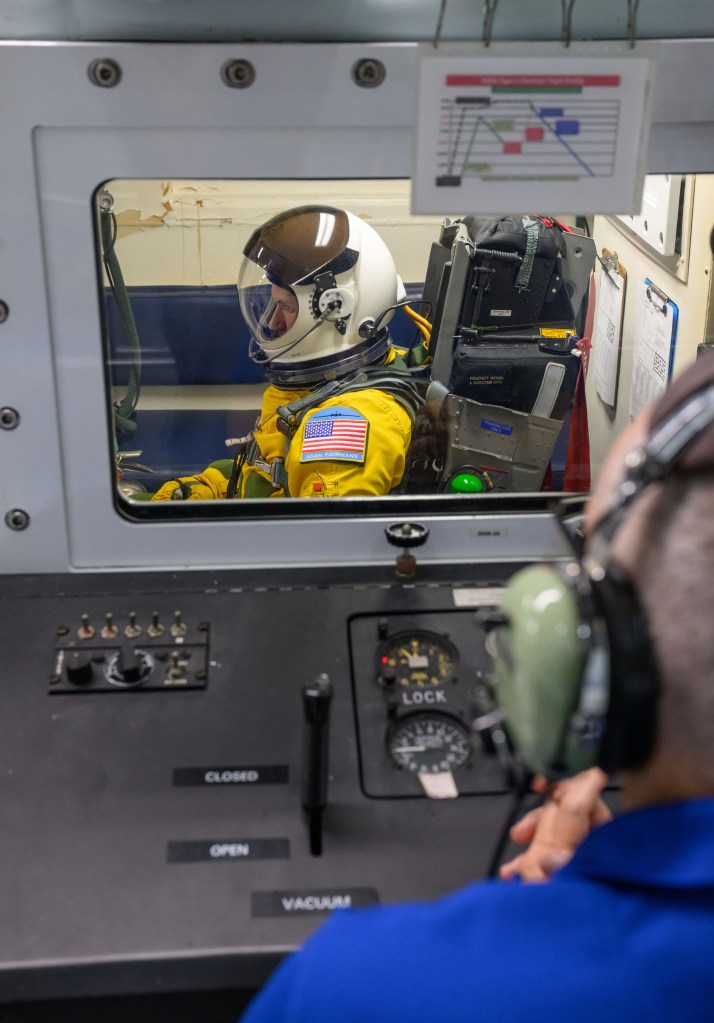
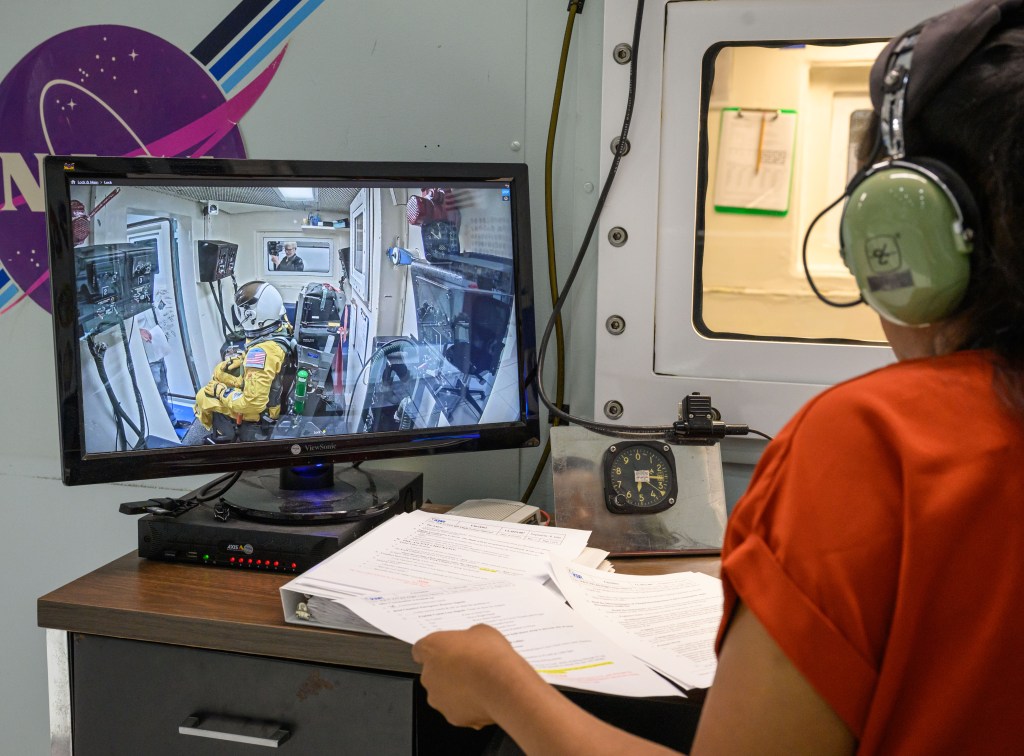
Candidates have also spent time in one of Johnson’s altitude chambers as part of their flight training. These unique facilities allow NASA to simulate physical pressure levels ranging from those at sea level to near vacuum. After donning flight suits and helmets, candidates enter the chamber to familiarize themselves with the conditions they will face on high-altitude flights and in space, and to practice different protocols and interventions designed to keep them safe.

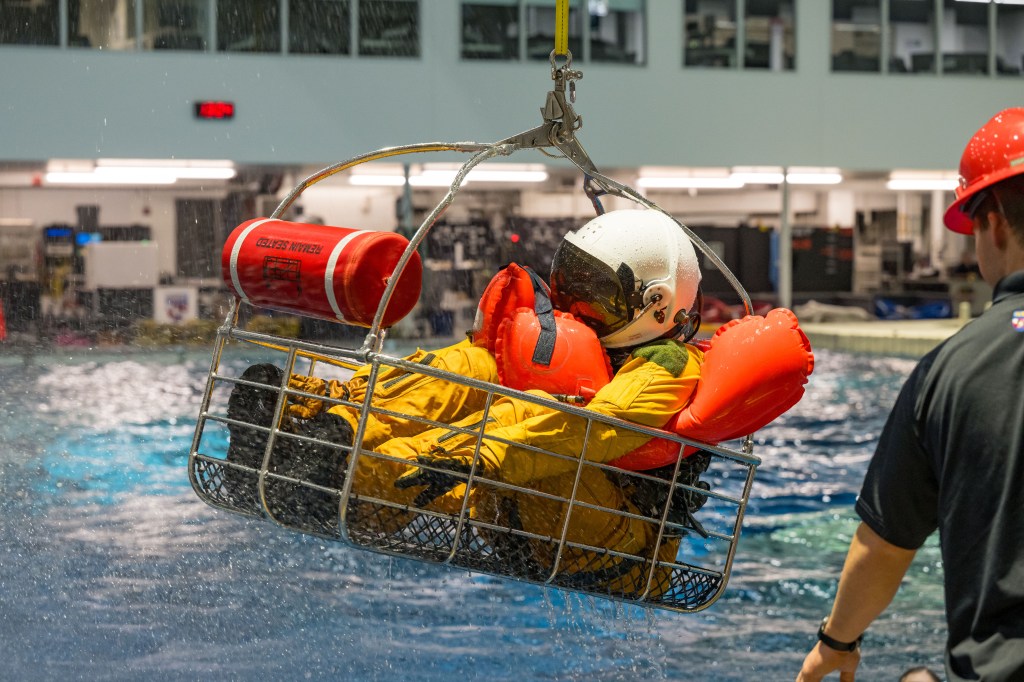
Water Survival Training

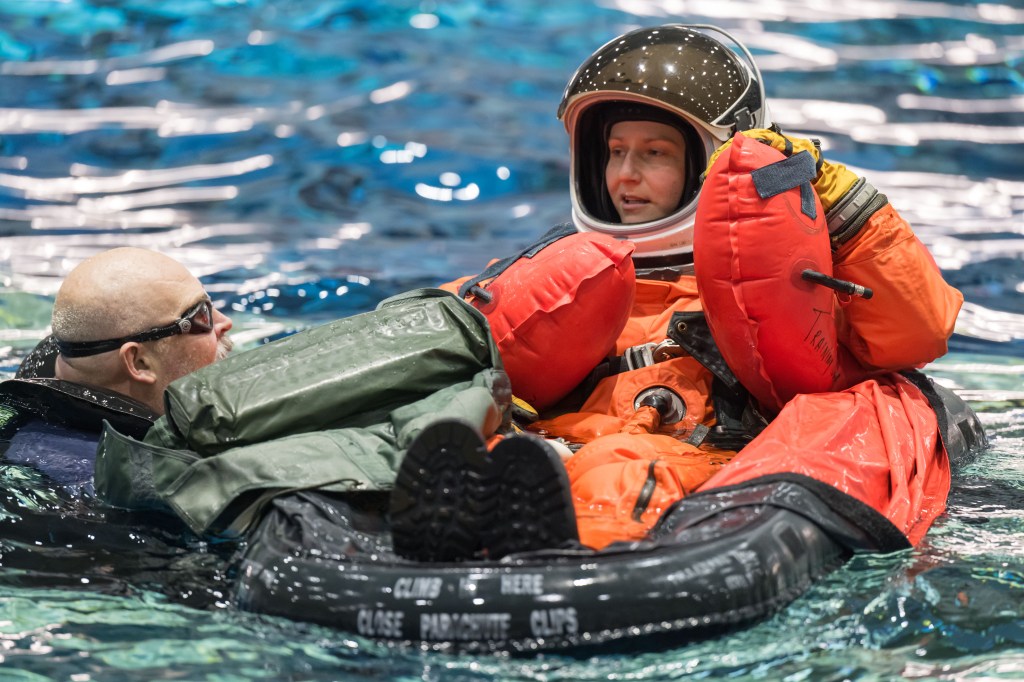
Candidates continued survival training to prepare for the unlikely event of landing in remote environments after a mission. Water survival exercises in Johnson’s Neutral Buoyancy Laboratory, or NBL, simulate these scenarios while also building teamwork and decision-making skills.

On top of these exercises, candidates are completing intensive Russian language classes and cross-cultural training to prepare for missions spanning countries and continents. They are learning to operate spacecraft systems used in human spaceflight missions, conducting spacewalk training at the NBL, and training inside other mockups of space vehicles. They are also learning emergency procedures, maintenance, and repair of spacecraft.

The class is on track to graduate in 2027, when they will join NASA’s active astronaut corps and await their first flight assignments. Whether they go on to contribute to research taking place aboard the International Space Station or venture to the Moon to prepare for future Mars missions, the graduates will have the operational expertise, scientific knowledge, and technical background necessary to advance NASA’s deep space exploration goals and sustain a long-term human presence beyond low Earth orbit.

About the Author

Linda E. Grimm

Linda E. Grimm

Details

Last Updated

Sep 10, 2026

Source: www.nasa.gov
NASA Kicks Off Inspiration Tour with Steelers vs. Falcons Game

Three Pittsburgh Steelers fans, dressed in black and yellow clothes with the Steelers' logo on it, pose with an astronaut in a spacesuit. The reflective visor is closed. In the foreground, a man takes the group's picture with his phone.
NASA/Aubrey Gemignani

Fans pose for a photo with an astronaut in the NASA Experience Zone at an NFL game between the Pittsburgh Steelers and the Atlanta Falcons at Acrisure Stadium, Sunday, Sept. 13, 2026, in Pittsburgh, Pennsylvania.

NASA’s engagement at NFL games is part of the agency’s Inspiration Tour, aimed at strengthening connections between NASA and its partners and showcasing innovation in air and space in the lead up to the MAX POWER aerospace technology expo and air show at the agency’s Kennedy Space Center in early November.

Image Credit: NASA/Aubrey Gemignani

Source: www.nasa.gov
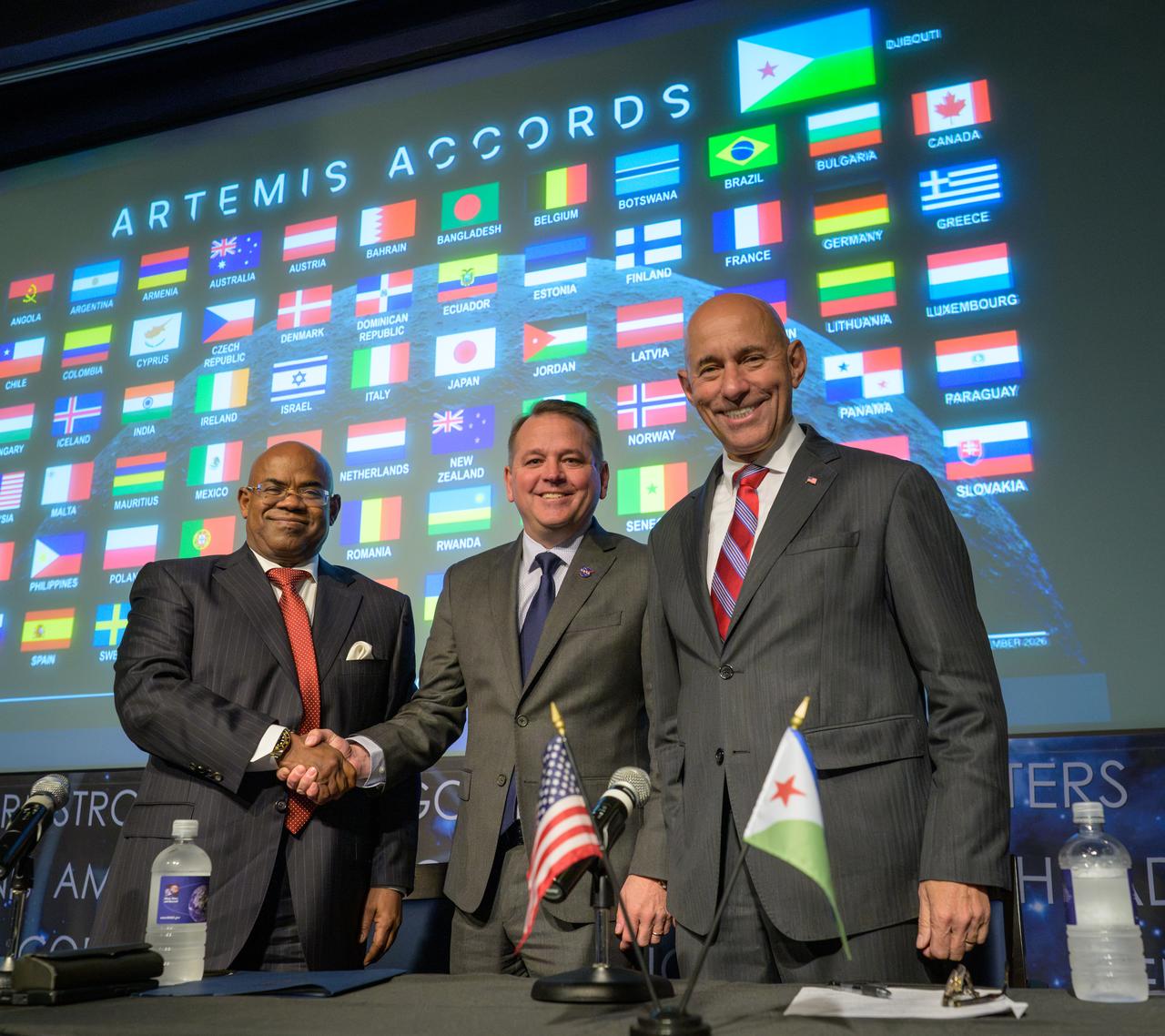
NASA Welcomes Djibouti as Newest Artemis Accords Signatory  

NASA Deputy Administrator Matt Anderson, center, Ambassador of Djibouti to the United States, Mohamed Siad Douale, left, and Assistant Secretary of State for African Affairs, Frank Garcia, right, pose for a group photograph after the Artemis Accord signing, Monday, September 14, 2026, at the Mary W. Jackson NASA Headquarters building in Washington. Djibouti is the 72nd country to sign the Artemis Accords, which establish a practical set of principles to guide space exploration cooperation among nations participating in NASA’s Artemis program.
NASA Deputy Administrator Matt Anderson, center, Ambassador of Djibouti to the United States, Mohamed Siad Douale, left, and Assistant Secretary of State for African Affairs, Frank Garcia, right, pose for a group photograph after the Artemis Accord signing, Monday, September 14, 2026, at the Mary W. Jackson NASA Headquarters building in Washington.
NASA/Bill Ingalls

The Republic of Djibouti became the 72nd nation and eighth African country to sign the Artemis Accords during a ceremony Monday at NASA Headquarters in Washington. The Artemis Accords are the first set of practical principles aimed at enhancing transparency, safety, and coordination among nations as they explore the Moon, Mars, and beyond.

“Djibouti joins this coalition of like-minded nations at an important time,” said NASA Deputy Administrator Matt Anderson, who hosted the ceremony. “President Trump has directed NASA to return Americans to the lunar surface, establish an enduring presence, and lay the foundation for human exploration of Mars. NASA will lead, but we will not do it alone. We are creating opportunities for Artemis Accords nations to contribute hardware, scientific payloads, technology demonstrations, CubeSats, and other capabilities to future missions.” 

Ambassador of Djibouti to the United States Mohamed Siad Douale signed on behalf of Djibouti. U.S. State Department Assistant Secretary for African Affairs Frank Garcia also participated in the event.

Djibouti’s national space program, launched in 2020 and managed by the Centre for Studies and Research of Djibouti within the Ministry of Higher Education and Research, has steadily expanded its technical capabilities. The nation successfully launched its first satellites, Djibouti 1A and Djibouti 1B, in 2023 and 2024, respectively. Both reached orbit aboard American Falcon 9 rockets launched from Vandenberg Space Force Base in California, an early example of how the U.S. is supporting Djibouti capabilities in space.

“By joining the Artemis Accords, Djibouti seeks to deepen its partnership with the United States and with the growing community of nations committed to peaceful space cooperation,” said Douale. “We look forward to building partnerships in scientific research, satellite applications, education, and technical training, while creating new opportunities for Djibouti students, researchers, engineers, and entrepreneurs.”

In 2020, NASA and the State Department joined with seven other founding nations to establish the Artemis Accords, responding to the growing interest in lunar activities by both governments and private companies, and committing nations to:

  • Explore peaceably and transparently
  • Render aid to those in need
  • Enable access to scientific data
  • Ensure activities do not interfere with those of others
  • Preserve historically significant sites and artifacts by developing best practices

By signing the Artemis Accords, nations open the door to opportunities for future lunar exploration with NASA, advancing humanity’s return to the Moon, and shaping the Golden Age of space exploration and innovation.

Learn more about the Artemis Accords at: 

https://www.nasa.gov/artemis-accords

-end-

Source: www.nasa.gov
An Early Look at Fall Color in Canada


July 27
September 6

A river winds through a mostly green tundra landscape in summer, dotted with numerous lakes.
NASA Earth Observatory/Michala Garrison

A river winds through the same tundra landscape in autumn, now colored red and orange. Some green vegetation remains visible along the river.
NASA Earth Observatory/Michala Garrison

A river winds through a mostly green tundra landscape in summer, dotted with numerous lakes.
NASA Earth Observatory/Michala Garrison

A river winds through the same tundra landscape in autumn, now colored red and orange. Some green vegetation remains visible along the river.
NASA Earth Observatory/Michala Garrison


July 27

September 6


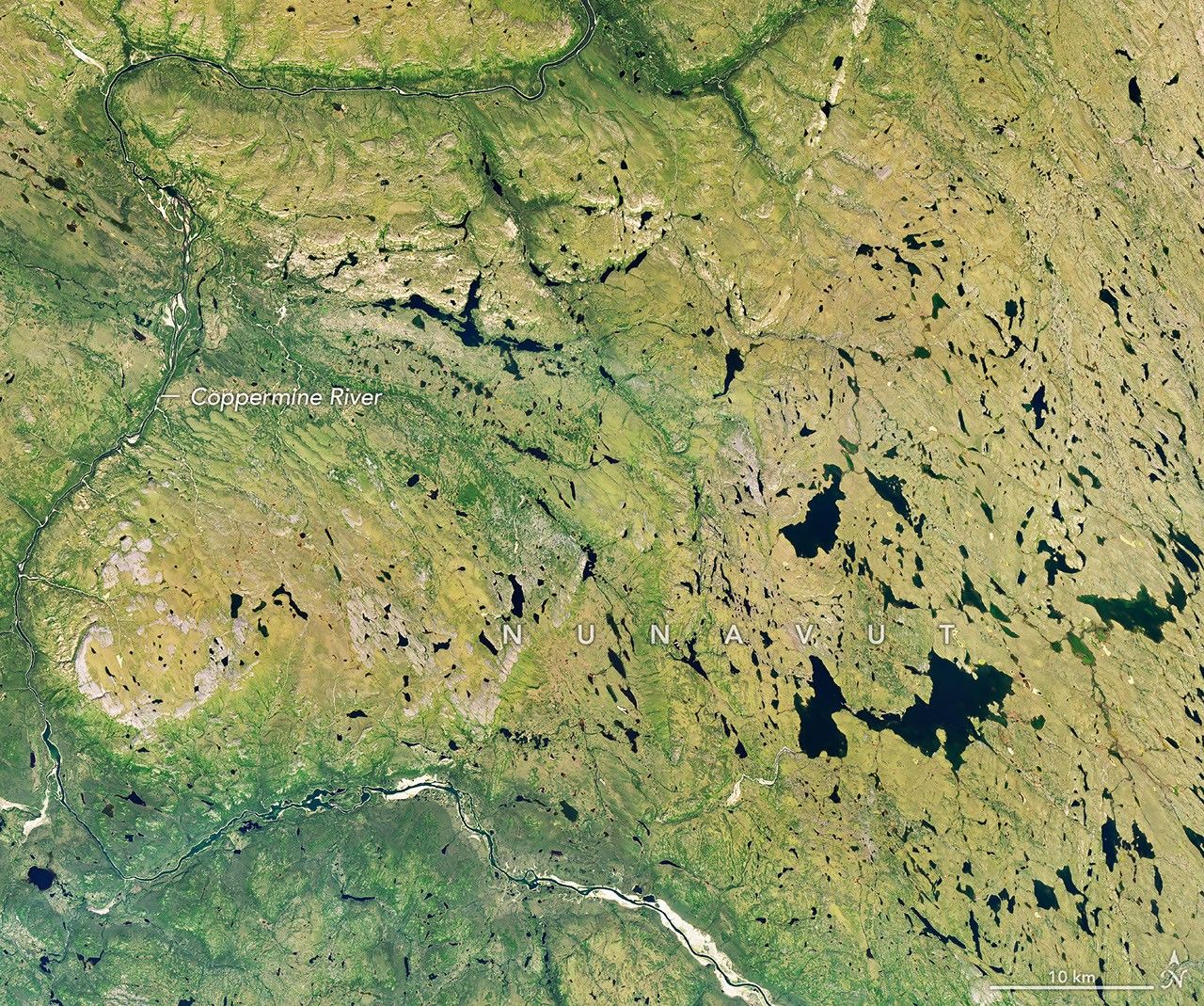
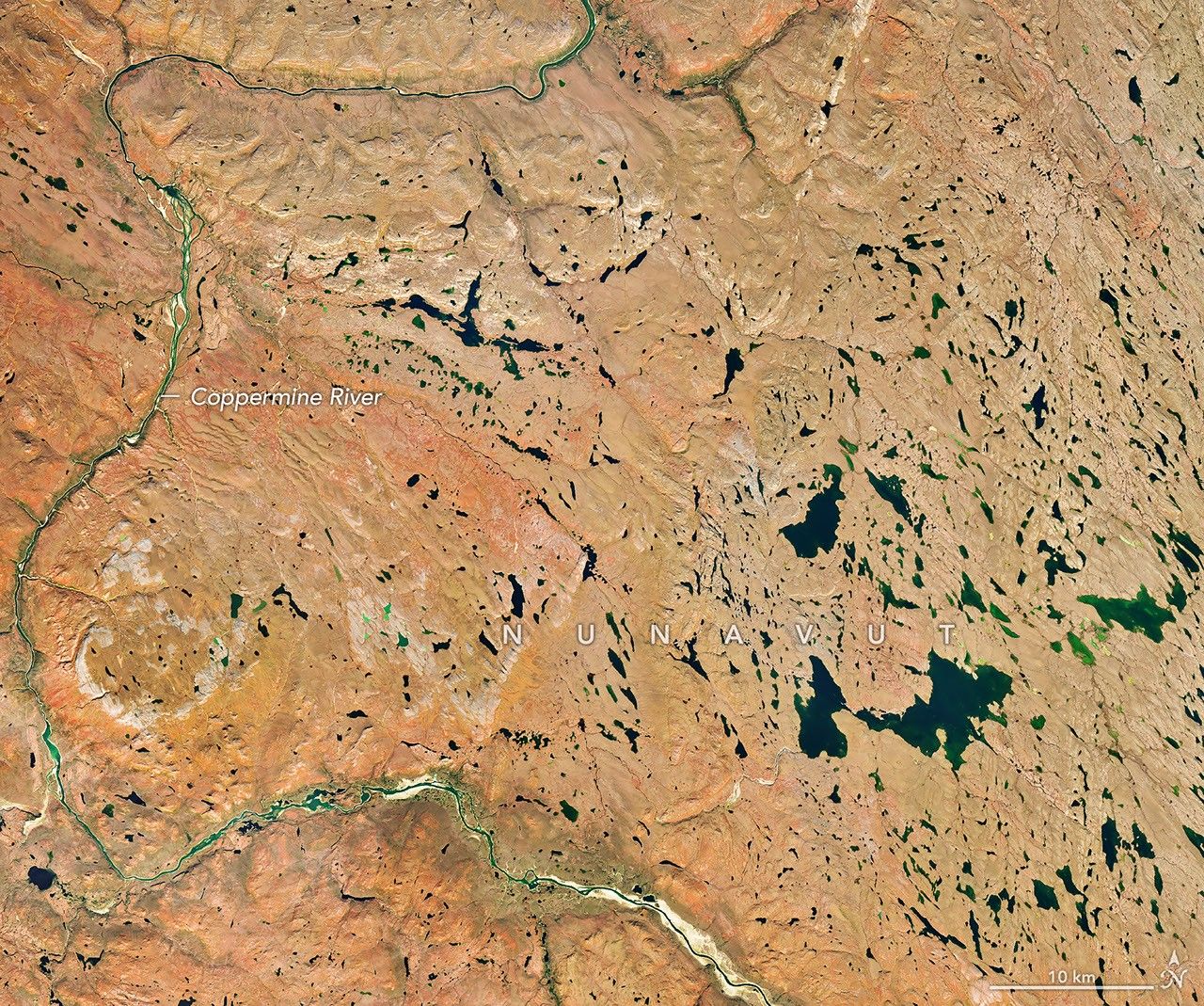
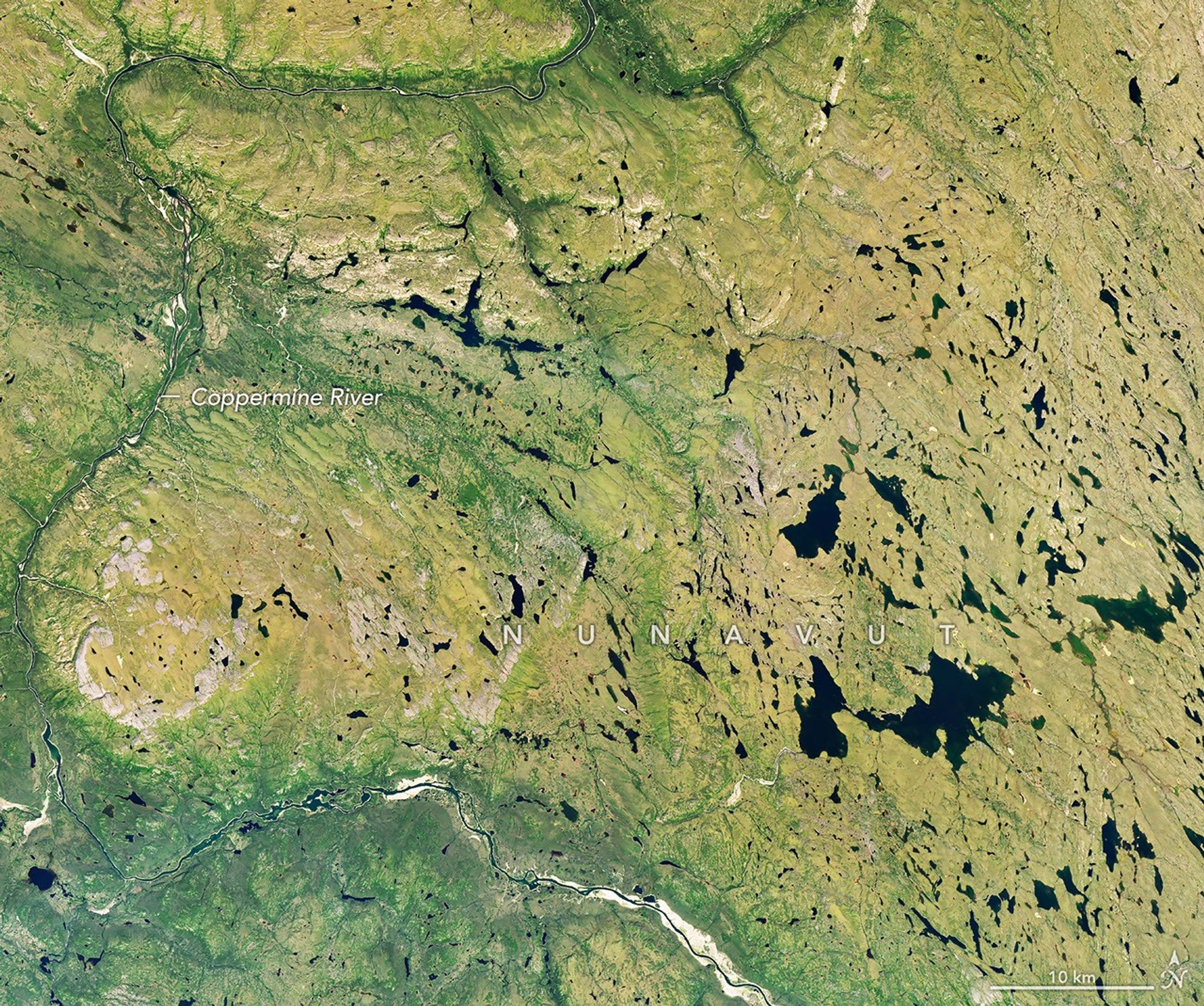
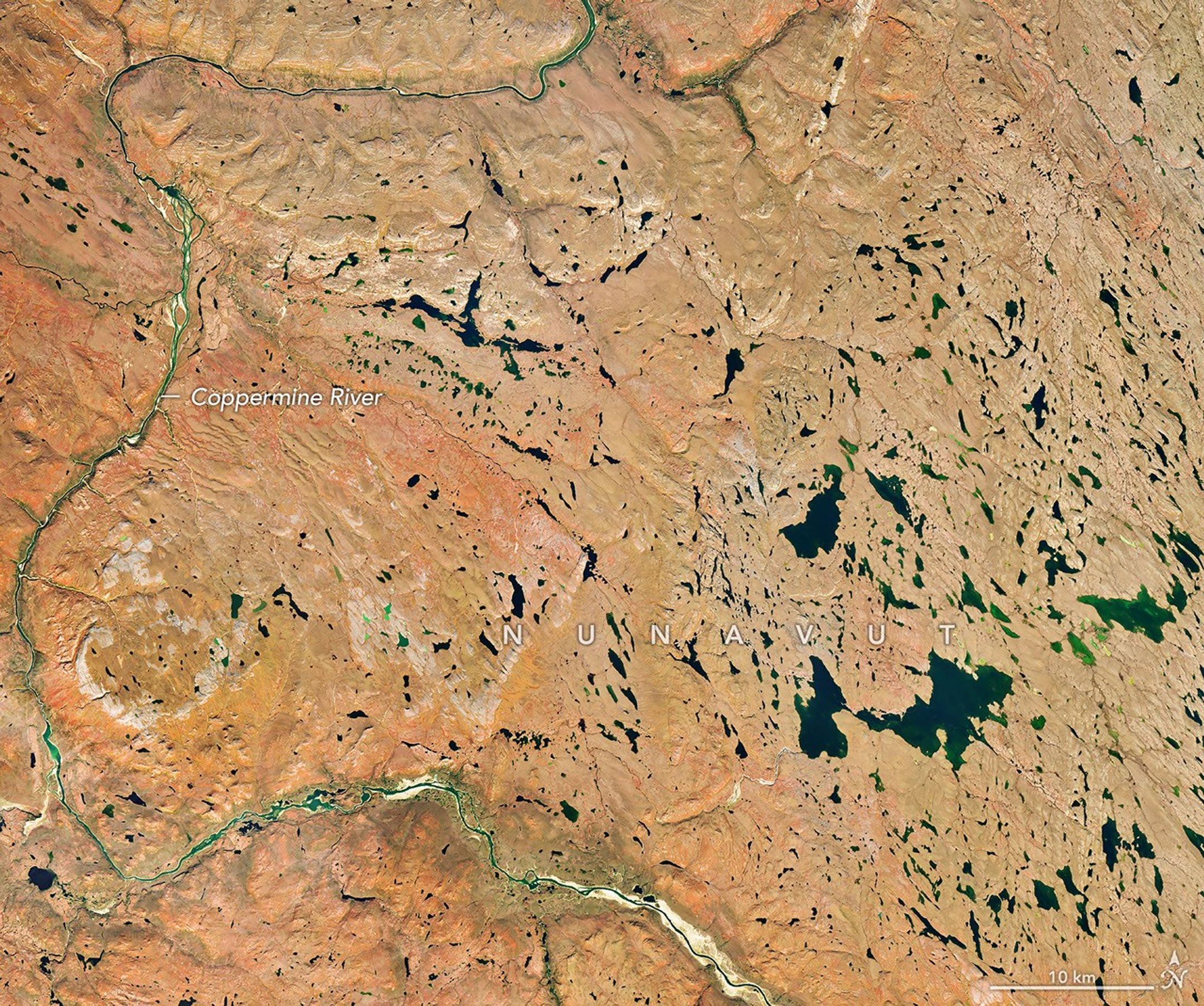
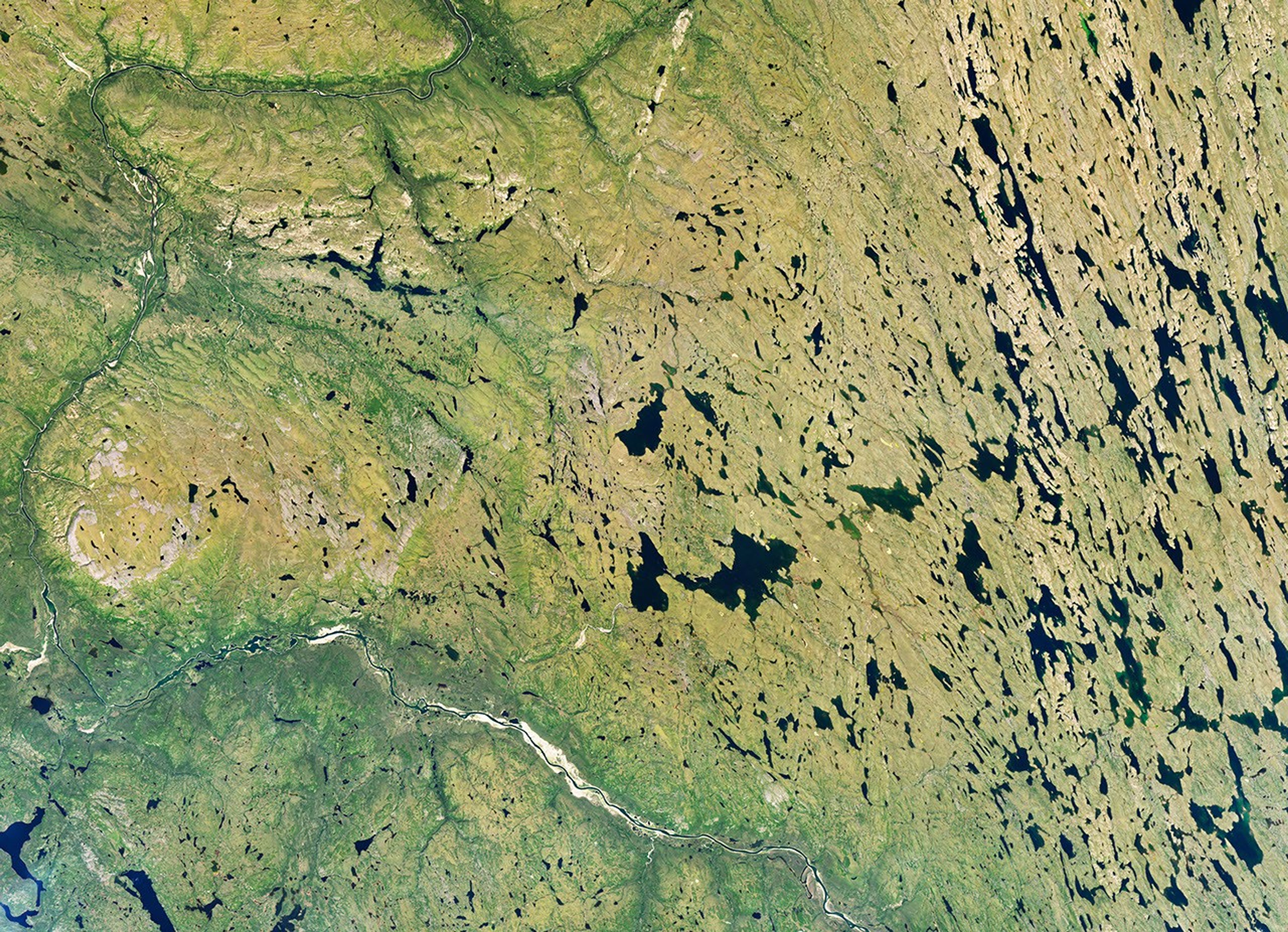
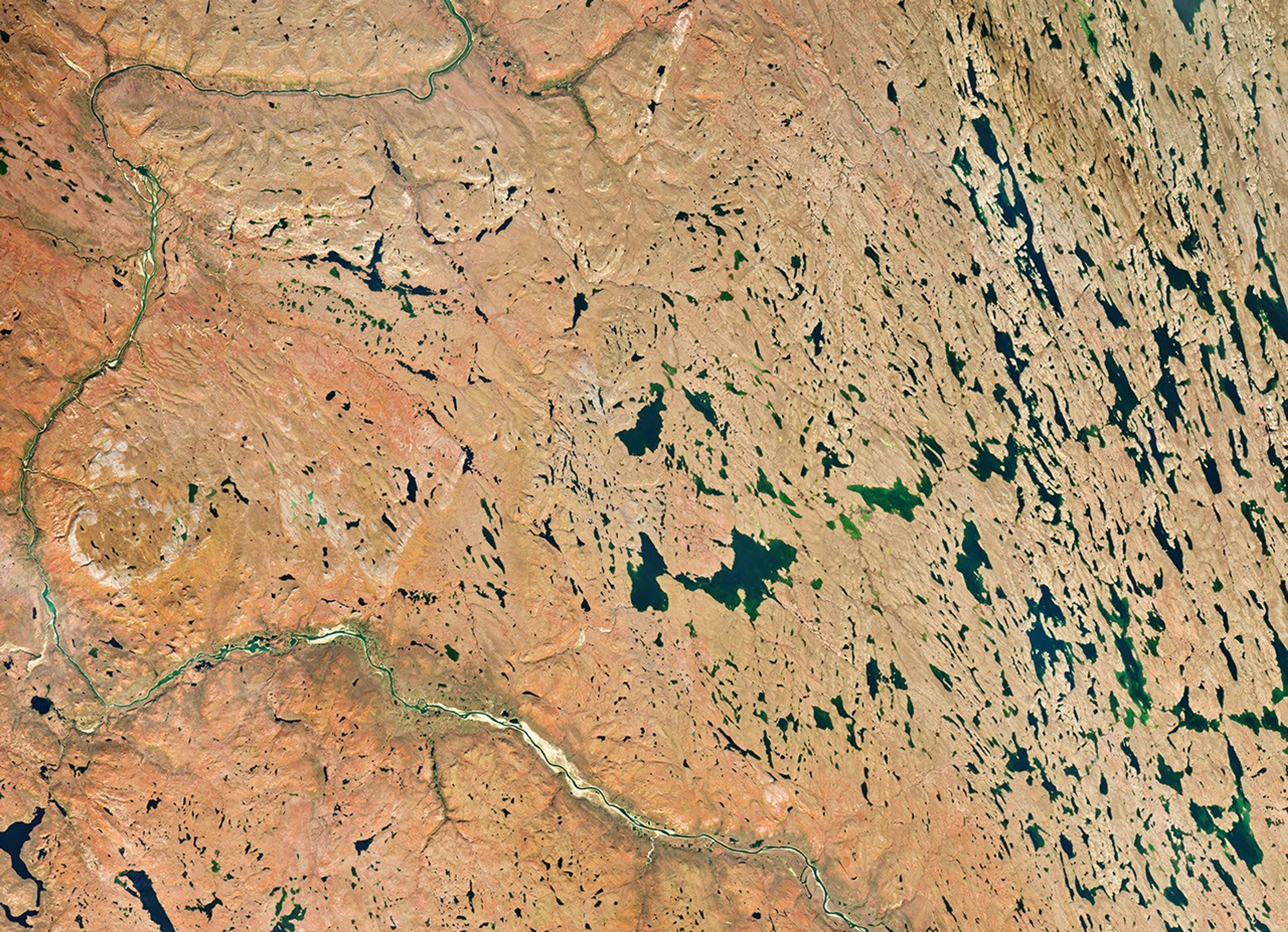
Autumn color sweeps across the low-growing shrubs and tundra vegetation of Nunavut, Canada, in this image pair captured by the OLI (Operational Land Imager) on Landsat 9. NASA Earth Observatory images by Michala Garrison.

As North America rode out a summer of remarkable heat, fall foliage and cool, crisp weather still seemed like distant, alien concepts across much of the continent in early September 2026. But fall comes early in the tundra and subarctic ecosystems of Nunavut, in far northern Canada.

Vivid signs of the season were already sweeping across the landscape on September 6 when the OLI (Operational Land Imager) on Landsat 9 captured this image (right) of the Coppermine River winding through low-growing shrubs and tundra vegetation upriver of Kugluktuk, a community at the river’s mouth. The other image (left) shows the same area on July 27, 2026, when vegetation was still green.

The region is known for willow and birch shrubs, blueberries, bearberries, and other low-growing tundra plants that turn shades of red, orange, and yellow each fall. A NASA and South Dakota State University analysis of seven years of satellite data found that foliage in the region begins to change in early September and peaks in mid-month, making this one of the first places on the North American continent to change color. But blink and you might miss it: the analysis also showed that far northerly regions tend to have shorter periods of peak color—sometimes a week or less—compared to many lower-latitude areas.

In the fall, leaves change colors as they lose chlorophyll, the molecule that plants use to synthesize food. Chlorophyll makes plants appear green because it absorbs the red and blue light from sunlight as it strikes leaf surfaces. However, chlorophyll is not a stable compound, and plants must continuously synthesize it, a process that requires ample sunlight and warm temperatures. As temperatures drop and days shorten in autumn, levels of chlorophyll fall as well.

As concentrations of chlorophyll decline, the green fades from leaves, presenting an opportunity for other pigments—carotenoids and anthocyanins—to take the stage. Carotenoids absorb blue-green and blue light, so in the absence of chlorophyll, they cause leaves to appear yellow. Anthocyanins absorb blue, blue-green, and green light, so light reflecting off the pigments appears red.

Citizen scientists have an opportunity to help NASA scientists track fall color and contribute to long-term environmental databases with the GLOBE North American Phenology Campaign. Participants observe and record leaf color changes during the spring and fall, helping scientists understand plant responses to climate and environmental changes.

NASA Earth Observatory images by Michala Garrison, using Landsat data from the U.S. Geological Survey. Story by Adam Voiland.

References & Resources

You may also be interested in:

Stay up-to-date with the latest content from NASA as we explore the universe and discover more about our home planet.

Painting the Growing Season in the Maize Triangle

3 min read

Radar data from an agricultural area in South Africa, shown in a vivid color palette, reveal crop types and how…

Article

Wild, Scenic, and Increasingly Rusty

5 min read

Orange streams are now being spotted in hundreds of watersheds in permafrost areas throughout Alaska’s Brooks Range.

Article

A Shift in What’s Shaping U.S. Landscapes

5 min read

Wild disturbances are on the rise, while land disturbed by human activity has been decreasing.

Article

Source: science.nasa.gov