Passion Meets Precision at NASA’s Flight Research Lab

4 min read

Preparations for Next Moonwalk Simulations Underway (and Underwater)

One man communicates with a hand-held radio, as two other men wait to the side for the go-ahead command to fly an experiment on a drone.
Derek Abramson, Dale Reed Subscale Flight Research Laboratory chief engineer, left, communicates with the Edwards Air Force Base air traffic control tower for approval to fly the Alta-X drone near NASA’s Armstrong Flight Research Center in Edwards, California, on Thursday, Aug. 27, 2026. Justin Link, small uncrewed aircraft pilot, second from left, and laboratory chief pilot Justin Hall await flight clearance. Researchers at NASA’s Johnson Space Center in Houston developed the advanced guidance and navigation system known as the Safe and Precise Landing – Integrated Capabilities Evolution (SPLICE) experiment, which is installed on the Alta-X. SPLICE will help spacecraft land precisely and detect and avoid potential hazards, which is critical for NASA missions to the Moon and to Mars.
NASA/Ryan Kline

Long before they helped shape NASA’s future aerospace breakthroughs, Derek Abramson, Justin Hall, and Justin Link were in their garages and homes building radio‑controlled aircraft, testing new ideas, and flying their creations at hobby events. That early passion now fuels the work of NASA’s Dale Reed Subscale Flight Research Laboratory at the agency’s Armstrong Flight Research Center in Edwards, California.

At NASA Armstrong’s subscale flight lab, the team turns that lifelong enthusiasm into mission-focused innovation. The laboratory supports research that ranges from advanced navigation systems for future landings on the Moon and Mars to emerging aeronautics concepts that need quick, low-cost evaluation. NASA’s small, remotely piloted and autonomous aircraft allow engineers to explore ideas that could be difficult, risky or expensive to test at full scale.

Skilled team

Abramson, Hall, and Link play key roles in that work. Abramson serves as the laboratory’s chief engineer. Hall is the chief pilot. Link is a drone pilot. Together, they integrate emerging aerospace technologies with the lab’s subscale aircraft fleet and, when needed, design and build aircraft or flight experiments to evaluate new concepts.
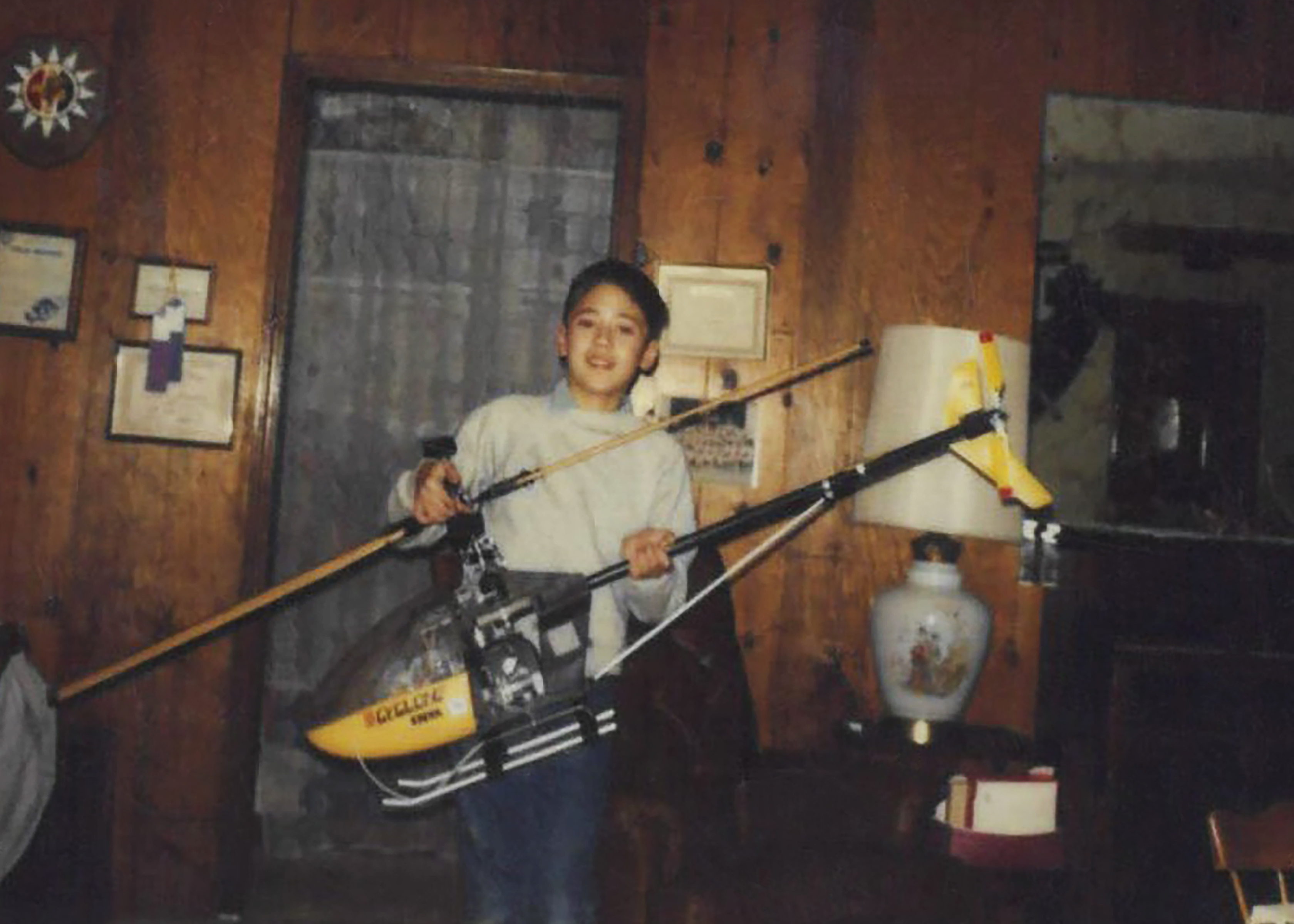
A boy holds a large radio-controlled black-and-yellow helicopter.
Derek Abramson, chief engineer at the Dale Reed Subscale Flight Research Laboratory at NASA’s Armstrong Flight Research Center in Edwards, California, is shown with his Kalt Cyclone radio-controlled helicopter in the mid-1980s. Abramson loved flying this aircraft as a child, and he has been an aviation enthusiast for as long as he can remember.
Derek Abramson

Abramson’s expertise, built through service in the U.S. Navy and the aerospace industry, centers on technical oversight, management, and system design. Hall is known for creative approaches to problem solving and uses practical methods to address technical challenges and maintain flight safety. Link specializes in designing and fabricating research vehicles and draws on extensive hands-on experience to understand what works, and what does not, in flight. 

On weekends, the team often tinkers in their garages or hangars building radio-control aircraft, researching hobby trends, or exploring new technologies. You might see them flying their creations at hobby events or attending trade shows. Their passion for flight brought Abramson, Hall, and Link together years before they one-by-one joined NASA more than a decade ago, though each discovered that spark in a different way.

Early influences

Abramson’s interest began as a child with rubber-band powered stick and tissue aircraft and radio-controlled models. His early aviation pursuits led to his first solo flight while in high school and a pilot’s license. In the Navy, he worked on multiple aircraft, including EA-6B and the F-18, as an avionics technician. As an engineer, he supported the B-1 and CV-22 Osprey aircraft flight tests. As an intern at NASA Armstrong, he used his operational and engineering experience on remotely piloted and autonomous aircraft.

Hall’s interest grew after seeing historic aircraft including the Mach 3 SR-71 fly over his elementary school playground and watching Space Shuttle Challenger land from above his dad’s shoulders. He has built and flown model and remotely piloted aircraft for as long as he can remember. His reputation flying radio-controlled hobby aircraft at fly-ins and trade events led to an offer to fly subscale aircraft at NASA.
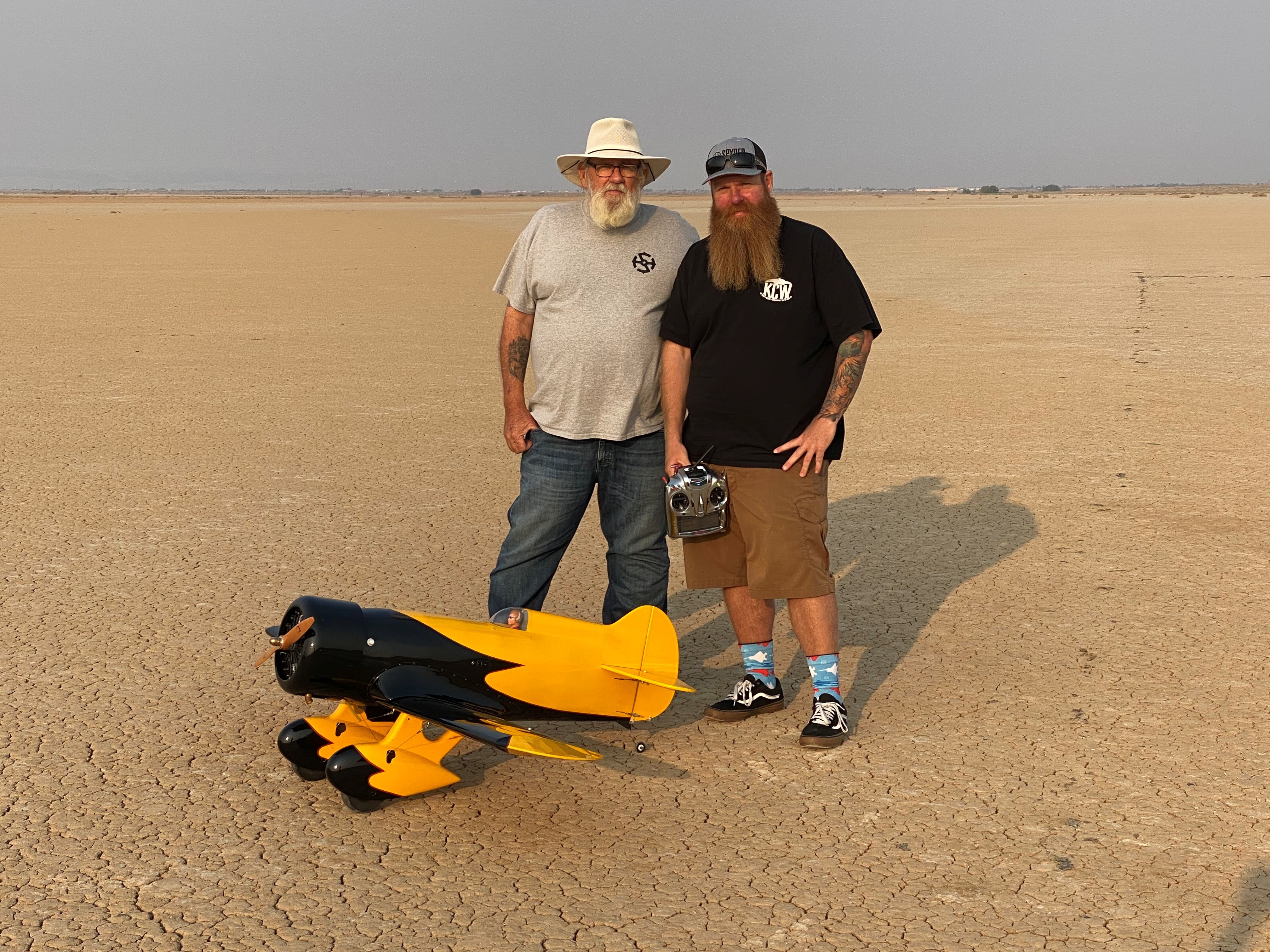
Two men stand by a yellow and black radio-controlled aircraft.
Justin Hall, chief pilot at the Dale Reed Subscale Flight Research Laboratory at NASA’s Armstrong Flight Research Center in Edwards, California, stands in front of a radio-controlled aircraft with his dad, David Hall, in August 2020. David Hall built the Gee Bee aircraft years earlier but was unable to fly it due to his health. He asked his son to fly the aircraft so he could see it in the air, which Justin did the day of this photo. Shortly afterward, David Hall passed away.
Justin Hall
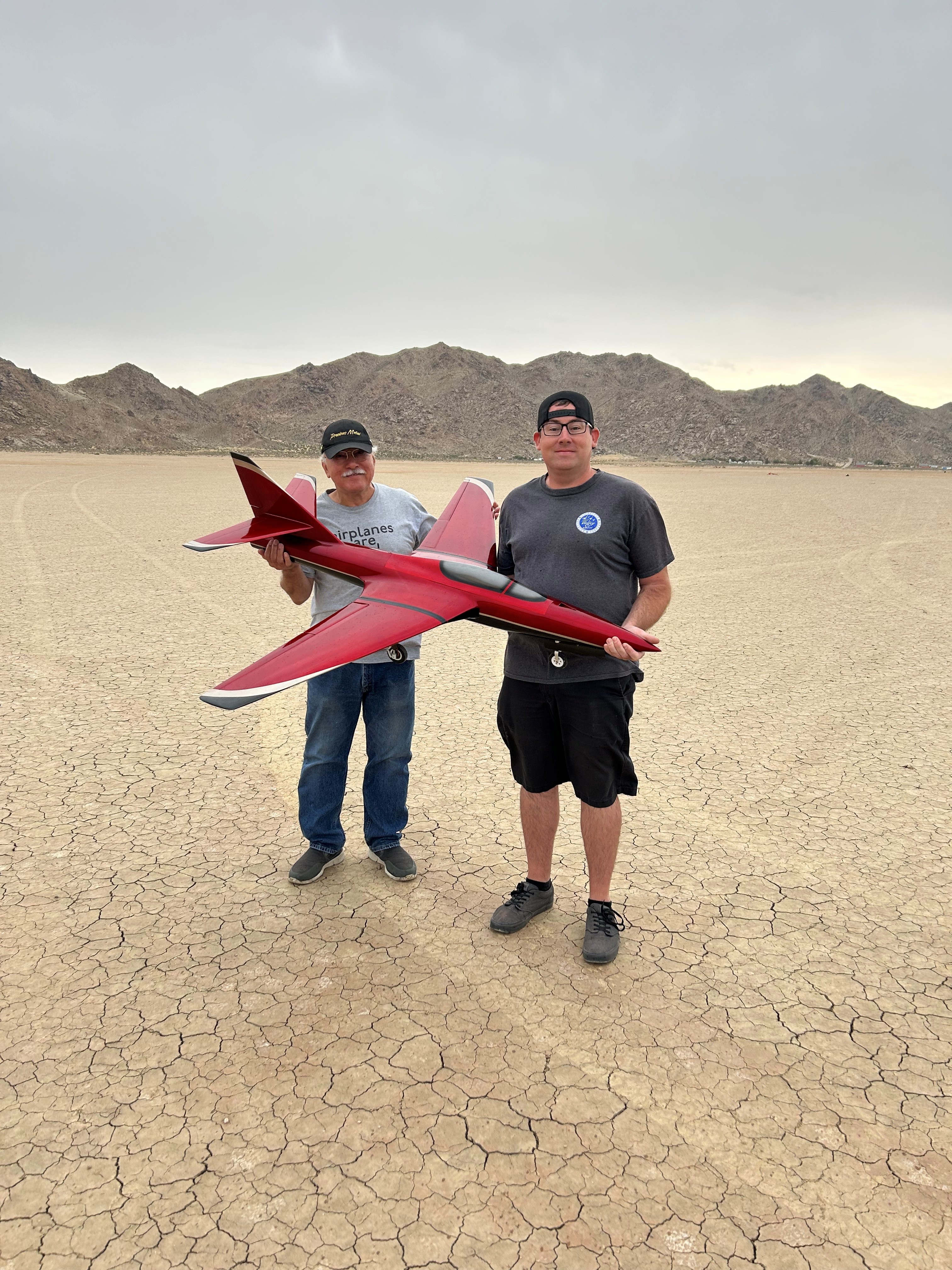
Two men hold a large radio-controlled aircraft. The aircraft is red with white and black stripes.
Justin link, drone pilot at the Dale Reed Subscale Flight Research Laboratory at NASA’s Armstrong Flight Research Center in Edwards, California, and his dad, Don Link, hold a Firebird radio-controlled aircraft on the day of its first flight in September 2023. It was a project they worked on together. Don Link reduced the dimensions of the original larger-scale model aircraft and drew the plans, while Justin Link manufactured composite molds and built the aircraft from scratch.
Justin Link

Link was five years old when he built balsa-wood aircraft with his dad and flew them in a field near their home. As he grew older, his hobby expanded to include radio-controlled cars, boats, helicopters, and aircraft. Aviation runs deep in Link’s family. His great grandfather served in the U.S. Army Air Corps, his grandfathers served in the U.S. Air Force, and his dad was an Air Force avionics technician. Link raced sailplanes, competed with scaled warbird aircraft, and was encouraged by family and friends to pursue an aviation profession. He has worked with large drones for more than 11 years, focusing on research and development, composite materials, and specialized fabrication methods.

Together, the team applies its experience and knowledge in rapid design, fabrication, integration and flight testing to bring new ideas to flight. Their work continues to support NASA’s missions across aeronautics, science, and exploration.

Source: www.nasa.gov

APOD: 2026 September 17 – A Treasure Chest in the Carina Nebula

APOD

Astronomy Picture of the Day

Discover the cosmos! Each day a different image or photograph of our fascinating universe is featured, along with a brief explanation written by a professional astronomer.

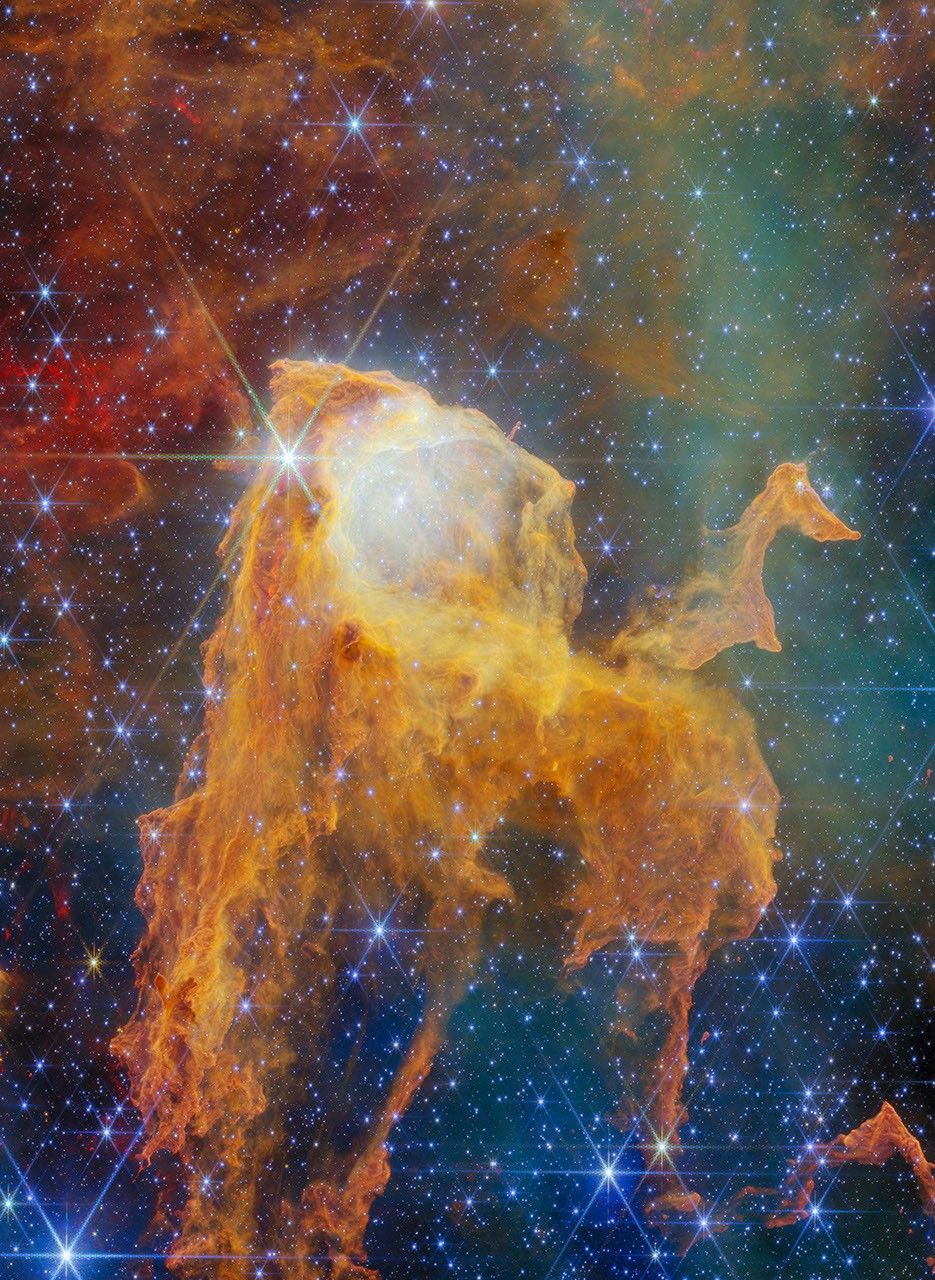
A colorful nebula resembles an open treasure chest on a field of stars

A Treasure Chest in the Carina Nebula

Explanation: This treasure chest is full of stars. The featured image was obtained with NASA‘s James Webb Space Telescope and shows a dust pillar in the Carina Nebula inside our Galaxy, roughly 7500 light-years away. It is formed by interstellar gas and dust, and shaped by powerful stellar winds and radiation from neighboring stars like the nearby Eta Carinae stellar system which is more luminous than 5 million suns. The star formation inside the pillar is excavating its head, creating the open lid of the chest. Astronomers estimate that there are about 70 stars in a compact cluster inside the pillar. This cluster is now thought to be only around 1.3 million years old. Its bounty of young stars includes a massive star approximately 19 times as massive as the Sun. More massive stars are rarer, shine brighter and evolve faster than less massive stars. They are the shiniest jewels in the treasure chest.

APOD’s main NASA site is moving : From apod.nasa.gov to science.nasa.gov/apod
Tomorrow’s picture: The Triangulum Galaxy

Date September 17, 2026
Credit ESA/Webb, NASA & CSA, M. Reiter; Acknowledgement: M. H. Özsaraç
Authors & editors: Cecilia Chirenti, Robert Nemiroff, Jerry Bonnell, Keighley Rockcliffe
A service of: ASD at NASA / GSFC,
NASA Science Activation & Michigan Tech. U.

Source: science.nasa.gov

NASA Unveils Enterprise, the First Space Shuttle

The Shuttle Enterprise (Orbiter Vehicle 101) rolls out of the Palmdale manufacturing facilities with Star Trek television cast members. From left to right they are: Dr. James D. Fletcher, NASA Administrator, DeForest Kelley (Dr. "Bones" McCoy), George Takei (Mr. Sulu), James Doohan (Mr. Scott), Nichelle Nichols (Lt. Uhura), Leonard Nimoy (the indefatigable Mr. Spock), Gene Rodenberry (The Great Bird of the Galaxy), and Walter Koenig (Ensign Pavel Chekov).
The rollout ceremony for NASA’s first space shuttle, OV-101, coincided with Constitution Day of the nation’s bicentennial on Sept.17, 1976. Although the orbiter was originally planned to be named Constitution, Star Trek fans successfully convinced President Gerald Ford to name it Enterprise after the series’ fictional starship.
NASA

Fifty years ago, on Sept. 17, 1976—Constitution Day of America’s bicentennial year—NASA unveiled its first space shuttle orbiter, OV-101, to the public. NASA had originally planned to name the vehicle Constitution, but a letter-writing campaign changed the agency’s plans. Nearly 100,000 fans of the Star Trek television series wrote the White House urging that the shuttle be named after the USS Enterprise, the fictional starship featured in the series. In a memo, President Gerald Ford directed NASA to christen the shuttle Enterprise saying he was “partial to the name”. The name Enterprise, long celebrated in U.S. naval history, had earlier been bestowed on the first nuclear-powered carrier, a World War II carrier, and an American vessel of the Revolutionary War.

Hundreds of invited guests attended the rollout ceremony at Rockwell’s Palmdale facility in southern California, including Star Trek creator Gene Roddenberry and several cast members. Pictured from left to right in this photo are NASA Administrator James C. Fletcher, DeForest Kelley (Dr. “Bones” McCoy), George Takei (Mr. Sulu), James Doohan (Chief Engineer Montgomery “Scotty” Scott), Nichelle Nichols (Lt. Uhura), Leonard Nimoy (Mr. Spock), series creator Gene Rodenberry, U.S. Rep. Don Fuqua (D.-Fla) and Walter Koenig (Ensign Chekov).

Even though Enterprise was not designed to fly in space, it performed the essential atmospheric test flights that paved the way for the shuttle program’s first spaceflights in 1981. The orbiter is now on display at the Intrepid Museum in New York City.

Learn more about the historic rollout of NASA’s first space shuttle.

Credit: NASA

Source: www.nasa.gov

NASA Invites Media to SpaceX’s 35th Resupply Launch to Space Station

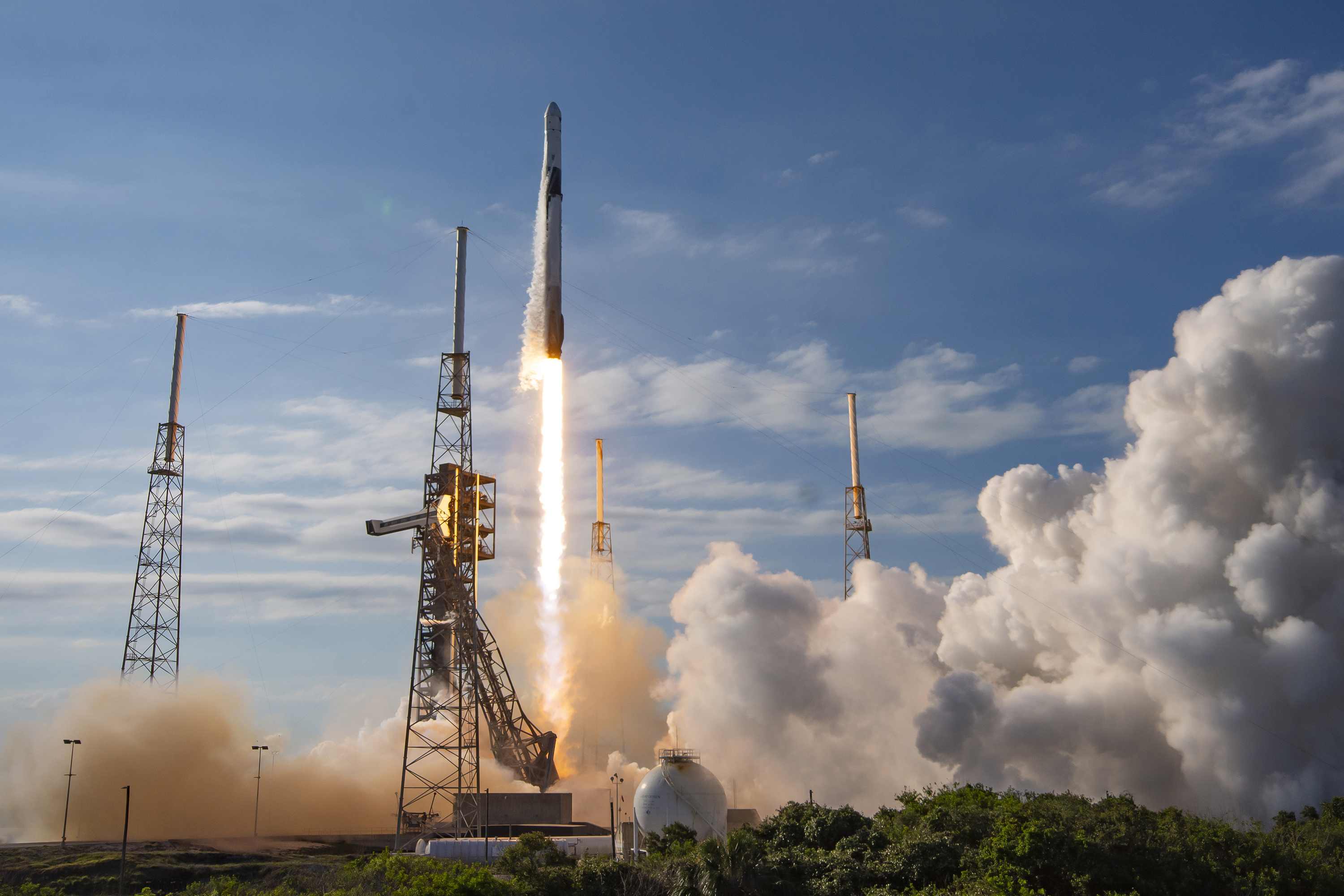
A SpaceX Falcon 9 rocket launches on May 15, 2026, carrying about 6,500 pounds of science, supplies, and equipment to the International Space Station during the company’s 34th commercial resupply mission for NASA.
Credit: NASA

Media accreditation is open for the next cargo launch that will deliver NASA science investigations, supplies, and equipment to the International Space Station. The 35th SpaceX commercial resupply services mission to the orbital laboratory for NASA will lift off on a Falcon 9 rocket.

NASA and SpaceX are targeting no earlier than October to launch the SpaceX Dragon spacecraft from Cape Canaveral Space Force Station in Florida.

Credentialing to cover prelaunch and launch activities is open to U.S. media only. The application deadline is 11:59 p.m. EDT, Thursday, Oct. 1. All accreditation requests must be submitted online at:

https://media.ksc.nasa.gov

Media will receive a confirmation email upon approval. NASA’s media accreditation policy is available online. For questions about accreditation, or to request special logistical support, email: [email protected]. For other questions, please contact NASA’s Kennedy Space Center newsroom at: 321-867-2468.

Each resupply mission to the station delivers scientific investigations in biology and biotechnology, Earth and space science, physical sciences, and technology development and demonstrations. Cargo resupply from U.S. companies ensures a national capability to deliver scientific research to the space station, significantly increasing NASA’s ability to conduct new investigations aboard humanity’s laboratory in space.

In addition to food, supplies, and equipment for the crew, Dragon will deliver the final sets of International Space Station Roll-Out Solar Arrays, called IROSA, which astronauts will install during future spacewalks to complete station’s power augmentation. Once installed, the arrays will provide additional power to support critical station operations, including its safe and controlled deorbit.

The mission also will transport several new experiments to the orbital complex, including hardware to manufacture artificial retinas in microgravity that could help restore vision for patients on Earth and 3D heart cell models to advance large-scale drug testing on future space missions. Dragon also will carry materials to study how a new type of glass is formed in microgravity, and brain organoids that could uncover potential treatment targets for neurodegenerative diseases like Alzheimer’s, Parkinson’s, and multiple sclerosis.

For more than 25 years, people have lived and worked continuously aboard the International Space Station, advancing scientific knowledge and making research breakthroughs not possible on Earth. The space station helps NASA understand and overcome the challenges of human spaceflight, expand commercial opportunities in low Earth orbit, and build on the foundation for long-duration missions to the Moon, as part of the Artemis program, and to Mars.

Learn more about NASA’s commercial resupply missions at:

https://www.nasa.gov/station

-end-

Josh Finch / Jimi Russell
Headquarters, Washington
202-358-1100
[email protected] / [email protected]

Steven Siceloff
Kennedy Space Center, Fla.
321-876-2468
[email protected]

Sandra Jones / Joseph Zakrzewski
Johnson Space Center, Houston
281-483-5111
[email protected] / [email protected]

Source: www.nasa.gov

Summer Goes Out With a Heat Dome

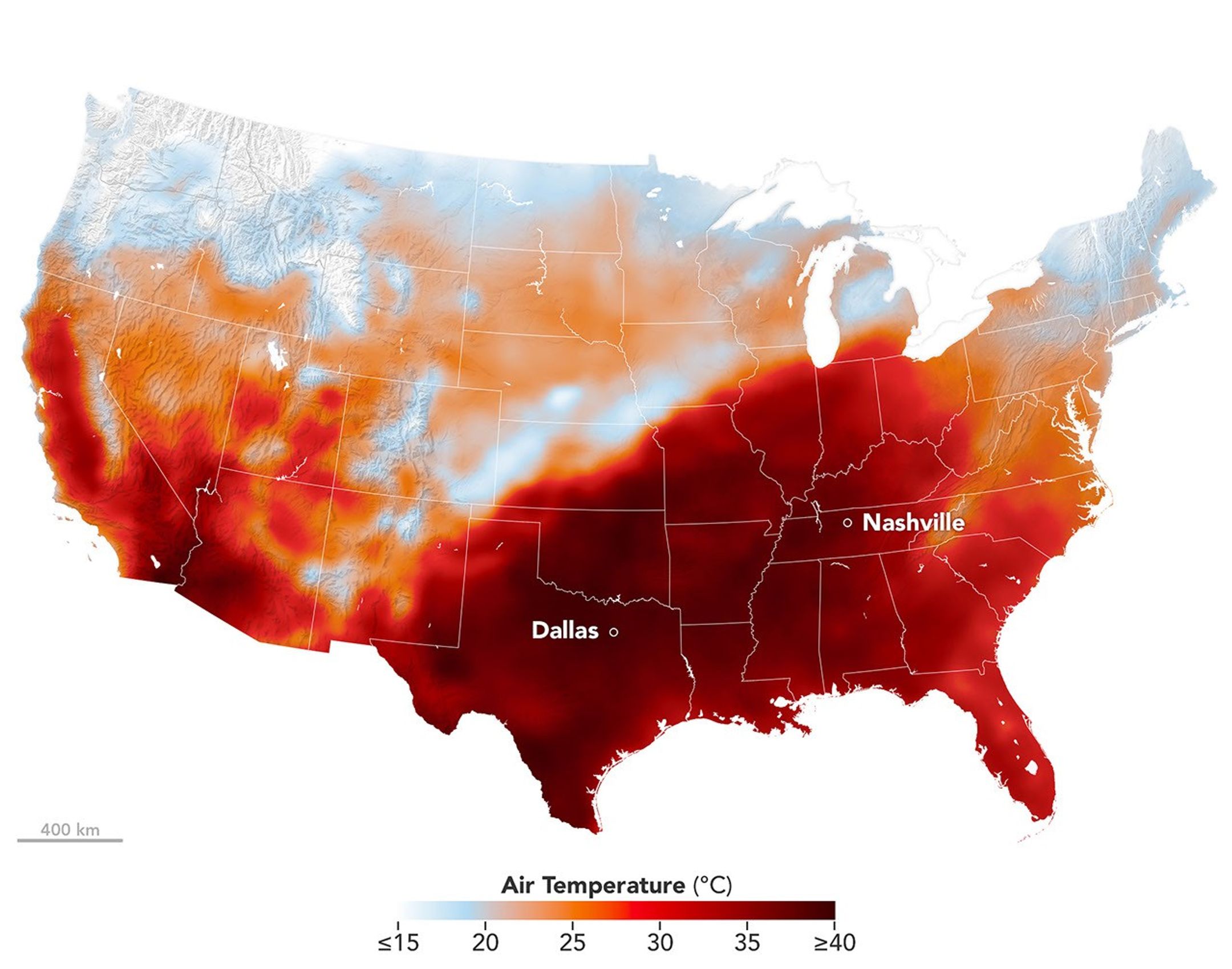
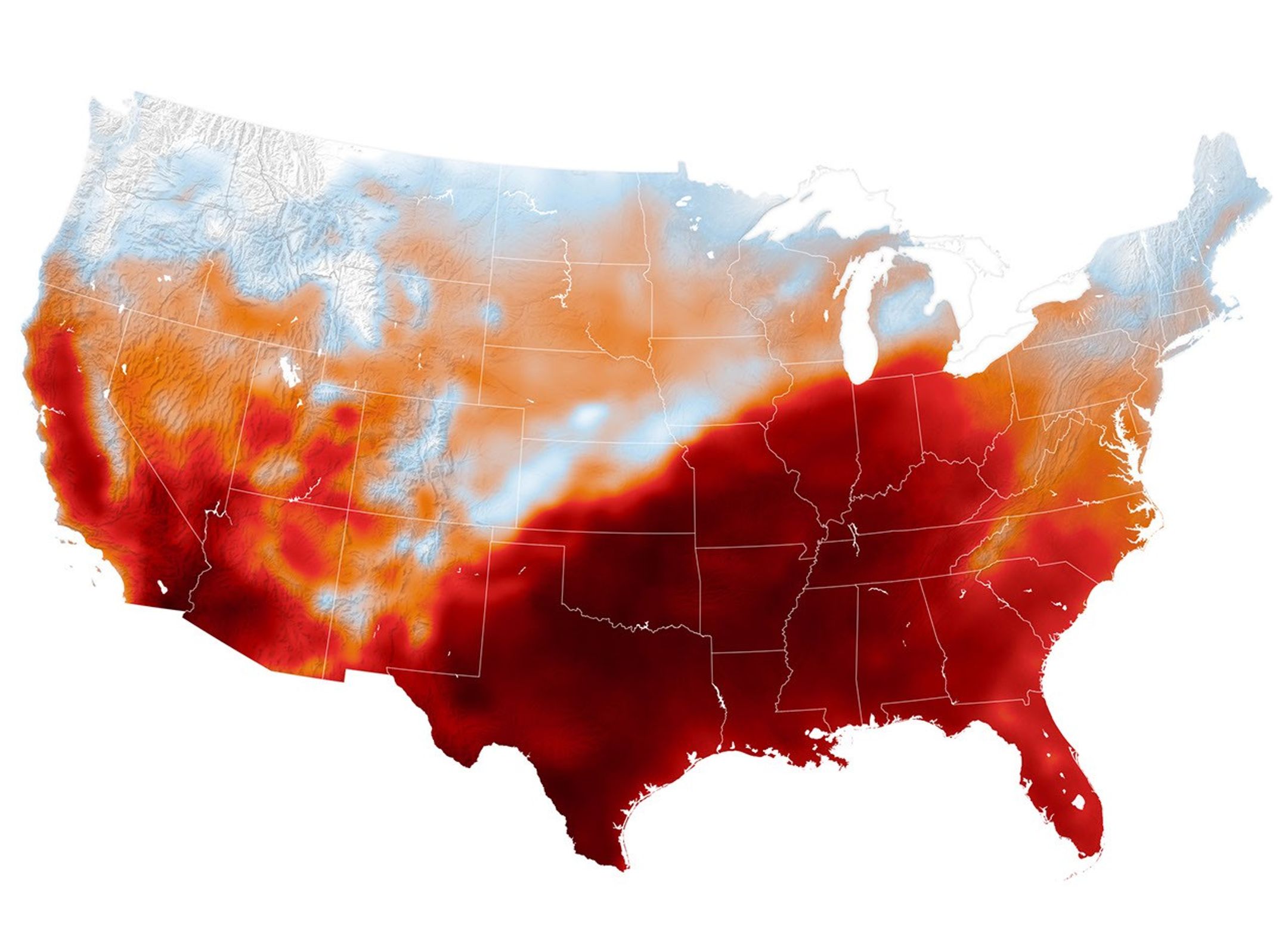
Air temperatures in the United States are depicted in white to light blue (cooler) and orange to red (warmer). An area of red, indicating temperatures around 100 degrees Fahrenheit, covers Texas and several states to the east and northeast.
An area of high pressure over the south-central U.S. produced unseasonable and, in some places, record-breaking warmth on September 15, 2026, as shown in this map of modeled air temperatures from GEOS (Goddard Earth Observing System).
NASA Earth Observatory/Michala Garrison

While the calendar indicated that astronomical summer was winding down, a swath of the south-central United States was sweltering under a heat dome in mid-September 2026.

This map shows air temperatures in the contiguous U.S. on September 15, 2026, at 4 p.m. Central Time (21:00 Universal Time), modeled at 2 meters (6.5 feet) above the ground. It was produced by combining satellite observations with temperatures predicted by a version of the GEOS (Goddard Earth Observing System) model, which uses mathematical equations to represent physical processes in the atmosphere. The darkest reds indicate areas where temperatures approached or exceeded 40 degrees Celsius (104 degrees Fahrenheit).

More than 41 million people in the U.S.—about 12 percent of the population—were under a National Weather Service extreme heat advisory, extreme heat watch, or extreme heat warning on September 15. The high temperatures spanned large portions of several states, such as Texas, Oklahoma, Arkansas, Missouri, and Tennessee. Meteorologists warned that high humidity, limited cloud cover, and light winds could make temperatures feel higher than thermometer readings and increase the risk of heat-related illnesses.

Several locations set new daily high temperature records on September 15. These included Dallas, Texas, at 101ºF (38ºC), Memphis, Tennessee, at 99ºF (37ºC), and Nashville, Tennessee, at 100ºF (38ºC). The cities were all at least 12ºF warmer than normal that day, with Nashville breaking its daily-high record from 1927. The day before, Nashville also set a record-high minimum temperature of 75ºF (24ºC).

A weather phenomenon meteorologists call a heat dome was responsible for driving temperatures up across the region. A heat dome develops when an area of high pressure in the upper atmosphere pushes hot air toward the surface and traps it there. Heat domes put the brakes on convection and suppress clouds and precipitation. This allows sunlight to reach Earth’s surface relatively unhindered and further elevate air temperatures.

The stretch of unseasonable temperatures follows the warmest June through August in the contiguous United States in a 132-year record, according to NOAA. The three-month period in 2026 was 0.4ºF warmer than the previous records, set in 1936 and 2021.

NASA Earth Observatory image by Michala Garrison, using GEOS-FP data from the Global Modeling and Assimilation Office at NASA GSFC. Story by Lindsey Doermann.

References & Resources

You may also be interested in:

Stay up-to-date with the latest content from NASA as we explore the universe and discover more about our home planet.

Heat Dome Broils the Western U.S.

4 min read

A ridge of high pressure fueled record-breaking temperatures in Montana, Utah, and Wyoming on July 12, 2026.

Article

Europe’s Scorching Summer

6 min read

A series of heat waves in 2026 is breaking records and taking a toll in Europe.

Article

Sensing the Poles’ Hidden Heat

3 min read

New animations from NASA’s PREFIRE mission reveal two years of seasonal temperature swings at the Arctic and Antarctic.

Article

Source: science.nasa.gov