
8 min read
Preparations for Next Moonwalk Simulations Underway (and Underwater)
Research teams at the NASA Glenn Research Center perform experiments in world-class facilities such as the 9- by 15-Foot Low-Speed Wind Tunnel (9 x15 LSWT), the Aero-Acoustic Propulsion Laboratory (AAPL), the Small Hot Jet Acoustic Rig (SHJAR), the Nozzle Acoustic Test Rig (NATR), the DGEN AeroPropulsion Research Turbofan (DART), and the Acoustical Testing Laboratory (ATL).
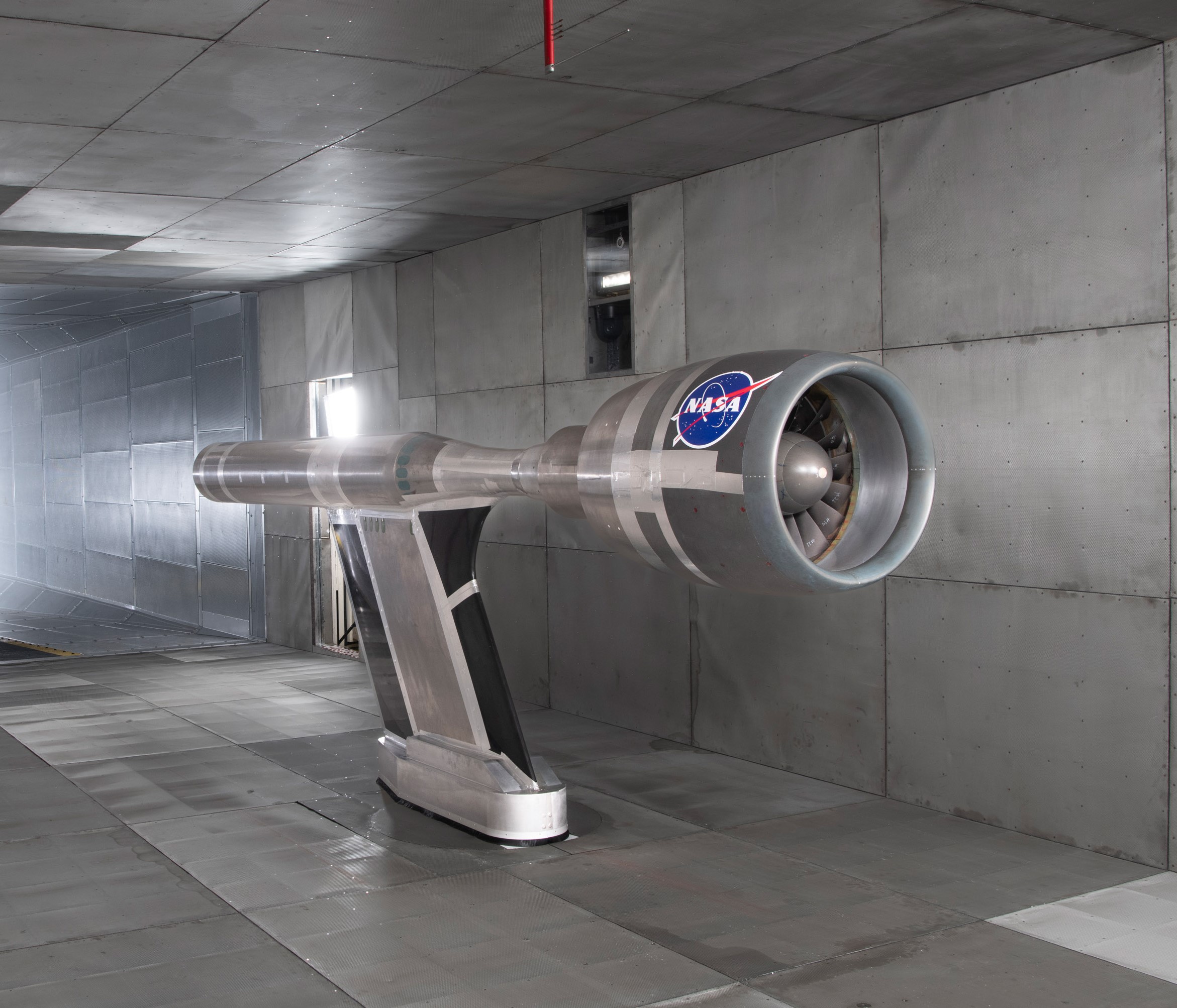
9×15 Low-Speed Wind Tunnel (9×15 LSWT)
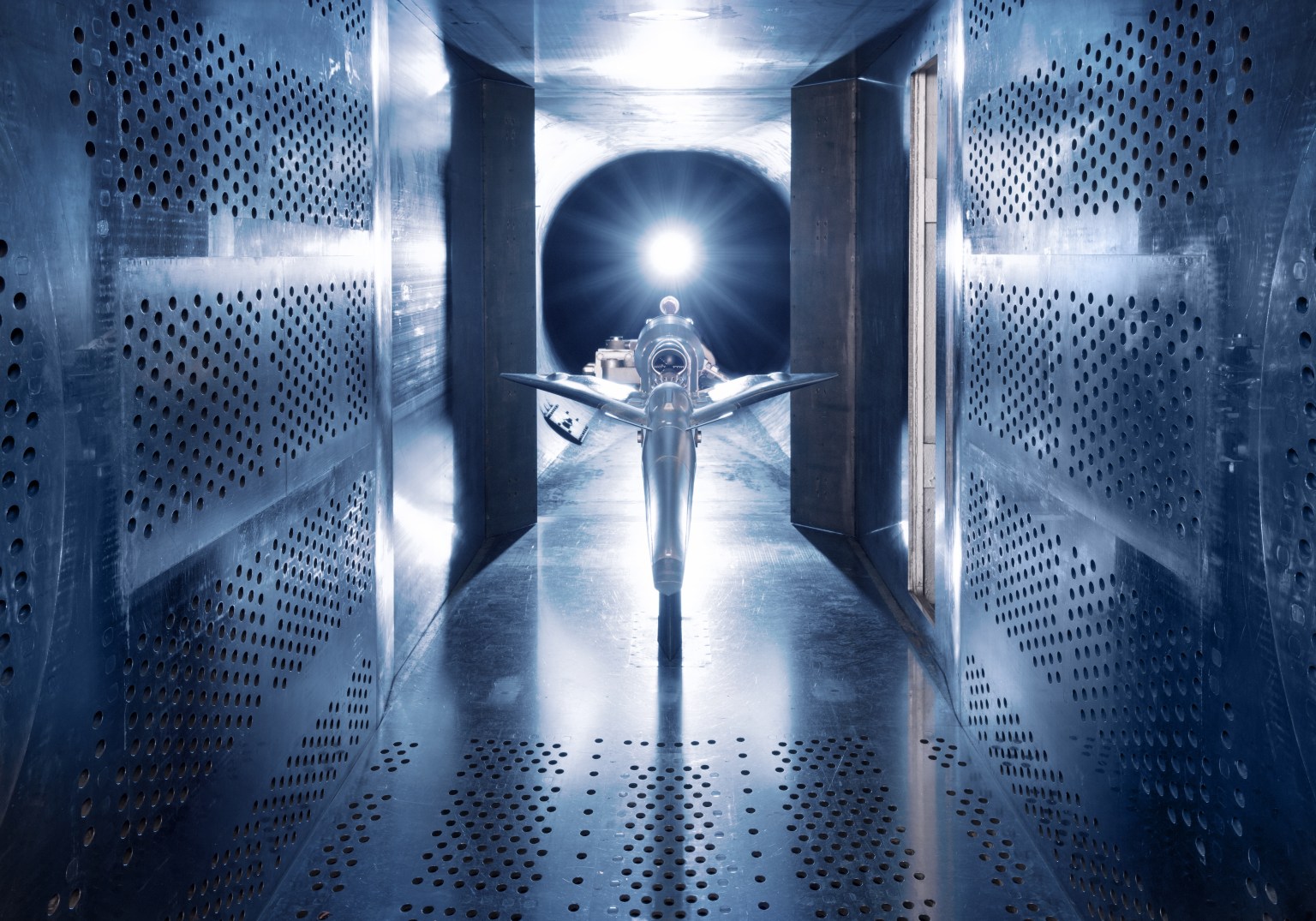
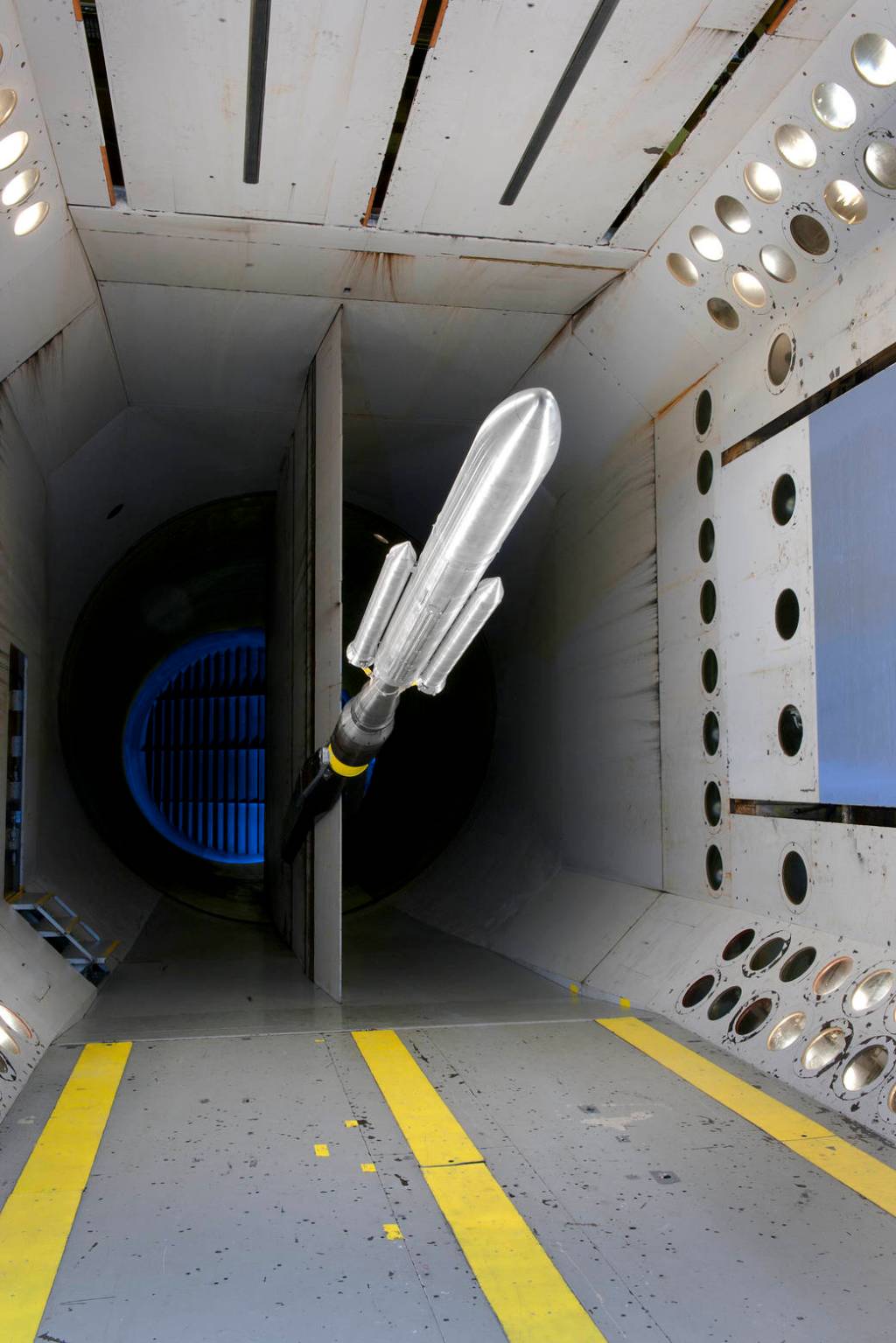
The 9- by 15-Foot Low Speed Wind Tunnel is specially designed to give researchers a controlled environment to study aircraft engine aerodynamics and acoustics at takeoff and landing conditions. This helps us to reduce noise in communities near airports. Major modifications were completed in 2019 to improve the flow and lower the background noise of the tunnel. A new 5-sensor traversing microphone rake helps measure sound produced by scale experimental propulsors. Read more about the capabilities of the 9 x 15 LSWT on our facilities page.
Aero-Acoustic Propulsion Laboratory (AAPL)
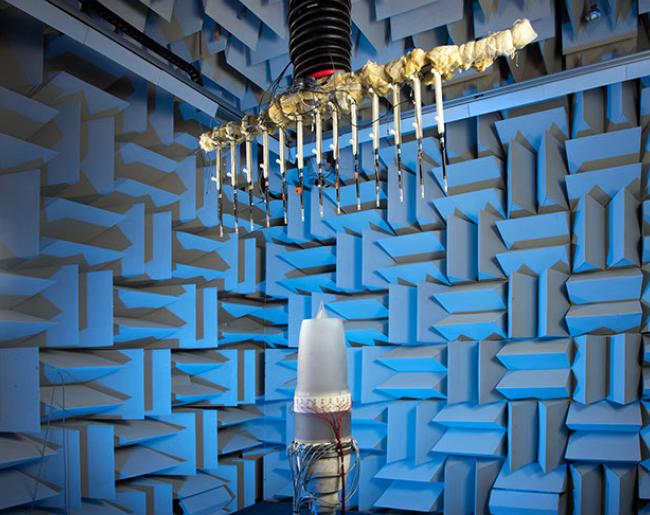
The Aero-Acoustic Propulsion Laboratory (AAPL) is a dual-purpose 65-foot radius geodesic dome used to reduce community noise and perform aeroacoustic tests of aircraft engines and engine components. The test area inside the dome can be configured as a hemi-anechoic or anechoic chamber. There are no echoes in the dome during tests because 17,000 custom-designed 2-ft thick fiberglass wedges are mounted to the inside surface of the dome walls and placed on the floor and around test rigs to absorb sound and prevent sound reflections. When AAPL was constructed in 1993, it was the first known free-standing geodesic dome to include materials to reduce transmission of sound through the walls and absorb sound within it. AAPL currently houses the Nozzle Acoustic Test Rig (NATR), Small Hot Jet Acoustic Rig (SHJAR), and the DGEN 380 Aeropropulsion Research Turbofan (DART). Read more about the capabilities of the AAPL on our facilities page.
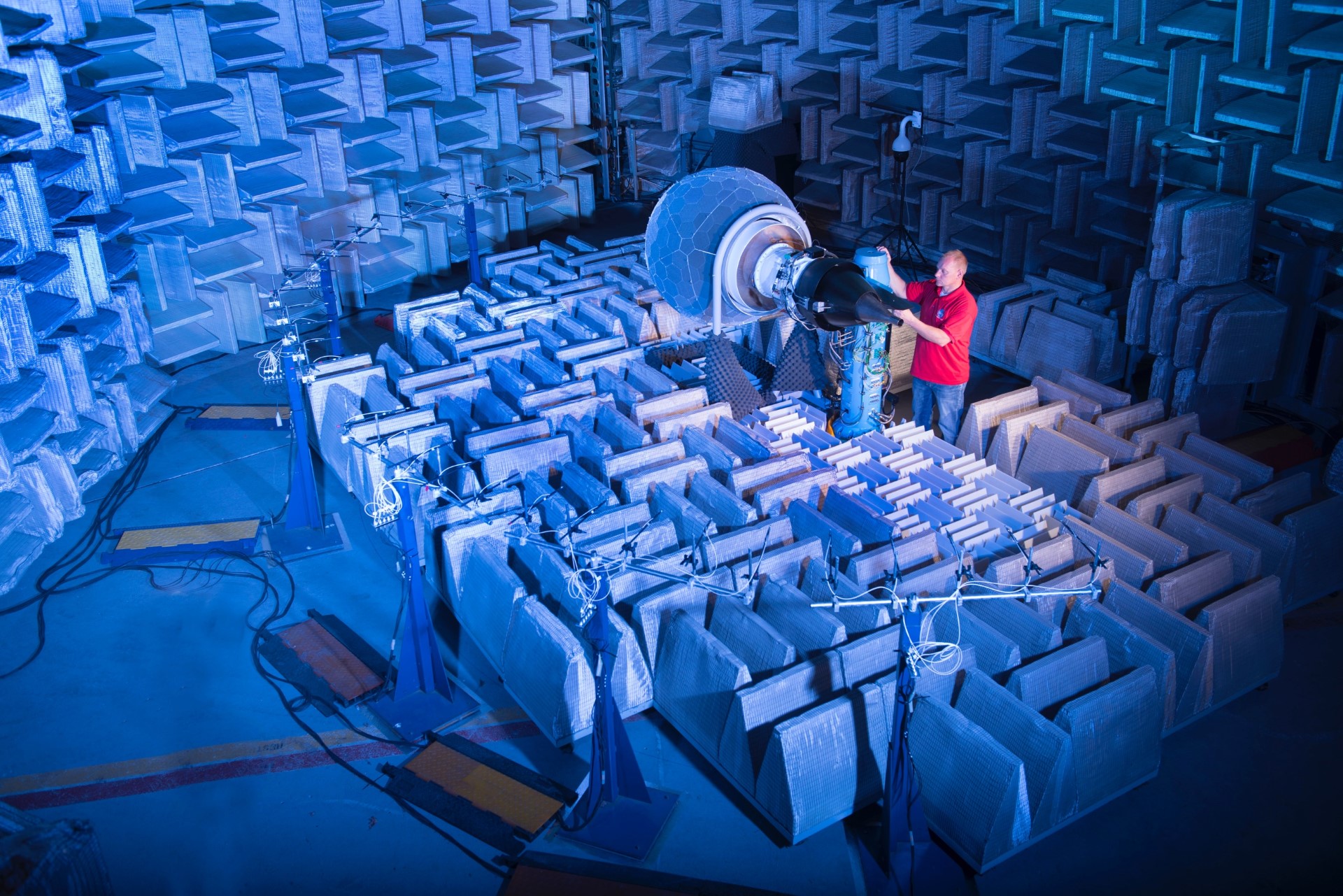
Small Hot Jet Acoustic Rig (SHJAR)
SHJAR is one of three rigs installed inside the anechoic dome of the Aeroacoustic Propulsion Lab. It can be used to test single stream nozzles up to 5 cm in diameter, Mach 2.0 and 800 K. SHJAR is a key tool in connecting the dots between nozzle geometry, jet flow, and noise. Creative nozzle designs are inexpensively created for this rig, and their impact on flow and noise is measured with world-leading measurement techniques. Researchers at NASA Glenn have been using SHJAR to develop advanced flow measurement techniques like Rayleigh Scattering, Raman Scattering, digital Schleiren, and real-time Particle Image Velocimetry. Three-dimensional microphone arrays have been deployed to map the sources of the noise. These techniques hold the promise of unlocking some of the mysteries of how the turbulence caused by the nozzle creates noise. The data from this rig is used to validate the computer codes that are being developed to calculate jet noise. Better noise prediction codes will help engineers design quieter nozzles.
Among the many firsts in turbulent jet research produced on SHJAR, time-resolved measurements of turbulent temperature were recently made using Raman-based optical methods, achieving high-frequency measurements of thermodynamic temperature fluctuations needed to complete turbulence models used in heat transfer as well as jet noise. In 2006, researchers had used the first time-resolved particle image velocimetry to measured space-time correlations of turbulent velocities in hot jets, a flow statistic key to the production of noise. Time-resolved velocimetry was also used to map convection speeds of turbulence, another flow metric required by jet noise theory but previously unavailable in hot jets.
The SHJAR is not only a good place to develop advanced diagnostic techniques, it has been a good testbed for exploring canonical problems in jet noise such as how the installation of the jet on an aircraft changes the noise produced by the jet. Jet-surface interaction, where the plume of the jet interacts with the wings, flaps, and tail of an aircraft, was identified as a fundamentally different noise mechanism in SHJAR tests.
Most of these ground-breaking measurement techniques and practical noise insights first developed on the relatively simple SHJAR have been deployed on the high-fidelity Nozzle Acoustic Test Rig (NATR), co-located in the Aero-Acoustic Propulsion Lab. Read more about the capabilities of the SHJAR on our facilities page.
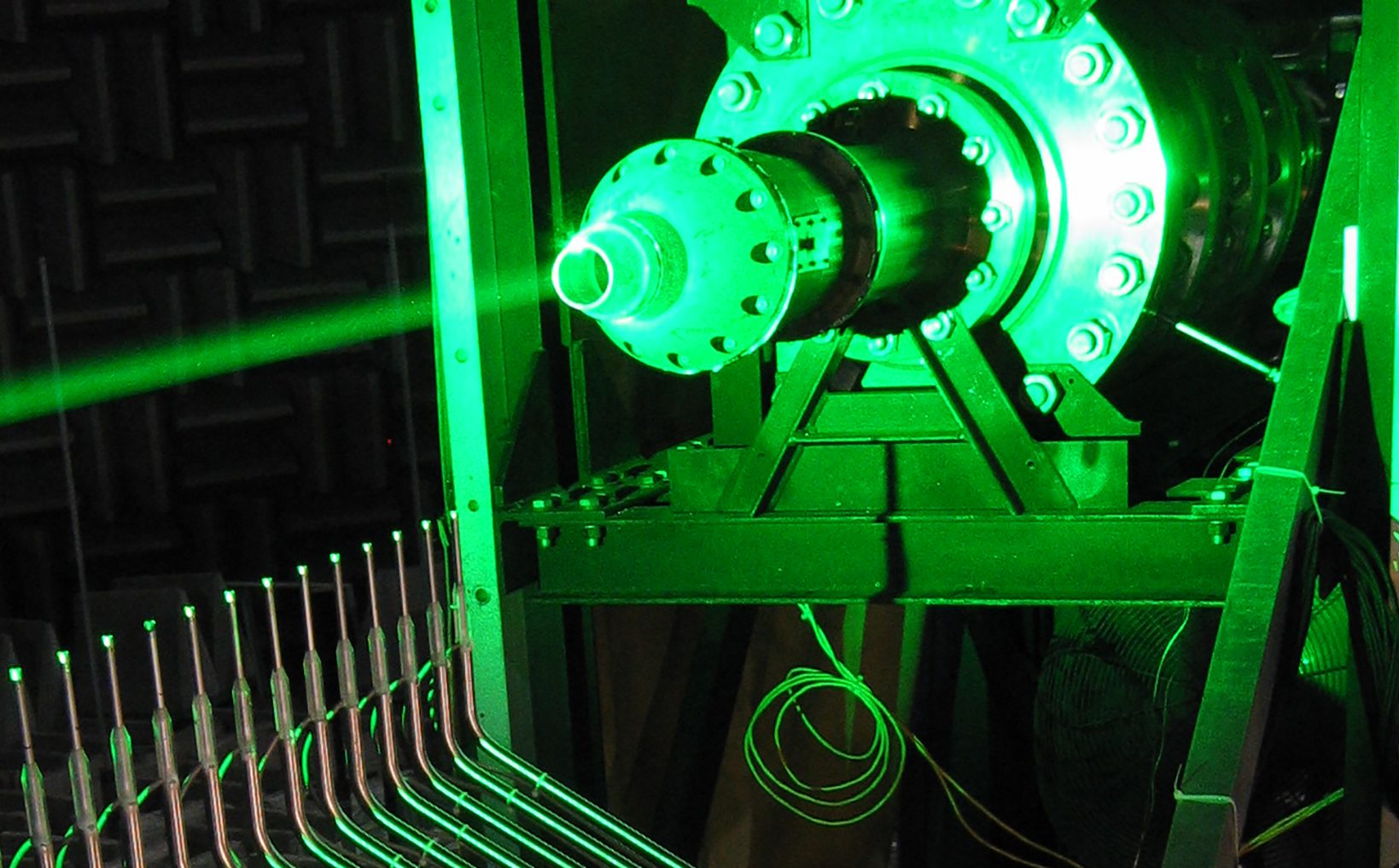
Nozzle Acoustic Test Rig (NATR)
The Nozzle Acoustic Test Rig (NATR), a free-jet wind tunnel, plays a key role in evaluating jet noise reduction concepts so that only the most promising concepts are selected for full-scale engine tests. Scale models of nozzles from both military and commercial aircraft engines can be tested in the NATR, which is one of three test rigs housed in the NASA Glenn Aero-Acoustic Propulsion Lab. The NATR can simulate take-off and landing flight conditions up to Mach 0.35. A jet engine simulator with up to three streams of air at a variety of pressures and temperatures simulate the flow of a turbofan engine to evaluate advanced nozzle concepts. The arc of microphones overhead simultaneously measures the far-field noise at all angles, allowing accurate translation of measurements to those of an actual aircraft flying overhead. The NATR enables engineers to evaluate a number of nozzle noise reduction concepts at a fraction of the cost and time required for a full-scale engine test.
Over its 30-year history, NATR has been the origin of many important jet noise breakthroughs. First built to support jet noise testing for the High-Speed Research program on commercial supersonic airliners, the facility has hosted many test programs led by NASA and industry. The chevron nozzles seen flying on today’s aircraft were first ‘discovered’ during a NASA-led test campaign in 1997. Over the years industry has used the rig to develop noise prediction methods for near-term designs. NASA has explored low-noise concepts for engines that are not yet available, such as engines with dual-fan systems. Recent tests have measured the noise likely to be heard from supersonic airliners, reducing the risk that these unique aircraft will not be allowed to fly from current airports. The tests also point to technologies to reduce their noise, allowing the aircraft designers to make the aircraft more efficient and environmentally acceptable.
The ability to test nozzle with flight is critical, as this has a strong impact on the noise produced by the relative velocity of the jet and the surrounding air, and it is a key feature allowing noise measurements to be directly transformed to what would be heard from a real airplane flying overhead. The large size of the anechoic space around the NATR is also critical to measuring the true acoustic far-field of the jet nozzle. The NATR in the Aero-Acoustic Propulsion Lab is one of the very few facilities in the world where these measurements are possible, and the only facility where both flow diagnostics and acoustics can be made on the same rig, a key capability in understanding the relationship between jet flow and noise. Read more about the capabilities of the NATR on our facilities page.

DGEN AeroPropulsion Research Turbofan (DART)
DGEN 380 is the primary component integrated into the NASA Glenn Research Center’s DGEN Aero-propulsion Research Turbofan (DART). It serves as a flexible, relevant, experimental aeroacoustic and aero-performance test bed, providing valuable information throughout NASA’s technology maturation process for a variety of multidisciplinary research that includes turbofan noise, engine controls, installation effects, and measurement technologies.
Recent tests were completed August 2019 to develop a better understanding of propulsion-noise sources to enable improved turbofan noise-prediction methods and noise-mitigation techniques. Simultaneous acoustic measurements were obtained using a circumferential infinite-tube-probe array at the core-nozzle exit in conjunction with sideline and farfield microphone arrays. The extensive data set will allow for the application of advanced source-separation and phased-array methods to elucidate not only the core-noise structure, but also the propagation characteristics of other propulsion noise sources. Read more about the capabilities of the DART on our facilities page.
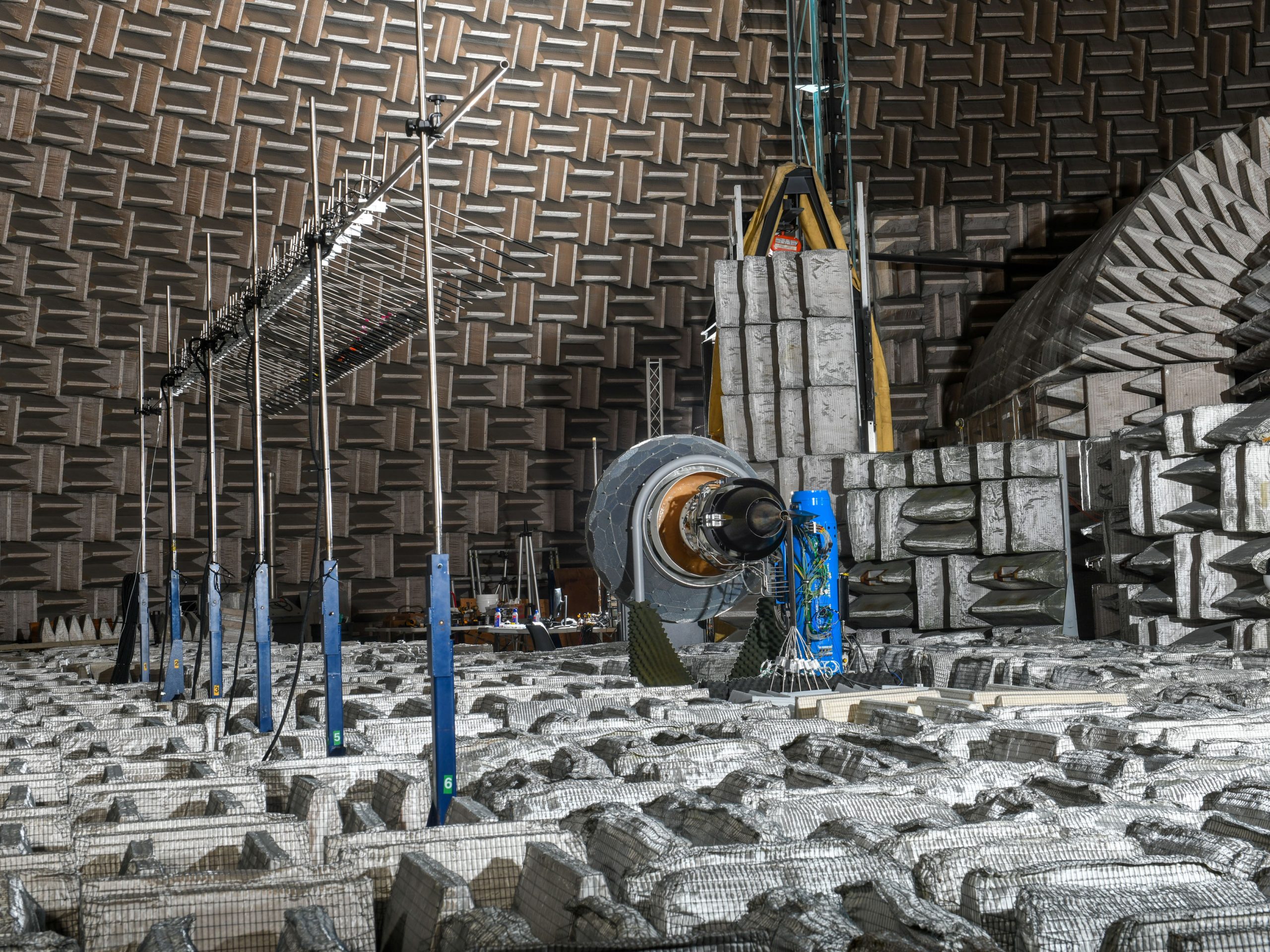
Acoustical Testing Laboratory
The Acoustical Testing Laboratory at NASA GRC is used to support NASA’s human space exploration and aeronautics research missions. The ATL is a versatile test chamber that can be configured as an anechoic or hemi-anechoic chamber. Dense rubber material in the walls and ceiling of the ATL absorb or reflect sound from the outside. 34-inch deep fiberglass wedges that line the walls and floor are designed to absorb 99% of incident sound above 100 Hz which helps create an ideal environment for making acoustic measurements. A separate control room is attached for any noisy equipment or persons needed to perform the measurements.
The ATL has been used to quantify the noise emissions of experiments performed on the International Space Station, to measure noise sources and levels from electric motors, to calibrate microphone equipment, to measure the effectiveness of acoustic liners for aircraft engine models and to evaluate the over-the-wing engine placement for reducing takeoff and landing noise. Recent tests in the ATL have also included a scale model of a supersonic aircraft engine inlet and a spacecraft cabin ventilation fan.
To get a copies of NASA technical reports related to research in the Acoustical Testing Laboratory, please visit the NASA Technical Reports Server (NTRS).
Contact Us
Need to reach us for more information about our research, software, or data? Get in touch via the link below.


Source: www.nasa.gov