Whatever the latest battlefield threat is, the Army National Guard Training Support Branch’s Emerging Threat Replication Program helps train service members to defeat it.
Source: www.war.gov
Whatever the latest battlefield threat is, the Army National Guard Training Support Branch’s Emerging Threat Replication Program helps train service members to defeat it.
Source: www.war.gov
2 min read
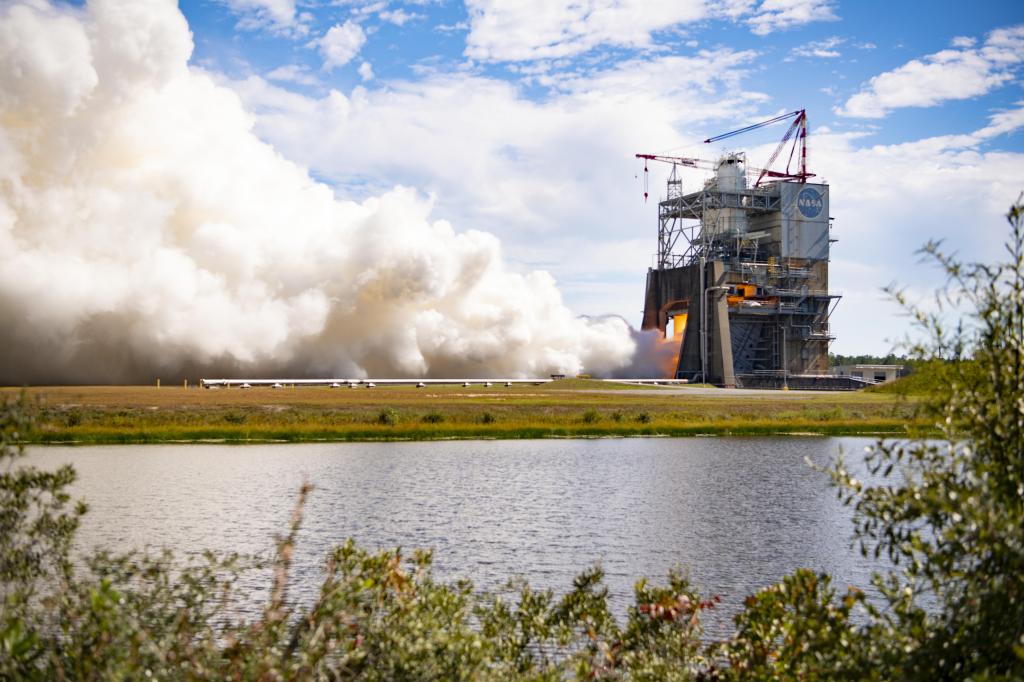
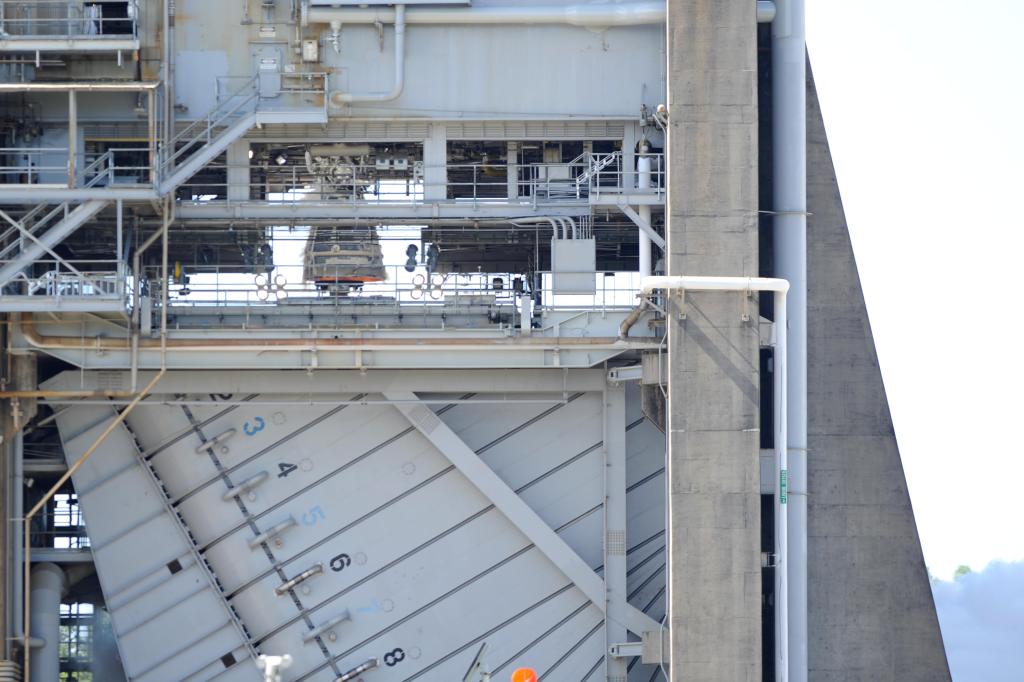
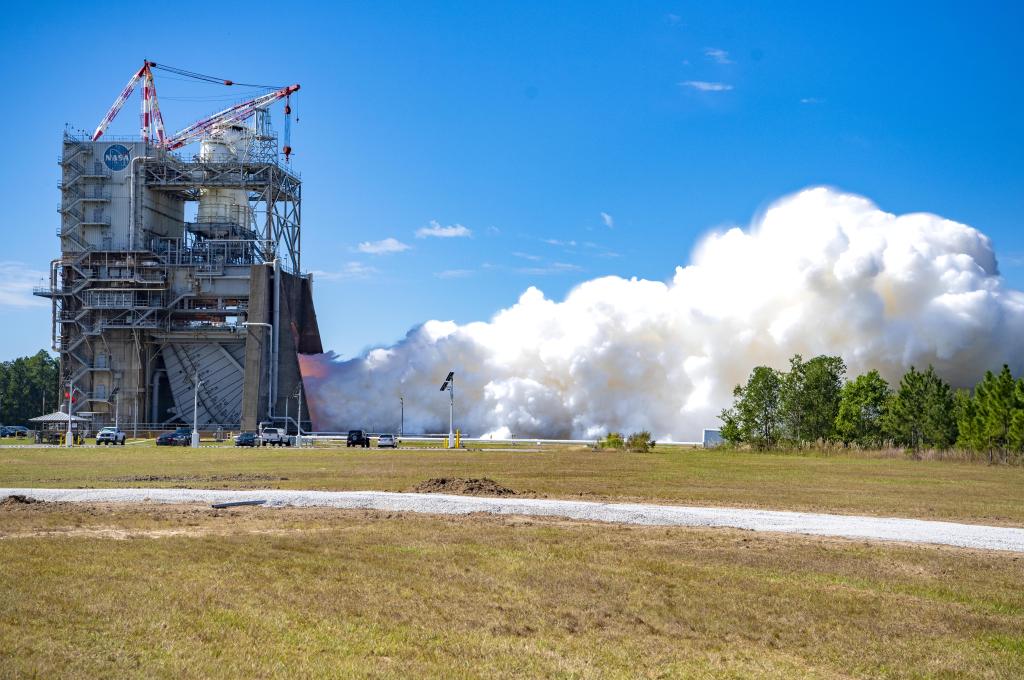
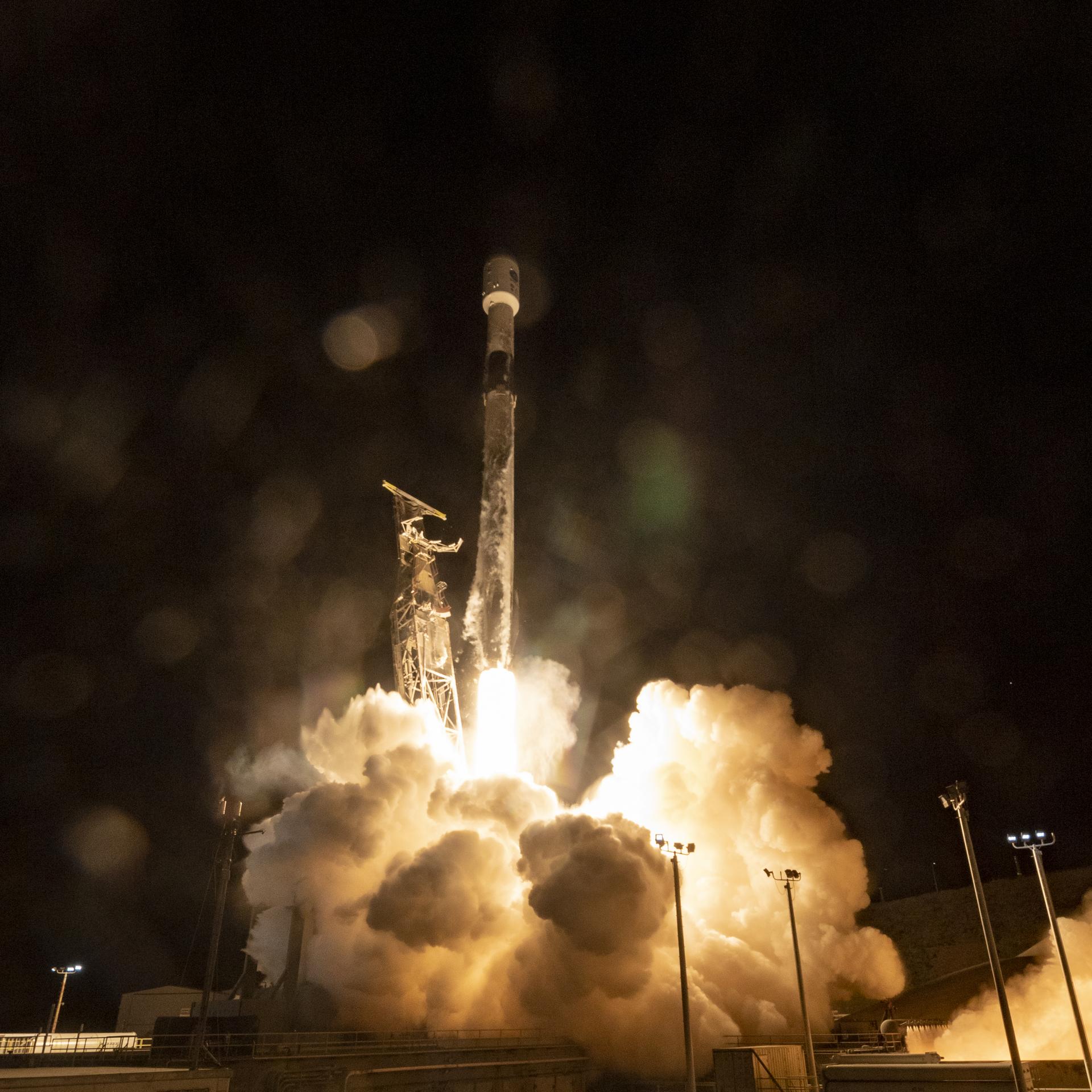
NASA tested RS-25 engine No. 10001 on Oct. 21 on the Fred Haise Test Stand at NASA’s Stennis Space Center near Bay St. Louis, Mississippi.
Test teams fired the developmental engine for almost eight-and-a-half minutes (500 seconds), the same amount of time RS-25 engines fire during launch of NASA’s SLS (Space Launch System) rocket.
During the test, operators also fired the engine up to the 111% power level, matching the thrust needed for new production engines to launch the SLS rocket and the Orion spacecraft to orbit.
The main objectives of the test were to acceptance test RS-25 flight components for future Artemis missions and validate the new thermal protection system, which protects the RS-25 engine nozzle from the thermal environment surrounding SLS during launch.
While this developmental engine will not be used in flight, the hot fire test provides NASA and NASA’s prime contractor L3Harris Technologies with the capability to capture critical data to improve engine performance and reliability.
Four RS-25 engines produce up to 2 million pounds of combined thrust to help launch the SLS rocket for each Artemis mission.
All RS-25 engines are tested and proven flightworthy at NASA Stennis prior to use. Tests are conducted by a team of operators from NASA, L3Harris, and Nova Space Solutions.
Source: www.nasa.gov
Dear NASA Science Community,
NASA Science wants to deliver science faster, so we’re changing how we compete and select missions. On Monday, October 26, we will host a virtual NASA Science Town Hall, from NASA Headquarters, to explain our new Competition Model 2.0 (CM 2.0), and answer your questions. (Details below.)
We have heard you. We have listened. We know that the burden of bringing great ideas forward has been too heavy for too long. It has taken years to move mission concepts through the current two-step process. This has often come with contract management challenges, unpredictability, and not enough funding. NASA is committed to doing better — and I’m excited to share with you how we’re making it happen.
I am so pleased that NASA Administrator Jared Isaacman has empowered the Science Mission Directorate to take action and make our mission selection process move more smoothly, efficiently, and effectively. The Administrator has directed us to accelerate the delivery of science, reduce the time and resources spent on long competitive processes, and focus funding on the highest-priority missions across every NASA Science division as quickly and affordably as possible. Predictability in delivering incredible science will be at the forefront of what we do.
We are committed to getting this right. Some of these changes will take time to fully implement. We will roll them out in stages, be thoughtful about them, and refine them with your input along the way. But time is also of the essence. By streamlining how missions are proposed, reviewed, and selected, we can make meaningful change right now. That streamlined approach is Competition Model 2.0, or CM2.0, and it is how we are answering the Administrator’s call to get you to science faster.
CM2.0 starts from a simple idea: compete on the science first. Proposals will be science-focused and will not require detailed engineering plans, cost, and implementation work until they are truly needed to make a decision. This frees you to spend more of your time doing science and less of it proposing how to do science.
Here is how we will streamline mission selection across our mission classes:
CM2.0 will not change how we manage our largest missions since that process has already been reformed. After the James Webb Space Telescope, NASA conducted the Large Mission Study which drew lessons from Webb and best practices from our most successful flagships into a single, documented approach for building large missions more efficiently. Flagships will continue to follow that approach, with NASA directing the overall mission to a lead NASA Center and it will then compete the science teams and instruments through targeted solicitations.
These missions will move to a new, accelerated two-step competition:
These updates in the mission selection process will reduce time from AO to step 2 selection by up to 45 percent. This means that the original 35-months timeline will be reduced to about 19.5 months, all while having a stronger, more mature mission at the time of selection.
These missions follow the same two-step approach with an even broader field of implementing organizations, including universities and industry partners. Implementing organizations and partners will be evaluated on past performance on projects of similar complexity and cost prior to mission selection. PI-led teams can request pairing with either a Goddard or JPL implementation team at Step 1 selection, and NASA can provide Center support where it will help with procurement, contract management, or quick resolution of technical challenges. This will result again in an up to a 45 percent reduction in the selection timeline.
These missions will move to a single-step competition with a smaller review team and virtual site visits. They will also be open to a broad range of implementing organizations. The time to final selection will drop from about 32 months to about 19 months which is a reduction of up to 40 percent. Our smallest missions will be riding the momentum of a maturing commercial space economy and will move even faster. This means more missions, more often, with more incredible science at a lower cost.
The commercial space industry has never been stronger—and it’s only gaining momentum. Mission and implementation teams will be expected to adopt industry best practices and emerging commercial capabilities, including commercial buses, subsystems, and multi-mission operations — wherever they offer a technical or cost benefit. No mission class is too large or too complex to benefit from the commercial industry. We will keep assessing the commercial landscape at regular intervals, building on our recent Science as a Service Request for Information.
By competing on science first, established teams and first-time teams stand on equal footing. The best idea wins.
Great science deserves great stewardship. Rigorous cost and schedule control remains mandatory across every mission class. Phase A estimates will inform complexity and scope trades. Therefore, breaches of control thresholds will carry real consequences of up to, and including, mission termination. That discipline is how we keep the pipeline flowing for everyone.
Our NASA Centers lead the world in spaceflight experience. Therefore, by appropriately directing work at Goddard and JPL, we will save taxpayer dollars, eliminate unnecessary competition among NASA Centers, encourage collaboration, and keep critical skills thriving across the agency.
This is a moment of real opportunity. We have an administrator who is empowering us to move faster and a commercial market that is ready to help. We have NASA Centers with unmatched expertise, and a science community whose ideas expand and redefine the bounds of human achievement in the cosmos. CM2.0 brings those strengths together so that more great ideas become great missions, all while being faster and returning more science at an affordable price for the benefit of all.
NASA leads the world in discovery and innovation, but none of that happens on its own. It happens because of you. You are the reason the list of what’s “impossible” keeps getting shorter. I am so proud of what this community has achieved, and what incredible science we will continue to discover together
Thank you for your brilliance, your dedication, and your partnership. The best of NASA Science is still ahead of us, and I cannot wait to see where this journey takes us.
With gratitude and excitement,
Nicola Fox, associate administrator, Science Mission Directorate, NASA Headquarters
NASA will host a community town hall from 2 to 3 p.m. EDT Monday, Oct. 26, featuring Dr. Nicola “Nicky” Fox, associate administrator for the agency’s Science Mission Directorate, and other NASA science leaders. Fox will provide an overview of NASA’s new Competition Model 2.0 (CM 2.0), followed by an opportunity for participants to ask questions.
Members of the science community, academia, media, and the public are invited to join the virtual town hall at:
Participants may submit questions and vote on questions submitted by others at:
https://nasa.cnf.io/sessions/eawk
Questions will be screened for spam and inappropriate content before appearing publicly. NASA science leaders will address as many questions as time allows.
A recording of the town hall will be posted online following the event.
Source: science.nasa.gov
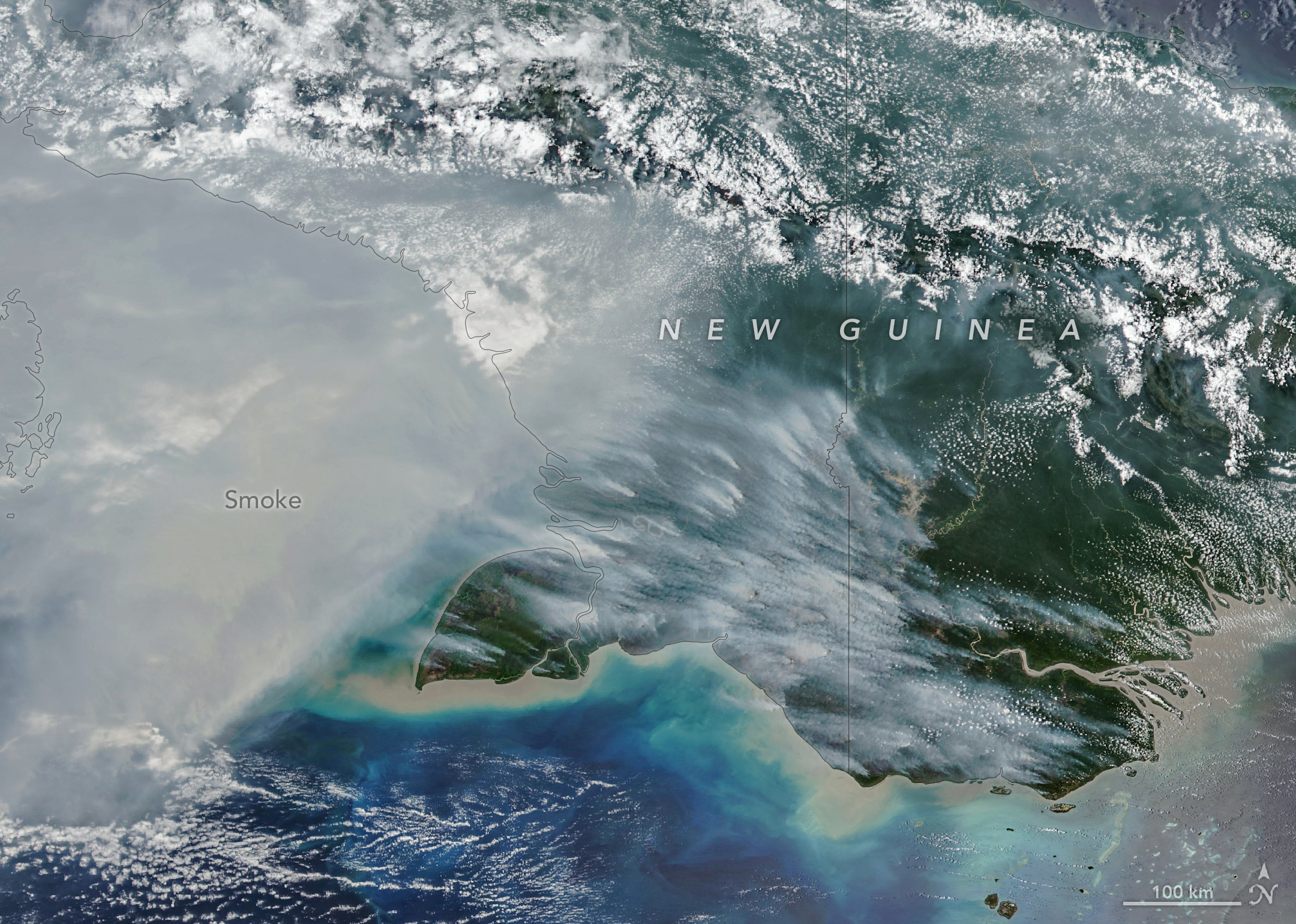
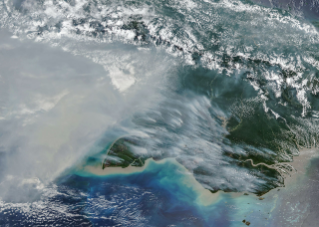
New Guinea, the world’s second-largest island, harbors an extraordinary variety of plant life across more than a dozen distinct ecoregions, including seasonally dry savannas, tropical rainforests, and lowland swamp forests. But in September and October 2026, as drought gripped New Guinea (sometimes called Papua) amid a strong El Niño, fires scorched the island and smoke shrouded large swaths of it for weeks.
The VIIRS (Visible Infrared Imaging Radiometer Suite) on the NOAA-20 satellite captured this image of thick smoke streaming from the southern part of the island on October 11, 2026. In recent weeks, soaring levels of air pollution delayed and canceled flights, closed schools, and prompted officials in some areas to urge children and older people to wear masks.
“Sometimes smoke that has drifted into the convection of nearby thunderstorms will get washed out or lofted up into the upper troposphere, but a lot of smoke stays near the surface and causes air quality problems,” said Robert Field, an associate research scientist at NASA’s Goddard Institute for Space Studies and Columbia University. “It’s a horrible situation.”
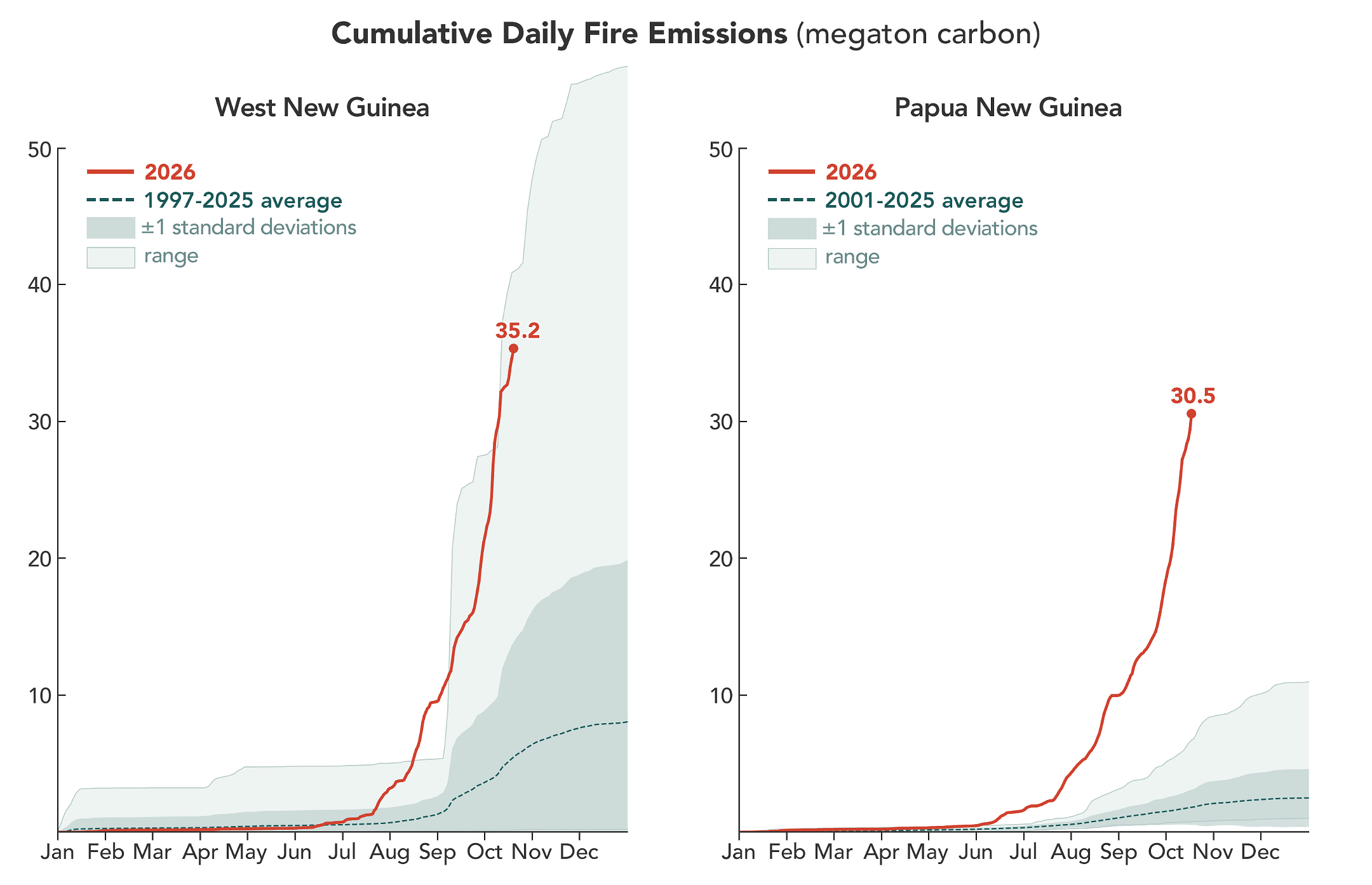
According to the Global Fire Emissions Database (GFED), a fire emissions monitoring system, fires in Papua New Guinea, on the eastern half of the island, had released nearly 32 megatons of carbon by October 17, more than any other year on record at that point in the year (charts above). “Emissions are already much higher than the 2015 total for the year, and it’s very likely that this will become the highest year on record for Papua New Guinea, even surpassing 1997,” said Guido van der Werf, a fire scientist at Wageningen University & Research.
On the Indonesian side, sometimes called West New Guinea or Indonesian Papua, carbon emissions exceeded 35 megatons, the third highest after 2015 and 1997, other El Niño years with severe fires. Van der Werf led the development of GFED, a satellite-driven modeling framework that uses a mix of remote sensing, vegetation characteristics, and other information to estimate the extent of vegetation fires and the emissions over nearly three decades.
Unusually dry weather—a byproduct of El Niño shifting rainfall patterns—has primed ecosystems across the island to burn. The southernmost part of Papua New Guinea, dominated by relatively fire-prone savannas and grasslands of the Trans-Fly region, went more than 90 consecutive days without rain, according to Papua New Guinea’s National Weather Service. Since August, parts of the region have seen precipitation of roughly 5 to 10 percent of normal, according to the weather service’s data. Local news outlets report that drought is causing crop failures, water shortages, and school disruptions.
In this normally wet part of the world, people ignite the vast majority of fires, researchers say. Crop fires, pasture maintenance, deforestation and land clearing, and hunting are all common reasons people burn in New Guinea. In dry conditions, managed fires sometimes spread and burn uncontrolled as wildfires, particularly in the drier, southernmost parts of the island.
“We’re seeing an exceptionally high level of fire activity in Papua New Guinea and Eastern Indonesia, particularly Indonesian Papua and Kalimantan, this year compared with Sumatra and other parts of Western Indonesia,” said Yang Chen, an associate researcher at the University of California, Irvine. “Papua has emerged as Indonesia’s new deforestation frontier.”
Over the past two decades, land in Indonesian Papua has been cleared for industrial oil palm and pulpwood plantations, shifting small-scale cultivation, urban expansion, and mining. According to Global Forest Watch, the region lost 27,000 hectares of primary forest in 2025, nearly double the 2024 total and the most since 2017.
Sumatra’s fires are relatively low compared to other drought years partly because many areas are already developed. “Areas with large oil palm, sugarcane, or pulpwood plantations also often have their own private fire brigades to protect their assets,” said Field. “It’s in unmanaged areas or primary forest edges where we’re generally seeing the most fire.”
Researchers expect the fires to continue until the heavy rains of the wet season arrive in the southern part of New Guinea, typically in early November.
NASA Earth Observatory image and charts by Michala Garrison, using data from NASA EOSDIS LANCE, GIBS/Worldview, Joint Polar Satellite System (JPSS), and the Global Fire Emissions Database (GFED). Story by Adam Voiland.
Stay up-to-date with the latest content from NASA as we explore the universe and discover more about our home planet.
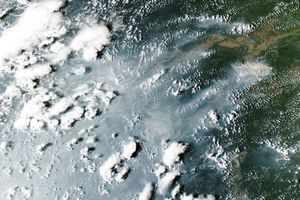
During El Niño, a cascade of fires across the tropics begins in equatorial Asia and continues in the central and…
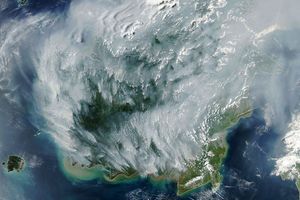
With Indonesia gripped by drought, fires are smoldering on the surface and underground.
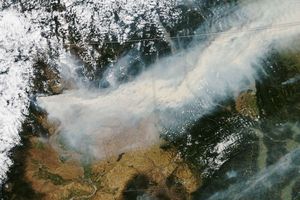
Wildland fires in early August 2026 pushed air quality to unhealthy levels, destroyed hundreds of structures, and triggered mandatory evacuations…
Source: science.nasa.gov
APOD
Astronomy Picture of the Day
Discover the cosmos! Each day a different image or photograph of our fascinating universe is featured, along with a brief explanation written by a professional astronomer.

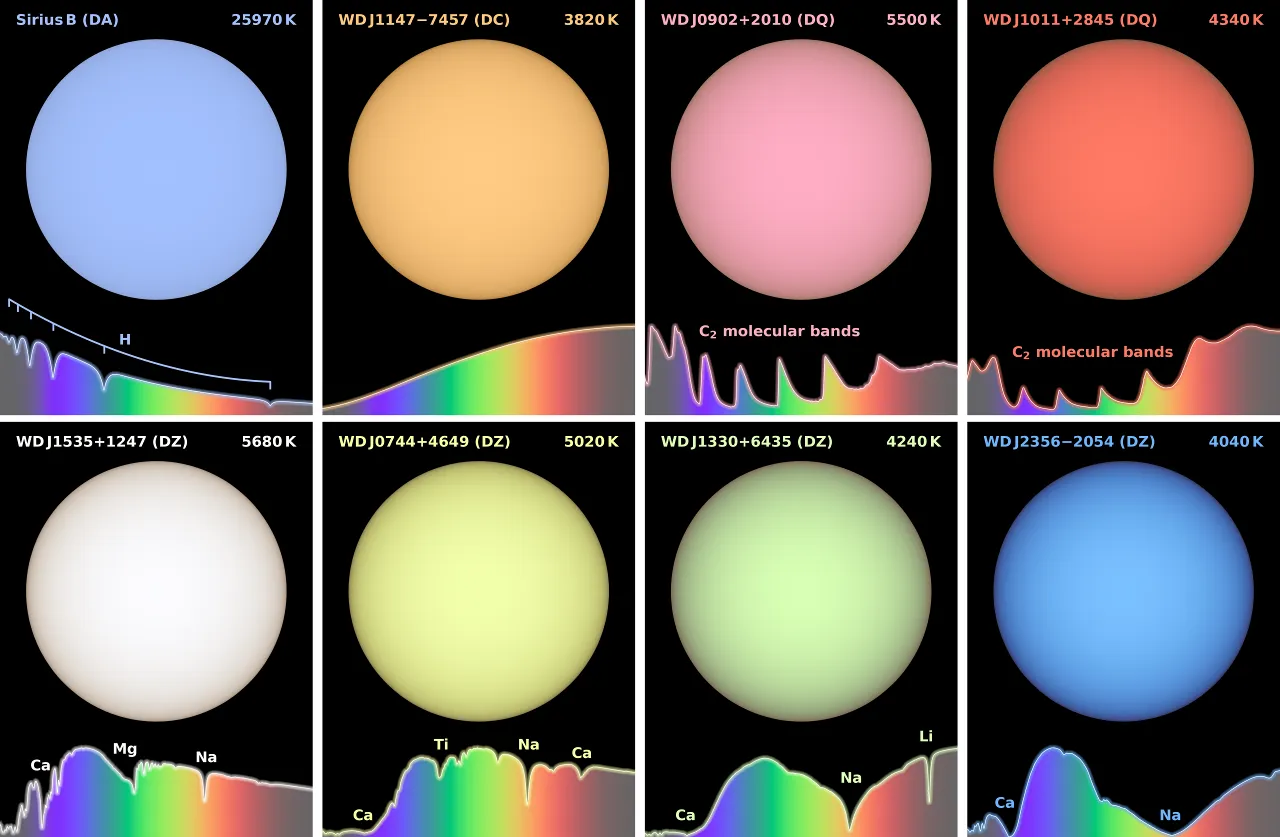
Explanation: Star light, star bright: is there a green star out tonight? Other than the Sun, all stars are so far from Earth that they appear as points in the sky. They are mostly white, but sometimes noticeably red or blue. This color typically relates to the temperature: blue stars are hotter than red stars. What about other colors? The featured image is an illustration showing WD J1330+6435, a white dwarf star, surrounded by an accretion disk with gas and rocks orbiting the star. White dwarfs are small, faint stars that are left over when a star like the Sun exhausts its nuclear fuel. Astronomers recently found that some white dwarf stars, despite their name, would appear yellow, green, cyan, pink, or purple. In these cases, trace elements that were accreted to these stars interact with the stellar atmosphere and shift its normally white color. But, alas! I wish I may, I wish I might, but they are too faint to see tonight…
Tomorrow’s picture: eye in the sky
| Date | October 22, 2026 |
|---|---|
| Credit & Copyright | Mark A. Garlick/University of Warwick |
| Authors & editors: | Cecilia Chirenti, Robert Nemiroff, Jerry Bonnell, Keighley Rockcliffe |
| A service of: |
ASD at NASA / GSFC, NASA Science Activation & Michigan Tech. U. |
Source: science.nasa.gov
4 min read
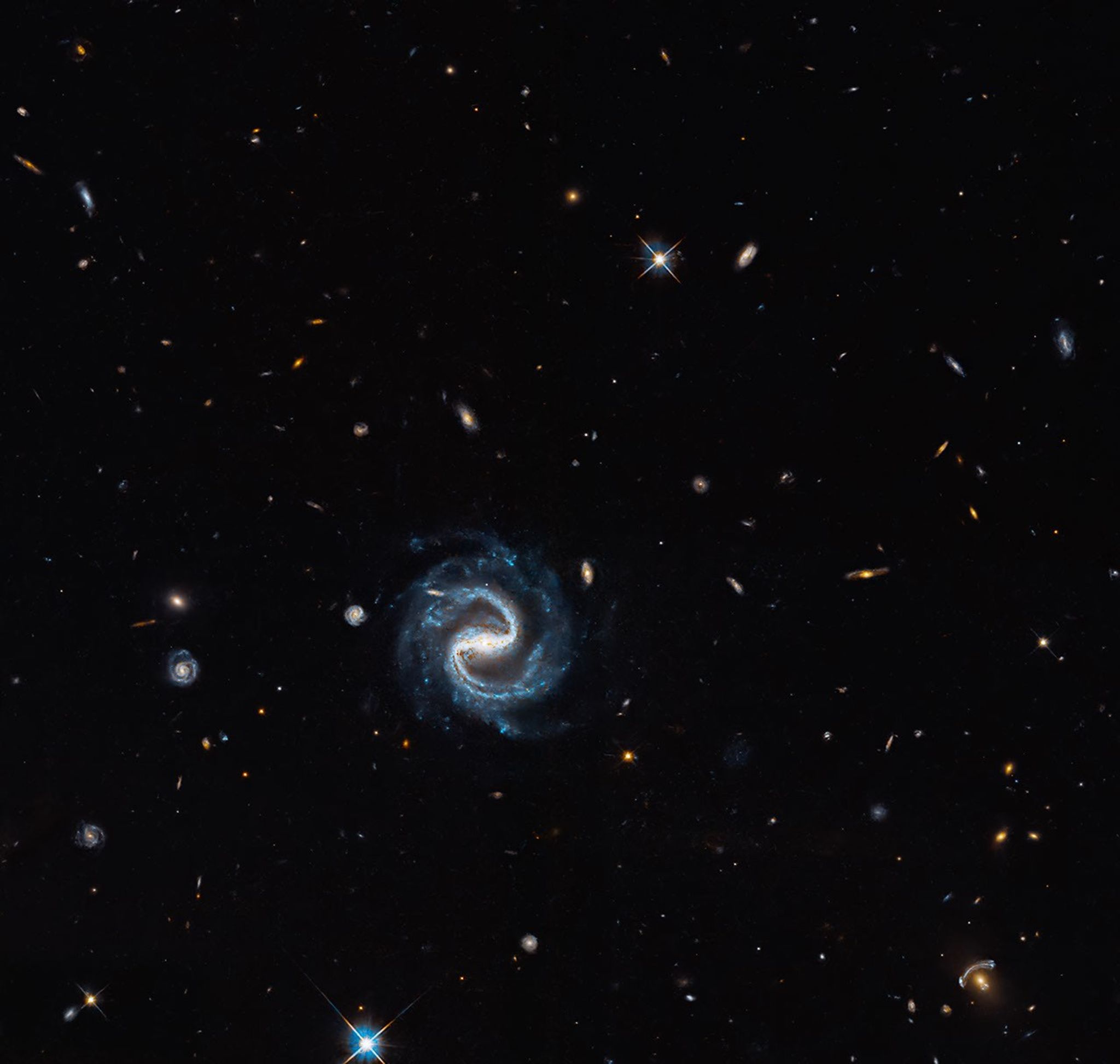
A sweeping barred spiral galaxy marks the spot in this image, but the real treasure is the gravitational lens in the lower-right corner, where a distant background galaxy is being magnified and distorted by the gravity of a closer galaxy.
This observation is one of many gravitational lensing images taken by NASA’s Hubble Space Telescope in preparation for science with the new Nancy Grace Roman Space Telescope.
Gravitational lensing occurs when the mass of a foreground object – such as a galaxy – warps spacetime, causing light to bend, distort, and magnify as it passes around the object, similar to a giant lens in space. Lenses like this occur when a precise chance alignment takes place between the foreground and background galaxies, causing light from the background galaxy to curve around the foreground galaxy.
In this image, the gravitational lens features a foreground elliptical galaxy that is about 4.5 billion light-years away. That means the light we see from this galaxy now would have first started traveling toward us when our solar system was still forming. The background galaxy is about eight billion light-years away, almost twice as far. It appears as a pair of arcs, one large and very noticeable to the upper left of the foreground galaxy, the other a much smaller, flipped image of the same background galaxy to the lower right. This configuration is called an arc-counterarc pair.
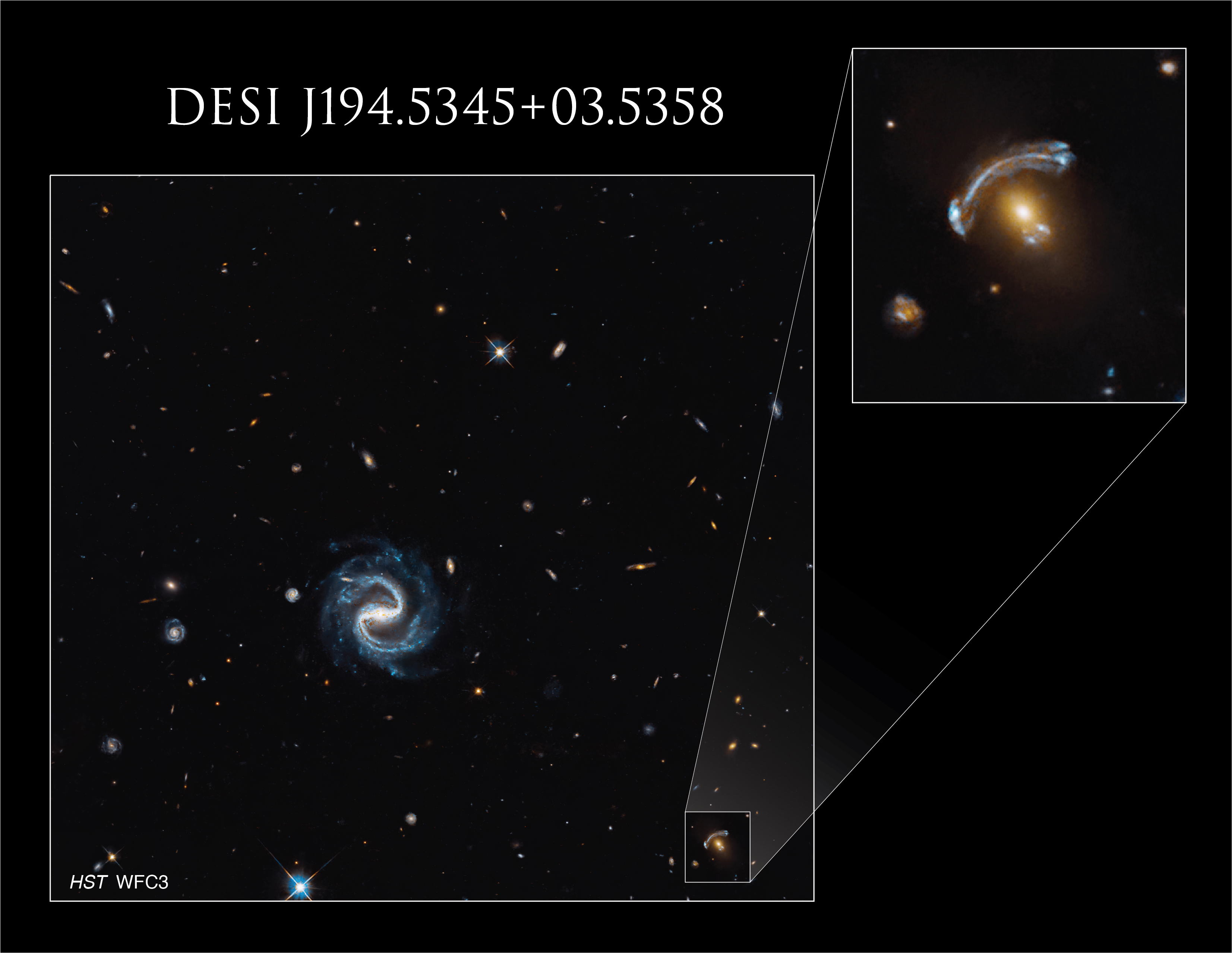
The more massive the foreground galaxy is, the stronger the gravitational lens and the more significantly it bends light. By studying the distortion of the background galaxy, researchers can determine how much mass the foreground galaxy contains. This plays a huge role in the study of dark matter, the mysterious, invisible substance that makes up the majority of mass in the universe. The visible matter is not enough to account for the level of distortion in the background galaxy, which allows researchers to calculate both the mass of the foreground galaxy and how much dark matter it contains.
Almost all of the objects in this image are galaxies, except for a few scattered foreground stars. The barred spiral galaxy in this image – so called because its arms extend from a bar of stars in its center – is about the size of our own Milky Way galaxy, which astronomers think is a barred spiral as well. The tiny spiral to the left of the large spiral may be a satellite galaxy, similar to the Large and Small Magellanic Clouds that orbit the Milky Way.
Hubble views the cosmos primarily in visible and ultraviolet light with some infrared coverage, and Roman sees mainly infrared wavelengths and some visible light. Hubble can provide high-resolution views of individual objects, while Roman has a much larger field of view conducive to panoramas.
Images like this offer a glimpse of how Hubble and Roman will work together to build an even more comprehensive picture of the cosmos. This is just one of many gravitational lens images captured by Hubble. Astronomers will use them to analyze gravitational distortions to learn more about dark matter in the foreground galaxies and to lay the groundwork for future Roman observations.
Hubble can only view these gravitational lenses one at a time, while Roman’s wide view of the sky will provide a greater sample of these lenses. Astronomers are using Hubble’s sharp images to build a computer model to better analyze dark matter-induced distortions. This tool will help astronomers analyze Roman’s large images. Hubble will also follow up on interesting lenses Roman detects.
Media Contact:
Claire Andreoli
NASA’s Goddard Space Flight Center, Greenbelt, MD
[email protected]
Source: science.nasa.gov