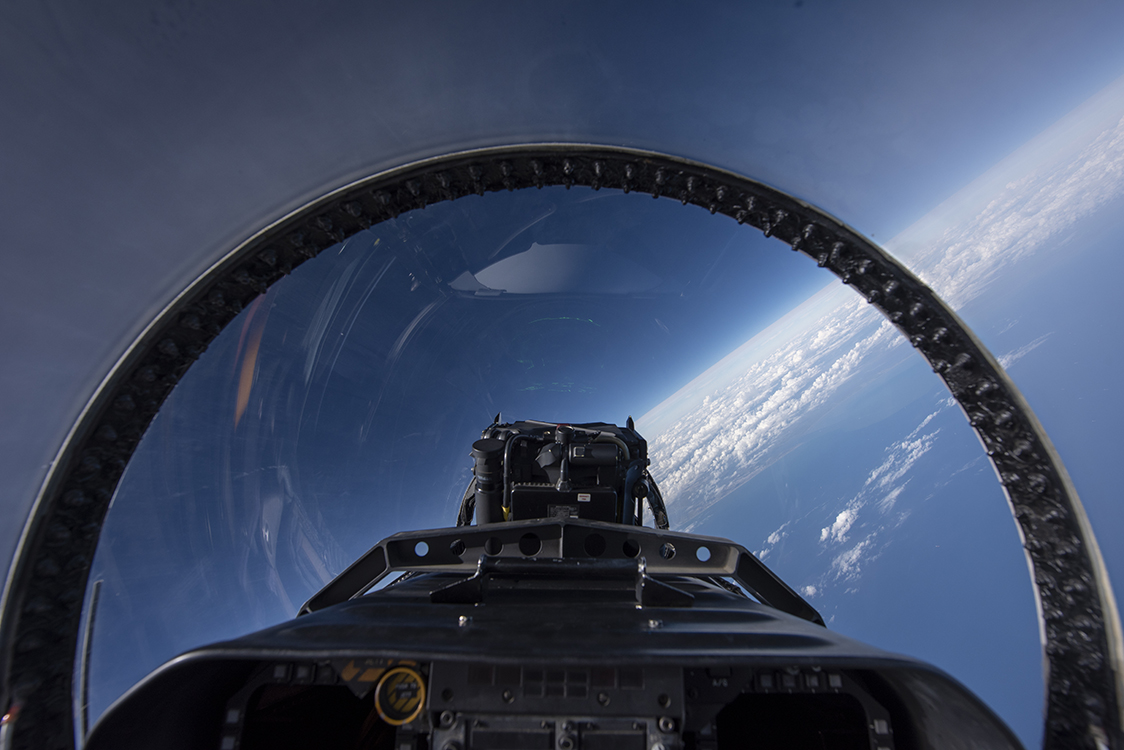
An Air Force Reservist helped lead a joint three-member U.S. military team to a third-place finish in the novice division at the 2026 International Confederation of Reserve Officers Military Competition in Bucharest, Romania.
Source: www.war.gov
An Air Force Reservist helped lead a joint three-member U.S. military team to a third-place finish in the novice division at the 2026 International Confederation of Reserve Officers Military Competition in Bucharest, Romania.
Source: www.war.gov
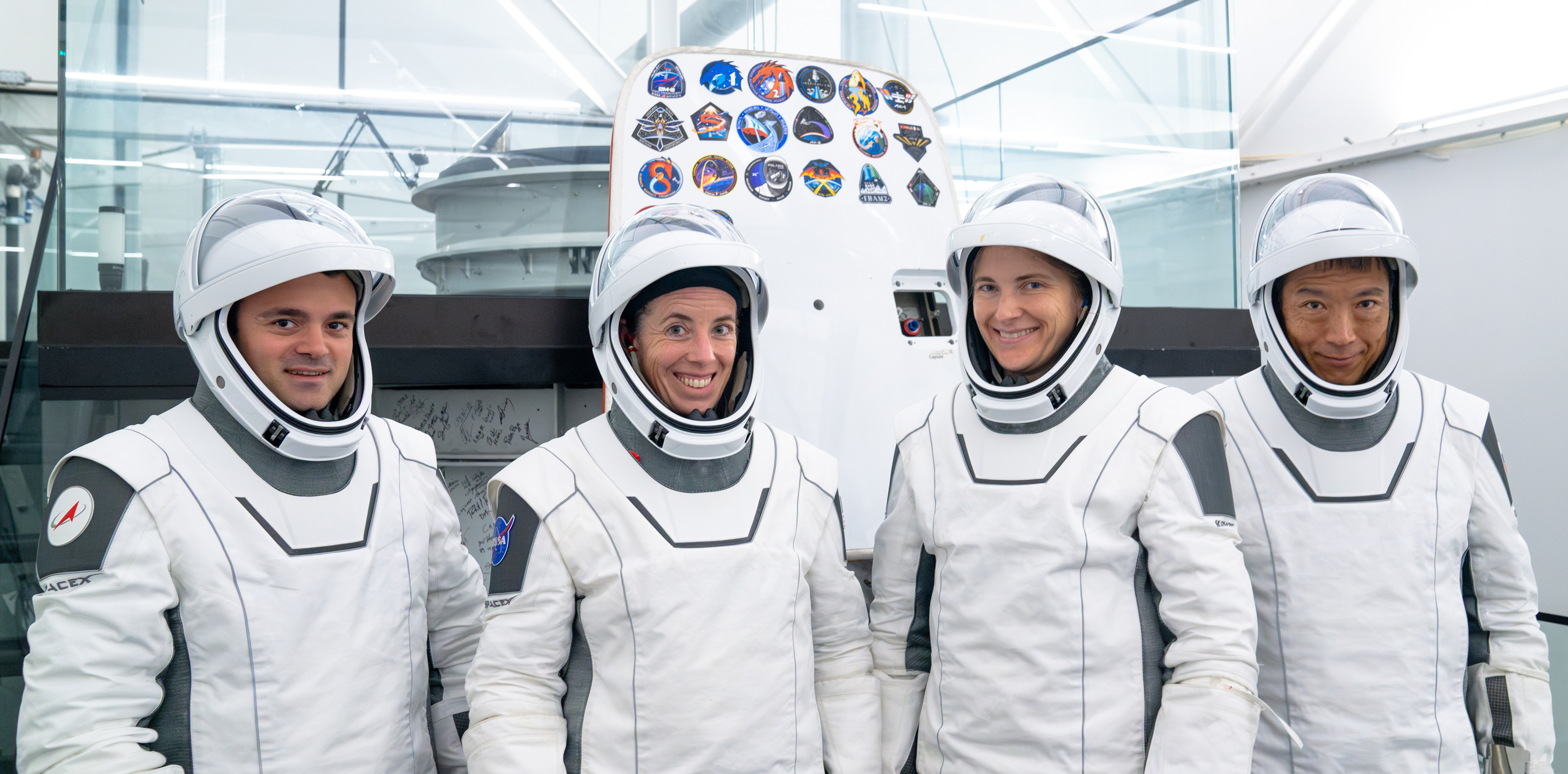
Four crew members from three space agencies will launch to the International Space Station no earlier than spring 2027 for a long-duration science expedition as part of NASA’s SpaceX Crew-14 mission.
NASA astronauts Kayla Barron and Chris Birch will serve as spacecraft commander and pilot, with JAXA (Japan Aerospace Exploration Agency) astronaut Makoto Suwa, and Roscosmos cosmonaut Arutyun Kiviryan as mission specialists. After docking, Crew-14 will join the space station’s Expedition 75/76.
This mission is the 14th commercial crew rotation with SpaceX under NASA’s Low Earth Orbit Program. The crew will conduct scientific investigations and technology demonstrations to help prepare humans for future exploration missions to the Moon and Mars and to benefit people on Earth.
This will be Barron’s second flight to the space station. She was selected as a NASA astronaut in 2017. Barron earned a bachelor’s degree in systems engineering from the U.S. Naval Academy in Annapolis, Maryland and a master’s degree in nuclear engineering from the University of Cambridge in England. A commander in the U.S. Navy, Barron earned her submarine warfare officer qualification, deploying three times aboard the USS Maine. She first launched to the space station in 2021 aboard NASA’s SpaceX Crew-3 mission, spending a total of 177 days in space across space station Expeditions 66/67. She completed two spacewalks and served as lead robotics operator for another. Most recently, Barron supported the development of new technologies and operational concepts for NASA’s Artemis program.
Selected as a NASA astronaut in 2021, Birch graduated from the University of Arizona in Tucson with degrees in mathematics and biochemistry and molecular biophysics. She earned a doctorate in biological engineering from the Massachusetts Institute of Technology, and later taught bioengineering at the University of California, Riverside, and scientific writing and communication at the California Institute of Technology in Pasadena. Birch competed as a decorated track cyclist on the U.S. National Team and was named to the Olympic Long Team for the 2020 Tokyo Games. She has served as a capsule communicator, supporting crews aboard the space station and during the Artemis II mission. Birch was crew lead for Expedition 72, working with flight control teams to help manage daily operations, and served as a crew representative for NASA’s Orion Program, supporting Artemis II mission development and operations. This will be her first spaceflight.
The Crew-14 mission also is the first spaceflight assignment for Suwa. Before JAXA selected him as an astronaut candidate in 2023, Suwa spent nearly a decade with the World Bank Group. Previously, he served in Rwanda as a Japan Overseas Cooperation Volunteer before joining the United Nations World Meteorological Organization. Suwa holds a doctorate in geosciences from Princeton University and completed basic training to become certified as an astronaut in 2024.
This mission will be Kiviryan’s first trip to the space station. He graduated from Saint Petersburg Suvorov Military School in 2010 and later studied at the Baltic State Technical University. He graduated in 2015 as an engineer specializing in rocket science and completed training in the operation of computer-controlled machines. Kiviryan was selected for the Gagarin Research and Test Cosmonaut Training Center Cosmonaut Corps in 2021 and has served as a test cosmonaut since 2023.
For more than 25 years, people have lived and worked continuously aboard the International Space Station, advancing scientific knowledge and making research breakthroughs that aren’t possible on Earth. The space station helps NASA understand and overcome the challenges of human spaceflight, expand commercial opportunities in low Earth orbit, and build on the foundation for long-duration missions to the Moon, as part of the Artemis program, and to Mars.
Learn more about International Space Station research and operations at:
-end-
Joshua Finch / Jimi Russell
Headquarters, Washington
202-358-1100
[email protected] / [email protected]
Anna Schneider / Mary Pfister
Johnson Space Center, Houston
281-483-5111
[email protected] / [email protected]
Source: www.nasa.gov

Côte d’Ivoire signed the Artemis Accords on Thursday, becoming the 75th signatory and marking a major milestone for this growing coalition. With the signing ceremony in the nation’s largest city, Abidjan, Côte d’Ivoire joined other like-minded nations and committed to the peaceful, transparent, and responsible exploration of the Moon, Mars, and beyond.
“The United States and Côte d’Ivoire already cooperate on Earth,” said NASA’s Deputy Administrator Matt Anderson. “Today, we expand that partnership beyond it. Joining the Artemis Accords opens new opportunities for our scientists, engineers, and institutions to work together as humanity returns to the Moon and prepares for what comes next. We’ve aligned on the principles. The opportunities are in front of us. And now we can get to work.”
The nation’s Minister of Higher Education and Scientific Research Adama Diawara signed on behalf of the country in a ceremony held during Africa Space Expo ASPEX 2026. Chargé d’affaires Junaid Munir from the U.S. Department of State witnessed the ceremony.
“This is a great achievement, and important for Côte d’Ivoire’s ambitions and for the rest of the African Union members,” said Director General of the Space Agency of Côte d’Ivoire Tidiane Outtara.
Côte d’Ivoire has expanded its involvement in space science and technology through years of international cooperation. Since 2019, the National Office of Technical Development of Côte d’Ivoire and NASA have collaborated on Earth observation and geodesy, a field that measures Earth’s shape, gravity, and movement. Together, the partners have advanced global geodetic networks, improved space‑based measurement techniques, and increased understanding of how Earth’s systems interact.
The country later established the Space Agency of Côte d’Ivoire in 2025 to coordinate national efforts in Earth observation, space weather, astronomy, satellite navigation, and communications.
In 2020, NASA and the State Department joined with seven other founding nations to establish the Artemis Accords, responding to the growing interest in lunar activities by both governments and private companies. The Artemis Accords are the first set of practical principles aimed at enhancing transparency, safety, and coordination among nations as they explore the Moon, Mars, and beyond, committing nations to:
By signing the Artemis Accords, nations open the door to opportunities for future lunar exploration with NASA, advancing humanity’s return to the Moon, and shaping the Golden Age of exploration and innovation.
Learn more about the Artemis Accords at:
https://www.nasa.gov/artemis-accords
Source: www.nasa.gov
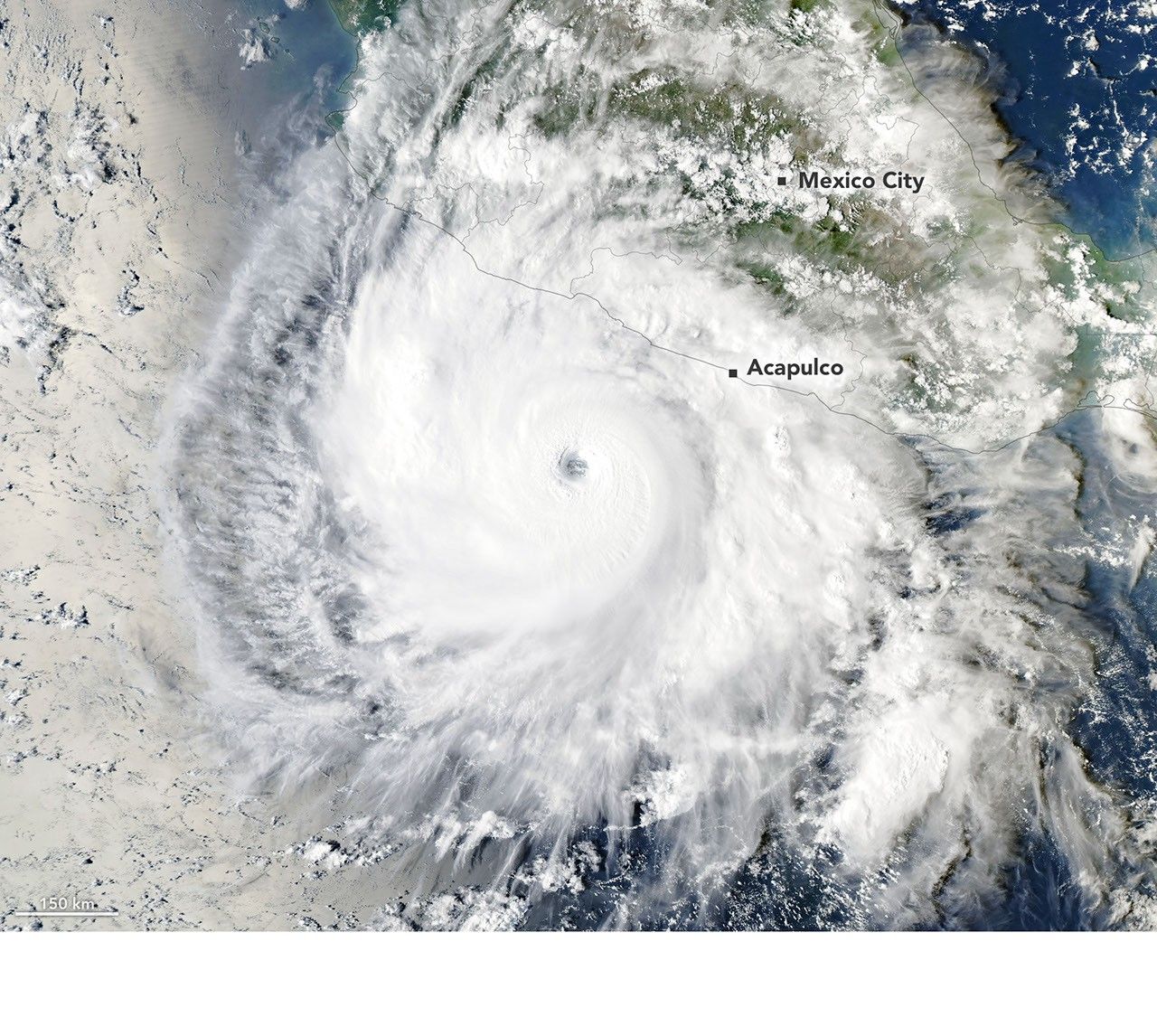
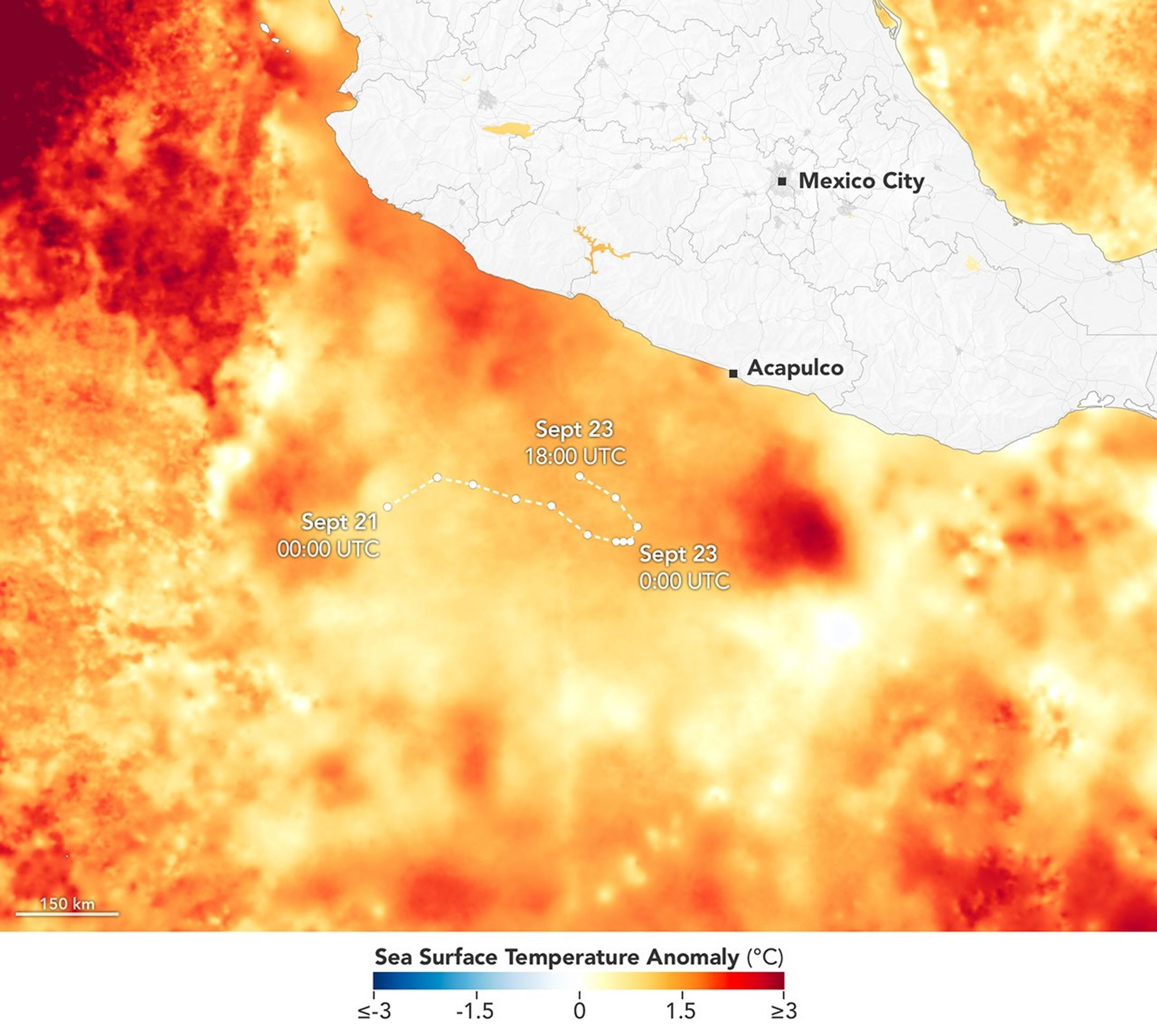
In mid-September 2026, Hurricane Polo began as a tropical disturbance off the Pacific coast of Mexico. By September 20, it was organized enough to qualify as a tropical depression, and by the next day it was a tropical storm.
From there, Polo launched into a period of rapid intensification that left meteorologists searching for adjectives strong enough to convey what was happening. Some described the storm’s rate of intensification and strength as “jaw-dropping,” others as “astonishing,” and others as “absolute insanity.”
“Polo went through a period of what can only be described as explosively rapid intensification,” said Gary Partyka, an atmospheric scientist with the Global Modeling and Assimilation Office (GMAO) at NASA’s Goddard Space Flight Center, in an email. “This was RAPID, rapid intensification.”
The storm was in an environment that was “near perfect” for strengthening, Partyka said, characterized by weak wind shear, high moisture, warmer ocean temperatures, and high levels of atmospheric instability.
Several observers leaned on extreme rapid intensification—a technical classification meaning the storm’s wind speeds increased at least 60 knots (111 kilometers or 69 miles per hour) within a 24-hour period. By September 22, the storm’s maximum sustained wind speed had risen by 90 knots (167 kilometers per hour or 104 miles per hour) within 24 hours, hitting category 5 strength. In its normally staid forecast discussions, the National Hurricane Center called the intensification “truly remarkable.”
When NOAA’s Hurricane Hunter aircraft flew over the storm on September 22, researchers estimated winds of nearly 285 kilometers (180 miles) per hour. That would make it the third-strongest storm on record in the eastern Pacific by maximum sustained winds and the fastest on record to go from a tropical depression to a category 5 storm, according to some analysts.
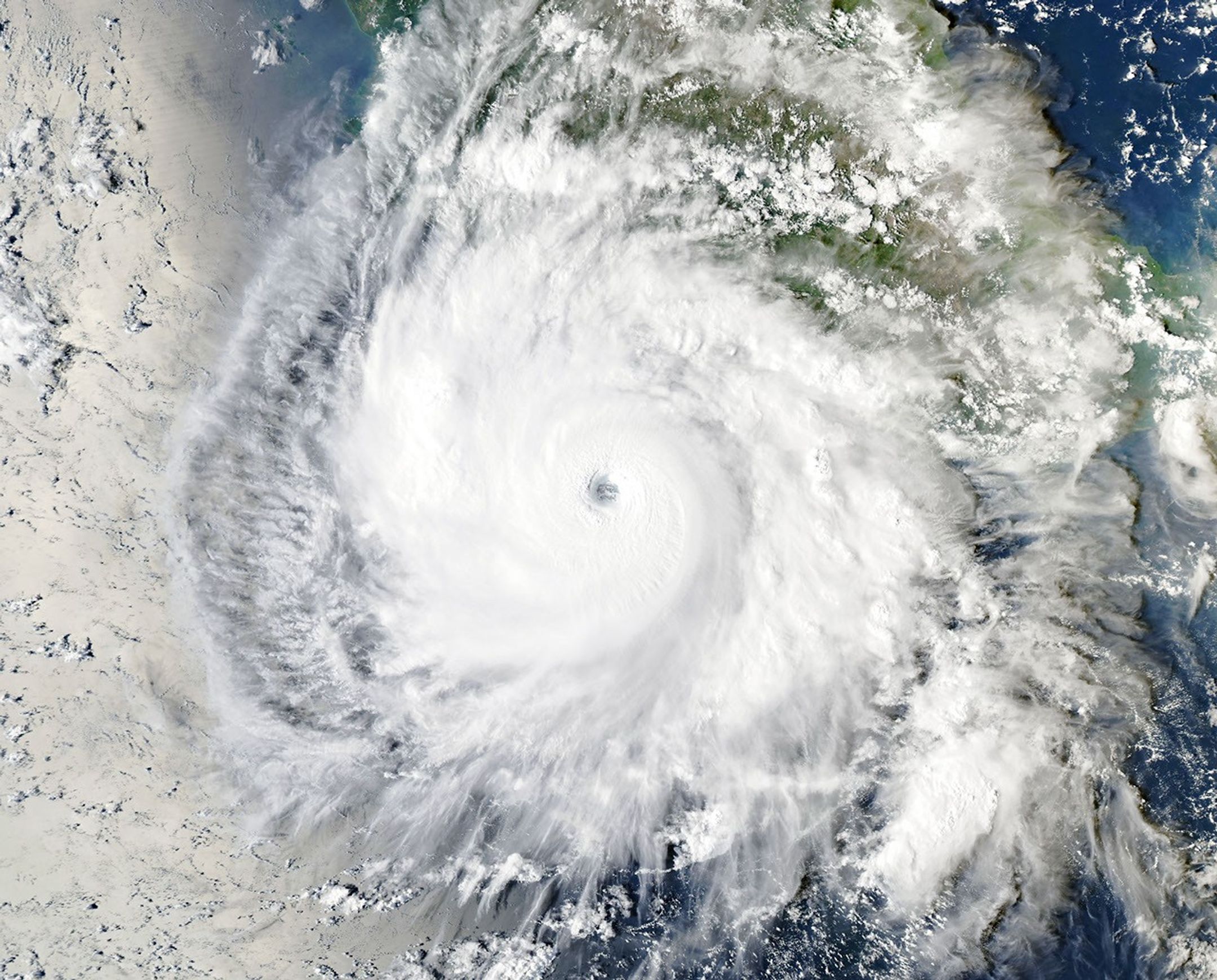
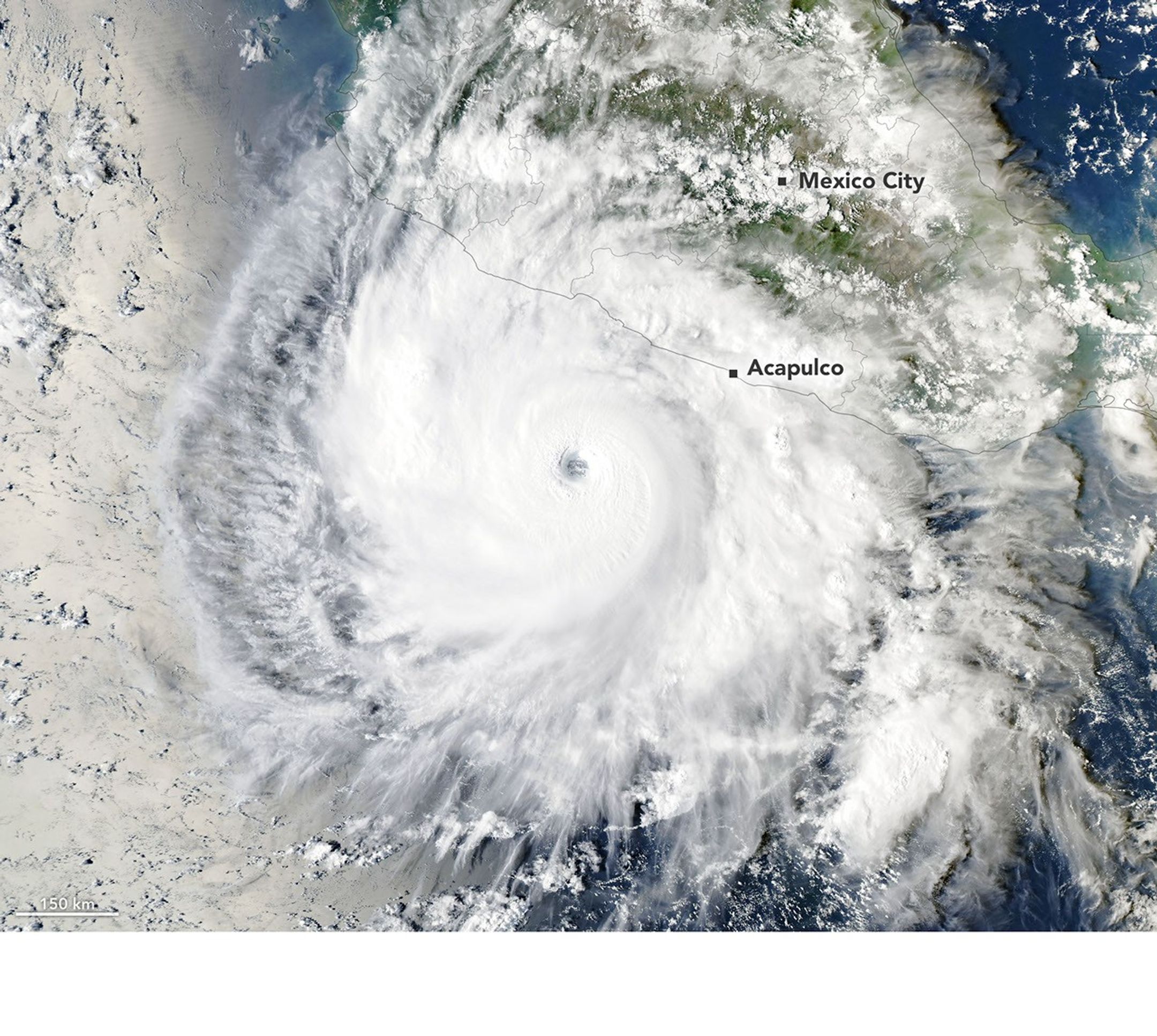
On the afternoon of September 23, when the Moderate Resolution Imaging Spectroradiometer (MODIS) on NASA’s Aqua satellite captured this image (left), Polo was churning off the coast of Guerrero, southwest of Acapulco. With maximum sustained winds of 230 kilometers (145 miles) per hour, the storm was category 4 strength when the image was acquired, having undergone an eyewall replacement cycle that weakened it slightly.
“The satellite imagery of Polo is very impressive, with the storm’s large, clear eye and extensive outflow pattern,” said Kristen Corbosiero, an atmospheric scientist at the State University of New York at Albany, who is working on a NASA project that uses satellite data to study tropical cyclone ventilation. “Weak winds above the system and good outflow at the top of the system also contributed to Polo’s rapid intensification.”
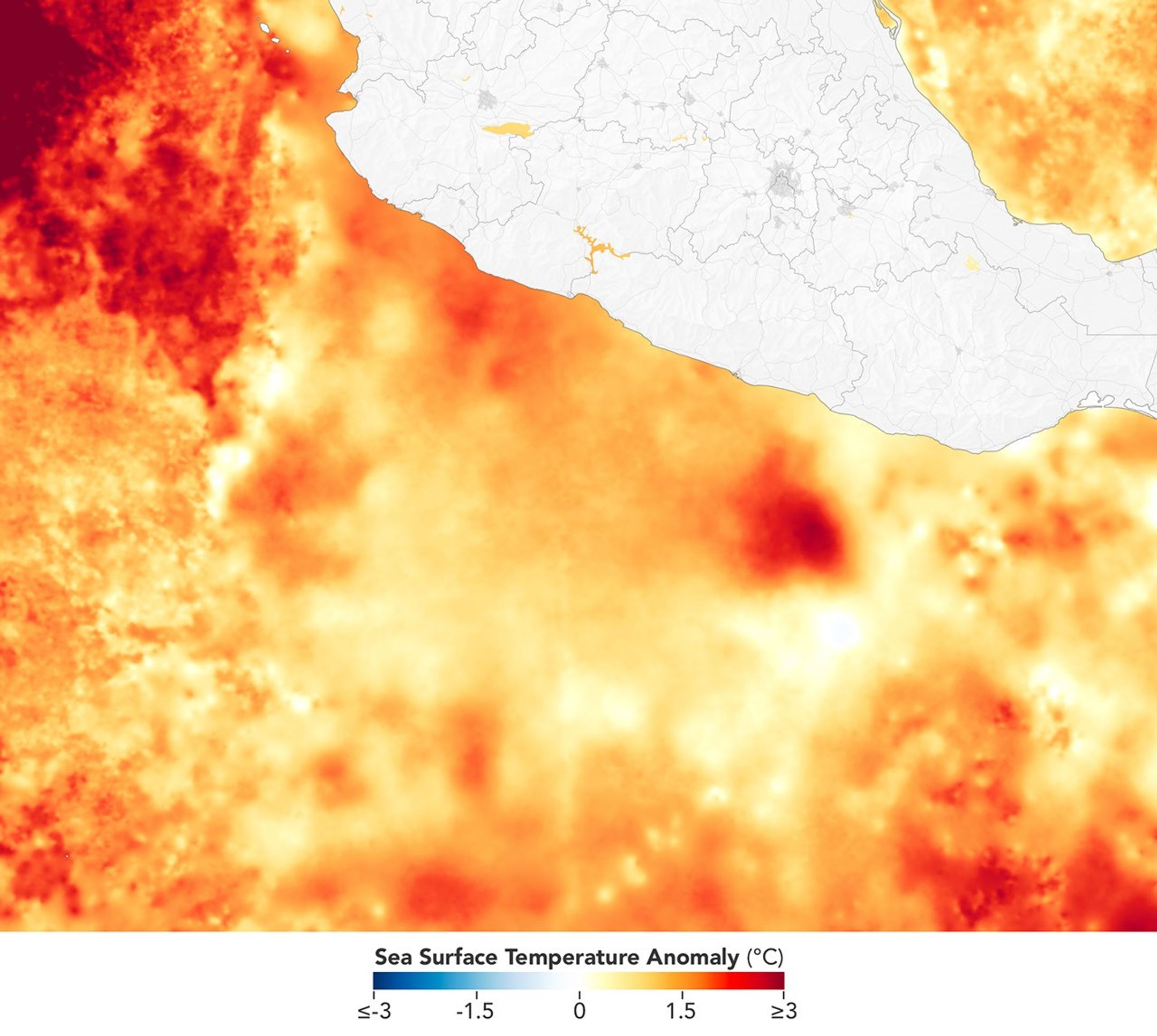
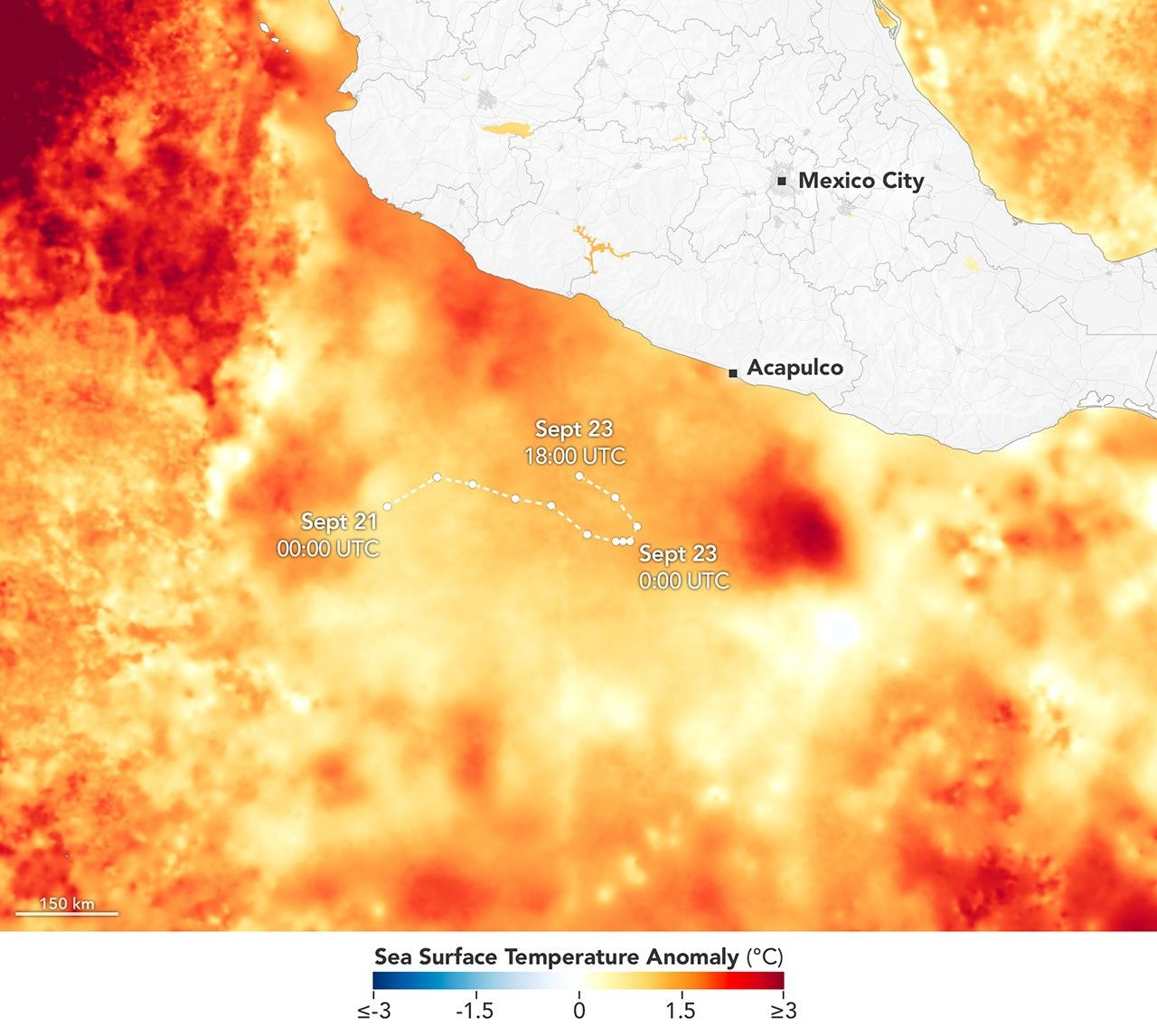
As Polo developed, it moved over areas where sea surface temperatures were as high as 32 degrees Celsius (90 degrees Fahrenheit)—2 to 3 degrees warmer than usual for September 23. Surface waters across much of the region were above 27.8°C (82°F), the temperature generally required to sustain and intensify hurricanes.
The map above (right) is based on data from the Multiscale Ultrahigh Resolution Sea Surface Temperature (MUR SST) project at NASA’s Jet Propulsion Laboratory, which blends satellite measurements from NASA, NOAA, and international missions with observations from ships and buoys. Rather than absolute temperatures, the map shows anomalies—how much warmer or cooler the ocean surface was on September 23, 2026, than the project’s 2003-2014 average for that date.
While the map above conveys temperatures at the water surface, the presence of warm water deeper in the column has likely contributed to the storm’s staying power, Corbosiero added. Sometimes hurricanes churn up cooler water from deep in the column that can slow a storm’s intensification, but in this case the cool water wake behind the storm appears minimal, and measurements and models show high ocean heat content at considerable depths.
Both Partyka and Corbosiero cautioned against attributing Polo’s rapid intensification directly to El Niño’s unusually warm surface temperatures in the central and eastern Pacific Ocean. Several hurricanes in this region have undergone rapid intensification in the past during La Niña and neutral conditions, Corbosiero noted, including Hurricane Otis in 2023 and Patricia in 2015, both category 5 storms.
However, the overall amount of tropical cyclone activity in the eastern Pacific does typically increase during El Niño due to changes in large-scale ocean and atmospheric circulation patterns, and that’s what has happened so far in 2026. As of September 24, the accumulated cyclone energy in the region was nearly twice the norm, according to data from Colorado State University.
People tracking sea surface temperature anomalies or other aspects of the storm can do so using NASA’s Worldview browser, a near real-time data viewer from the Short-term Prediction Research and Transition (SPoRT) project, and the FLUID tool from GMAO. Forecasters expect Polo to stay over the Pacific until next week, when it may curve toward the northeast and approach Baja California.
NASA Earth Observatory images by Michala Garrison, using sea surface temperature data from the Multiscale Ultrahigh Resolution (MUR) project, MODIS data from NASA EOSDIS LANCE and GIBS/Worldview, and storm track data from NOAA’s National Hurricane Center. Story by Adam Voiland.
Stay up-to-date with the latest content from NASA as we explore the universe and discover more about our home planet.
The powerful storm delivered extreme rainfall and damaging winds to the state, passing the Island of Hawaiʻi as a category…
The first named storm of the 2026 Atlantic hurricane season brought intense rainfall and the threat of flash flooding to…

The Pacific was buzzing with storms while the Atlantic was notably quiet.
Source: science.nasa.gov
APOD
Astronomy Picture of the Day
Discover the cosmos! Each day a different image or photograph of our fascinating universe is featured, along with a brief explanation written by a professional astronomer.
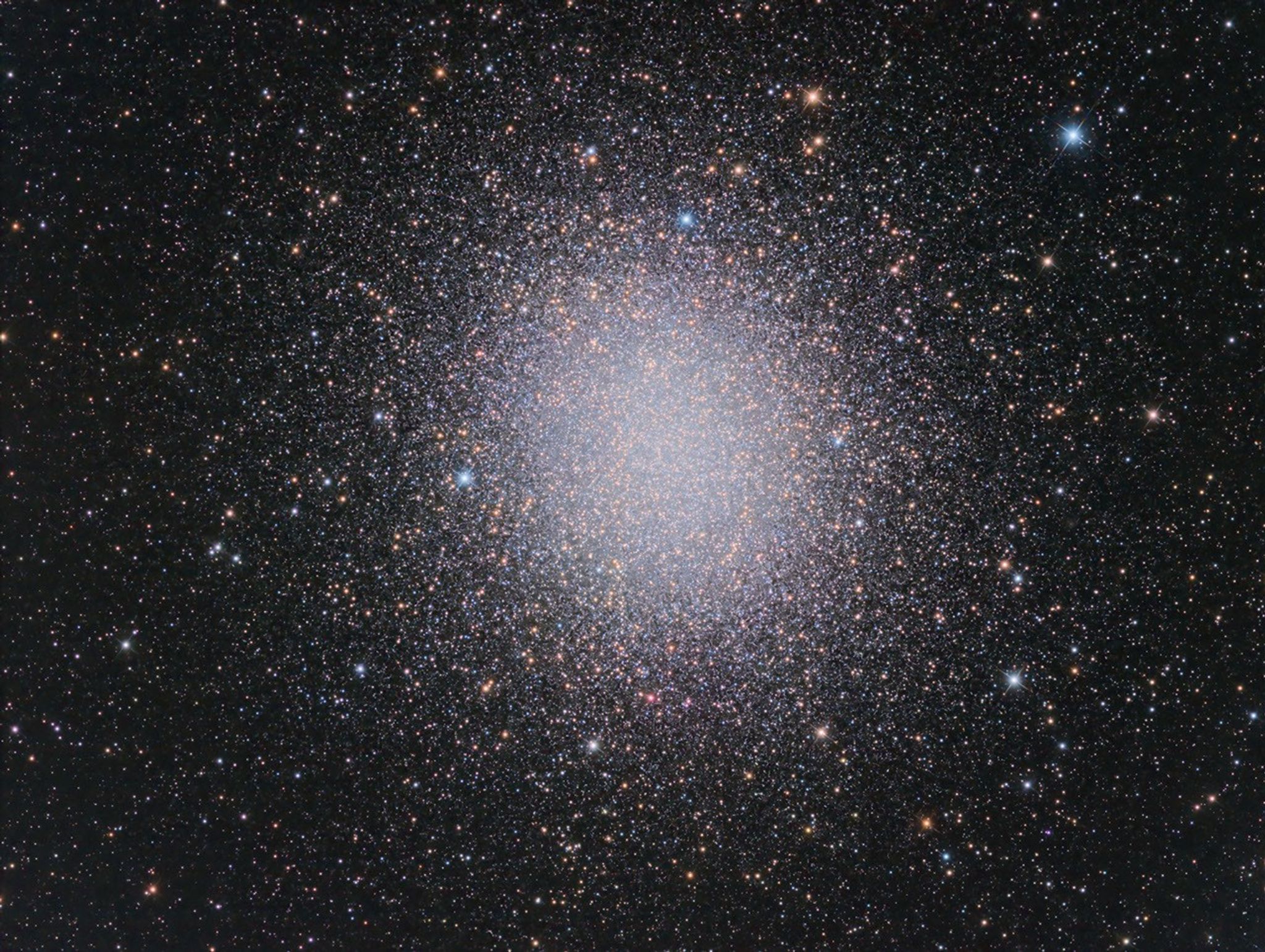
Explanation: Globular star cluster Omega Centauri packs about 10 million stars much older than the Sun into a volume some 150 light-years in diameter. Also known as NGC 5139, at a distance of 15,000 light-years it’s the largest and brightest of 200 or so known globular clusters that roam the halo of our Milky Way galaxy. Though most star clusters consist of stars with the same age and composition, the enigmatic Omega Cen exhibits the presence of different stellar populations with a spread of ages and chemical abundances. In fact, Omega Cen may be the remnant core of a small galaxy merging with the Milky Way. With a yellowish hue, Omega Centauri’s red giant stars are easy to pick out in this sharp telescopic view. A two-decade-long exploration of the dense star cluster with the Hubble Space Telescope has revealed evidence for a massive black hole near the center of Omega Centauri.
APOD’s email for image submissions has changed. Please see: APOD Submissions.
APOD’s main NASA site is moving: From apod.nasa.gov to science.nasa.gov/apod
Tomorrow’s picture: reflections on a starry night
| Date | September 25, 2026 |
|---|---|
| Credit & Copyright: | Javier O. Cadenas Parra |
| Authors & editors: | Jerry Bonnell, Cecilia Chirenti, Robert Nemiroff, Keighley Rockcliffe |
| A service of: |
ASD at NASA / GSFC, NASA Science Activation & Michigan Tech. U. |
Source: science.nasa.gov
For more information, contact Donald S. Parker, Kennedy Space Center, [email protected]
Improper casting and forging processes in the manufacture of aluminum alloy 2219 can lead to microstructural defects that result in a sub-optimal response to anodic surface treatments and an increase in corrosion susceptibility. This Technical Bulletin communicates the risks of improper casting and recommends a homogenizing step followed by multidirectional deformation after conventional direct chill casting, especially for larger castings. 09/24/26 DOC ID: 20260008373
Background
Aluminum 2219 is an age-hardenable, over-saturated, aluminum-copper alloy developed by Aluminum Company of America (Alcoa) in 1954, for service up to 600 °F. Numerous aerospace applications include launch and space vehicles including space shuttle fuel tanks, and International Space Station human-rated pressurized modules. It has excellent cryogenic properties, weldability, workability, and mechanical properties at low and high temperatures [1].
Problem/Issue Description
Casting 2219 aluminum alloy ingots is a specialized process used to manufacture large-scale structures that are subsequently forged or rolled into final product forms. The as-cast ingot internal defects may include disparate grain sizes, macrosegregation of alloying elements, and residual banded and clustered copper-rich intermetallics, which can lead to unsatisfactory mechanical and corrosion properties including low ductility, low strength, and a non-uniform distribution of material properties in the final product form. [2,11,12]
These defects can be somewhat mitigated with post-casting processes, including mechanical deformation, solution treatment, quenching, and aging. However, if ingots already possess unrecoverable discontinuities such as interdendritic segregation, banded and clustered large copper intermetallics, and disparate grain sizes, no subsequent thermos-mechanical processing will remedy the deficiencies in properties, especially for larger ingot sizes.
Homogenization as an Essential Step
Homogenization after casting greatly improves the final properties’ subsequent mechanical processing. Studies show that Fick’s laws of diffusion drive the highly concentrated copper atoms out of the interdendritic boundary zones, distributing them evenly across the aluminum matrix grains; residual phases are dissolved into the matrix, and degree of segregation of all elements reduces dramatically. Homogenization processing parameters need to be optimized for ingot cross-section thickness to ensure proper and uniform thermal response. Wang et al., who focused on homogenization, effectively used a temperature and time of 535 °C for 10 hours [3].
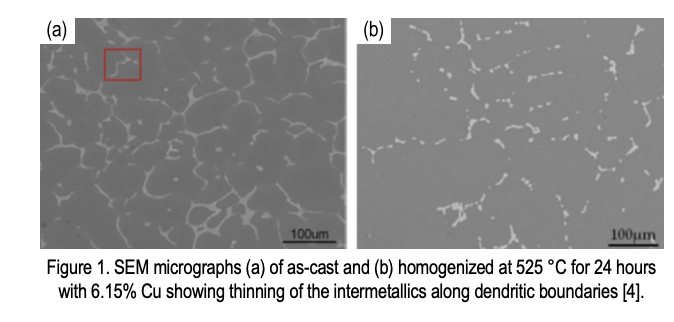
Homogenization optimization variables include the melting point, amount and dissolution rate of the eutectic phase, ingot size, grain size and copper content. Several researchers demonstrated that tools such as X-ray Diffraction (XRD) or Differential Scanning Calorimetry (DSC) are valuable tools for defining and verifying the homogenization step [3,4,5,6,7,8,9]. Improvement of microstructure and mechanical properties of homogenized aluminum 2219 is well documented. Scanning Electron Microscope (SEM) images from a study examining aluminum 2219 with varying amounts of copper show change in the morphology of grain boundaries after homogenizing in Figure 1.
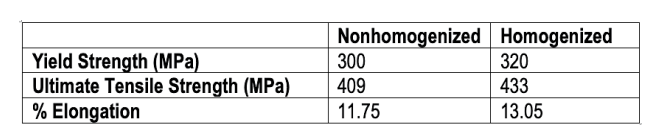
The table below lists the results of Wang et al. who examined nonhomogenized and homogenized 2219, which were forged and treated to the T6 temper. The homogenized 2219 is clearly superior [3].
Thermomechanical Deformation Mechanical deformation such as forging — specifically, upset forging — and rolling, followed by solution treatment and aging, have been shown to drastically improve the aluminum 2219 microstructure by creating well distributed smaller-sized Al2Cu particles and significantly smaller grains leading to improved and less anisotropic mechanical properties. In one example of many studies, superior mechanical and microstructural properties were developed with a higher temperature multidirectional forging at 510 °C followed by warm rolling at 240 °C.
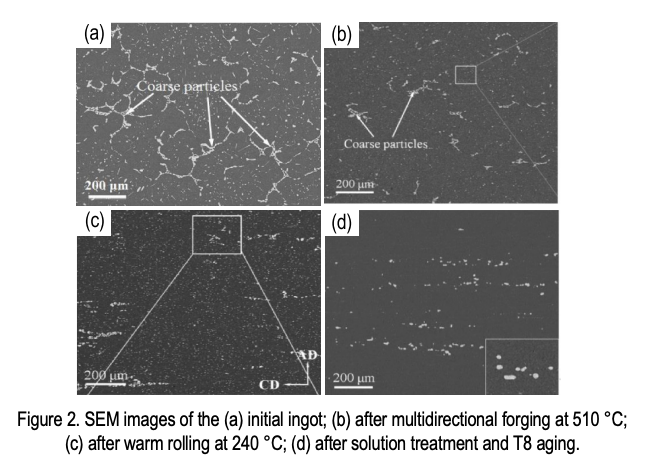
The upset forging and rolling followed by solution treatment and aging led to significantly reduced area fraction of coarse Al2Cu particles (5.5% to 1.0%) due to dissolution into the matrix. Grain size was reduced (230 micrometers to 58.6 micrometers) through increased storage energy and nucleation from the lower temperature rolling. Lastly, a uniformly distributed θ’ phase was increased by 118%. These changes in microstructure led to better strength, elongation and fracture properties[10].
Recommendation/Guidance
Homogenization after conventional direct chill casting is imperative to optimize the final properties of aluminum 2219 and should be explicitly included in procurement specifications. In addition, verification of effectiveness of the homogenization step is also recommended and could include before and after micrographs, DSC or XRD measurements. The initial micrographs are useful to verify a high-quality ingot. Multi-directional deformation is also important to aid fracturing of coarse particles, distribution of the Al2Cu and intermetallic phases, recrystallization, and nucleation of new grains leading to improved mechanical properties.
References
1. NASA-CR-74545
2. NASA-CR-123777
3. Wang et al., Materials 2018, 11, 914.
4. Chen et al., Metals 2020, 10, 197.
5. Zhang et al., Journal of Materials Research and Technology 2023, 27, 7470.
6. Gupta et al., Canadian Metallurgical Quarterly, 2006, 45, No. 3.
7. Xu et al., Metals 2021, 11, 174.
8. Zhang et al., Advanced Engineering Materials, 2024, 26.
9. Lin et al., Materials 2023, 16, 433.
10. Zhang et al., Journal of Materials Research and Technology 2023, 22, 1136.
11. NASA-TM-20230018439 12. NASA-TM-20240000329
Source: www.nasa.gov

A chaotic secret hides within this seemingly serene image of spiral galaxy NGC 4698 taken by NASA’s Hubble Space Telescope and released on Sept. 18, 2026. As a spiral galaxy like our own Milky Way galaxy, NGC 4698 has spiral arms that curl around within a thin disk of stars, gas, and dust. These arms are marked by opaque clumps of brown dust and dotted with small collections of bright blue stars.
Unlike many other spiral galaxies, NGC 4698’s delicate spiral arms are only prominent in the outer reaches of the disk; spiral arms often wind down to the very center of a galaxy, but NGC 4698’s spiral arms appear to shy away from its glowing center. The arms instead hover in a ring-like structure around the perimeter of the galaxy.
Read more about this unusual spiral galaxy.
Text credit: ESA/Hubble
Image credit: ESA/Hubble & NASA, D. Thilker, the MAUVE-HST Team
Source: www.nasa.gov
9 min read

The 2026-2027 challenge theme is, “Fueling Flight Design Challenge: New Energy Systems.”
As more and more aircraft are a part of the US’ National Airspace System (NAS), NASA and partners at the FAA, at universities, and in the aviation industry are searching for ways to increase safety, make flight more affordable, find new fuels for aircraft, and reduce the amount of time passengers and cargo spend in the air. This year’s Dream with Us Challenge focuses on new aircraft fuels and how even the addition of one new fuel will change both the aircraft they are used in and the airports where aircraft take off and land.
The “Fueling Flight Design Challenge: New Energy Systems” challenge is open to middle and high school students, with a different task for middle school teams and high school teams. Teams for both categories will focus on the addition of an emerging aircraft fuel source, liquefied natural gas (LNG) into our aviation environment. This will require teams to learn more about LNG, how it might be used in aviation, the benefits of an additional fuel source, and what kind of changes would need to be made to aircraft and to airports to adapt to these new changes.
Since the early days of aviation, commercial aircraft have relied on traditional designs and infrastructure. Aircraft have been a similar “tube-and-wing” design, with limitations that were made because of the materials aircraft were made with, along with the technology to build these aircraft. With the increasing availability of new technologies and new materials, aircraft no longer need to follow the same basic design. In addition, new research about fuel types, increasing demand for more flights and more fuel has resulted in many different options that include types of fuel, increasing electrification, and more. That also means airports are going to need to adjust. Changes in airport infrastructure will be needed to add multiple fuel types, different gateway configurations to allow for new aircraft types, and perhaps even different areas for different aircraft. What will this all look like? That partially depends on researchers and designers in the future since these are challenges the aeronautics community is starting to face now and will continue to do in the future.
Globally each year, over 62 million metric tons of air cargo are transported, which is more than 33% of global trade by value. This equates to about $8.3 trillion annually. With these large numbers, even a small increase in efficiency can have a large economic impact.
A major air freight company has announced that they are looking to replace some of their fleet with a new aircraft and are interested in new designs to increase efficiency and that will utilize a different type of fuel. Your team has been tasked by your aircraft company to develop a new concept cargo aircraft to present to the air freight company. Your team has been directed to focus on a design that will use liquefied natural gas, or LNG. Since LNG must be stored differently than traditional jet fuel, the aircraft design needs to adapt. These changes, however, may lead to innovative designs that are more aerodynamically efficient.
The air freight company has provided the following requirements.
Teams will be provided with performance information for the jet engine.
The high school module is for students in grades 9 – 12. Students in grades 6 – 8 will use the middle school module. See the Dream with Us main webpage for details. Note: for teams that have both middle and high school students, those teams will compete in the high school challenge.
The high school challenge is open to all participants in grades 9 – 12 who are attending public, private, parochial, and home schools in the United States of America and children of U.S. military members stationed overseas.
The 2026/2027 Dream with Us Design Challenge for middle and high school students opens September 25, 2026. The submission period for middle school entrants begins September 25, 2026, and concludes on January 22, 2027, at 11:59 pm ET. Schools, organizations, and community groups should communicate to parents and guardians that submissions are limited to one entry per team and team registration requires someone over the age of 13 to create the account (adult team sponsors may create the registration on the team’s behalf if desired). Entries must be submitted through the submission link on the Dream with Us Design Challenge webpage: https://www.nasa.gov/dream-with-us/. Signed permission forms from parents or legal guardians are required for all participants that agree to the terms and requirements listed below and on the submission form.
Use of artificial intelligence tools for challenge-related work is not permitted. Teams must not upload, process, or generate any content using AI systems, including publicly available browser‑based GenAI services, AI‑assisted code generation tools, or AI‑generated imagery. All submissions must be created solely by team members without the assistance of AI.
The final product for this challenge is to prepare and submit an Engineering Design Notebook.
Teams of judges will evaluate your work based on what you submit in your Engineering Design Notebook. Your team should look through the Scoring Rubric and begin to do research to design a system to address the requirements of the notebook; specifics about the notebook requirements can be found in the Scoring Rubric. The headings in the Scoring Rubric should be used as the headings in your Engineering Design Notebook. Fill in sections of the Engineering Design Notebook as you complete the work in each section.
Engineering Design Template (insert)
Scoring Rubric (insert)
The following research resources can get you started on your work. This is not an all-inclusive list of resources publicly available but is meant to give you a strong starting point:
Fundamental Experimental Tests and Modeling of LOX/CH4 Engines at High Pressures
“As Jet Fuel Supplies Tighten, Can Other Fuels Meet Demand?”
All high school entries will be submitted through the NASA Gateway link found INSERT GATEWAY LINK HERE and on the Dream with Us Design Challenge webpage. All entries must include the following:
Entries will be evaluated by industry experts based on impact, practicality, originality, and how well the idea is communicated. Projects will go through several levels of judging. Top teams will be asked to take part in the finalist stage, where participants will be asked to join a select group of industry judges and virtually present their projects (see timeline for dates). A panel of Blue Ribbon Judges will then make award selections based to determine which projects will be recognized.
A Scoring Rubric (see above) is available as a guide for teams. This does not need to be submitted with the team’s project.
Are you an educator who needs to know more about how to support a team or multiple teams? Are you a student wanting to know more about how to participate? Join us in October, when we will set up a mid-point check-in! Stay tuned for those dates to be released on the Dream with Us design challenge webpage.
Questions:
If you have any additional questions, please reach out to the NASA Aeronautics STEM team at [email protected].
Dream With Us: High School Engineering Challenge
Source: www.nasa.gov
10 min read
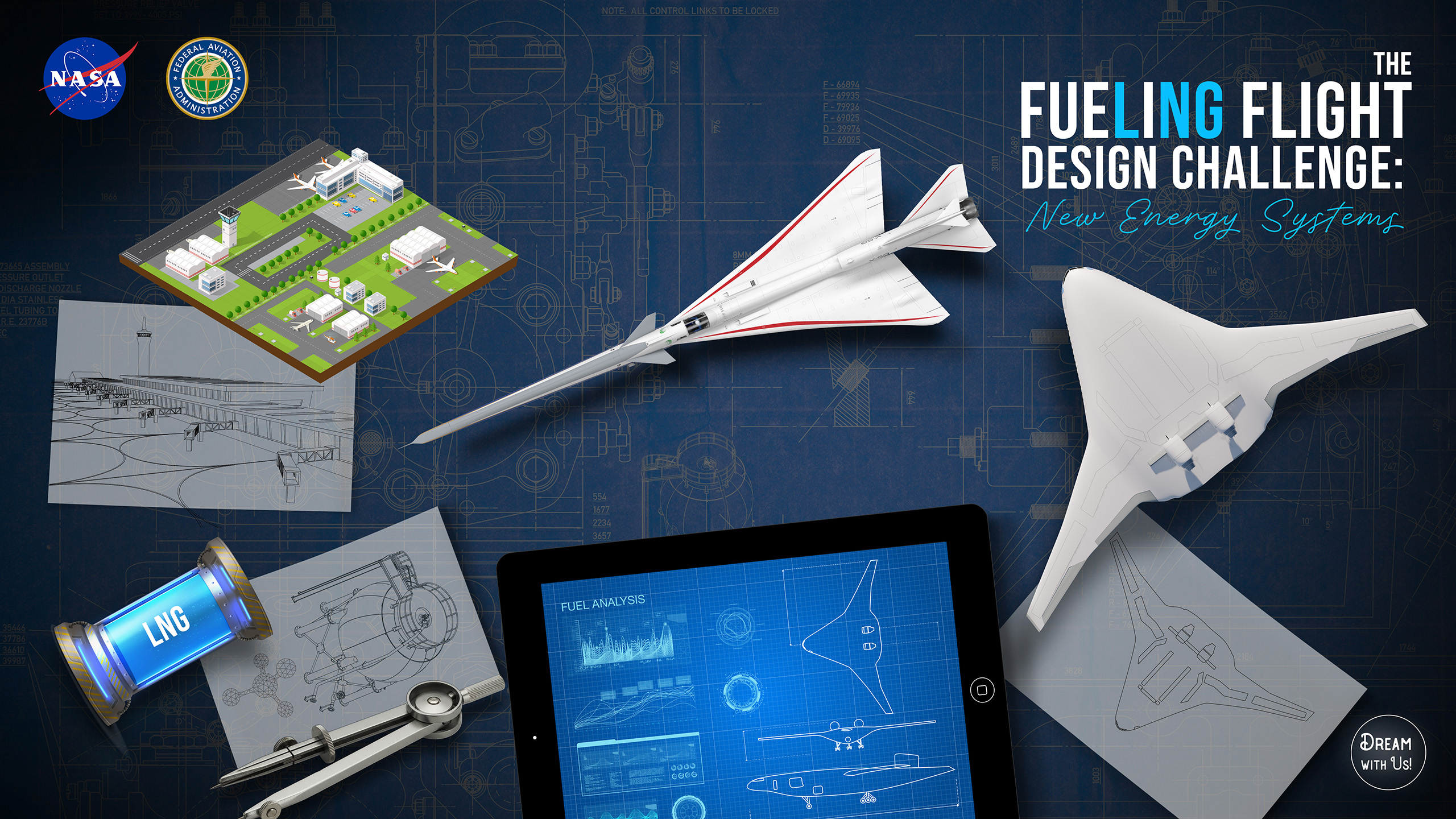
The 2026-2027 challenge theme is, “Fueling Flight Design Challenge: New Energy Systems.”
As more and more aircraft are a part of the US’ National Airspace System (NAS), NASA and partners at the FAA, at universities, and in the aviation industry are searching for ways to increase safety, make flight more affordable, find new fuels for aircraft, and reduce the amount of time passengers and cargo spend in the air. This year’s Dream with Us Challenge focuses on new aircraft fuels and how even the addition of one new fuel will change both the aircraft they are used in and the airports where aircraft take off and land.
The “Fueling Flight Design Challenge: New Energy Systems” challenge is open to middle and high school students, with a different task for middle school teams and high school teams. Teams for both categories will focus on the addition of an emerging aircraft fuel source, liquid natural gas (LNG) into our aviation environment. This will require teams to learn more about LNG, how it might be used in aviation, the benefits of an additional fuel source, and what kind of changes would need to be made to aircraft and to airports to adapt to these new changes.
Since the early days of aviation, commercial aircraft have relied on traditional designs and infrastructure. Aircraft have been a similar “tube-and-wing” design, with limitations that were made because of the materials aircraft were made with, along with the technology to build these aircraft. With the increasing availability of new technologies and new materials, aircraft no longer need to follow the same basic design. In addition, new research about fuel types, increasing demand for more flights and more fuel has resulted in many different options that include types of fuel, increasing electrification, and more. That also means airports are going to need to adjust. Changes in airport infrastructure will be needed to add multiple fuel types, different gateway configurations to allow for new aircraft types, and perhaps even different areas for different aircraft. What will this all look like? That partially depends on researchers and designers in the future since these are challenges the aeronautics community is starting to face now and will continue to do in the future.
Middle school student teams of 2-4 members will adapt an existing airport (or create one of their own) that incorporates the use of both liquefied natural gas (LNG) and traditional aviation fuel. The airport design should include the overall airport layout that includes (but is not limited to): control tower(s), hangars, fuel locations, terminal, passenger parking, runways. See requirements below for specific details.
The 2026/2027 Dream with Us Design Challenge for middle and high school students opens September 25, 2026. The submission period for middle school entrants begins September 25, 2026, and concludes on January 22, 2027, at 11:59 pm ET. Schools, organizations, and community groups should communicate to parents and guardians that submissions are limited to one entry per team and team registration requires someone over the age of 13 to create the account (adult team sponsors may create the registration on the team’s behalf if desired). Entries must be submitted through the submission link on the Dream with Us Design Challenge webpage: https://www.nasa.gov/dream-with-us/. Signed permission forms from parents or legal guardians are required for all participants that agree to the terms and requirements listed below and on the submission form.
Use of artificial intelligence tools for challenge-related work is not permitted. Teams must not upload, process, or generate any content using AI systems, including publicly available browser‑based GenAI services, AI‑assisted code generation tools, or AI‑generated imagery. All submissions must be created solely by team members without the assistance of AI.
The middle school challenge is open to all participants in grades 6 – 8 who are attending public, private, parochial, and home schools in the United States of America and children of U.S. military members stationed overseas.
Students in grades 9 – 12 will use the high school module. See the Dream with Us main webpage for details. Note: for teams that have both middle and high school students, those teams will compete in the high school challenge.
Submissions for the Dream with Us: Middle School Aviation Challenge are accepted September 25, 2026 – January 22, 2027. Submission link: INSERT LINK HERE. Winners will first be announced during a virtual awards reception (date TBD) then shared on social media and the Dream with Us design challenge webpage after the reception.
Submissions for the Dream with Us: Middle School Aviation Challenge are accepted September 25, 2026 – January 22, 2027. Submission link: INSERT LINK HERE. Winners will first be announced during a virtual awards reception (date TBD) then shared on social media and the Dream with Us design challenge webpage after the reception.
Challenge Rules
The 2026/2027 Dream with Us Design Challenge for middle and high school students opens September 25, 2026. The submission period for middle school entrants begins September 25, 2026, and concludes on January 22, 2027, at 11:59 pm ET. Schools, organizations, and community groups should communicate to parents and guardians that submissions are limited to one entry per team and team registration requires someone over the age of 13 to create the account (adult team sponsors may create the registration on the team’s behalf if desired). Entries must be submitted through the submission link on the Dream with Us Design Challenge webpage: https://www.nasa.gov/dream-with-us/. Signed permission forms from parents or legal guardians are required for all participants that agree to the terms and requirements listed below and on the submission form.
Each team submission will have two separate categories: technical and creative. Both categories must be included for consideration. Note: all sources for the presentation should be cited, including images. Please see the section above for rules about the use of AI.
The technical presentation, using PowerPoint or similar, must include:
The team’s creative submission will be a presentation that advertises the benefits of the new airport modification, allowing two different types of fuels to be utilized at the airport. The audience could be city or state leadership, stores interested in investing in a location at the airport, airlines who may want to now fly to this airport (this is up to you!). How you choose to present this advertisement for improvements is up to you. It could be any of the following (or maybe you have another creative idea):
All middle school entries will be submitted through the NASA Gateway link found INSERT GATEWAY LINK HERE and on the Dream with Us Design Challenge webpage. All entries must include the following:
The following lessons and activities can be used to help participants learn more about aircraft and airport design, along with other aircraft considerations:
Do you need to find out more about research on liquefied natural gas (LNG) as an aviation fuel source? Find out more here:
Entries will be evaluated by industry experts based on impact, practicality, originality, and how well the idea is communicated. Judges will make award selections based on the above-mentioned criteria to determine which projects will be recognized.
Are you an educator who needs to know more about how to support a team or multiple teams? Are you a student wanting to know more about how to participate? Join us in October, when we will set up a mid-point check-in! Stay tuned for those dates to be released on the Dream with Us design challenge webpage.
Questions:
If you have any additional questions, please reach out to the NASA Aeronautics STEM team at [email protected].
Dream With Us: High School Engineering Challenge
Source: www.nasa.gov
Spacecraft propulsion traditionally relies on volatile fuels and separate, bulky systems for different types of maneuvering in space. NASA is working to change that paradigm. Engineers at NASA’s Marshall Space Flight Center in Huntsville, Alabama, recently completed a rigorous series of environmental and physical tests on a new small satellite designed to make spaceflight safer and more efficient.
The ASCENT (Advanced Spacecraft Energetic Non-Toxic) Propulsion Dual Mode mission is a flight demonstration of a spacecraft about the size of a large shoebox. The mission will test a single, integrated propulsion system that uses a common fuel tank to feed two different types of engines.
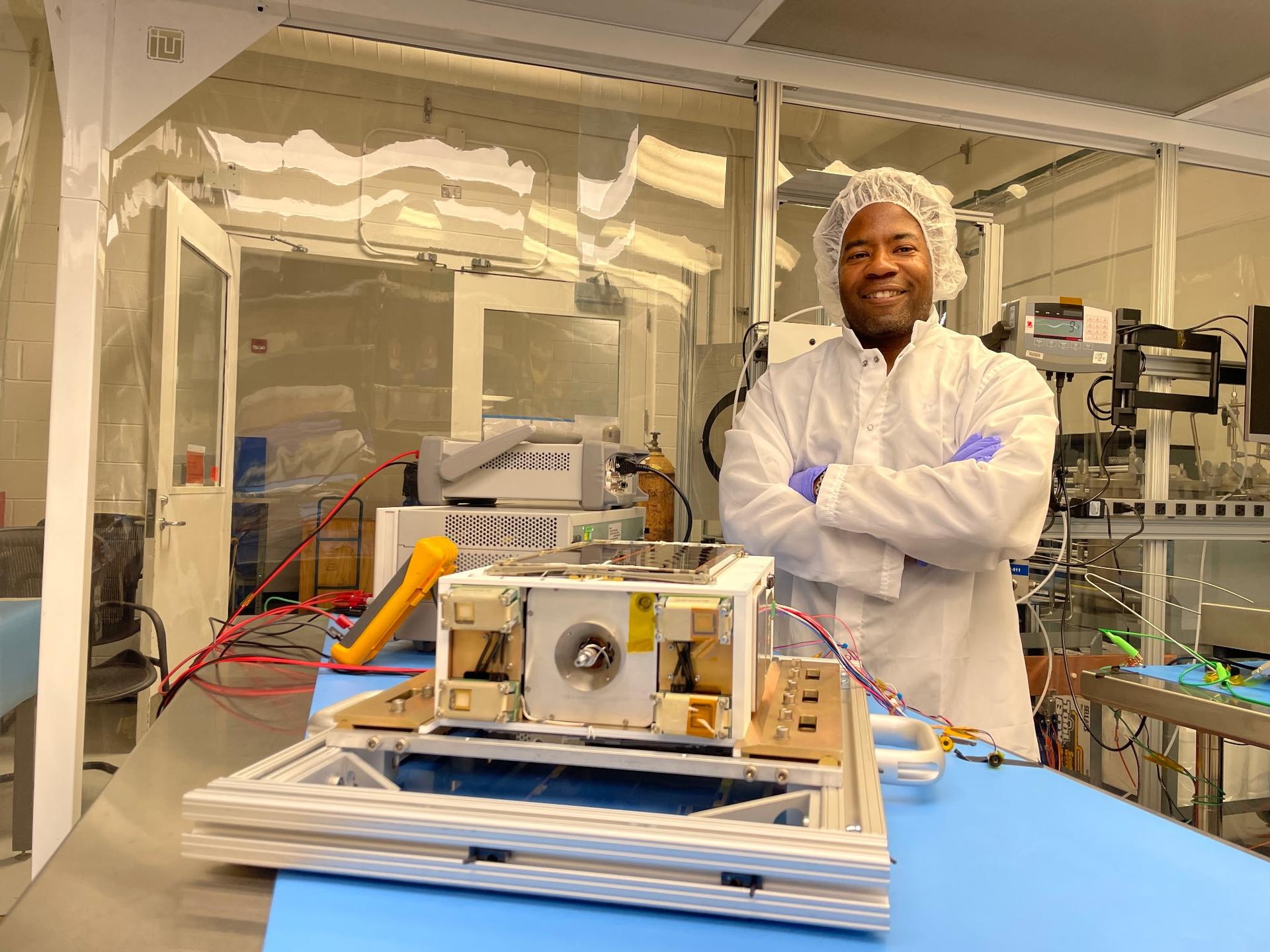
Typically, spacecraft carry two separate propulsion systems to navigate: a high-thrust chemical system for rapid movements like entering orbit, and a low-thrust electric system for highly efficient, slow maneuvers like maintaining a position. This requires multiple fuel tanks and heavy plumbing, which eats up valuable space and weight.
The spacecraft being developed uses a single non-toxic propellant called ASCENT. By feeding both a high-thrust combustion engine and low-thrust electrospray thrusters from one central tank, the spacecraft saves critical mass and volume. For future missions, this means more room for scientific instruments and the ability to launch on smaller, less expensive rockets.
Bringing this concept to flight requires a nationwide collaborative effort. While NASA Marshall manages the mission, the spacecraft relies on electrospray thrusters developed by the Massachusetts Institute of Technology, a chemical propulsion module built by Plasma Processes, and a spacecraft bus integrated by the Georgia Institute of Technology.
“There are a lot of odds and ends, and a lot of small challenges and some big ones,” said Nehemiah Williams, the demonstration’s project manager at NASA Marshall. “But ensuring the functionality of the propulsion system across all these different teams is what makes the mission successful.”
Before a spacecraft can safely operate in the harsh environment of low Earth orbit, it must pass a battery of tests on the ground. Over the past few months, the engineering team at Marshall has put the flight hardware through its paces inside the center’s Small Spacecraft Servicing and Integration Lab.
To verify the integrity of the unified propulsion system, the team conducted extensive leak testing. Engineers performed a pressurized helium leak test of the spacecraft inside a vacuum chamber to ensure the integrity of the spacecraft’s seals, successfully proving those seals were working as intended. Because the system shares a single tank of ASCENT propellant to feed two different thruster types, ensuring that the fuel lines and valves are perfectly sealed is vital for mission safety and success.
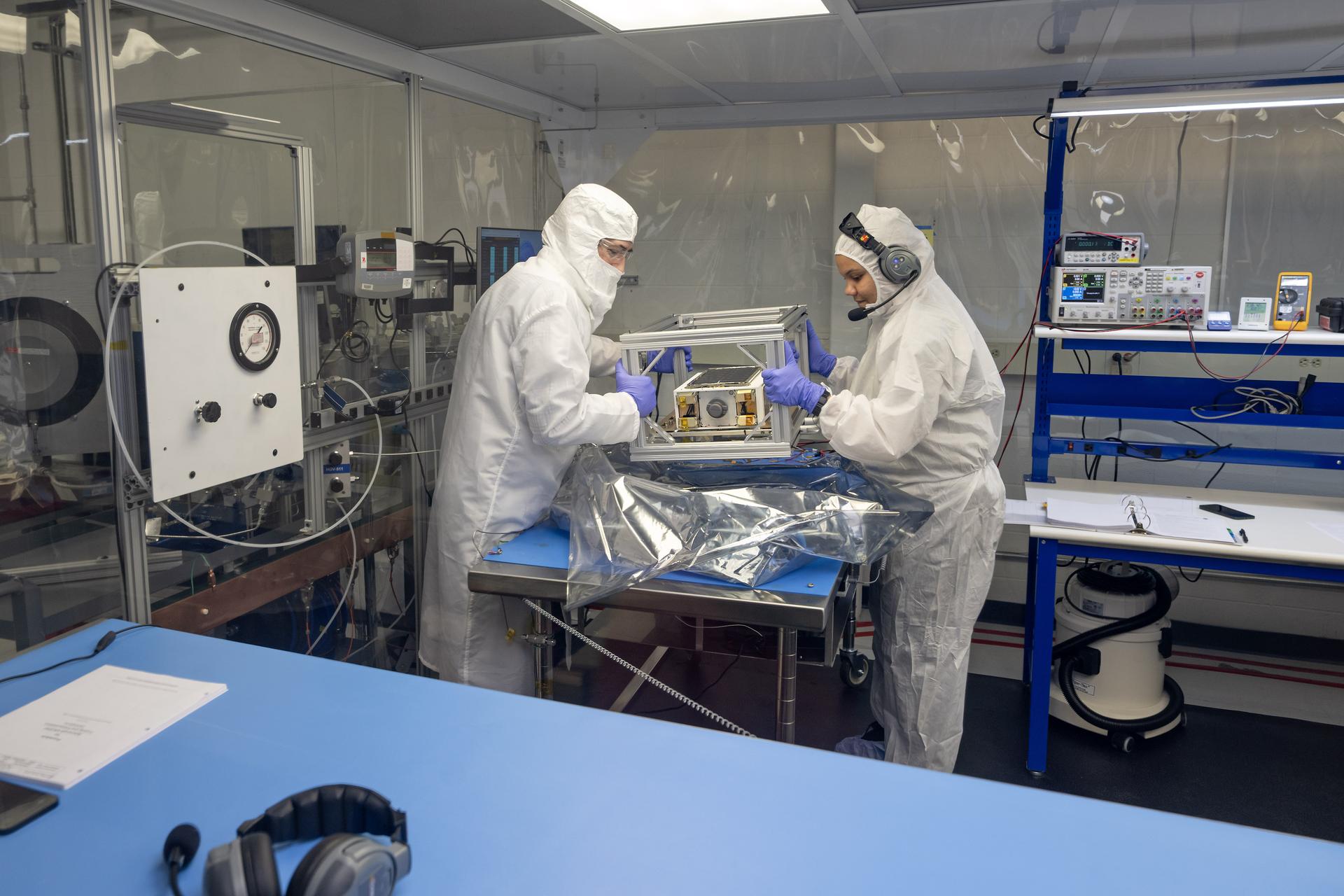
The team also subjected the spacecraft to thermal vacuum testing. Space is an unforgiving environment characterized by a total lack of air and extreme temperature swings. By placing the spacecraft inside a specialized vacuum chamber that mimics these harsh conditions, engineers can ensure that the electronics, thrusters, and mechanical systems will operate normally once in orbit.
Additionally, the spacecraft underwent a spin test. Just like a tire on a car, a spacecraft needs to be perfectly balanced. The spin test measures the spacecraft’s mass properties and center of gravity. This validates the CubeSat’s ability to stably fly and maintain the correct attitude, allowing its antennas to communicate with Earth and its solar panels to accurately catch the Sun’s rays.
With the environmental and physical testing now complete, the mission is entering its final stages of preparation. The team will complete the final system checkouts, integrate the spacecraft’s solar arrays, and ship the hardware to its launch destination.
The ASCENT Propulsion Dual Mode mission is manifested to launch no earlier than October 1 as a payload aboard a SpaceX Falcon 9 rocket from Vandenberg Space Force Base in California.
Once deployed into an orbit about 325 miles above Earth, the spacecraft will begin a nine-month mission. After an initial checkout period, the operations team will execute short chemical and electric maneuvers. If successful, the spacecraft will spend several months performing multiple orbit-raising and lowering maneuvers, alternating between its high-thrust and low-thrust engines to prove the dual-mode concept works in space.
The ASCENT Propulsion Dual Mode mission is managed and funded by NASA’s Small Spacecraft & Distributed Systems (SSDS) within the agency’s Research and Technology Mission Directorate at NASA Headquarters in Washington. SSDS is based at NASA’s Ames Research Center in California’s Silicon Valley.
Source: www.nasa.gov