
For 18-year-old Hailey Macleod, access to Edwards Air Force Base, Calif., was the realization of a dream with the help of a wish granter at Make-A-Wish Greater Los Angeles and the 412th Test Wing.
Source: www.war.gov
For 18-year-old Hailey Macleod, access to Edwards Air Force Base, Calif., was the realization of a dream with the help of a wish granter at Make-A-Wish Greater Los Angeles and the 412th Test Wing.
Source: www.war.gov
Samuel Huntington and Roger Sherman are two of the four Connecticut delegates among the 56 Founding Fathers who signed the Declaration of Independence on July 4, 1776.
Source: www.war.gov
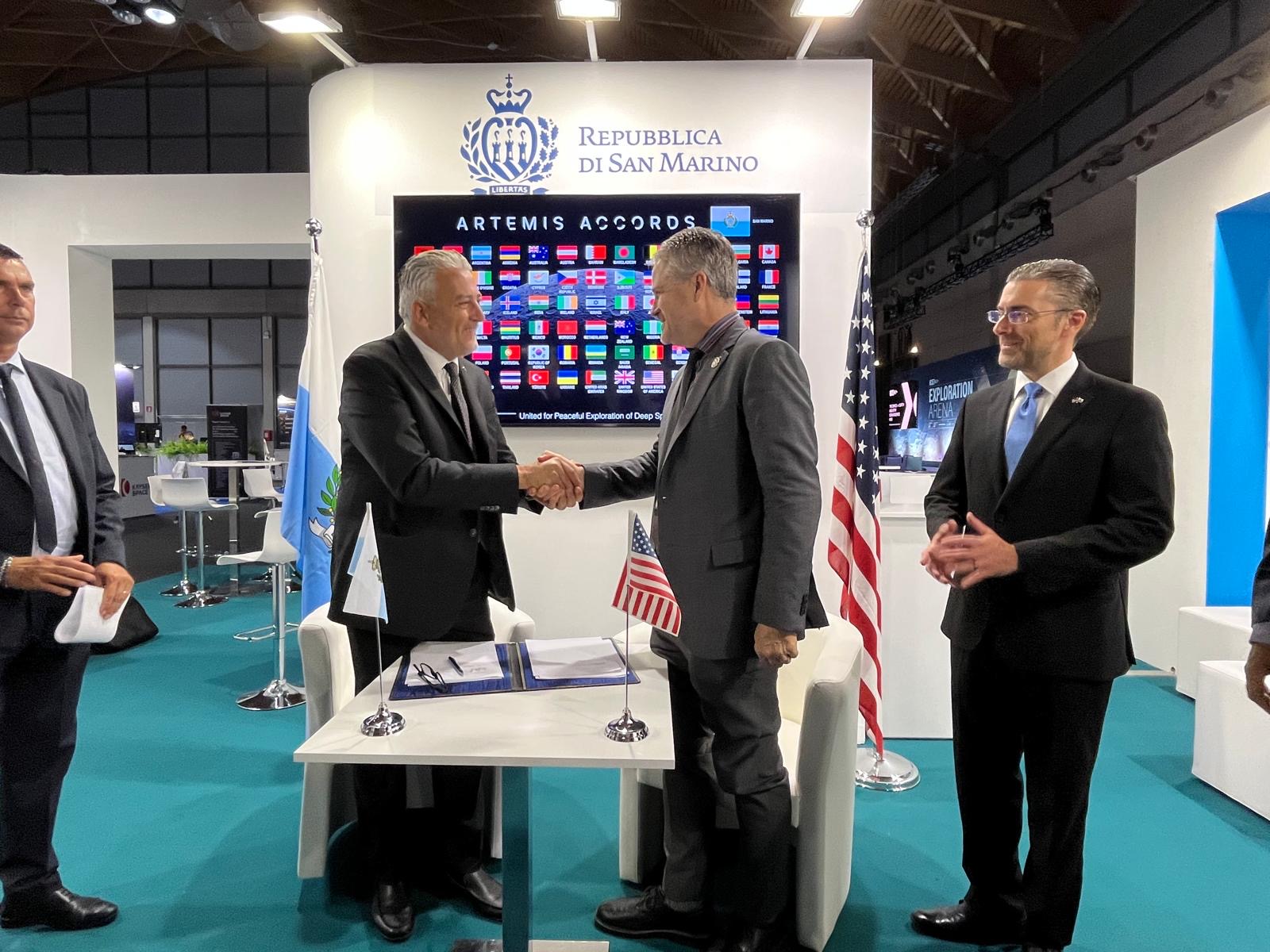
The Republic of San Marino became the 76th signatory to the Artemis Accords during a ceremony in the city of Rimini on Friday with NASA and U.S. Department of State officials present.
“San Marino joins a growing coalition of like-minded nations committed to the peaceful, transparent, and responsible exploration of space,” said NASA Deputy Administrator Matt Anderson. “President Trump has directed NASA to build a Moon Base and establish an enduring presence on the lunar surface. As we do, we are putting the principles of the Accords into practice. NASA has invited every Artemis Accords signatory to participate in our return to the Moon through scientific payloads, technology demonstrations, CubeSats, and other capabilities. San Marino is already looking toward that future.”
Minister of Industry and Technological Research Rossano Fabbri signed on behalf of San Marino. Gregory Mann, NASA Europe representative, participated in the ceremony with the U.S. Consul General in Florence Joseph Tordella.
“We are pleased and honored that the Republic of San Marino has been welcomed as the 76th signatory state of the Artemis Accords,” said Fabbri. “We fully share the principles and values expressed in the Artemis Accords, and we are convinced that the signatory states united under the Accords will make a tangible contribution to promoting international cooperation in space and ensuring the use of space for peaceful purposes.”
In 2020, NASA and the State Department joined with seven other founding nations to establish the Artemis Accords, responding to the growing interest in lunar activities by both governments and private companies. They introduced the first set of practical principles aimed at enhancing the safety and coordination between nations as they explore the Moon, Mars, and beyond, committing nations to:
By signing the Artemis Accords, nations open the door to opportunities for future lunar exploration with NASA, advancing humanity’s return to the Moon, and shaping the Golden Age of exploration and innovation.
Learn more about the Artemis Accords at:
https://www.nasa.gov/artemis-accords
Source: www.nasa.gov
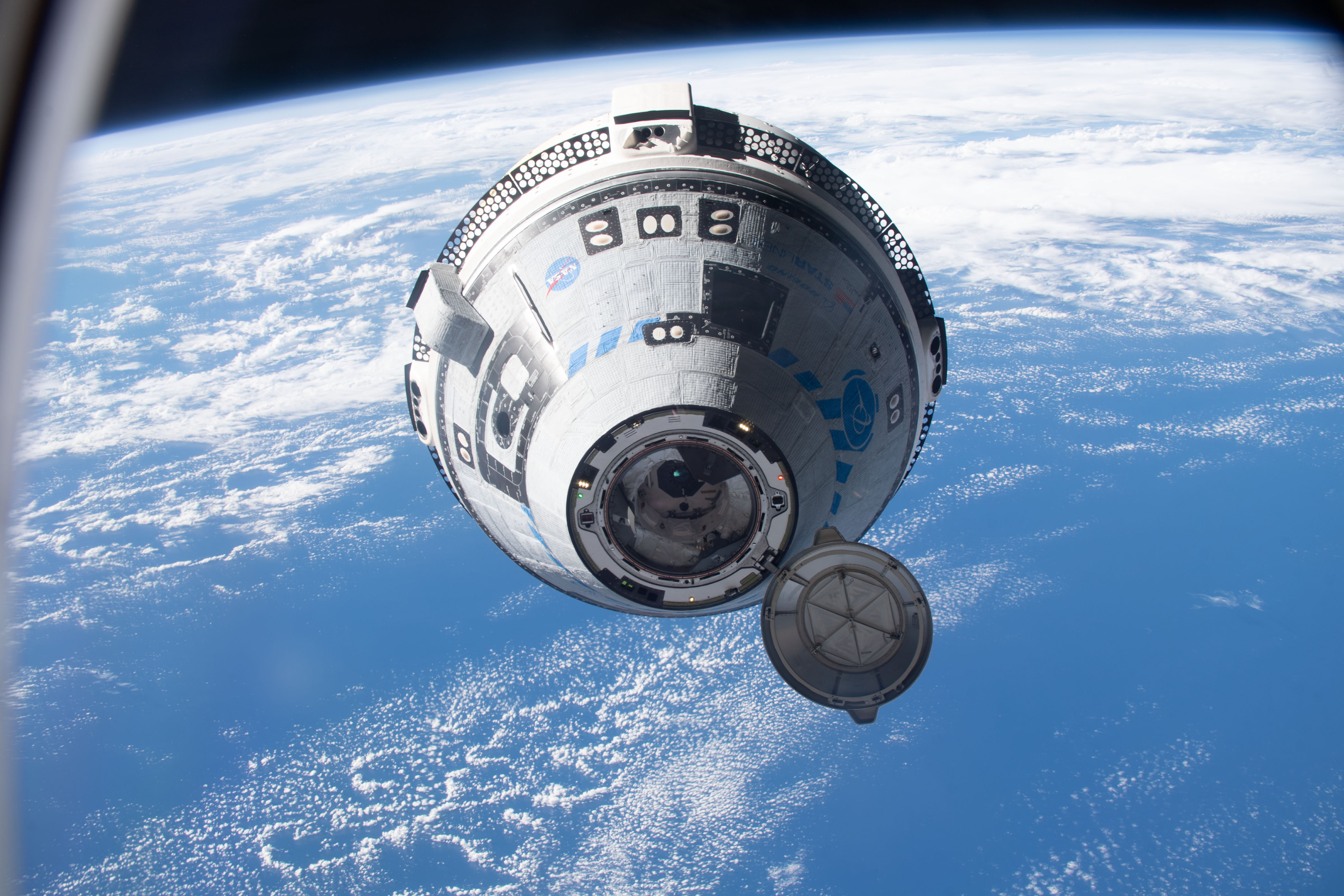
During a news conference at 3 p.m. EDT on Monday, Sept. 28, NASA and Boeing leadership will discuss Starliner’s development and plans for regular crew flights to and from the International Space Station.
Learn where to watch online:
The briefing participants include:
Media already credentialed for Crew-13 may participate in person at NASA’s Kennedy Space Center in Florida. To ask questions, media must request the dial-in number from the Kennedy newsroom by emailing: [email protected] no later than one hour prior to the start of the call. A copy of NASA’s media accreditation policy is online.
For NASA’s blog and more information about the agency’s missions, visit:
-end-
George Alderman / Joshua Finch
Headquarters, Washington
202-358-1600
[email protected] / [email protected]
Source: www.nasa.gov
APOD
Astronomy Picture of the Day
Discover the cosmos! Each day a different image or photograph of our fascinating universe is featured, along with a brief explanation written by a professional astronomer.

Explanation: On August 15, this perseid meteor streaked through night skies over the Observatorio del Roque de los Muchachos at La Palma, Canary Islands, Spain. The bright and colorful meteor trail was captured next to the central Milky Way, whose dark interstellar dust clouds and luminous starlight reach above the horizon. In the foreground of this tantalizing celestial scene is the 23 meter diameter mirror of the prototype Large-Sized Telescope (LST-1). LST-1 is the first telescope constructed at the northern hemisphere site of the innovative Cherenkov Telescope Array Observatory. With 198 hexagonal mirror segments and a large, high-efficiency, pixelized camera, LST-1 is designed to detect extremely brief, atmospheric visible light flashes. Lasting about a billionth of a second, the visible light flashes are triggered by energetic gamma-rays from cosmic sources such as distant active galaxies and gamma-ray bursts. Of course, on that night some individual mirror segments of LST-1 also reflected the atmospheric flash of the bright perseid meteor.
APOD’s email for image submissions has changed. Please see: APOD Submissions.
APOD’s main NASA site is moving: From apod.nasa.gov to science.nasa.gov/apod
Tomorrow’s picture: before and after
| Date | September 26, 2026 |
|---|---|
| Credit & Copyright: | Jeff Dai (TWAN) |
| Authors & editors: | Jerry Bonnell, Cecilia Chirenti, Robert Nemiroff, Keighley Rockcliffe |
| A service of: |
ASD at NASA / GSFC, NASA Science Activation & Michigan Tech. U. |
Source: science.nasa.gov