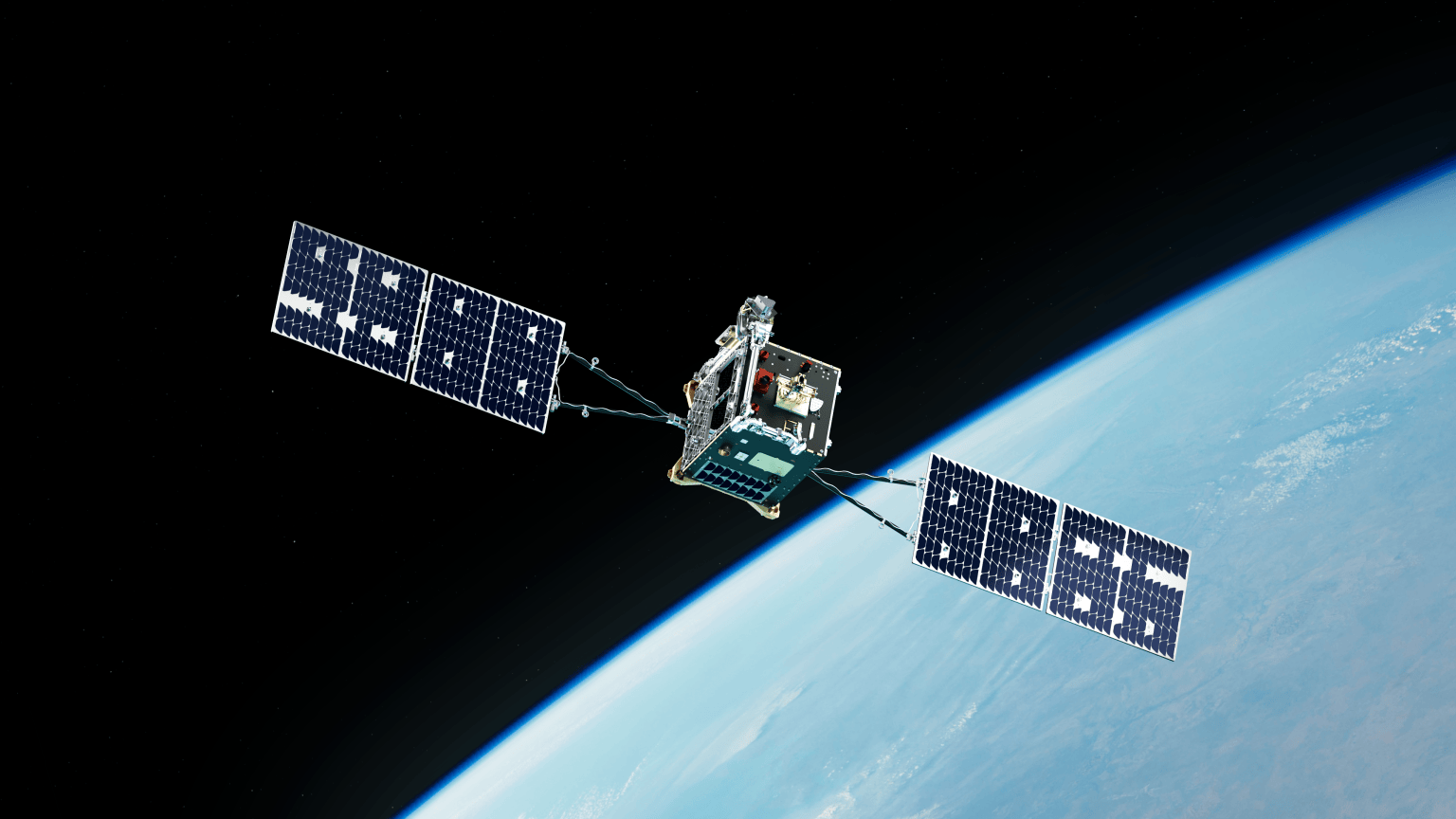
NASA’s SpaceX CRS-35 Mission to Launch Health Research

NASA experiments focused on human and plant health and drug-resistant organisms will travel to the International Space Station aboard SpaceX’s 35th Commercial Resupply Services mission for the agency from Cape Canaveral Space Force Station in Florida, advancing research that benefits life on Earth and future exploration.

This research supports astronaut health during long-duration missions through four investigations from the agency’s Biological and Physical Sciences division, including 3D models of the human brain, a crop disease study, a faster way to assess astronaut health, and an analysis of antibiotic-resistant bacteria aboard the space station.

Tiny brain models, big questions

A new precision health investigation helps address a key question: What happens to the human brain in space?

The experiment sends small, lab-grown models of the human brain to the orbiting laboratory for five weeks. Researchers compare tissue models that traveled to space with identical ones kept on Earth to determine how a short spaceflight affects the human brain at the cellular level.

The effort could deepen our understanding of how the human brain responds to stress and help lay the groundwork for methods that counter risks to brain health that astronauts may face on future missions to the Moon and beyond.

Disease-resistant crops for space

A space crops investigation tests whether crop diseases develop faster and more severely in microgravity.

The experiment compares molecular and structural changes between Earth-grown and space station-grown plants infected with a disease-causing fungus. The findings could guide plant breeding on Earth to produce disease-resistant crops and help minimize yield losses in future space agriculture systems.

Space crops provide nutrition, increase dietary variety, and offer psychological benefits for astronauts during extended missions. They also absorb carbon dioxide, produce oxygen, and recycle water, which will become increasingly important as human missions extend farther from Earth.

Analysis helps astronauts thrive

The spacecraft also carries the first test of a compact microplate reader that arrived aboard the space station earlier this year.

The Commercially Enabled Rapid Space Science initiative experiment tests the device’s ability to detect and measure certain biomarkers such as antibodies, antigens, and proteins.

Use of the plate reader would allow scientists to analyze samples aboard the space station and obtain data quickly, rather than wait for the samples to return to Earth for analysis.

Ultimately, the research aims to support the timely detection of infections and other health issues in astronauts while expanding science capabilities in remote exploration locations where resupply will be more difficult.

Tracking antibiotic-resistant bacteria

A precision health investigation returns for its fourth and final planned stay aboard the space station to study how antibiotic-resistant bacteria survive and evolve in microgravity.

As part of the investigation, astronauts repeatedly sample surfaces throughout the space station to monitor for drug-resistant organisms.

The work could help develop ways to protect astronauts against bacterial infections during long-duration missions. On Earth, the findings could provide insight into how superbugs develop from the overuse of antibiotics.

To learn more about NASA’s biological and physical research in space, visit: https://science.nasa.gov/biological-physical/

Biological & Physical Sciences Division

  • NASA’s Biological and Physical Sciences Division pioneers scientific discovery and enables exploration by using space environments to conduct investigations not possible on Earth. Studying biological and physical phenomena under extreme conditions allows researchers to advance the fundamental scientific knowledge required to go farther and stay longer in space, while also benefitting life on Earth.

Source: science.nasa.gov
APOD: 2026 October 11 – Ice Fishing for Cosmic Neutrinos

APOD

Astronomy Picture of the Day

Discover the cosmos! Each day a different image or photograph of our fascinating universe is featured, along with a brief explanation written by a professional astronomer.

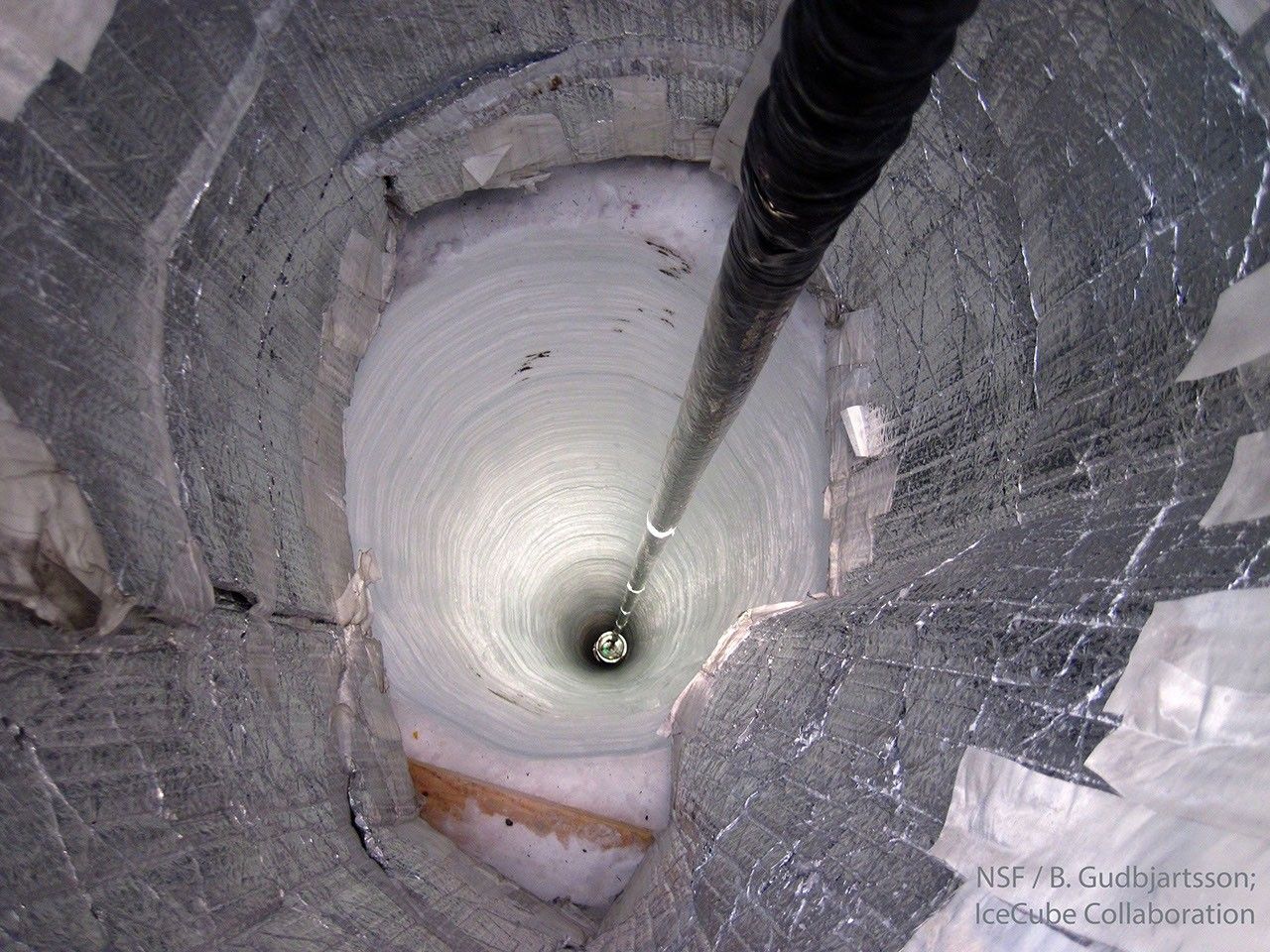
A dark cable descends into a deep carved hole of ice.  The hole is so deep that it disappears into darkness. Please see the explanation for more detailed information.

Ice Fishing for Cosmic Neutrinos

Explanation: Scientists are melting holes in the bottom of the world. In fact, almost 100 holes melted near the South Pole are now being used as an astronomical observatory. Astronomers with the IceCube Neutrino Observatory lowered a long string knotted with basketball-sized light detectors into each vertical lake. The water in each hole soon refreezes. The detectors attached to the strings are sensitive to blue light emitted in the surrounding clear ice. Such light results from fast-moving secondary particles liberated when high-energy neutrinos emitted by powerful processes out in the universe collide with ice molecules. IceCube has now detected many illuminating neutrinos. Pictured in 2010, one of the last of IceCube’s detector strings is lowered into the freezing abyss, making IceCube the largest neutrino detector ever created. In recognition of unprecedented discoveries, it was announced earlier this week that a founding leader of the IceCube Collaboration will be awarded the Nobel Prize in Physics.

Tomorrow’s picture: Moons Planet

Date: October 11, 2026
Credit: NSF, B. Gudbjartsson, IceCube Collaboration
Authors & editors: Robert Nemiroff, Jerry Bonnell, Cecilia Chirenti, Keighley Rockcliffe
A service of: ASD at NASA / GSFC,
NASA Science Activation & Michigan Tech. U.

Source: science.nasa.gov

APOD: 2026 October 10 – Lunar Farside

APOD

Astronomy Picture of the Day

Discover the cosmos! Each day a different image or photograph of our fascinating universe is featured, along with a brief explanation written by a professional astronomer.

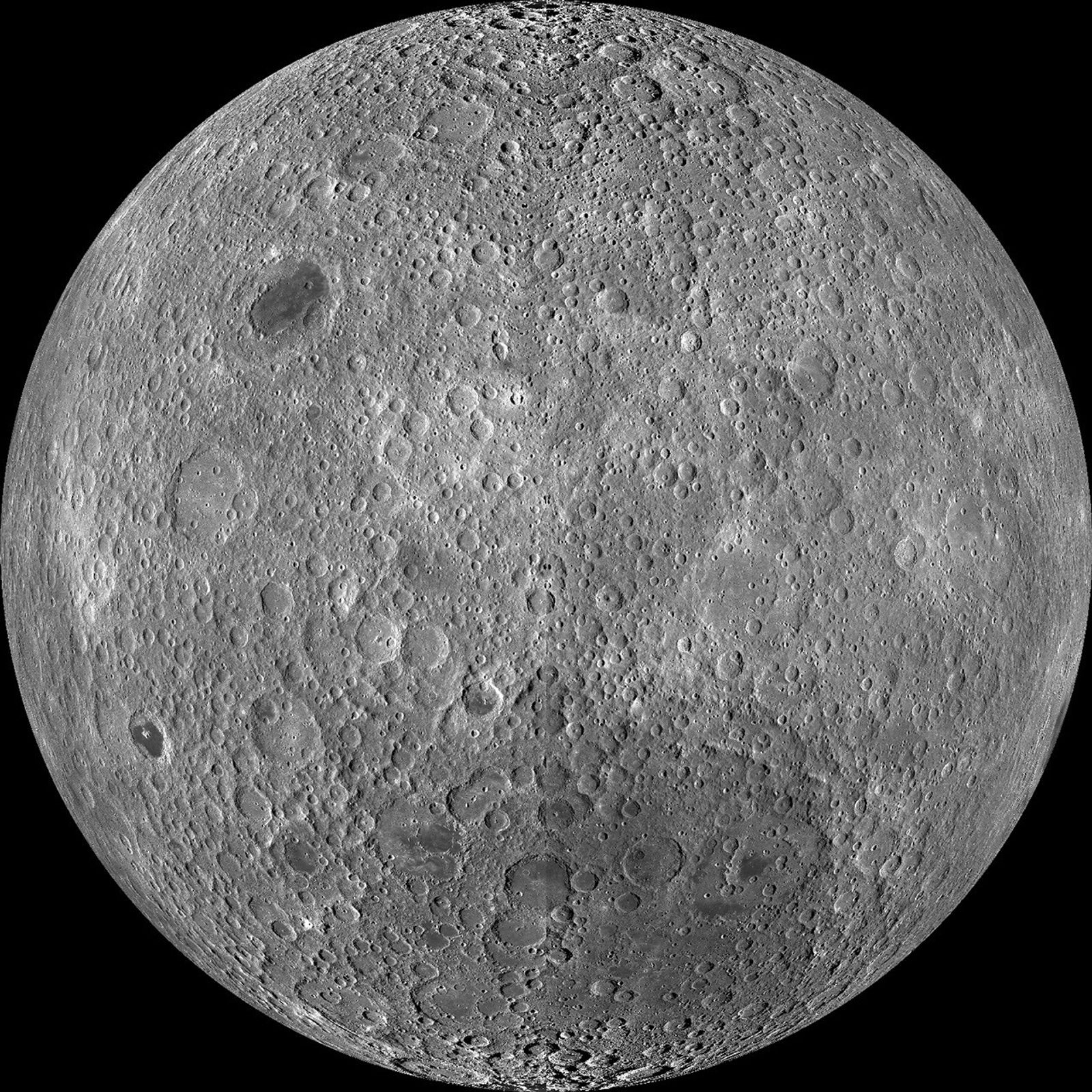
A mosaic image of the farside of the Moon.

Lunar Farside

Explanation: Tidally locked in synchronous rotation, the Moon always presents its familiar nearside to denizens of planet Earth. From lunar orbit, the Moon’s farside can become familiar, though. In fact this sharp picture, a mosaic from the Lunar Reconnaissance Orbiter’s wide angle camera, is centered on the lunar farside. Part of a global mosaic of over 15,000 images acquired between November 2009 and February 2011, the highest resolution version shows features at a scale of 100 meters per pixel. Surprisingly, the rough and battered surface of the farside looks very different from the nearside covered with smooth dark lunar maria. A likely explanation is that the farside crust is thicker, making it harder for molten material from the interior to flow to the surface and form dark, smooth maria.

Tomorrow’s picture: Sunday’s Childe

Date: October 10, 2026
Credit: NASA / GSFC / Arizona State Univ. / Lunar Reconnaissance Orbiter
Authors & editors: Jerry Bonnell, Cecilia Chirenti, Robert Nemiroff, Keighley Rockcliffe
A service of: ASD at NASA / GSFC,
NASA Science Activation & Michigan Tech. U.

Source: science.nasa.gov

NASA to Conduct Flyover, Engage NFL Fans at MetLife Stadium

NASA’s Freedom 250 F-5 team, including NASA Administrator Jared Isaacman, performs a flyover during the national anthem at an NFL game between the Cleveland Browns and the Carolina Panthers at Huntington Bank Field, Sept. 27, 2026, in Cleveland.
Credit: NASA/Jordan Cochran

As part of the agency’s Inspiration Tour flyover, NASA Administrator Jared Isaacman will pilot one of three F-5 fighter jets to kick off the New York Jets vs. Cleveland Browns game in East Rutherford, New Jersey, on Sunday, Oct. 11.

NASA team members will engage with fans at the agency’s Experience Zone, located at the Jets Tailgate Zone outside the stadium, from 10 a.m. to 1 p.m. EDT before the game. Fans can learn more about NASA’s return to the Moon under the agency’s Artemis dome, enjoy interactive games, and capture photos with a large, inflatable SLS (Space Launch System) rocket.

Isaacman will be available for limited media interviews during the game. To arrange interviews, please contact Camille Gallo at: [email protected] or 202-531-8057.

With stops across the nation, NASA’s Inspiration Tour convenes academic, industry, and public sector stakeholders to connect the agency with the people, technologies, and organizations that drive American leadership in space.

The tour will culminate in MAX POWER, a public exposition of American air and space innovation, Saturday, Nov. 7, and Sunday, Nov. 8, on and near the agency’s Kennedy Space Center in Florida. Held in honor of America’s historic 250th anniversary, the multi-day, family-friendly event will showcase the next-generation aircraft, spacecraft, autonomous vehicles, and technologies that will help define the future of transportation in air and space.

For more information about MAX POWER and the agency’s missions, visit:

https://www.nasa.gov/maxpower

-end-

Camille Gallo / Jessica Taveau
Headquarters, Washington
202-358-1600
[email protected] / [email protected]

Details

Last Updated

Oct 10, 2026

Editor
Jessica Taveau

Source: www.nasa.gov

Legendary Fighter Takes Final Flight: Air Force Reserve Delivers F-117A to Smithsonian

Air Force reservists transported a retired F-117A Nighthawk to the Smithsonian aboard a C-5M Super Galaxy. The stealth aircraft will join the museum’s permanent collection in Chantilly, Va., preserving its combat legacy for future generations.

Source: www.war.gov

Crew-12 Returns to Earth

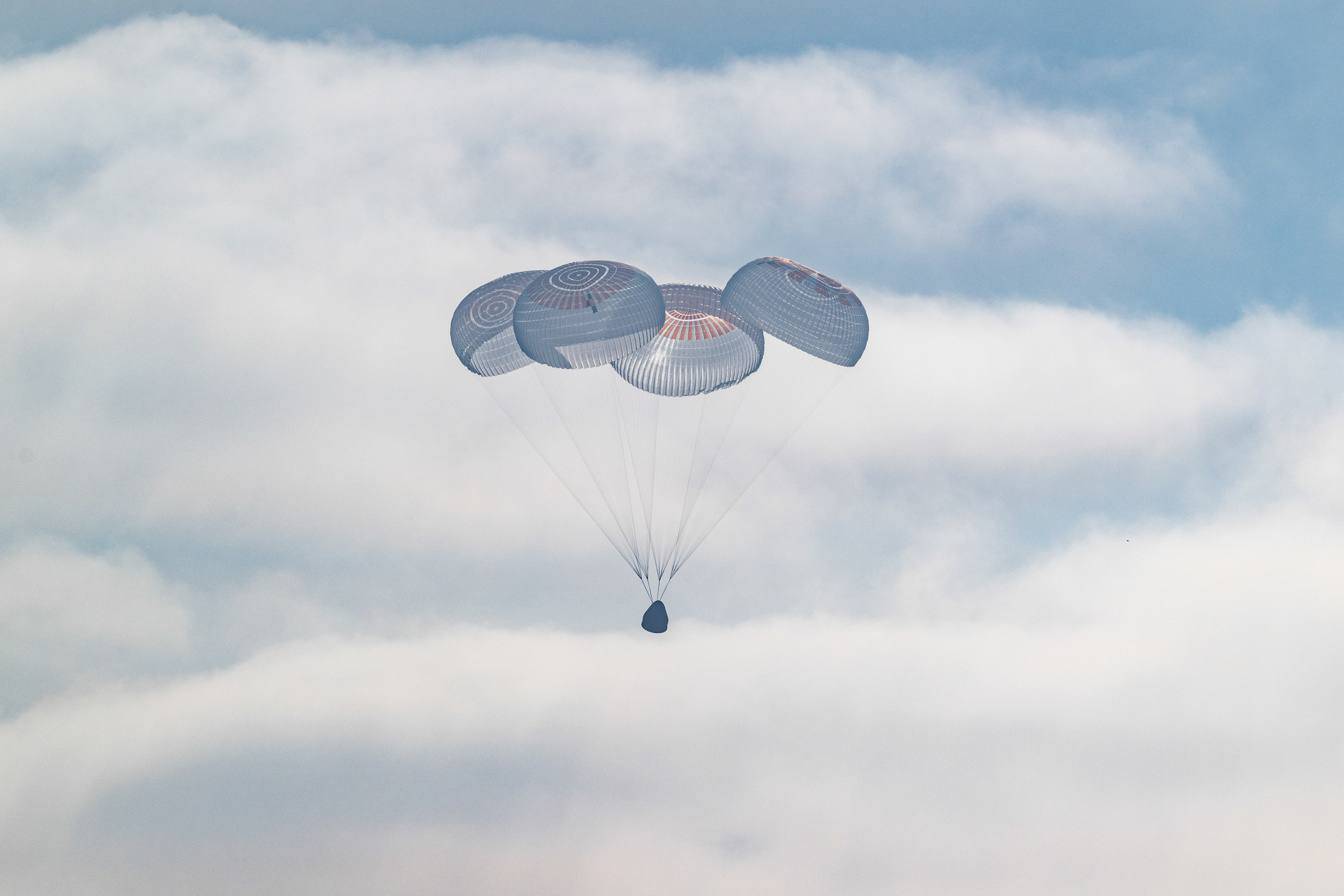
A cone-shaped spacecraft and the four large parachutes attached to it against a backdrop of fluffy white clouds in the sky.
NASA/Keegan Barber

The SpaceX Crew Dragon Freedom spacecraft is seen moments before splashing down in the Pacific Ocean off the coast of California in this Oct. 8, 2026, photograph. Aboard were NASA’s SpaceX Crew-12 members NASA astronauts Jessica Meir and Jack Hathaway, ESA (European Space Agency) astronaut Sophie Adenot, and Roscosmos cosmonaut Andrey Fedyaev. The four spent nearly eight months aboard the International Space Station.

See more photos from splashdown.

Image credit: NASA/Keegan Barber

Source: www.nasa.gov

NASA’s SSPICY Mission to Demonstrate In-Space Inspection Technologies

2 min read

Preparations for Next Moonwalk Simulations Underway (and Underwater)

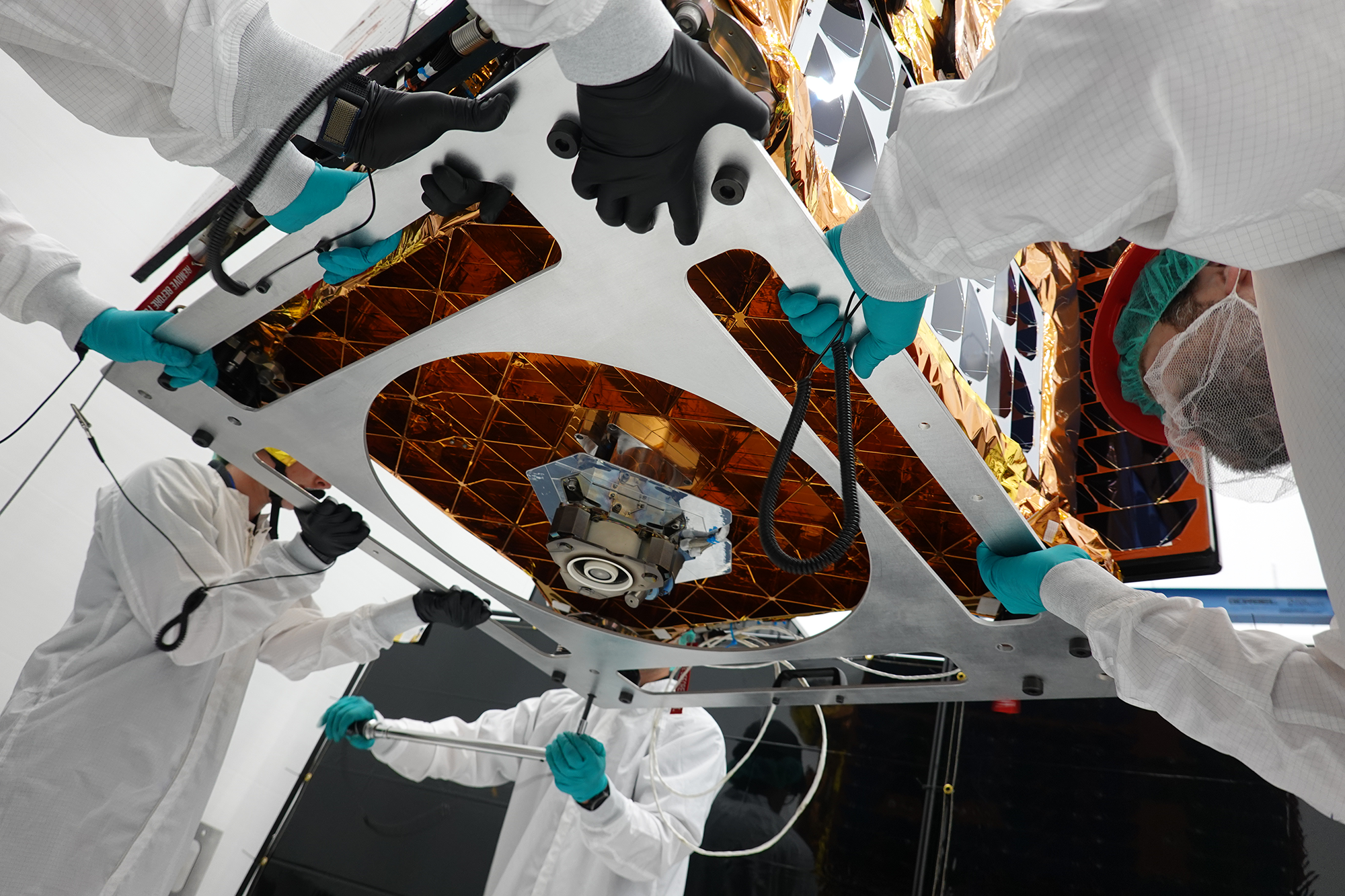
Four people in white suits with teal gloves hold the underside of the SSPICY spacecraft's white frame with
Technicians at Starfish Space prepare the Otter spacecraft ahead of NASA’s SSPICY technology demonstration mission. The CubeSat spacecraft will demonstrate technologies that could reduce orbital debris.
Starfish Space

A new NASA-supported spacecraft will get up close to satellites that are no longer in service, demonstrating technologies that could support future in-space repairs and reduce orbital debris.

The Small Spacecraft Propulsion and Inspection Capability (SSPICY) mission launched Oct. 1 from Vandenberg Space Force Base in California. The mission is a technology demonstration where an Otter spacecraft will approach up to four inoperable space objects of U.S. origin in low Earth orbit, such as satellites and rocket bodies.

In early 2027, the Otter spacecraft, built by Starfish Space, will begin to navigate within hundreds of yards of each object to perform inspections, using autonomous guidance and control software with minimal input from ground controllers. Computer vision and sensors enable software to make real-time navigation decisions as the spacecraft approaches each target.

During inspection, the Otter spacecraft will gather critical information about each object, such as spin rate, orientation, and surface condition. An electric propulsion system will enable SSPICY to travel between objects, and an articulating robotic boom will test pointing the spacecraft’s thrusters for precise maneuvering between different orbits.

This mission is the first time these technologies will be tested together as an integrated system, paving the way for future autonomous servicing and orbital debris inspection.

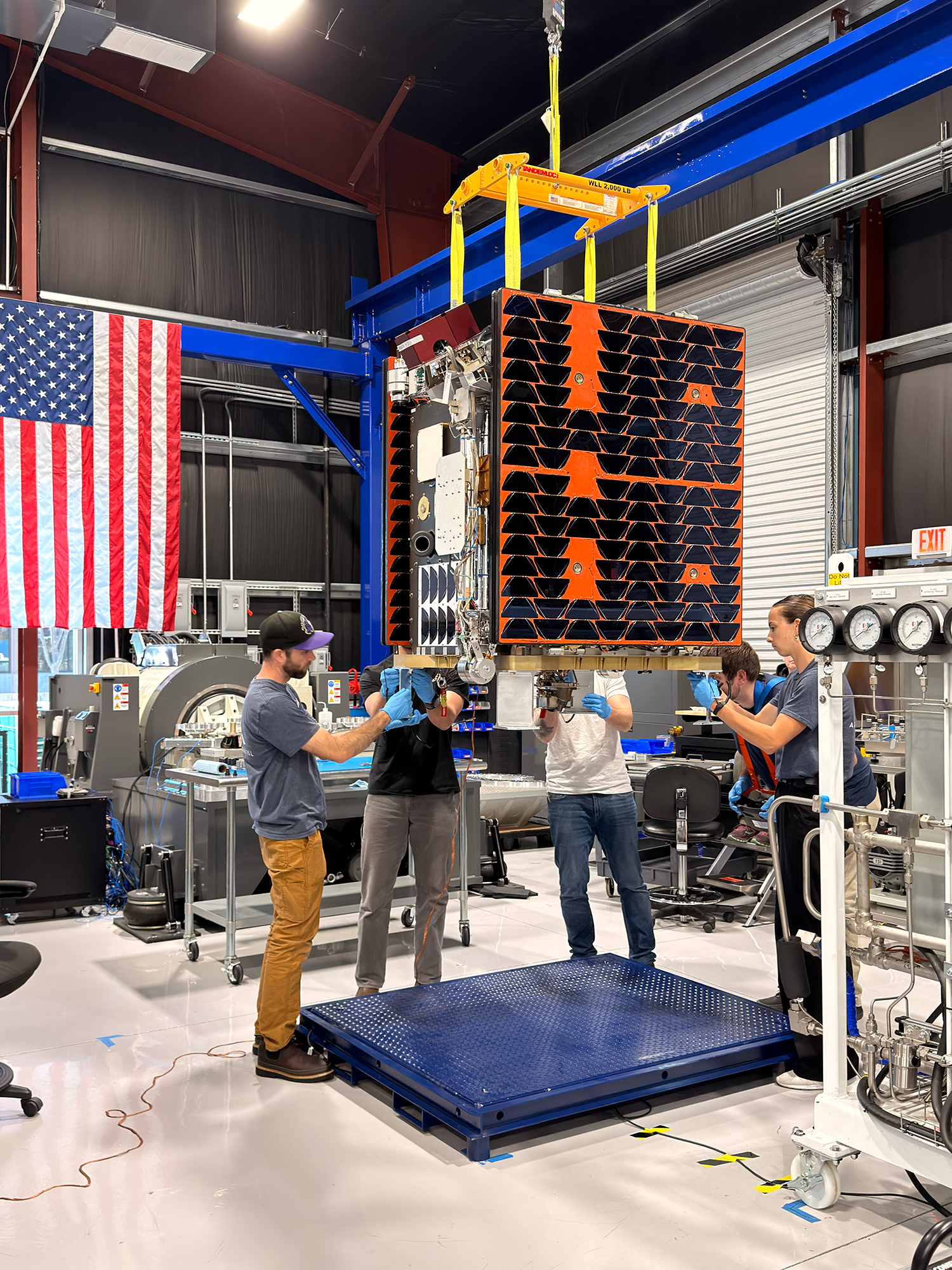
Four individuals stand in a large room with an American flag and equipment in the background. Above them, the SSPICY spacecraft is held by a ceiling mount.
Technicians prepare the Otter spacecraft for NASA’s SSPICY mission at Starfish Space facilities in Seattle. The spacecraft, which is about the size of a washing machine, will autonomously navigate to inoperable space objects of U.S. origin to inspect them, testing technologies to one day make in-space repair possible.

During the SSPICY mission, the Otter spacecraft won’t touch or dock with any satellites, but will test the technologies needed to one day enable missions to service or repair objects in orbit, or to safely remove them by pulling them into Earth’s atmosphere for disposal.

Space objects like rocket bodies and satellites that are experiencing issues or no longer in service can break apart or collide with one another, creating varying forms of orbital debris from large fragments to small particles. With thousands of satellites launched each year to provide communications, weather forecasting, navigation, and other services that people rely on daily, keeping the space near Earth safe for operations is increasingly critical.

Starfish Space developed and operates the Otter 24C spacecraft, which is performing the SSPICY mission. NASA’s Small Spacecraft and Distributed Systems program within the agency’s Research and Technology Mission Directorate funds and manages the technology demonstration.

NASA’s Small Business Innovation Research / Small Business Technology Transfer program funded awards to Starfish Space to support early development of the spacecraft’s key technologies and capabilities.  

Source: www.nasa.gov

NASA Announces Bold Science Initiatives for America’s Golden Age Summit

NASA insignia.
Credit: NASA

Editor’s note: This release was updated Oct. 8, 2026 with the formal name of the summit.

NASA is launching two new science and technology initiatives to deepen scientific understanding and accelerate the innovation that will shape America’s future in space.

The initiatives are announced in conjunction with the White House Office of Science and Technology Policy’s (OSTP) “Science: A Golden Age Summit” in Washington on Thursday with top U.S. agency leaders. The programs reflect NASA’s commitment to pioneering research and transformative technologies and advancing the Trump Administration’s vision as outlined in the July report to the President, Science: A New Golden Age. One focuses on peer review and the other on fellowship researchers.

“NASA has a proud history of pursuing bold ideas and achieving the near impossible,” said NASA Administrator Jared Isaacman. “Under President Trump’s leadership, we are building on that legacy by creating new opportunities for great science, experimenting with how we evaluate and accelerate the best ideas, and investing in the next generation of researchers through the Genesis Mission Fellowships. We are entering a new Golden Age of American innovation and discovery, and NASA will be at the forefront.”

During a fireside chat, Isaacman and Michael Kratsios, assistant to the President for science and technology and director of OSTP, will discuss the following:

  • Establishing a coordinated metascience initiative within NASA’s Science Mission Directorate to strengthen the reliability, efficiency, transparency, and overall productivity of the agency’s scientific practices. As part of this effort, NASA is expanding the agency’s use of dual anonymous peer review to ensure proposals are evaluated solely on their intrinsic scientific merit. This approach enhances fairness and supports innovative and unconventional research ideas. Started as a pilot program during the first Trump Administration, this initiative has helped position NASA as a leader in advancing best practices in scientific review.
  • NASA will support 10 Genesis Mission Fellows, who are accelerated doctoral students with dual competencies in super intelligence (SI) and science or engineering. Fellows will work directly on NASA mission areas and conduct research at NASA laboratories, advancing SI-enabled scientific discovery. The fellowships will be based on NASA’s successful Future Investigators in NASA Earth and Space Science and Technology program.

NASA leads the nation in space exploration, scientific discovery, and technological innovation. Through these new initiatives, NASA will continue to inspire the world and drive progress in science and technology.

Learn more about NASA science at:

https://science.nasa.gov

-end-

Camille Gallo / Elizabeth Shaw
Headquarters, Washington
202-358-1600
[email protected] / [email protected]

Details

Last Updated

Oct 08, 2026

Editor
Jennifer M. Dooren

Source: www.nasa.gov

NASA Briefing to Highlight Contributions to Martian Moons Mission

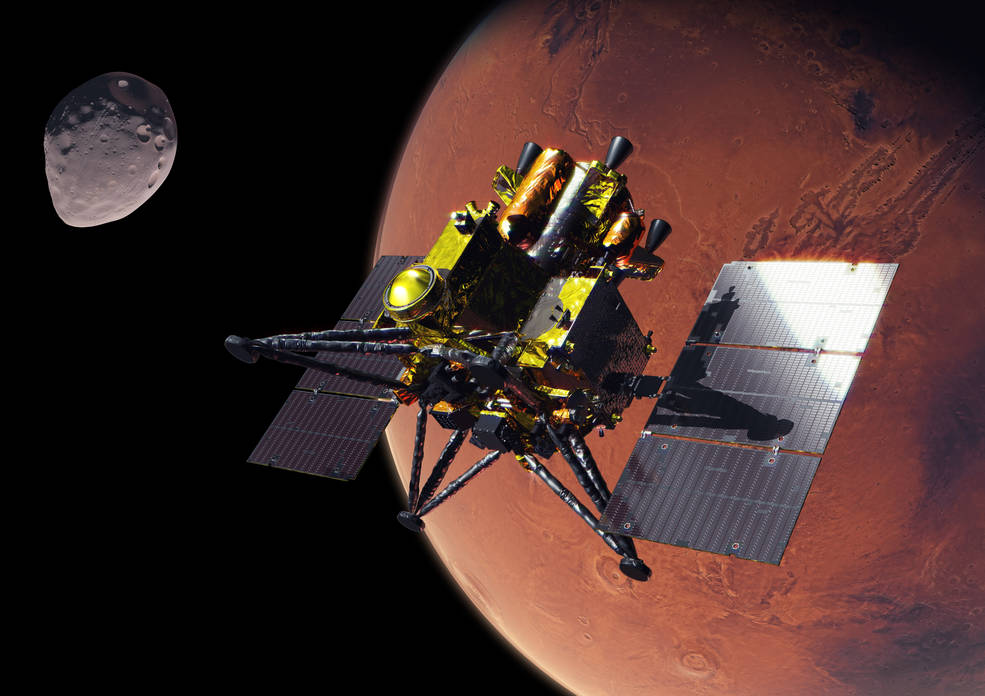
Artist view of the MMX spacecraft with Mars background.
An artist’s concept of JAXA’s (Japan Aerospace Exploration Agency) Martian Moons eXploration (MMX) spacecraft at Mars.
Credit: JAXA

Media are invited to join NASA for a media teleconference at 4 p.m. EDT, Thursday, Oct. 15, to preview the agency’s contributions to JAXA’s (Japan Aerospace Exploration Agency) Martian Moons eXploration (MMX) mission. The mission is scheduled to launch from JAXA’s Tanegashima Space Center in Japan on Monday, Oct. 19 EDT (Tuesday, Oct. 20 JST).

Audio of the media teleconference will stream on the agency’s website at:

https://www.nasa.gov/live

Participants in the briefing, who will provide an overview of the mission and NASA’s contributions, include:

  • Lindsay Hays, acting director, Planetary Science Division, NASA Headquarters in Washington
  • Tom Statler, MMX program executive and scientist, Planetary Science Division, NASA Headquarters
  • David Lawrence, MEGANE (Mars-moon Exploration with Gamma-rays and Neutrons) principal investigator, Johns Hopkins Applied Physics Laboratory
  • Kris Zacny, vice president, Blue Origin’s Honeybee Robotics

Media interested in participating by phone must RSVP no later than two hours prior to the start of the teleconference to Molly Wasser at [email protected]. A copy of NASA’s media accreditation policy is online. 

The MMX spacecraft will arrive at Mars in August 2027 to begin its survey of the Red Planet’s two moons, Phobos and Deimos. After surveying Phobos in detail, the spacecraft will collect a sample of the moon’s surface no earlier than December 2028 and deliver it to Earth in 2031. NASA’s contributions to the mission include the MEGANE gamma-ray and neutron spectrometer, the spacecraft’s surface sampler mechanism, and communications and navigation support from the agency’s Deep Space Network, as well as funding United States scientists participating on the MMX science team.

The MEGANE instrument was developed by Johns Hopkins Applied Physics Laboratory. Honeybee Robotics, a Blue Origin company, developed the spacecraft’s pneumatic sampler mechanism. NASA’s contributions to the MMX mission were funded by the agency’s Discovery Program, which provides frequent flight opportunities for high-value, focused planetary science investigations. The Discovery Program is managed by NASA’s Marshall Space Flight Center in Huntsville, Alabama, for the agency’s Science Mission Directorate in Washington.

For more information about the MMX mission, visit:

https://science.nasa.gov/mission/mmx/

-end-

Karen Fox / Alana Johnson
Headquarters, Washington
240-285-5155 / 202-672-4780
[email protected] / [email protected]

Details

Last Updated

Oct 08, 2026

Editor
Jessica Taveau

Source: www.nasa.gov