Widely Attended Gatherings (WAGs) Determinations

2026

NAHF Enshrinement Ceremony 9.24.26.pdf

An Evening with the Stars EWTS 9.16.26.pdf

Maryland Space Business Roundtable 9.9.26

Virginia Aerospace Business Association (VASBA) Gala 9.24.26.pdf

Roman Space Telescope Event 8.28.26.pdf

The Planetary Society_Celebrating Viking 7.20.26.pdf

Farnborough Airshow Events 7.18-19.26

University of Maryland Acres 7.14.26.pdf

Smithsonian National Air and Space Museum_Blue Origin 7.14.26.pdf

Space Business Roundtable_MSBR 7.22.2026.pdf

USA Rockets Red Glare Reception 6-25-26

Northrop Grumman Event 6.17.26.pdf

FUSE 6.24.26.pdf

Greater Cleveland Partnership 6.10.26.pdf

SSF UC Symposium 6.9.26.pdf

NAA Firefly Aerospace and AE Industrial Partners 6.11.26

AIAA Event 6.3.26

Space Walk III 5.21.26

Maryland Space Business Roundtable (MSBR) 5.20.26.pdf

Congressional Reception for Artemis II Crew 5.12.26.pdf

2026 Skyward Careers Award Luncheon 05.01.26.pdf

US Astronaut Hall of Fama Gala 5.16.26.pdf

RNASA Awards Dinner and Stellar Awards Luncheon 4.26.26.pdf

Space Policy Institute 4.29.26.pdf

Planetary Society APLU and AAU 4.21.26.pdf

41st Space Symposium-suppl 04.13-16.26

Space Symposium 2026 Events 4.13-16.26

2026 NSCFL Space Heroes and Legends Award Banquet 4.18.26

Newport News State of the City Event 4.13.26

Space Policy Institute Event 4.6.26

SpaceX Networking Reception 3.24.26

Maryland Space Business Roundtable (MSBR) 3.26.26

SIA_27th Annual Leadership Dinner 3.23.26

2026 Artemis Suppliers Conference 3.23-25.26

Ansys Government Initiatives Event_AGI 3.19.26

Homeland Security Week 3.17-18.26

Amazon Smithsonian and Space for Humanity Event 3.16.26

HLSR_NASA Night at the Rodeo 3.7.26

WIF Leadership Luncheon 3.4.26

2026 National Space Club Florida Committee Monthly Luncheon

Space Policy Institute Event 2.17.26

Maryland Space Business Roundtable_MSBR 2.11.26

2026 TSC Artemis II Pre-launch Reception 2.5.26

2026 VABA AAAAM Legislative Reception 2.4.26

Chamber of Commerce Summit 2.2.26

Cheniere Energy at the National Portrait Gallery 1.28.26

Leaders for a Better Louisiana at Adams and Reese 1.28.26

California Manufacturers and Technology Association Reception 1.23.26

Goddard Memorial Dinner 3.13.26

ISS 25th Anniversary 1.19.26

2026 Amentum Artemis II Rollout Reception 1.14.26

Maryland Space Business Roundtable 1.14.26

2025

Commercial Space Federation 12.9.25

Ansys Government Initiatives (AGI) 12.16.25

Maryland Space Business Roundtable (MSBR) 12.10.25

Women in Aerospace 12.11.25

Umbra Lab Inc 12.3.25

Space Policy Institute 10.21.2025

MSBR Space Business Roundtable 10.15.2025

76th International Astronautical Congress_IAC 9.29.25

2025 Von Braun Memorial Dinner 10.29.25

Space Foundation Reception 9.16.25

Evening with the Stars 9.10.25

MSBR Rooftop Reception 9.8.25

AIAA Dinner 8.18.25

STScI Event 7.29.25

MSBR Lunch 7.16.25

Rocket Lab Event 7.16.25

MSBR Lunch Reception 6.18.25

2025 Paris Airshow 6.13-19.25

Greater Houston Partnership Reception 6.12.25

Axiom Space X-4 Event

Space Foundation and German Embassy Reception 6.5.25

Mission 2 Moon Landing 6.5.25

H2M Conference and Events 5.28-29.25

Planetary Society 5.19.25

American Rocketry Challenge Reception 5.17.25

Rockets on the Hill Reception 5.16.25

Dayton Development Coalition Event 5.13.25

PA State Day Reception 5.6.25

MSBR STEM Gala 5.2.25

2025 ASF Hall of Fame Gala

AIAA Awards Gala 4.30.25

RNASA Awards Dinner 4.25.25

2025 Space Heroes and Legends Gala

Thunderbird School and Global Management Reception

40th Space Symposium Main Events

GovExec Awards Dinner 4.3.25

AIA Reception.4.2.25

SPI/GWU Dinner.4.2.25

Astrolab and Axiom.3.27.25

SPI/GWU/USRA Symposium.3.27.25

IDGA 18th Annual Event

Artemis VIP Reception.3.24.25

Goddard Memorial Dinner.3.21.25

MSBR Lunch.3.19.25

2025 Satellite Exhibition Event.3.10.25 to 3.13.25

SIA Dinner.3.10.25

67th Laureate Awards Dinner.3.6.25

SPI GWU Dinner.3.5.25

Bae Systems SPHEREx Launch.2.27.25

2025 Artemis Suppliers Conference

Blue Ghost Viewing Event

ServiceNow Forum.2.12.25

MSBR Luncheon.2.19.25

2025 Monthly NSCFL Luncheon

MSBR Lunch.1.22.25

Creole-Queen NOLA Reception.1.13.25

2025 New Glenn Mission 1 Launch Event

2025 Firefly Blue Origin Launch Reception

2024

MeriTalk Reception.12.19.24

Aero Club Award Dinner.12.13.24

Rocket Lab Event.12.13.24

Space Foundation Event.12.13.24

Umbra Lab Inc.12.5.24

Commercial Space Federation Joint Event.12.9.24

AGI Holiday Reception.12.3.24

The Arthur C. Clarke Foundation Event.11.21.24

Planet Labs PBC Reception.11.20.24

Rocket Lab Event.11.19.24

SPI GWU Dinner.11.5.24

Blue Origin and KBR Dinner.10.30.24

JASWDC Gala.10.30.24

SPI GWU Dinner.10.30.24

36th Annual Dr. Wernher von Braun Memorial Dinner

2024 Keystone Space Conference

2024 IAC Event

WIA Reception and Awards Dinner.10.10.24

2024 JPL Europa Clipper Launch Reception.10.8.24

SPI GWU Dinner.9.18.24

2024 VASBA HR AUVSI Gala

Blue Origin Reception.8.27.24

AIA & Amazon Reception.8.26.24

Exolaunch Reception.8.7.24

Farnborough Air Show.7.20-21.24

Artemis II SLS Roll Out Reception.7.15.24

Astroscale Reception Tokyo.7.12.24

Brooke Owens Fellowship Dinner.7.11.24

SpaceX GOES-U Launch

MSBR lunch.6.18.24

NAA Collier Dinner.6.13.24

Greater Cleveland Partnership.6.13-14.24

VAST Space LLC.6.12.24

Coalition for Deep Space Exploration Return to the Moon.6.5.24

The 2024 Infinite Exhibit Grand Opening

AIA and German Embassy Reception.6.4.24

AIA and British Embassy Reception.5.22.24

Space Foundation Event.5.16.24

Foundation Fratelli Tutti Dinners.5.10-11.24

MSBR STEM Gala.5.10.24

H2M Conference and Event.5.7-8.24

SPI/GW Dinner.5.1.24

Astrolab and Axiom.4.30.24

2024 Monthly NSCFL Luncheon

MEI 77th Annual Gala.4.17.24

Crowell & Moring Reception.4.16.24

2024 ASF Hall of Fame Gala

2024 Space Heroes and Legends Awards Dinner

SpaceX Symposium Reception.4.10.24

39th Space Symposium Supplemental

39th Space Symposium Main Events

SPI GWU Dinner.4.5.24

Goddard Memorial Dinner.3.22.24

SPI GW Dinner.3.20.24

AIA and Amazon Reception.3.19.24

MSBR Lunch.3.19.24

AIAA Awards Gala.3.15.24

NASM Event.3.6.24

Planetary Society.3.5.24

Embassy of Australia and Space Foundation.2.29.24

SPI/GWO Dinner.2.27.24

2024 Artemis Suppliers Conference

BDB Engineering Award Event

2024 Aerospace Days Legislative Reception

2024 NG-20 CRS Launch

IDGA 17th Annual Event.1.23 – 24.24

MSBR Lunch 1.16.24

Latino Biden-Harris Appointees Reception.1.11.24

STA Reception.1.11.24

2024 Axiom Space AX-3 Launch Reception

2023

2023 Astrobotic PM1 PreLaunch Reception

AERO Club Awards Dinner.12.15.23

WIA Dinner.12.13.23

MSBR Lunch.12.12.23

SCL and GBM Foundation Reception.12.11.23

LASP and Ball Aerospace Reception.12.11.23

Bayou Classic Brunch

L Oreal USA for Women Event.11.16.23

AAIA Reception.11.15.23

KBR Welcome Reception.11.14.23

SPI GWU Dinner 11.15.23

Museum of Natural History Board Events 11.2.23

USF Reception.10.24.23

Blue Origin KBR Reception

2023 Von Braun Memorial Dinner

Planet Labs PBC Reception.10.26.23

ELI Reception Dinner.10.24.23

OSIRIS REX RECEPTION.10.17.23

WIA Reception and Award Dinner.10.12.23

National Space Club Banquet 2023

Space Foundation and Airbus.10.3.23

IAC Event

NAHF Dinner Ceremony.9.22.23

2023 VASBA HR AUVSI Gala and Symposium

2023 Psyche Mission Team

SPI GWU Dinner 9.13.23

AIA Congress Space Reception.9.7.23

 MSBR Lunch 8.16.23

 WAG NG CRS 7-24-23

 2023 ASF Innovators Gala

 Space Foundation Reception 7.19.23

 Chamber of Commerce Reception.7.13.23

 ECI Fellows Meeting.7.12 to 7.14.23

 Embassy of Italy and Virgin Galactic.7.12.23

 JWST Reception 7.13.23

 Brook Owens Fellowship Dinner 7.13.23

 Comteck and Airbus Space Defense 07.11.23.

 Calgary Stampede.7.7.23

 CLD Reception.6.20.23

 CFA SAO Reception.6.15.23

 Paris Air Show.6.17-20.23

 UCAR Reception 6.7.23

 Space Forum 2023

 Rocket Lab TROPICS.5.18.23

 2023 Axiom Space AX-2 Launch Event WAG

 SW SPI Dinner 5.9.23

 H2M WAG 2023

 MSBR STEM Gala 5.5.23

 AIAA Awards Gala Event 5.18.23

 38th Space Symposium 4.16 to 4.20.23

 Planet Labs PGC Reception.4.13.23

 AL-23-009 RNASA

 2023 TEMPO Pre-Launch Reception

 MSBR Lunch 4.4.23

 Coalition for Deep Space Exploration SLS Orion EGS Gateway Suppliers 3.26.23

 Orion SLS Conference 3.27 to 3.28.23

 EWDC Event.3.23.23

 2023 Agency WAG Debus Award Banquet

 VHMC And Boeing Reception 3.18.23

 Ball Aerospace Kinship Reception 3.15.23

 Airbus Defence Event 3.14.23

 Terran Orbital Event 3.15.23

 SpaceX Satellite Reception 3.13.23

 SPI GWU Dinner 3.9.23

 Goddard Memorial Dinner 3.10.23

 2023 Agency Wag AHOF Gala

Space Foundation Event 2.16.23

BDB National Engineers Week 2023 Banquet
MSBR Lunch 2.28.23
STA Luncheon 2.7.23
WSBR Reception 2.1.23
SPI GWU SWF Reception 1.31.23
Artemis I Splashdown 01.17.23
MSBR Lunch 1.17.23

2022

GRC An Evening With the Stars 8.30.22
JPL 25 Years on Mars Reception 7.27.22
SPI GWU Dinner 7.6.22
Berlin Air Show 6.22-26.22
MSBR Lunch 6.21.22
KSC Gateway VIP Rception 6.14.22
MSBR Dinner Gala 6.10.22
NAA Robert J. Collier Awards Dinner 6.9.22
Advanced Space and Rocket Lab Capstone Event 6.8.22
AIA Challenger Center Reception 6.2.22
2022 H2M Summit 5.17-19.22
MSBR Lunch 5.17.22
FCW GovExec Awards Dinner 5.12.22
Meta Reception 5.4.22
JSC RNASA Luncheon and Dinner 4.29.22
Coalition for Deep Space Reception 4.28.22
SLS Orion EGS Suppliers Conference 4.28-29.22
SPI GWU Dinner 4.27.22
AIAA Awards Gala Dinner 4.27.22
MSBR Luncheon 4.19.2022
Arianespace Northrop Grumman JWST Reception 4.5.22
37th Space Symposium 4.4 to 7.22
Axiom Space Launch Event 3.30.22
Heinrich Boell Foundation Dinner 3.30.22
Aarianespace Reception 3.23.22
SIA Conference Events 3.21-23.22 Revised
Satellite Industry Association Reception 3.21.22
Goddard Memorial Dinner 3.18.22
GOES-T Post-Launch Reception 3.1.22
Goes-T L3 Harris Reception 3.1.22
Christopher Newport University Dinner 02.23.22
NG-17 CRS Launch Events VA 2.19.22
SPI GWU Dinner 02.04.2022
MSBR Dinner 01.18.2022
KSC CCTS Spaceport Summit 1.11-12.22

2021

JWST Launch 12.25.21
Aero Club Awards Reception 12.17.21
KSC NSC Celebrate Space 12.10.21
AGI Ansys Reception 12.10.21
KSC Ball Aerospace IXPE Launch Celebration Reception 12.7.21
WIA Awards Dinner 12.2.21
National Space Council Recognition Reception 12.1.21
SPI Dinner 11.16.21
AIAA ASCEND Event 11.15.21
AIAA Ascend 2021 Reception Dinner Las Vegs 11.14.21
KSC Astronaut Hall of Fame Event 11.13.21
KSC DNC Taste of Space Event 11.5.21
SPI Dinner 11.2.21
IAC Closing Gala 10.29.21
GRC Evening With The Stars 10.27.21
Goddard Memorial Awards Dinner 10.22.21
IAC 2021
Lucy Post Launch Dinner 10.16.21
KSC Lucy Launch Mission Events 10.12-13.21
United Airlines Reception 10.12.21
Blue Origin Launch 10.12.21
SPI Dinner on or about 9.28.21
Goddard Memorial Dinner 9.17.21 CANCELLED
SPI Dinner 9.7.21
RNASA Awards Dinner and Luncheon 9.3.21
GRC Evening With the Stars 8.31.21
FED100 Gala Awards Dinner 8.27.21
Addendum to 36th Space Symposium 8.22-26.21
36th Space Symposium 8.22-26.21
KSC ASF Innovators Gala 8.14.21
NG16 Launch Events 8.10.21
LaRC Virginia Space Reception 7.30.21
KSC 2021 Debus Award Dinner 7.30.21
Coalition for Deep Space 07.22.21
KSC Lockheed WAS Star Center Reception 7.15.21

2020

United Launch Alliance Satellite 2020 Reception 3.10.20
SpaceX Reception 3.9.20
U.S. Chamber of Commerce 2020 Aviation Summit 3.5.20
Maryland Space Business Roundtable Lunch 2.18.20
SLS Orion Suppliers Conference 2.12.20
Coalition for Deep Space Exploration Reception 2.11.20
Northrop Grumman NG-13 CRS Launch Events 2.9.20
VA UAS AeroSpace Legislative Reception 1.29.20
MSBR Lunch 1.21.20
Guidance Keough School of Global Affairs 1.16.20
Boeing Orbital Flight Test Launch Events 12.20.19
Virgin Space Reception 12.17.19
SEA Summit 12.17.19
Wright Memorial Dinner 12.13.19
Analytical Graphics AGI Reception 12.13.19
Ball Reception 12.10.19
MSBR Lunch 12.3.19
Plant Reception 11.20.19
JSC Spacecom Conference VIP Reception 11.20.19
JSC Spacecom Conference Reception 11.19.19
SAIC BSU STEM Roundtable 11.07.19
Apollo UK Productions Ltd 7.10.19
SpaceX Satellite Reception 5.6.19
SPI GWU Dinner 5.1.19
AIAA Reception 4.30.19
MSBR Lunch 1.21.20
MSBR Lunch 1.21.20

Source: www.nasa.gov
Johnson Space Center Sparks Curiosity at Houston’s 33rd Annual Japan Festival  

2 Min Read

Johnson Space Center Sparks Curiosity at Houston’s 33rd Annual Japan Festival  

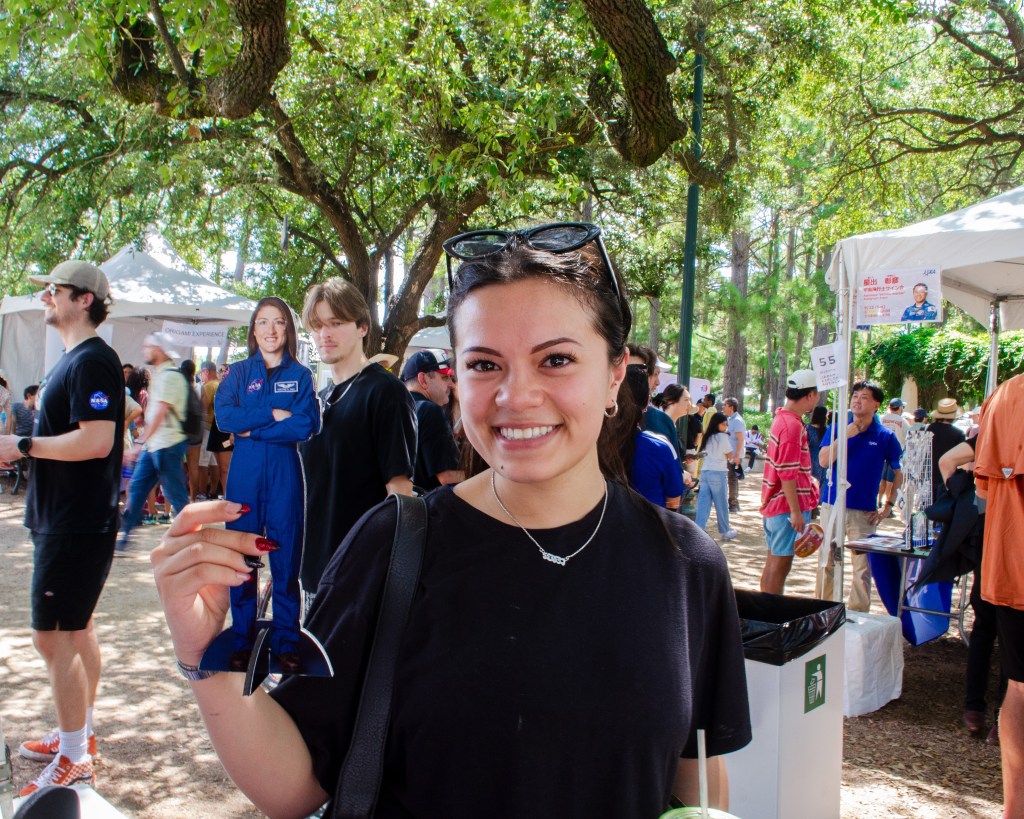
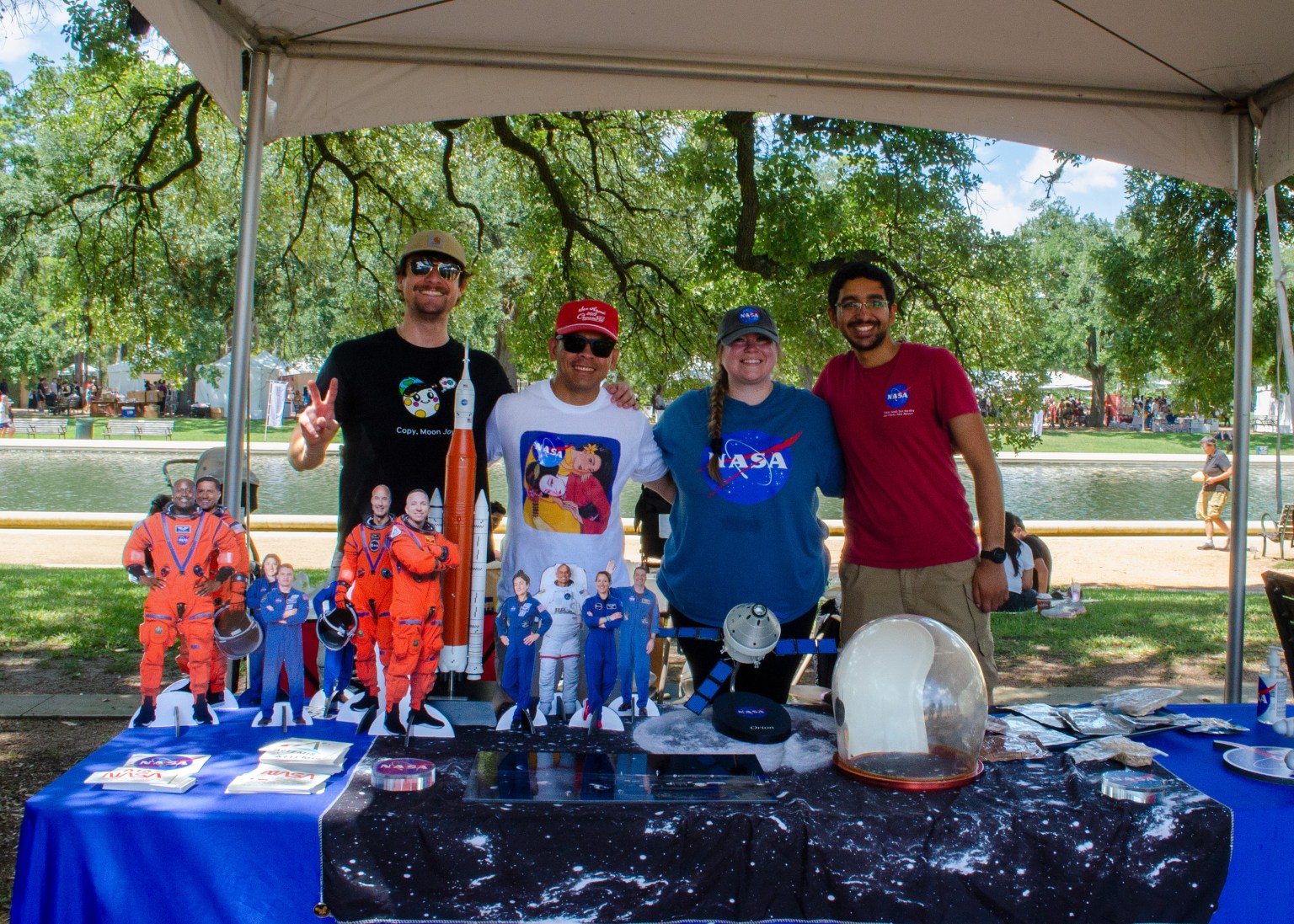
On Sept. 12-13, NASA’s Johnson Space Center employees brought the excitement and wonder of space exploration to Houston’s Japan Festival at Hermann Park. 

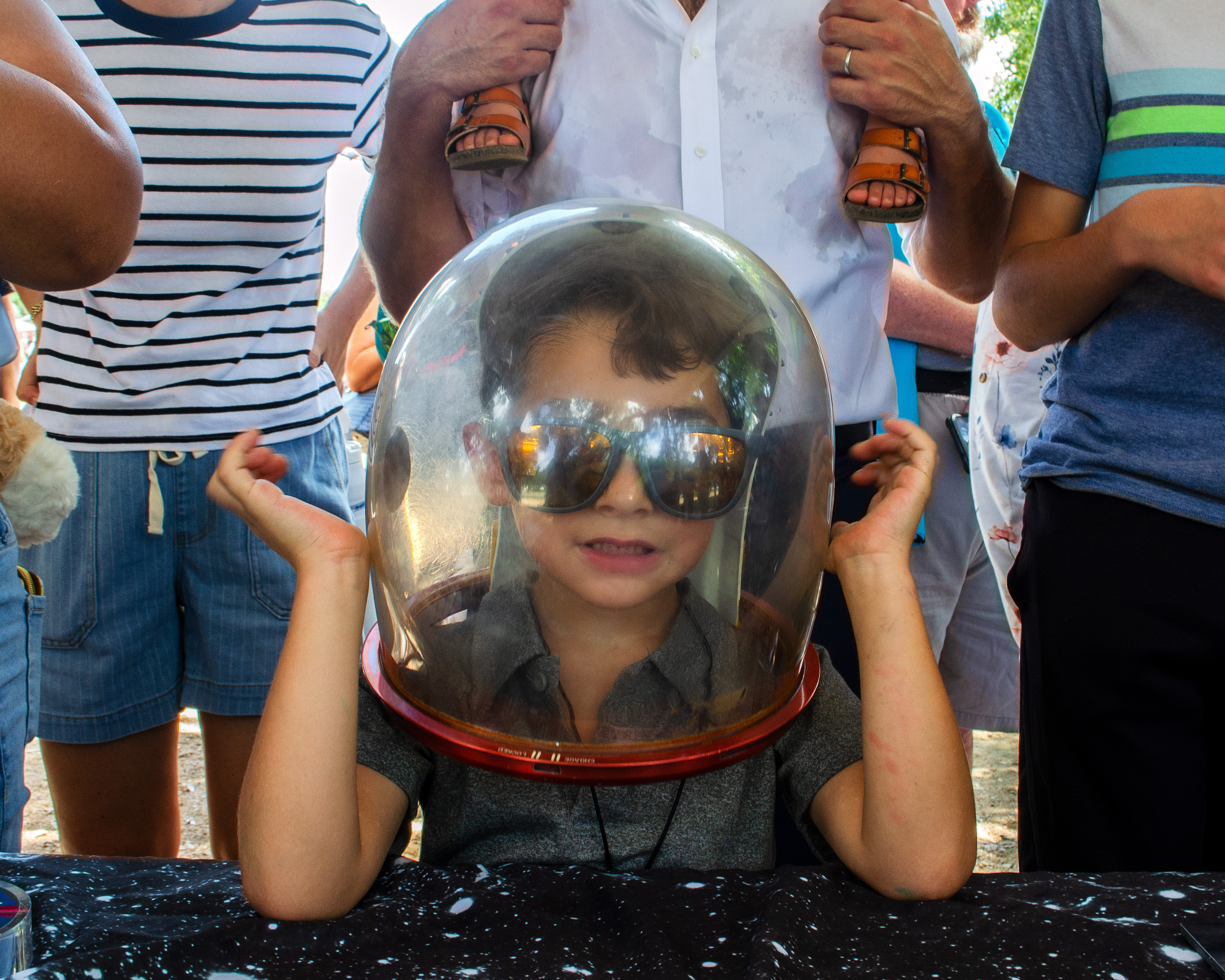
Attendees at the Japan Festival in Houston’s Hermann Park try on real astronaut gloves and a helmet while learning about NASA missions on Sept. 12, 2026.
NASA/Hailey Quist

For more than 30 years, the festival has immersed guests in traditional Japanese culture through food, dance, martial arts, music, and more, Johnson has supported the festival as an exhibitor for the past four years.

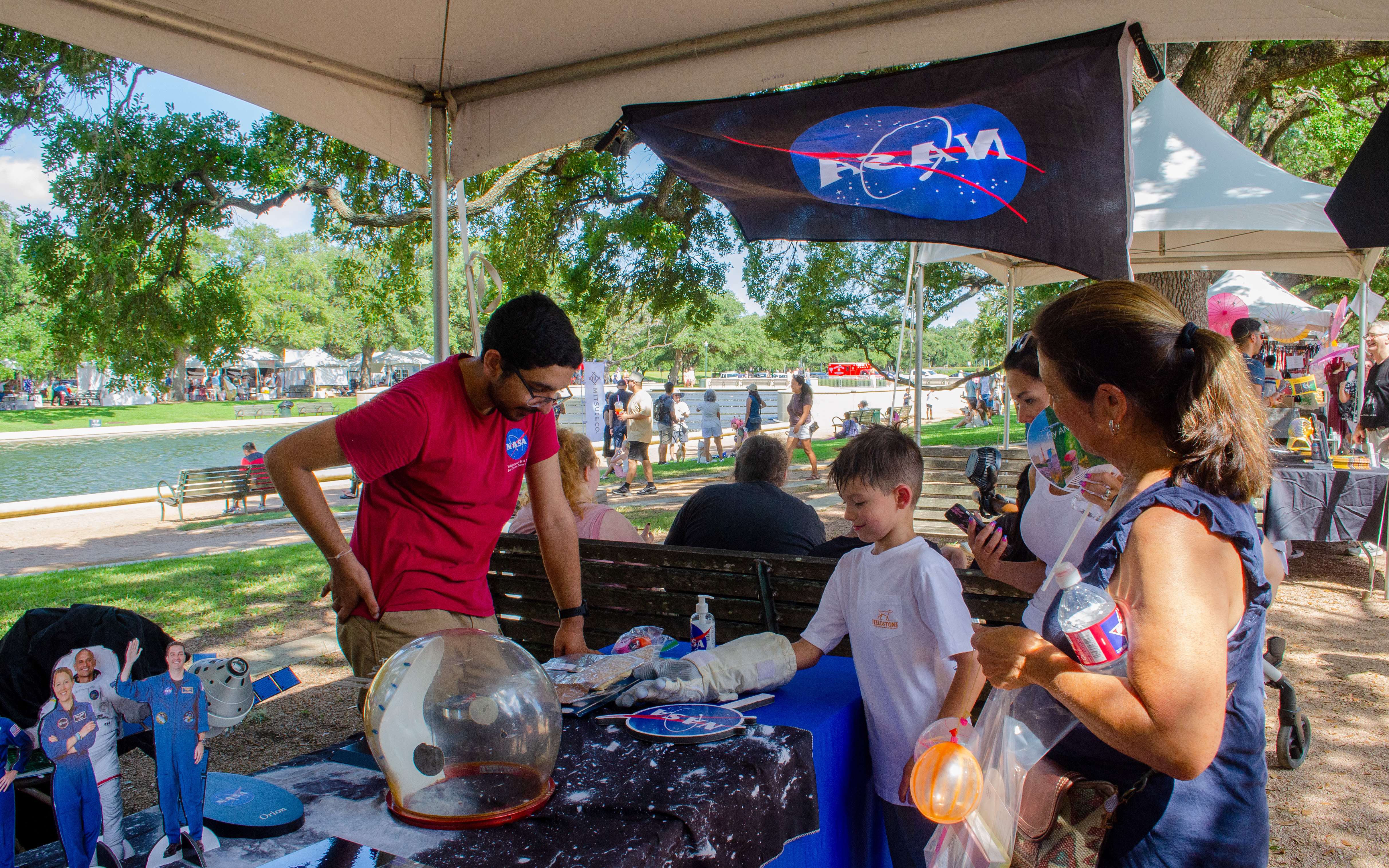
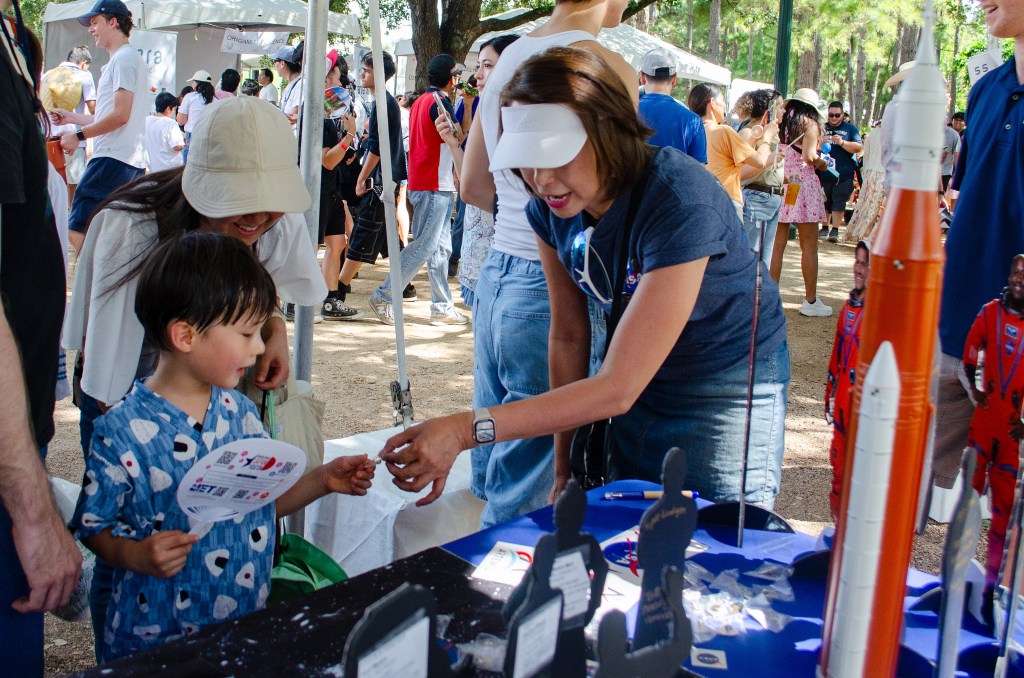
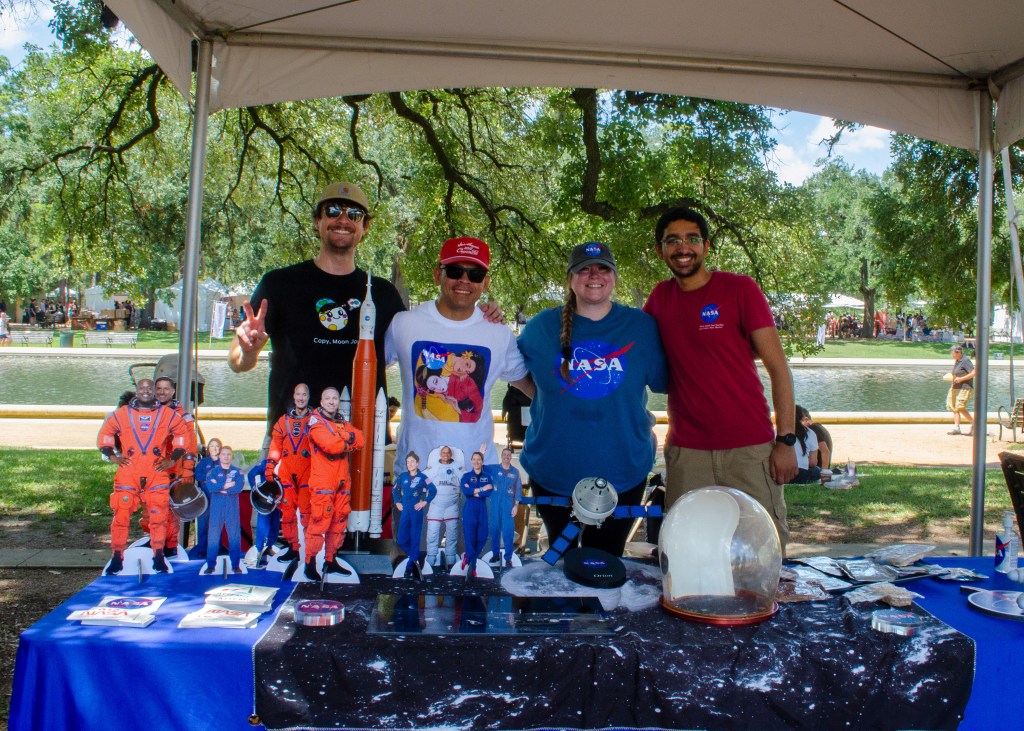
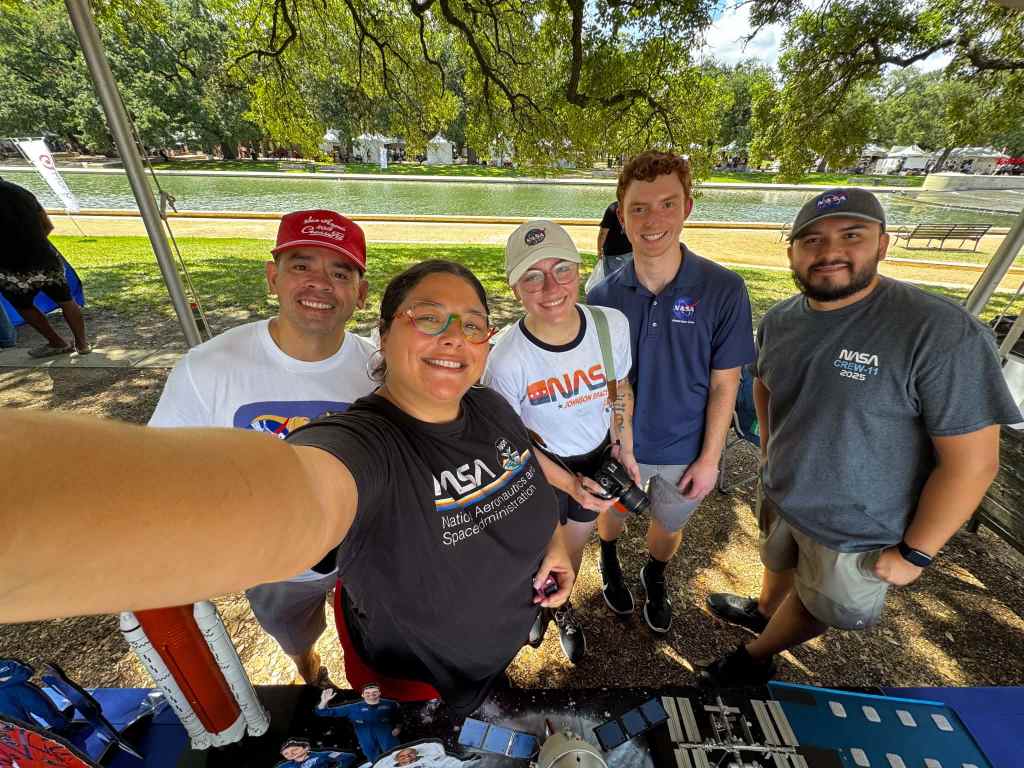
Johnson’s booth showcased the upcoming Artemis III mission and its crew, as well as NASA’s plans for the Moon Base. Display included models of NASA’s Orion spacecraft and the International Space Station, along with interactive exhibits featuring space food and a real astronaut glove and helmet for attendees to try on.

NASA’s Johnson Space Center volunteers share information about NASA missions with festival attendees.
NASA/Hailey Quist

Johnson employees interacted with over 3,000 festivalgoers, informing them about the agency’s current initiatives, handing out NASA stickers and pins, and inspiring the next generation of space explorers. According to Johnson employees, the highlight of the weekend was seeing the joy and excitement on the faces of children and adults as they explored the exhibits.

“It was amazing to see students as early as high school so passionate about NASA and asking questions on how to prepare for a NASA career,” said Brendan King, software engineer for Johnson’s Flight Dynamics Division.

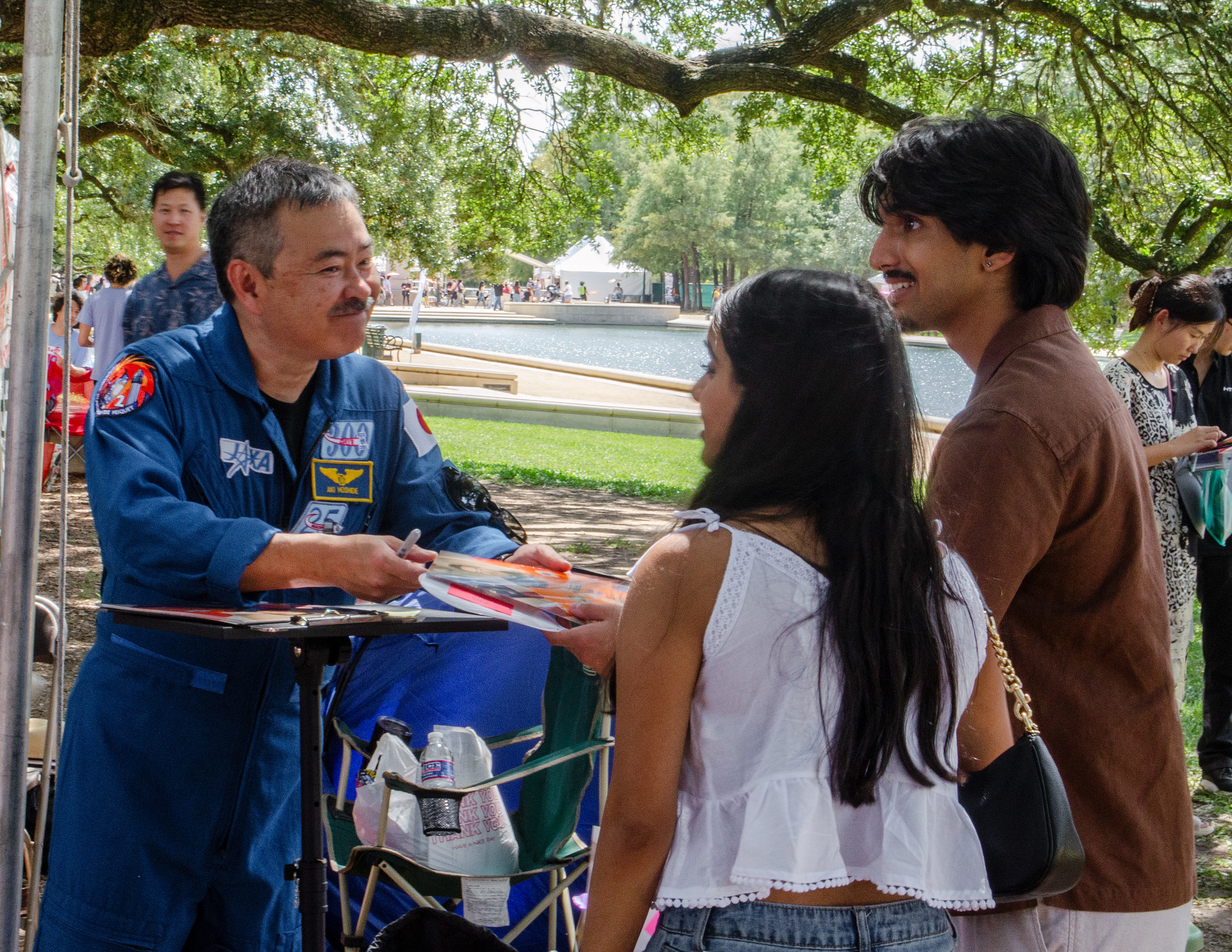
Next to Johnson’s booth, JAXA (Japanese Aerospace Exploration Agency), displayed a model of the HTV-X1 cargo spacecraft, space food, and images of JAXA’s pressurized rover, which could support future crewed and uncrewed exploration on the Moon. JAXA astronaut Akihiko Hoshide also signed autographs and posed for pictures with festival attendees.

JAXA (Japan Aerospace Exploration Agency) astronaut Akihiko Hoshide signs autographs and poses for pictures with festivalgoers.
NASA/Hailey Quist

The proximity of the booths was no mistake, reflecting the long-standing partnership between NASA and JAXA. From the addition of the Kibo laboratory aboard the space station to Japan’s signing of the Artemis Accords and development of lunar surface hardware. NASA and JAXA’s commitment to innovation and international collaboration continues to advance exploration.

As the hub of human spaceflight, Johnson engages with the public through events like Japan Festival. These events give the Johnson community opportunities to share NASA’s history, ongoing work, and future missions. They also remind Houstonians that Giant Leaps Start Here, right in the heart of Houston.

About the Author

Hailey Quist

NASA OSTEM Intern

Details

Last Updated

Sep 21, 2026

Source: www.nasa.gov
APOD: 2026 September 20 – Analemma over the Callanish Stones

APOD

Astronomy Picture of the Day

Discover the cosmos! Each day a different image or photograph of our fascinating universe is featured, along with a brief explanation written by a professional astronomer.

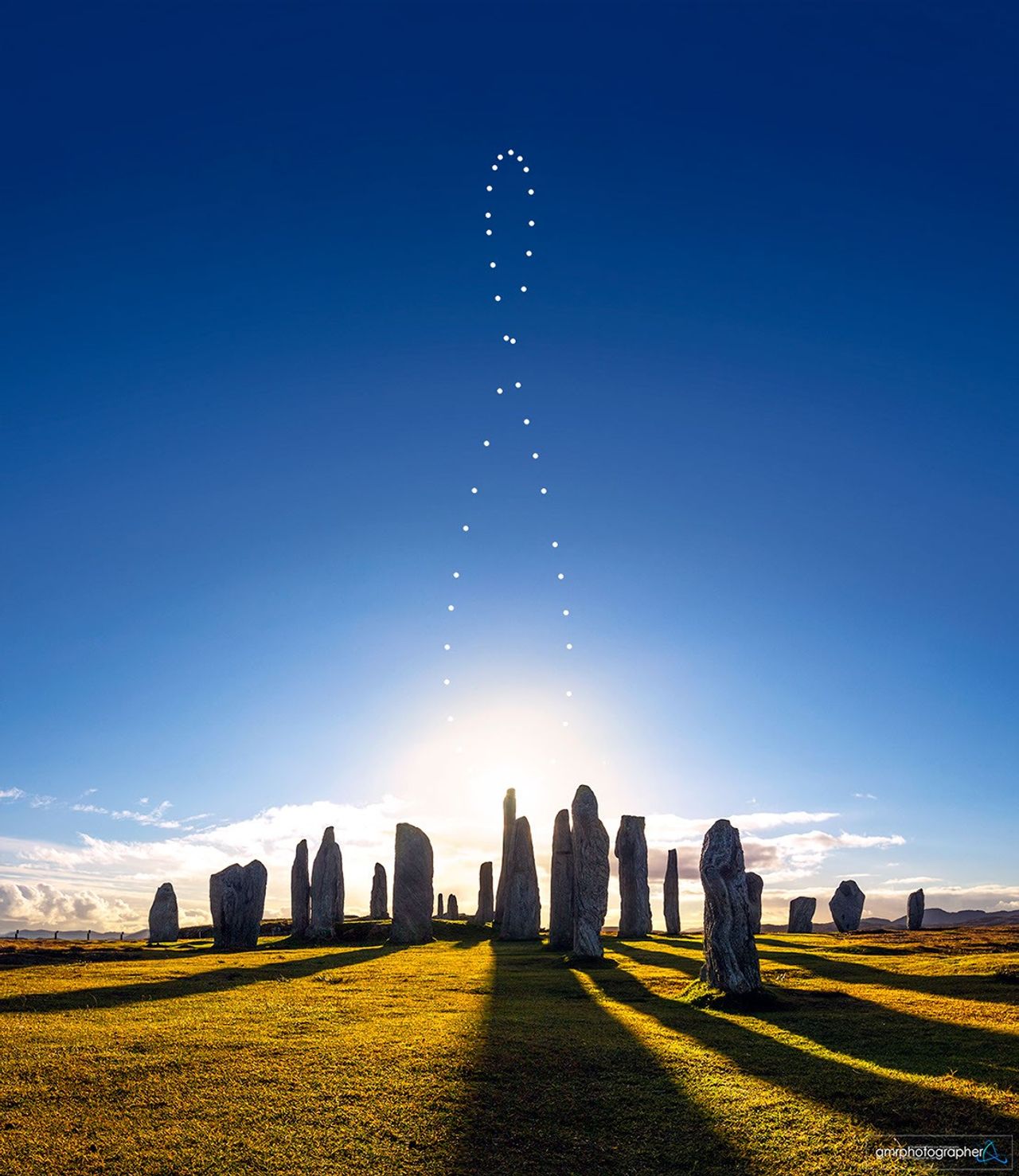
Multiple images of the Sun trace out an analemma curve in the daytime sky above the Callanish stones.

Analemma over the Callanish Stones

Explanation: If you went outside at the same time every day and took a picture that included the Sun, how would the Sun’s position change? A visual answer to that question is an analemma, a composite image taken from the same spot at the same time over the course of a year. The featured analemma was composed from images taken every few days at noon near the village of Callanish in the Outer Hebrides in Scotland, UK. In the foreground are the Callanish Stones, a stone circle built around 2700 BC during humanity’s Bronze Age. It is not known if the placement of the Callanish Stones has or had astronomical significance. The ultimate causes for the figure-8 shape of this and all analemmas are the tilt of the Earth axis and the ellipticity of the Earth’s orbit around the Sun. At the solstices, the Sun will appear at the top or bottom of an analemma. The featured image was taken near the December solstice and so the Sun appears near the bottom. Equinoxes, however, correspond to analemma middle points — not the intersection point. In two days there will be an equinox (“equal night”), when day and night are equal over all of planet Earth. Many cultures celebrate a change of season at an equinox.

APOD’s main NASA site is moving: From apod.nasa.gov to science.nasa.gov/apod
Tomorrow’s picture: open space

Date September 20, 2026
Credit & Copyright: Giuseppe Petricca
Authors & editors: Robert Nemiroff, Jerry Bonnell, Cecilia Chirenti, Keighley Rockcliffe
A service of: ASD at NASA / GSFC,
NASA Science Activation & Michigan Tech. U.

Source: science.nasa.gov

Florida, Ohio Guard Units Strengthen Communications Partnership

The Florida Air National Guard’s 125th Fighter Wing recently joined forces with the Ohio Air National Guard’s 220th Engineering Installation Squadron to improve communication infrastructure, strengthen mission readiness and provide hands-on training for airmen.

Source: www.war.gov

APOD: 2026 September 19 – A Zodiacal Night

APOD

Astronomy Picture of the Day

Discover the cosmos! Each day a different image or photograph of our fascinating universe is featured, along with a brief explanation written by a professional astronomer.

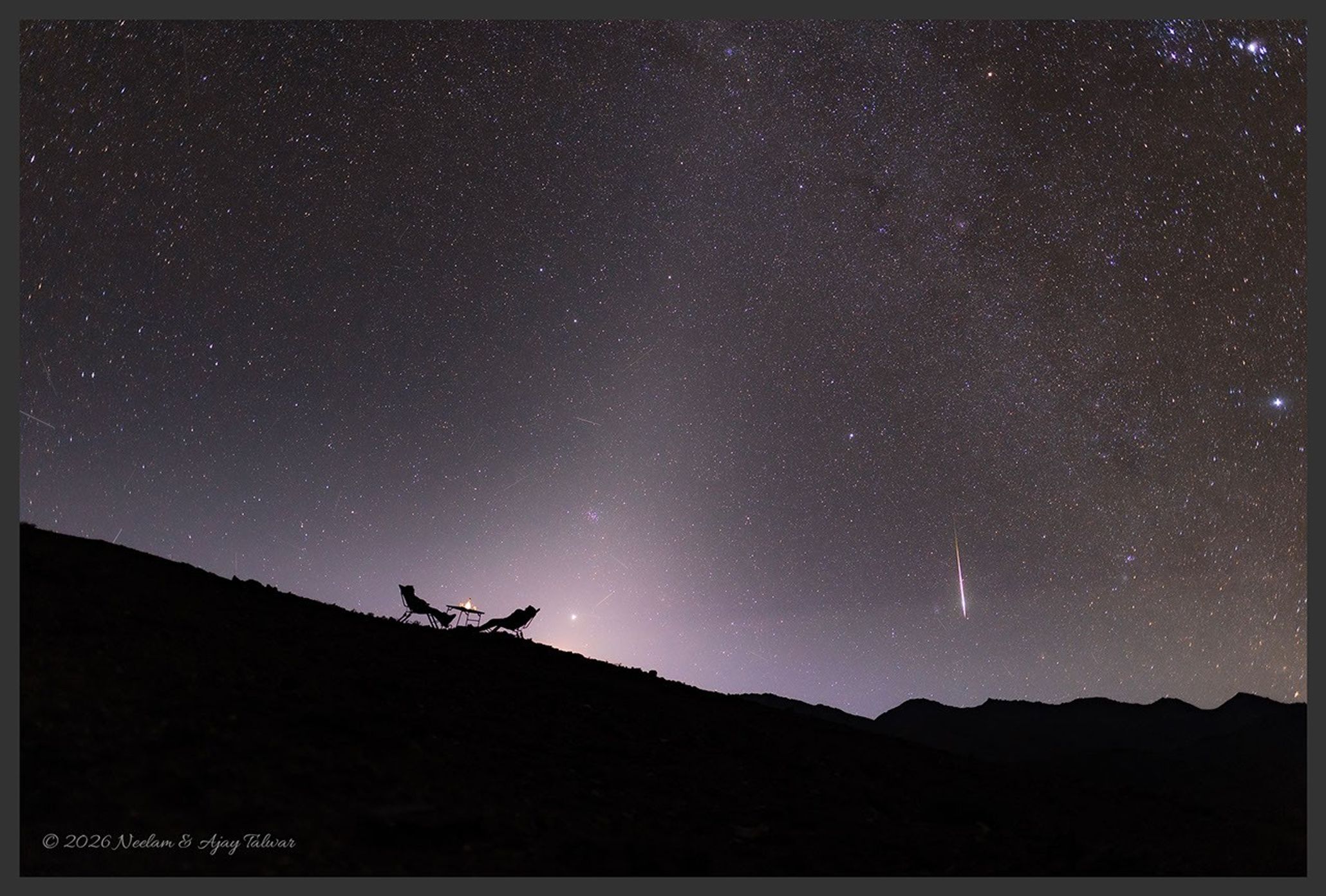
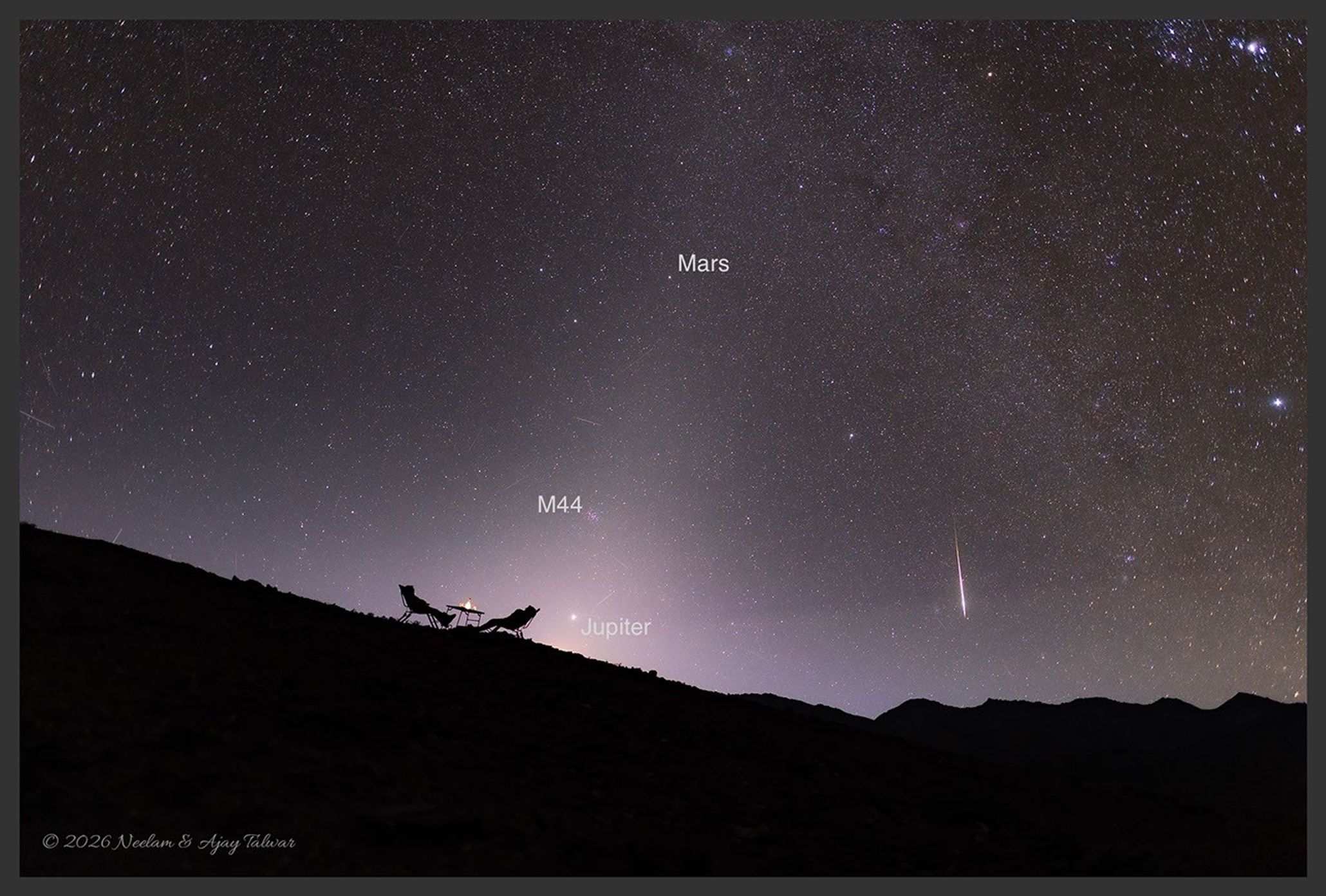
Two people are seated looking up at the night sky.Two people are seated looking up into the night sky. Jupiter, M44, and Mars are indicated with text labels.

A Zodiacal Night

Explanation: Also known as the false dawn, a luminous band of zodiacal light is captured in this dark night skyscape. The serene view was recorded just before the beginning of astronomical twilight during September’s star party at the remote Hanle Dark Sky Reserve, Ladakh, India, planet Earth. At about 4,500 meters altitude, the dark sky reserve presents a haven for hardy stargazing and astrophotography enthusiasts. While meteors streak through the night, bright planet Jupiter appears immersed in the faint zodiacal glow near the eastern horizon. Follow the zodiacal band toward the zenith to find open star cluster M44 and a yellowish tinged planet Mars near the center of the frame. In fact, serendipitous detections of interplanetary dust by NASA’s Juno spacecraft suggest Mars itself is the source of dust that back scatters sunlight and creates zodiacal light in planet Earth’s night.

APOD’s main NASA site is moving: From apod.nasa.gov to science.nasa.gov/apod
Tomorrow’s picture: only sunny days

Date September 19, 2026
Credit & Copyright: Neelam and Ajay Talwar (TWAN)
Authors & editors: Jerry Bonnell, Cecilia Chirenti, Robert Nemiroff, Keighley Rockcliffe
A service of: ASD at NASA / GSFC,
NASA Science Activation & Michigan Tech. U.

Source: science.nasa.gov

NASA Invites Media to Albania Artemis Accords Signing Ceremony

NASA meatball
Credit: NASA

The Republic of Albania will sign the Artemis Accords during a ceremony at 12 p.m. EDT on Monday, Sept. 21, at NASA Headquarters in Washington, becoming the 73rd country signatory.

NASA Deputy Administrator Matt Anderson will host Albania’s Minister for Europe and Foreign Affairs Ferit Hoxha and Ambassador of the Republic of Albania to the United States Ervin Bushati for the ceremony, together with U.S. Department of State officials.

This event is in person only. Media interested in attending must RSVP no later than 10 a.m. on Sept. 21 to: [email protected]. NASA’s media accreditation policy is online.

In 2020, during the first Trump Administration, the United States, led by NASA and the State Department, joined with seven other founding nations to establish the Artemis Accords, responding to the growing interest in lunar activities by both governments and private companies.

The Artemis Accords introduced the first set of practical principles aimed at enhancing the safety, transparency, and coordination of civil space exploration on the Moon, Mars, and beyond.

Learn more about the Artemis Accords at:

https://www.nasa.gov/artemis-accords

-end-

Camille Gallo / Elizabeth Shaw 
Headquarters, Washington 
202-358-1600 
[email protected] / [email protected] 

Details

Last Updated

Sep 18, 2026

Editor
Jennifer M. Dooren

Source: www.nasa.gov

NASA-JAXA XRISM Mission Sees Pulsar Gathering Companion’s ‘Wind’

5 min read

NASA-JAXA XRISM Mission Sees Pulsar Gathering Companion’s ‘Wind’

Using data from the Japan-led XRISM (X-ray Imaging and Spectroscopy Mission) observatory, astronomers have directly observed a giant star’s outflow, called a stellar wind, being captured by its compact companion and providing the power source for strong X-ray flares. The research is part of NASA’s exploration of the extreme universe to better understand how the cosmos works.
 
“We’ve never before seen clear indications of wind plasma falling onto a compact object,” said Roi Rahin, a researcher at UMBC (University of Maryland, Baltimore County) and NASA’s Goddard Space Flight Center in Greenbelt, Maryland. “We can now test our understanding of these processes in much greater detail.”
 
A paper describing the findings published Friday in the journal Science Advances.
 
The target system is BP Crucis, a high-mass X-ray binary located about 13,000 light-years away in the southern constellation Crux. The primary star, known as Wray 977, is a blue hypergiant about 40 times the Sun’s mass and 60 times its size. It’s so big, hot, and luminous that ionized gas constantly streams away from it, a phenomenon astronomers call a stellar wind.

This artist’s concept of the BP Crucis system follows the pulsar on a passage through the dense stream of plasma flowing from its companion, a blue hypergiant 40 times the Sun’s mass. During each four-day passage, the pulsar’s X-ray brightness flares as it pulls in some of the gas. At first, the gas forms a messy, turbulent accretion disk around the pulsar, and plasma spirals down to it. But as the pulsar moves deeper into the stream, there’s not enough angular momentum to support the disk, and it breaks up. At this point, plasma falls straight onto the pulsar. Later, as the pulsar near the end of its passage, a messy accretion disk rebuilds, this time spinning in the opposite direction of the earlier disk due to the stream’s flow.
NASA’s Goddard Space Flight Center/Conceptual Image Laboratory

The supergiant’s companion is a tiny-but-mighty neutron star called GX 301-2. The crushed core of a star that long ago exploded as a supernova, it packs more than the Sun’s mass into a ball roughly 12 miles (20 kilometers) across. Rotating every 11 minutes, it sweeps an X-ray beam toward Earth, which classifies it as a pulsar.   
 
Twice during the pulsar’s 41.5-day orbit, near its closest and farthest points from the primary star, strong X-ray flares occur for several days. Astronomers think the pulsar’s gravitational influence on the star creates an especially dense stream of plasma. Flares occur when the pulsar traverses this stream and captures some of its matter. The strongest eruptions happen closer to the star, where the stream is denser. 
 
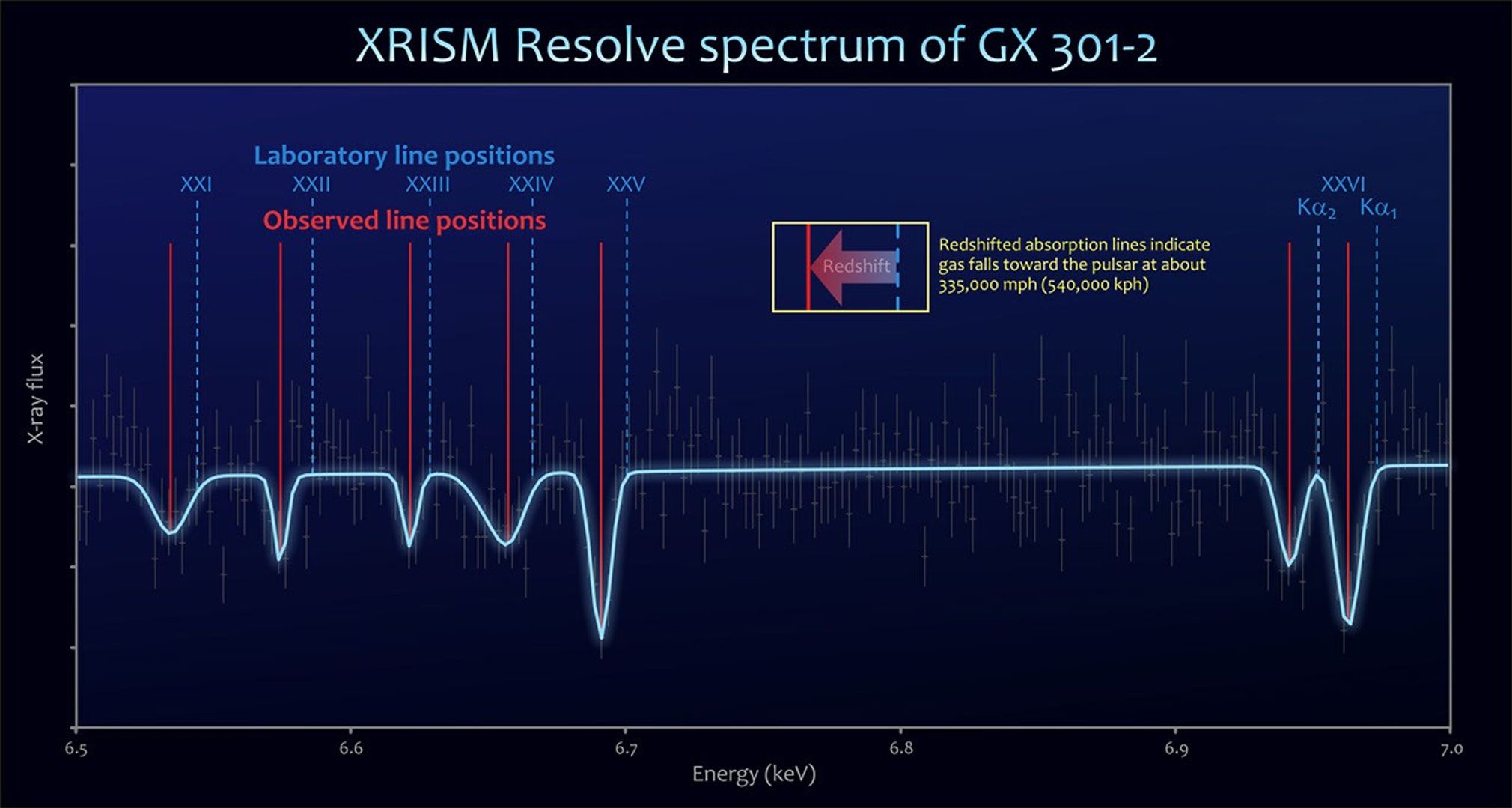
The researchers targeted the system with XRISM on Feb. 1, 2025, observing it for about 16 hours near the end of one of these stronger flares. The observatory’s Resolve instrument, jointly developed by NASA and JAXA (Japan Aerospace Exploration Agency), captured highly detailed X-ray spectra, revealing rapidly changing emission and absorption lines. In particular, absorption lines from highly ionized iron revealed the speed and direction of plasma relatively close to the pulsar. 

Watch to learn about spectroscopy, the dance between matter and light, and how NASA missions using it help scientists answer big questions about our universe. 
NASA’s Goddard Space Flight Center

When Rahin first saw these spectra, he realized he hadn’t seen anything like them before. He scoured the scientific literature for similar observations and came up empty-handed.

“It was clear that these observations were groundbreaking, but at the same time this meant the analysis had to be especially detailed,” said Nazma Islam, a co-author formerly at UMBC and NASA Goddard and now an assistant professor at Manipal Centre for Natural Sciences, India. “We could see how the dense stream of plasma acts very close to the neutron star.”

XRISM Resolve absorption spectrum of BP Crucis
The Resolve instrument aboard the NASA-JAXA XRISM observatory captured this high-resolution X-ray spectrum of BP Crucis. Prominent iron absorption lines (dashed) have shifted to lower energies (red lines), which indicates both the direction and velocity of the gas. The observations indicate the gas is moving toward the pulsar at about 335,000 mph (540,000 kph). Data and error bars are shown in gray, with a model spectrum in light blue. Roman numerals indicate the ionization state of iron atoms (the number of electrons they’ve lost to produce each spectral line).
NASA’s Goddard Space Flight Center, JAXA/NASA, Rahin et al. 2026

Rahin and his team show that the iron absorption lines they observed are displaced to lower energies than they would be if measured in a laboratory. This displacement, called a redshift, indicates motion away from the observer, which means the gas is flowing toward the pulsar. The extent of the redshift indicates the plasma’s velocity. The team’s analysis indicates gas is racing toward the pulsar at speeds of around 335,000 mph (540,000 kph).
 
Here’s what the researchers think is going on: As the pulsar enters the stream, it sweeps up gas into a thick, messy, turbulent disk. This gas spirals down to the pulsar, heats up, and emits X-rays to power the flares.
 
As the pulsar pushes farther into the stream, the turbulent disk breaks down. Astronomers suspect that as the pulsar moves more directly into the flow, the stream no longer has the angular momentum required to maintain the disk. Once the disk dissipates, plasma flows directly onto the neutron star. Observations with XRISM occurred near the end of this phase.

Then, as the pulsar nears the end of the stream, a messy disk briefly returns, this time spinning in the opposite direction. And then it, too, disappears as the pulsar exits. In all, the pulsar takes about four days to transit the stream.

“The BP Crucis system is an ideal laboratory for studying wind-fed pulsar accretion, and XRISM’s sensitive, high-resolution Resolve spectrometer is an ideal instrument for advancing our understanding of the processes involved,” said Brian Williams, the mission’s project scientist at NASA Goddard.  

To learn more about the XRISM mission, visit:

https://nasa.gov/xrism

Details

Last Updated

Sep 18, 2026

Editor
Francis Reddy
Contact
Alise Fisher
Location
Goddard Space Flight Center

Source: science.nasa.gov

NASA Awards SpaceX Three Crew Flights to Space Station

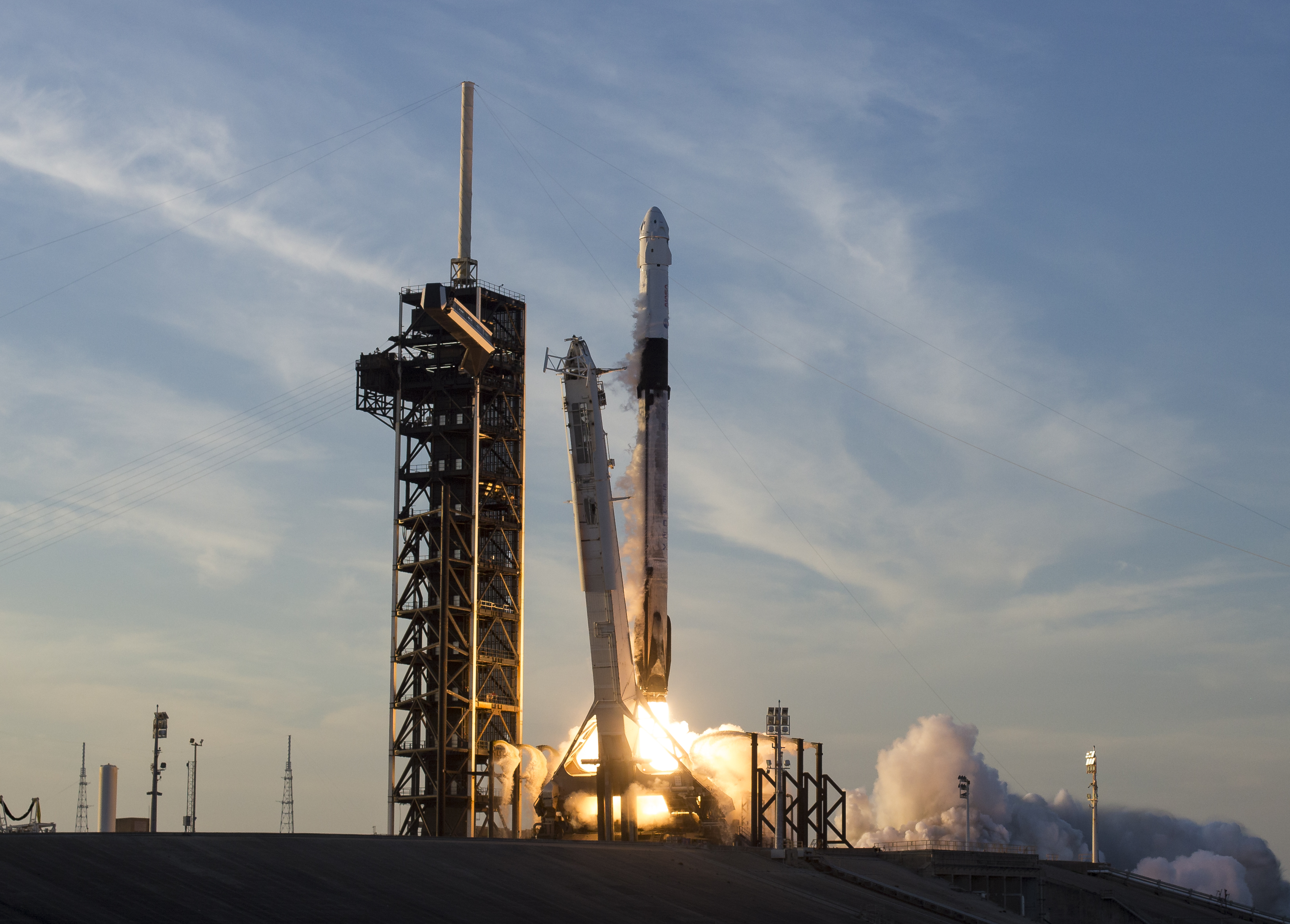
A SpaceX Falcon 9 rocket carrying the company's Dragon spacecraft is launched on NASA’s SpaceX Crew-10 mission to the International Space Station with NASA astronauts Anne McClain and Nichole Ayers, JAXA (Japan Aerospace Exploration Agency) astronaut Takuya Onishi, and Roscosmos cosmonaut Kirill Peskov onboard, Friday, March 14, 2025, from NASA's Kennedy Space Center in Florida. NASA’s SpaceX Crew-10 mission is the tenth crew rotation mission of the SpaceX Dragon spacecraft and Falcon 9 rocket to the International Space Station as part of the agency’s Commercial Crew Program. McClain, Ayers, Onishi, and Peskov launched at 7:03 p.m. EDT from Launch Complex 39A at the NASA's Kennedy Space Center to begin a six month mission aboard the orbital outpost.
A SpaceX Falcon 9 rocket carrying the company’s Dragon spacecraft launches NASA’s SpaceX Crew-10 mission to the International Space Station on March 14, 2025.
NASA/Aubrey Gemignani

To continue regular crew transportation to the International Space Station, NASA has awarded SpaceX three additional missions through a contract modification.

As part of the agency’s Commercial Crew Transportation Capability (CCtCap) contract, this change brings the total missions for SpaceX to 17 and helps NASA to maintain access to the space station with two unique commercial crew industry partners.

This is a firm fixed-price, indefinite-delivery/indefinite-quantity contract modification for the Crew-15, Crew-16, and Crew-17. The value of this modification for all three missions and related mission services is $946 million. The amount includes ground, launch, in-orbit, and return and recovery operations, cargo transportation for each mission, and a lifeboat capability while docked to the International Space Station. The period of performance runs through 2030 and brings the total CCtCap contract value with SpaceX to $5.92 billion.

The award follows the agency issuing a notice of intent in May to purchase the additional missions. The current sole source modification does not preclude NASA from seeking future contract modifications for additional transportation services, as needed.

In 2014, NASA awarded the CCtCap contracts to Boeing and SpaceX through a public-private partnership as part of the agency’s Commercial Crew Program. Under CCtCap, NASA certifies that a provider’s space transportation system meets the agency’s requirements prior to flying missions with astronauts.

SpaceX was certified by NASA for crew transportation in November 2020. The company’s twelfth crew rotation mission for the agency, the Crew-12 mission, is currently in orbit docked to the space station. As part of the missions, SpaceX’s Dragon spacecraft and Falcon 9 rocket transport up to four astronauts, along with critical cargo, to the space station.

For information about NASA’s Commercial Crew Office, visit:

https://www.nasa.gov/exploration/commercial/crew

Source: www.nasa.gov
COSI Telescope Comes Together

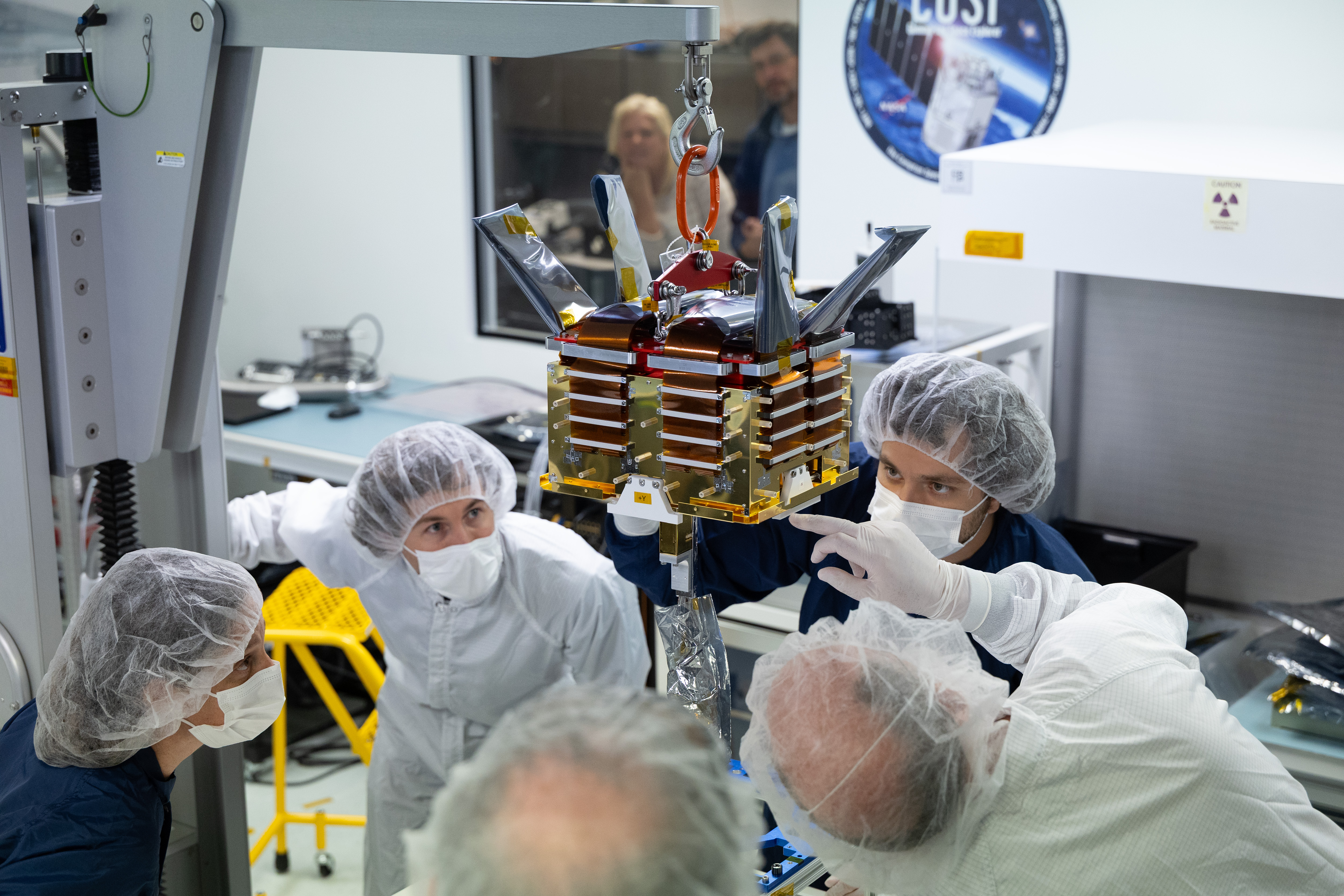
A group of five people wearing cleanroom suits, hairnets, and masks watch a small gold and silver box suspended by a small crane in a laboratory. In the background, slightly out of focus, two more people watch through a window. Next to the window is a large decal of the COSI mission patch.
UC Berkeley/Alan Toth

UC Berkeley engineers and managers watch as the COSI (Compton Spectrometer and Imager) detector assembly is slowly raised from a table in this July 8, 2026, image. The four pieces of silver material on the top of the detector box cover the flex circuits, which carry signals from the detectors to the readout electronics.

COSI is a wide-field gamma-ray telescope that will study energetic phenomena in the Milky Way and beyond, including the creation and destruction of matter and antimatter and the final stages of the lives of stars. The mission is a collaboration between the University of California, Berkeley’s Space Sciences Laboratory; the University of California, San Diego; the Naval Research Laboratory; NASA’s Goddard Space Flight Center; Northrop Grumman; Space Dynamics Laboratory; the Italian Space Agency; and a number of research institutions.

Image credit: UC Berkeley/Alan Toth

Source: www.nasa.gov
NASA’s Hubble Spots an Out-of-Sync Galaxy

3 min read

NASA’s Hubble Spots an Out-of-Sync Galaxy

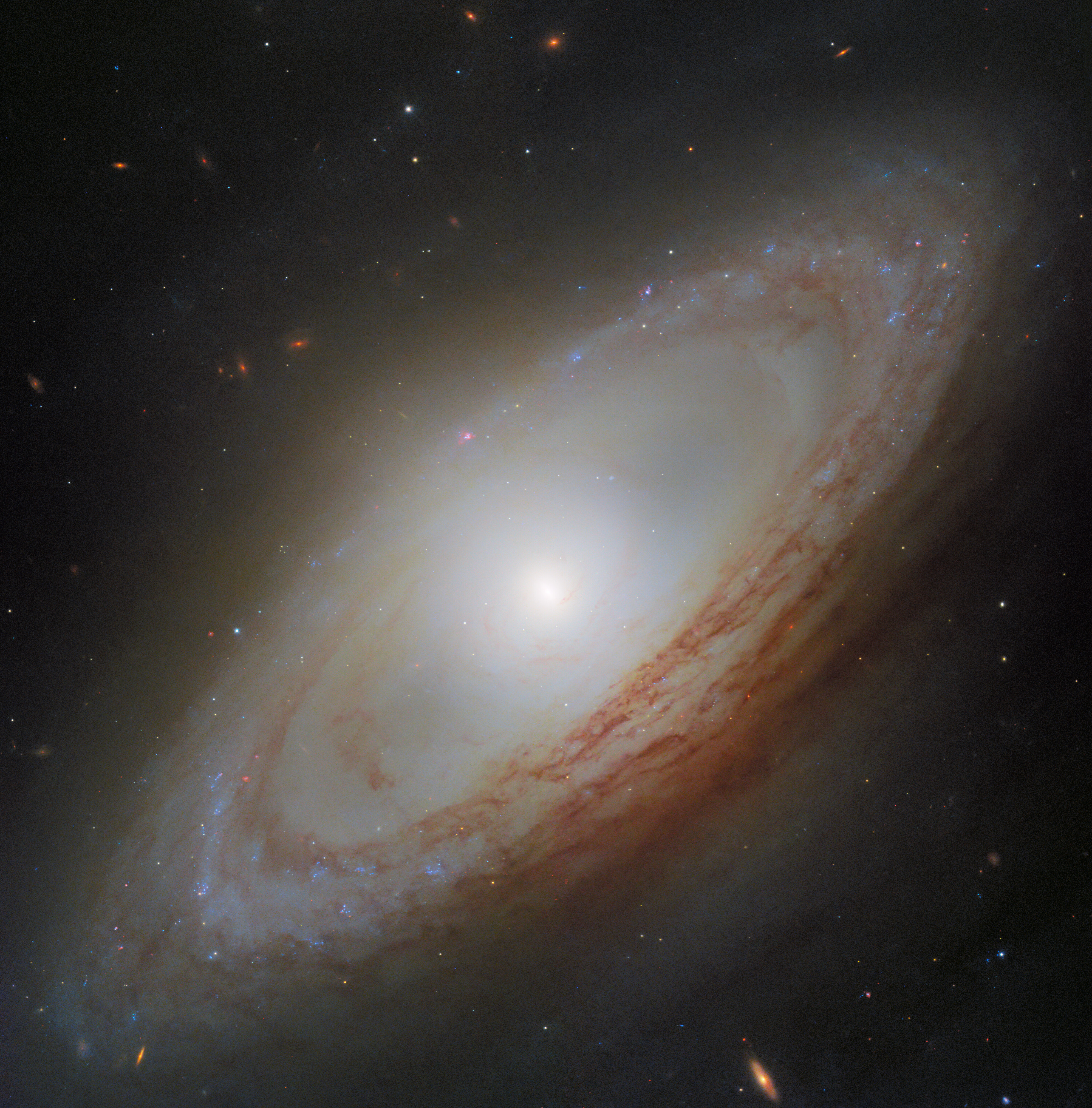
A spiral galaxy viewed at an angle, with a bright central bulge and winding spiral arms. The arms form a ring around the galaxy, without appearing to reach its center. Prominent red-brown dust lanes weave through the arms, which are also dotted with bright blue and reddish regions of star formation. The galaxy is set against a dark background scattered with stars and faint distant galaxies.
The spiral galaxy NGC 4698 shines in this image from the NASA/ESA Hubble Space Telescope.
ESA/Hubble & NASA, D. Thilker, the MAUVE-HST Team

Though the spiral galaxy in this new image from the NASA/ESA Hubble Space Telescope seems serene, it hides a chaotic secret. This galaxy is NGC 4698, and it lies about 55 million light-years away in the constellation Virgo. It’s one of over a thousand galaxies in the Virgo Cluster, the nearest large cluster of galaxies bound together by gravity.

As a spiral galaxy similar to our own Milky Way galaxy, NGC 4698 has spiral arms that curl around within a thin disk of stars, gas, and dust. These arms are marked by opaque clumps of brown dust and dotted with small collections of bright blue stars. Unlike many other spiral galaxies, like this one recently photographed by Hubble, NGC 4698’s delicate spiral arms are only prominent in the outer reaches of the disk; spiral arms often wind down to the very center of a galaxy, but NGC 4698’s spiral arms appear to shy away from its glowing center. The arms instead hover in a ring-like structure around the perimeter of the galaxy.

NGC 4698’s center is dominated by an elongated galactic bulge . The diffuse off-white glow of the galaxy’s bulge comes from stars smaller, older, and cooler than the massive blue stars that dot the galaxy’s outer disk. These tightly packed stars orbit a supermassive black hole containing millions of times the Sun’s mass. Scientists have found signs that this black hole is actively growing, drawing gas inward with its gravitational pull.

With a flat, starry disk and diffusely glowing center, NGC 4698 looks a lot like a typical spiral galaxy — but this galaxy is far from normal. NGC 4698 is one of only a few known spiral galaxies with a bulge that extends out from the disk at a right angle. The elongation is faintly visible in this Hubble image, which shows the ghostly glow of the starry bulge peeking above and below the dusty disk. What’s more, the stars and gas nearest the galaxy’s center rotate perpendicular to the rest of the disk!

What could cause a galaxy to be so out of sync? Astronomers have found that the culprit likely lies outside the galaxy. If NGC 4698 funneled in gas from an outside source, the newly collected gas could have formed a disk of gas and stars in the galaxy’s center, at an angle relative to the rest of the disk. Some observations suggest that this galaxy once experienced a minor galactic merger, as evidenced by a short ‘tail’ of hydrogen streaming from one side of the galaxy.

The data used to create this image come from an observing program focusing on galaxies in the Virgo Cluster. This program zooms in on the details of these relatively nearby galaxies, such as individual star clusters and nebulae. At the same time, researchers will use these data to take stock of the larger picture, learning how a galaxy’s journey through a cluster affects the galaxy’s evolution and ability to form new stars.

Text credit: ESA/Hubble

Media Contact:

Claire Andreoli
NASA’s Goddard Space Flight Center, Greenbelt, MD
[email protected]


Source: science.nasa.gov