The month of May typically marks the onset of the wet season in Puerto Rico. But in 2026, rain had largely failed to materialize as of late August, and much of the U.S. territory found itself in the throes of drought. The dry conditions have contributed to water shortages and rationing in some areas, leading Puerto Rico’s governor to declare a state of emergency in late July and the U.S. government to issue a drought disaster declaration for more than two dozen cities and towns in late August.
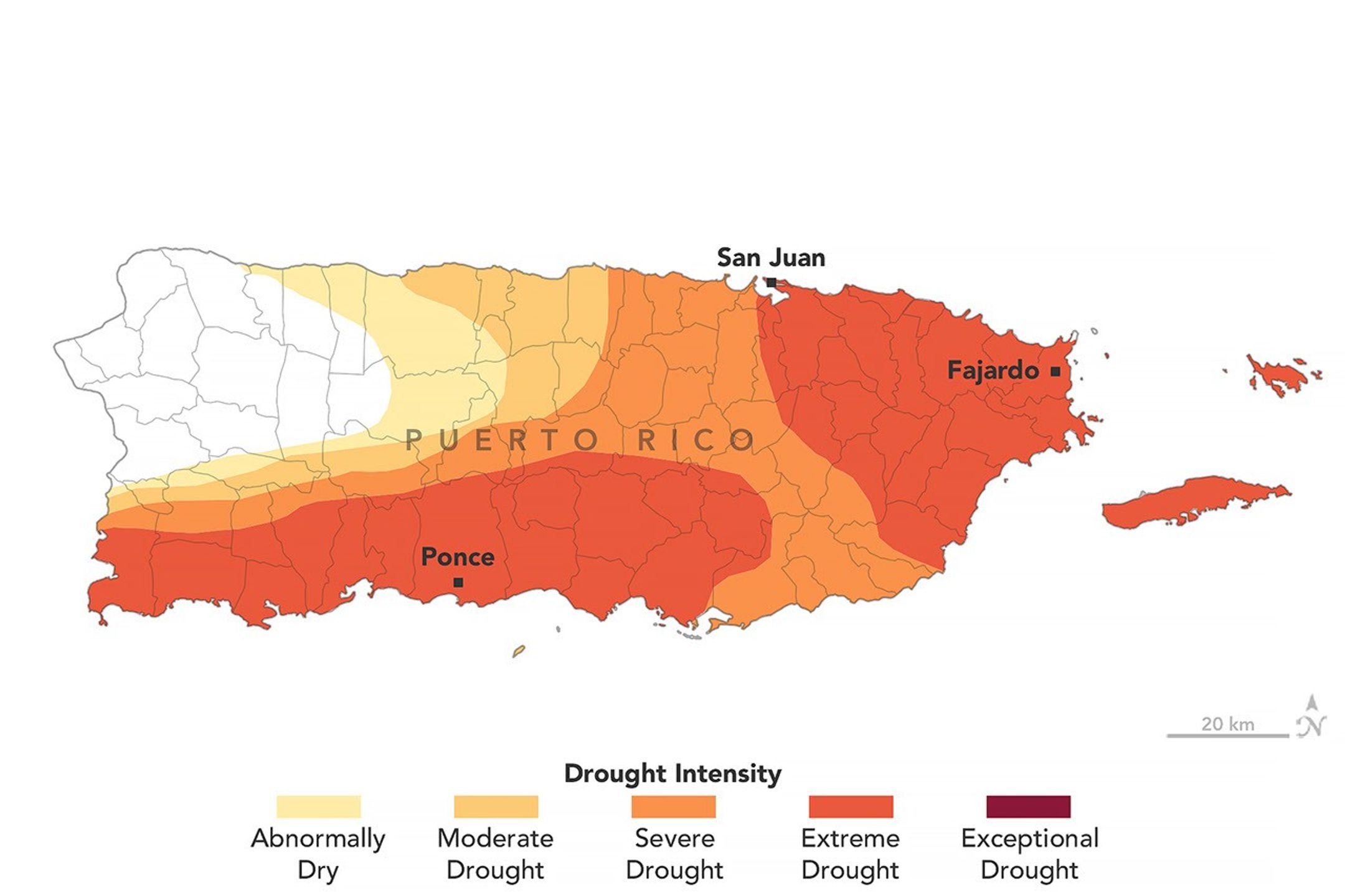
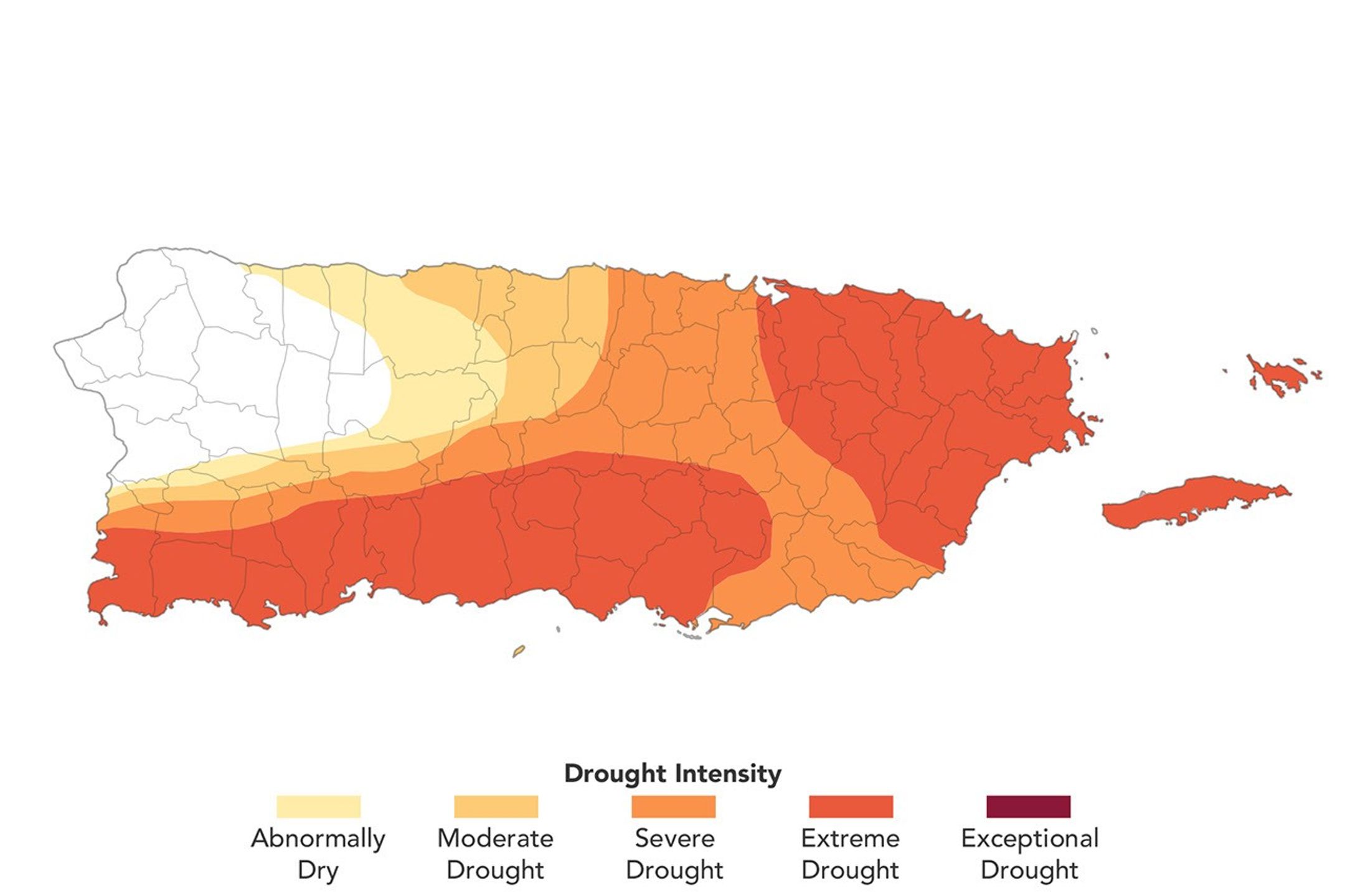
This map depicts the extent and severity of drought in Puerto Rico on August 25, 2026. It was produced by the U.S. Drought Monitor, a partnership between the National Drought Mitigation Center at the University of Nebraska-Lincoln, the U.S. Department of Agriculture (USDA), the National Oceanic and Atmospheric Administration, and NASA. NASA has contributed Earth observations and expertise to the project for many years, and in 2026, the partnership was strengthened when two agency scientists joined the small team that authors the weekly drought assessments.
Effects of the hot and dry conditions appeared in a variety of satellite data products and ground-based observations that the U.S. Drought Monitor considers when creating its weekly assessments, said David Mocko, a senior research scientist in the Hydrological Sciences Laboratory at NASA’s Goddard Space Flight Center. For recent updates to Puerto Rico’s drought maps, satellite estimates of soil moisture, as well as weather, streamflow, and well observations, were particularly important factors, he said. Mocko authored the U.S. Drought Monitor update for August 18, 2026. He and Jonathan Case of NASA’s Marshall Space Flight Center are the first from the agency to produce the weekly maps.
As of August 25, 2026, three-quarters of Puerto Rico was experiencing at least moderate drought, according to the group’s assessment. Zones of extreme drought (dark orange) in the eastern and southwestern regions of the main island had expanded in the previous week to cover 44 percent of the territory.
Three months earlier, no part of Puerto Rico was experiencing drought, and less than 20 percent of its area was classified as abnormally dry. Conditions were wetter than normal across the U.S. Caribbean in late winter and early spring, the National Integrated Drought Information System (NIDIS) reported—but then they dried significantly.
From mid-May through mid-July, most of Puerto Rico received less than 60 percent of normal precipitation, according to NIDIS. In southern and southwestern areas, rainfall totals were less than 20 percent of normal, amounting to a deficit of 3 to 6 inches (76 to 152 millimeters). Unusually high temperatures contributed to the drying—San Juan had one of its warmest Julys on record, for example. Streamflow reached record lows in rivers such as the Rio Fajardo in the northeast.
Strained water resources have affected farmers, ranchers, and residents across the territory. Water rationing has been in place for several municipalities since early August, according to news reports, with observers noting that infrastructure issues have exacerbated shortages. For farmers, parched soils have impacted the growth of everything from fruit and cacao trees to banana and coffee plants, leading to crop losses, while ranchers face depleting hay reserves.
U.S. Drought Monitor maps, published since 1999, assist federal, state, local, and tribal decision makers with drought response. The USDA, for instance, uses them in a “fast track” process for disaster designations, which can then direct emergency resources to those affected.
NASA Earth Observatory image by Michala Garrison, using data from the U.S. Drought Monitor at the University of Nebraska-Lincoln. Story by Lindsey Doermann.
References & Resources
- AP News (2026, August 26) US declares drought disaster for parts of Puerto Rico as dry conditions persist. Accessed September 1, 2026.
- National Centers for Environmental Information (2026, June 11) Drought Defined: A Deep Dive into the U.S. Drought Monitor. Accessed September 1, 2026.
- National Integrated Drought Information System (2026, July 23) Drought Update for Puerto Rico and the U.S. Virgin Islands. Accessed September 1, 2026.
- Puerto Rico Federal Affairs Administration (2026, August 26) Governor Announces USDA Approval of Drought Disaster Declaration for Puerto Rico. Accessed September 1, 2026.
- The University of Alabama in Huntsville (2026, March 31) UAH Earth System Science Center scientist selected as U.S. Drought Monitor author. Accessed September 1, 2026.
- U.S. Drought Monitor (2026, August 27) Puerto Rico. Accessed September 1, 2026.
- Yale Climate Connections (2026, August 13) What you need to know about the water crisis in Puerto Rico. Accessed September 1, 2026.
You may also be interested in:
Stay up-to-date with the latest content from NASA as we explore the universe and discover more about our home planet.
Drought in the Rio Grande basin contributed to New Mexico’s largest reservoir dwindling to its lowest level in decades.
Drought and water releases drained the Arizona reservoir to levels that have led to widespread fish deaths.
Using satellite data, researchers connected harmful algal blooms with warm water and low water levels at one of Colorado’s largest…


Source: science.nasa.gov