NASA Astronaut to Answer Questions from New Hampshire Students

2 min read

Preparations for Next Moonwalk Simulations Underway (and Underwater)

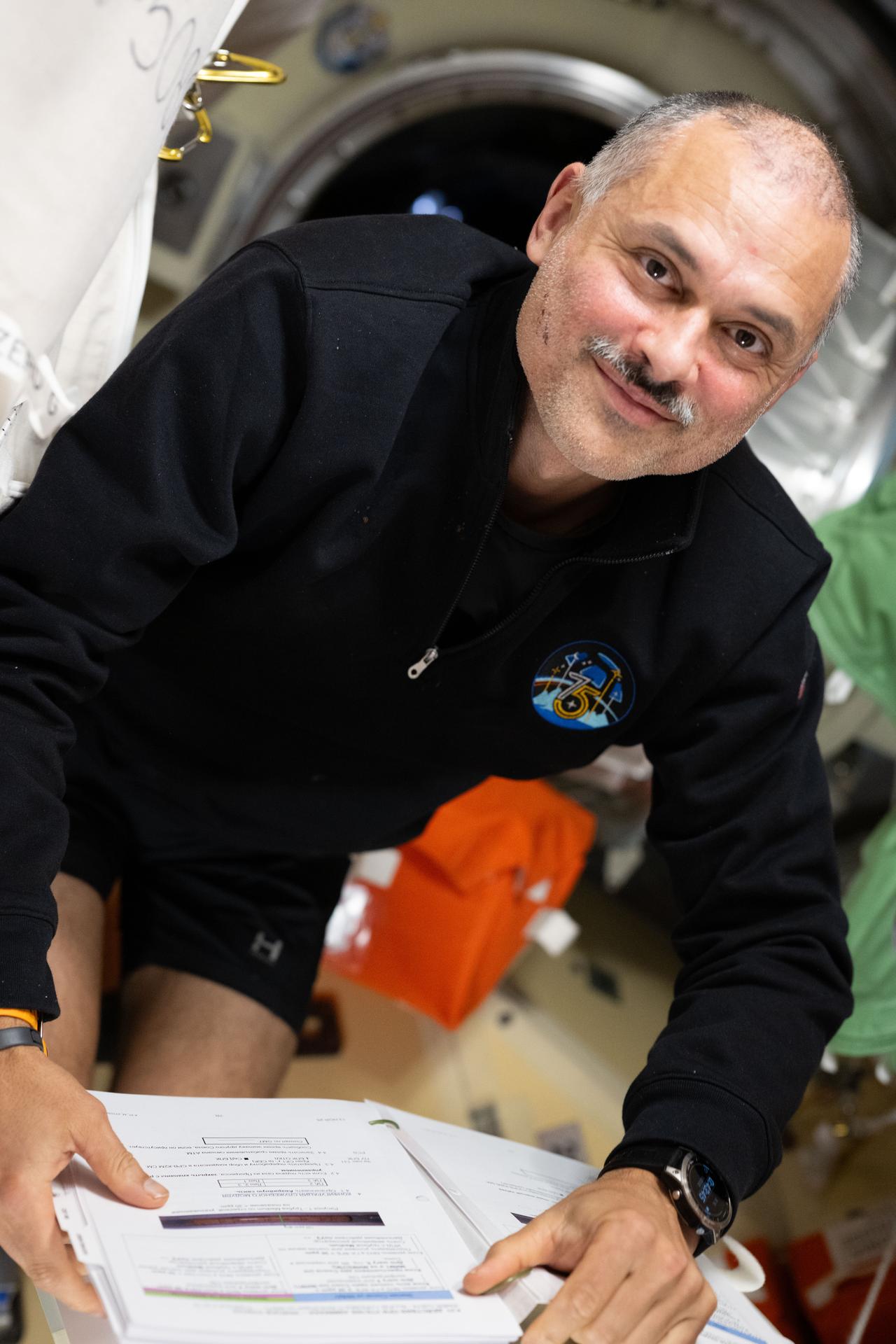
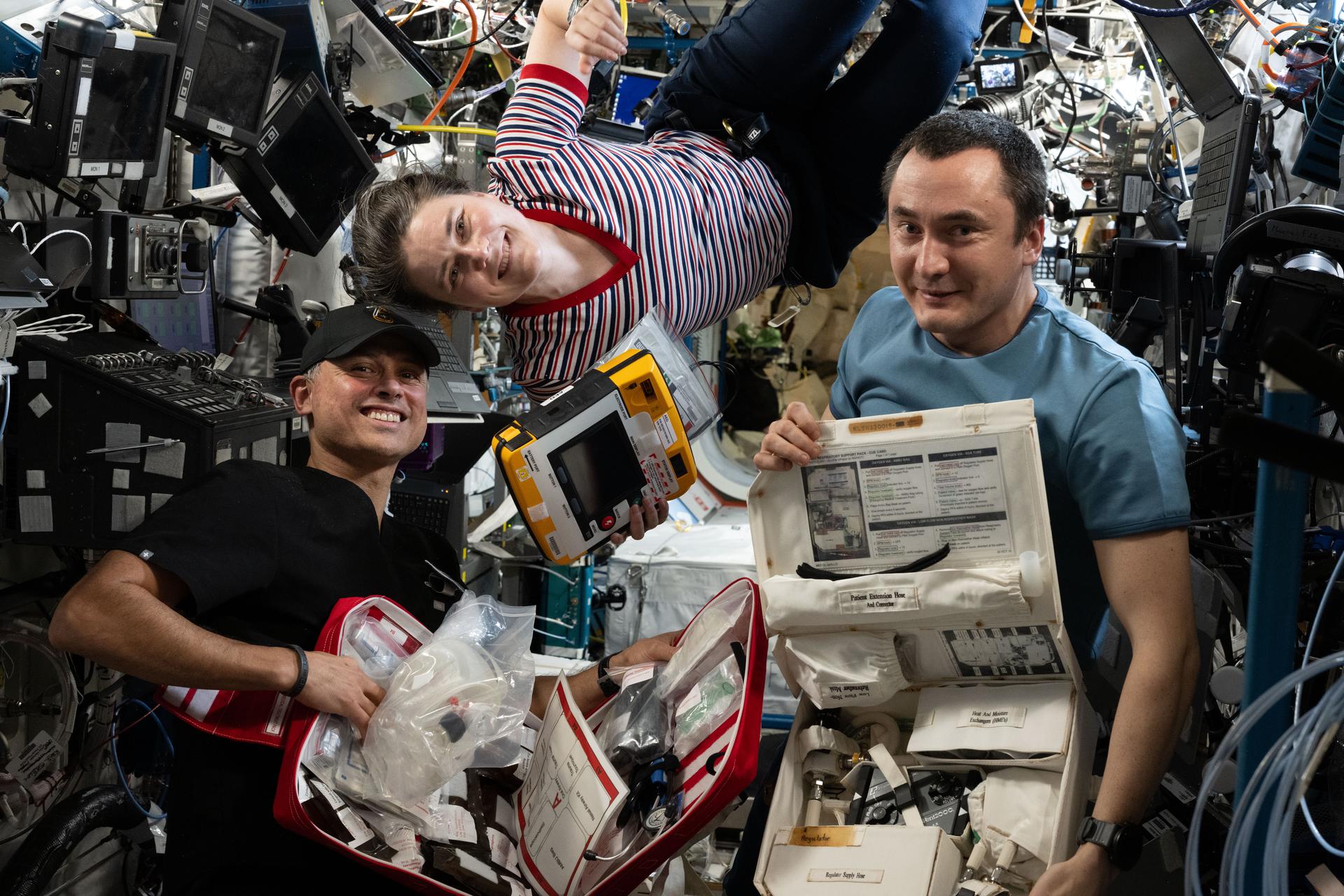
NASA astronaut Anil Menon reviews procedures for emergency scenarios while aboard the International Space Station as part of his long-duration science and research mission.
Credit: NASA

Editor’s Note: This feature was updated Sept. 22, 2026, to note the time change for the in-flight call with students. 

Students in New Hampshire will hear from NASA astronaut Anil Menon as he answers prerecorded STEM questions while aboard the International Space Station.

The Earth-to-space call will begin at 11:40 a.m. EDT Thursday, Sept. 24, and will stream live on the agency’s Learn With NASA YouTube channel.

This event is hosted by the McAuliffe-Shepard Discovery Center in Concord, New Hampshire, for students in grades K-12, and members of the community. This unique opportunity aims to deepen understanding of space exploration and enhance awareness of STEM careers.

Media interested in covering the event must RSVP no later than 5 p.m. EDT, Wednesday, Sept. 23, to Kelly Thompson at [email protected].

For more than 25 years, people have lived and worked continuously aboard the International Space Station, advancing scientific knowledge and making research breakthroughs not possible on Earth. The space station helps NASA understand and overcome the challenges of human spaceflight, expand commercial opportunities in low Earth orbit, and build on the foundation for long-duration missions to the Moon, as part of the Artemis program, and to Mars.

For more information on NASA in-flight calls, visit:

https://www.nasa.gov/stemonstation

Source: www.nasa.gov

NASA Kicks Off Nationwide Effort to Prepare Tomorrow’s Space Workforce

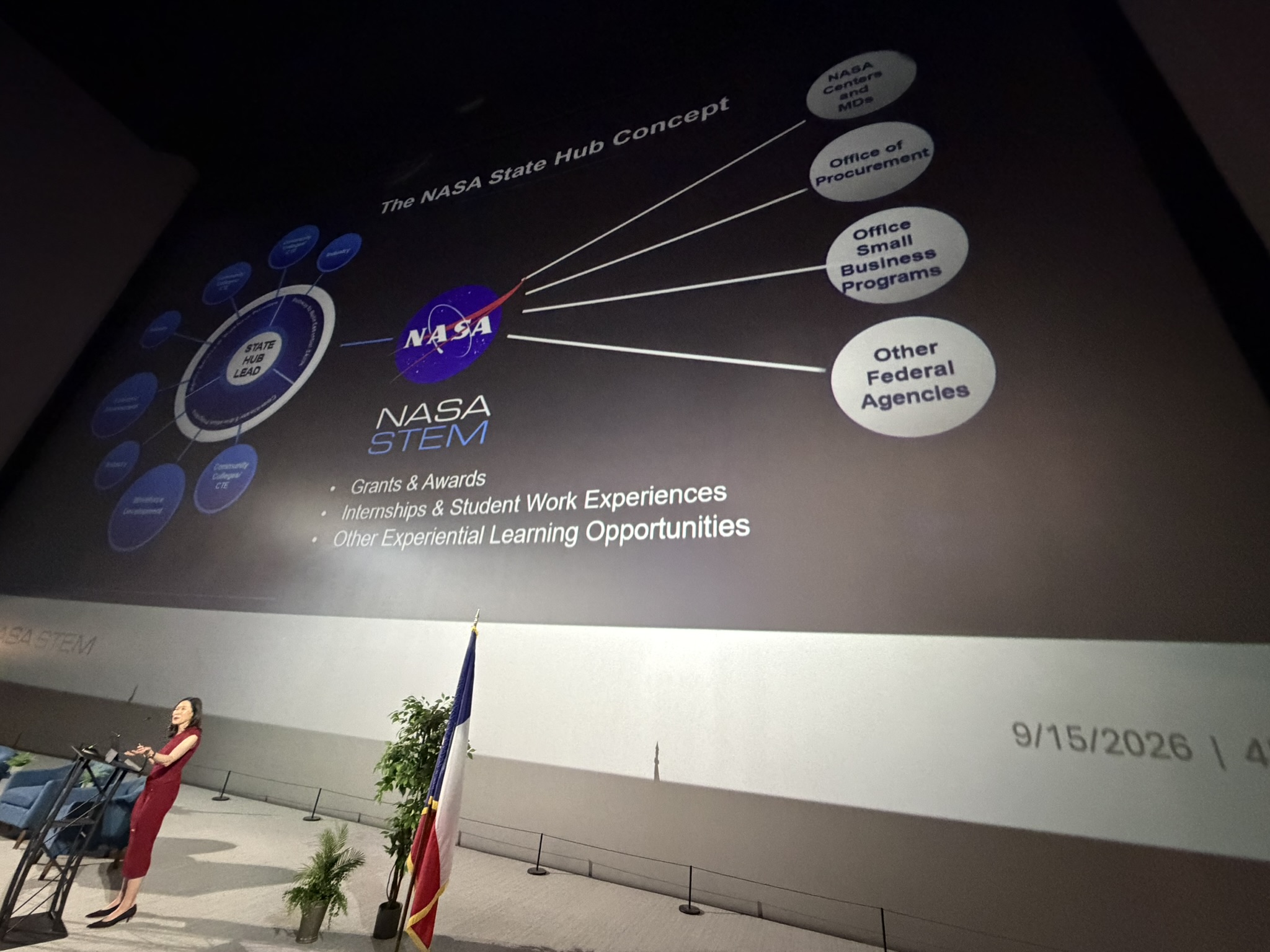
NASA kicked off its State Hubs for Skilled Technical Workforce initiative Sept. 15, 2026 with awardees at Space Center Houston. Agency leadership convened State Hub partners to align strategy and build momentum while focusing on partnerships, small business engagement, and next steps.

Elaine Ho, associate administrator for NASA’s Office of STEM Engagement in Washington, addresses NASA State Hubs project leaders and agency, state, and federal partners at Space Center Houston on Sept. 15, 2026
Credit: NASA

“The NASA State Hubs initiative is a top priority for the agency, because we know the space economy is really accelerating across the country,” said Elaine Ho, associate administrator for NASA’s Office of STEM Engagement at NASA Headquarters in Washington. “It’s energizing to watch our partners come together to put real plans into action to help students advance into well paying, rewarding technical jobs. I am excited about what’s ahead.”

NASA State Hubs project leaders and agency, state, and federal partners gathered in Houston to connect with peers, hear presentations from each State Hub, and explore workforce needs, skillsets, credentials, and hiring trends.

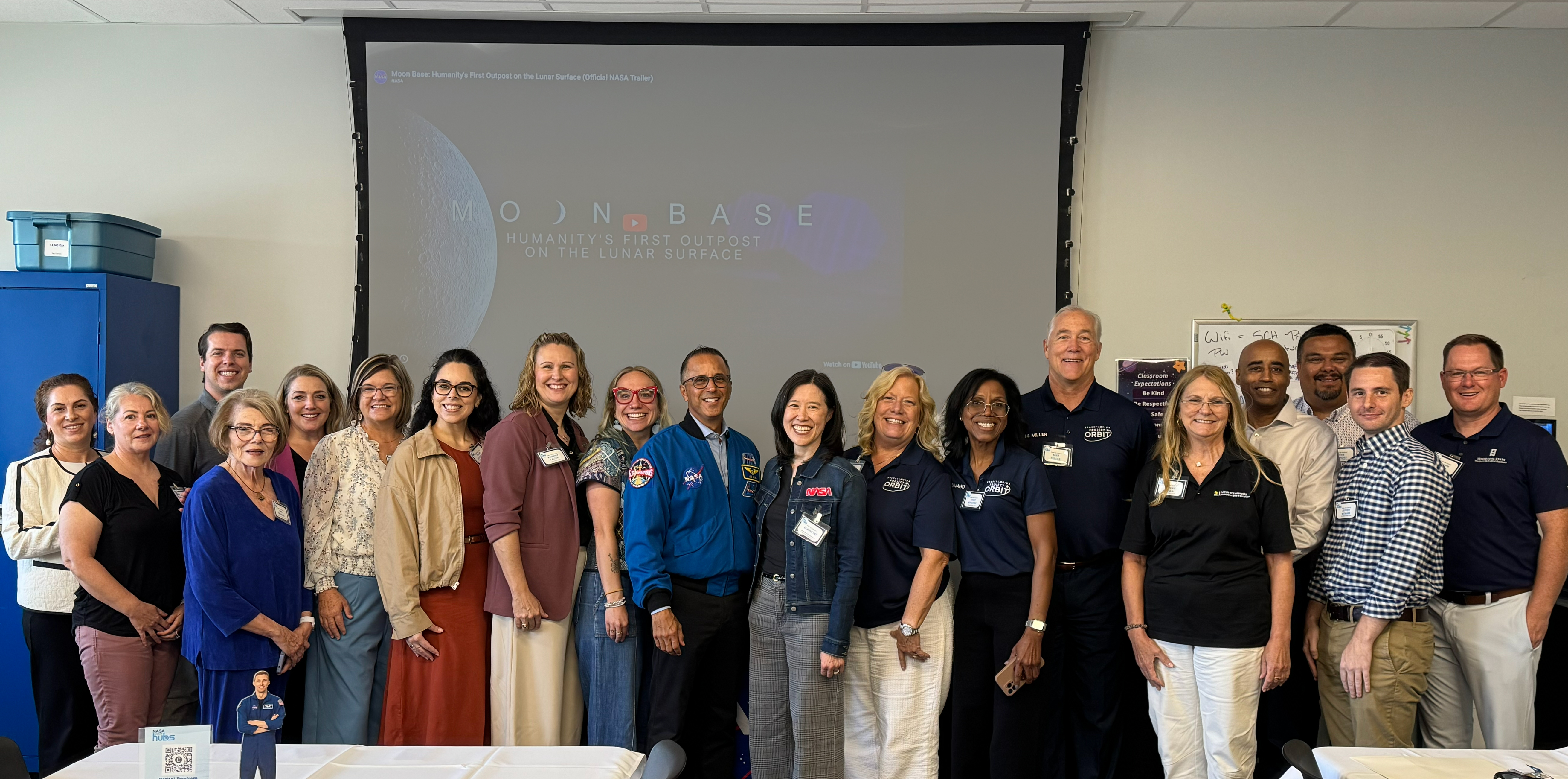
NASA State Hubs project leaders pause for a photo with Joe Acaba, center left, NASA astronaut and associate director for Mission and Strategy at Johnson Space Center in Houston, and Elaine Ho, associate administrator for NASA’s Office of STEM Engagement, center right.
Credit: NASA

In August, the agency selected seven projects representing states across the country: California, Colorado, Florida, Georgia, Minnesota, Texas, and Utah. Each Hub will offer programs tailored to its state’s unique aerospace industry and workforce priorities, ensuring students get opportunities that meet those needs.

During the meeting, NASA leadership and awardees discussed challenges impacting the STEM workforce pipeline, including limited coordination between industry, community colleges, and state economic development entities, difficulty scaling job programs, and misconceptions about manufacturing jobs.

In the coming months, NASA State Hub awardees will finalize approaches and begin delivering programming, tools, and resources that connect students across their state with the technical skills and hands-on experiences that prepare them to join the aerospace workforce.

Together, NASA and its State Hubs partners are mapping out the path to a future aerospace landscape powered by career ready workers who can build what comes next, advance NASA’s missions, and sustain America’s leadership in space.

For more information on NASA State Hubs, visit:
https://www.nasa.gov/learning-resources/nasa-state-hubs

Source: www.nasa.gov

Embracing the Equinox

3 Min Read

Embracing the Equinox

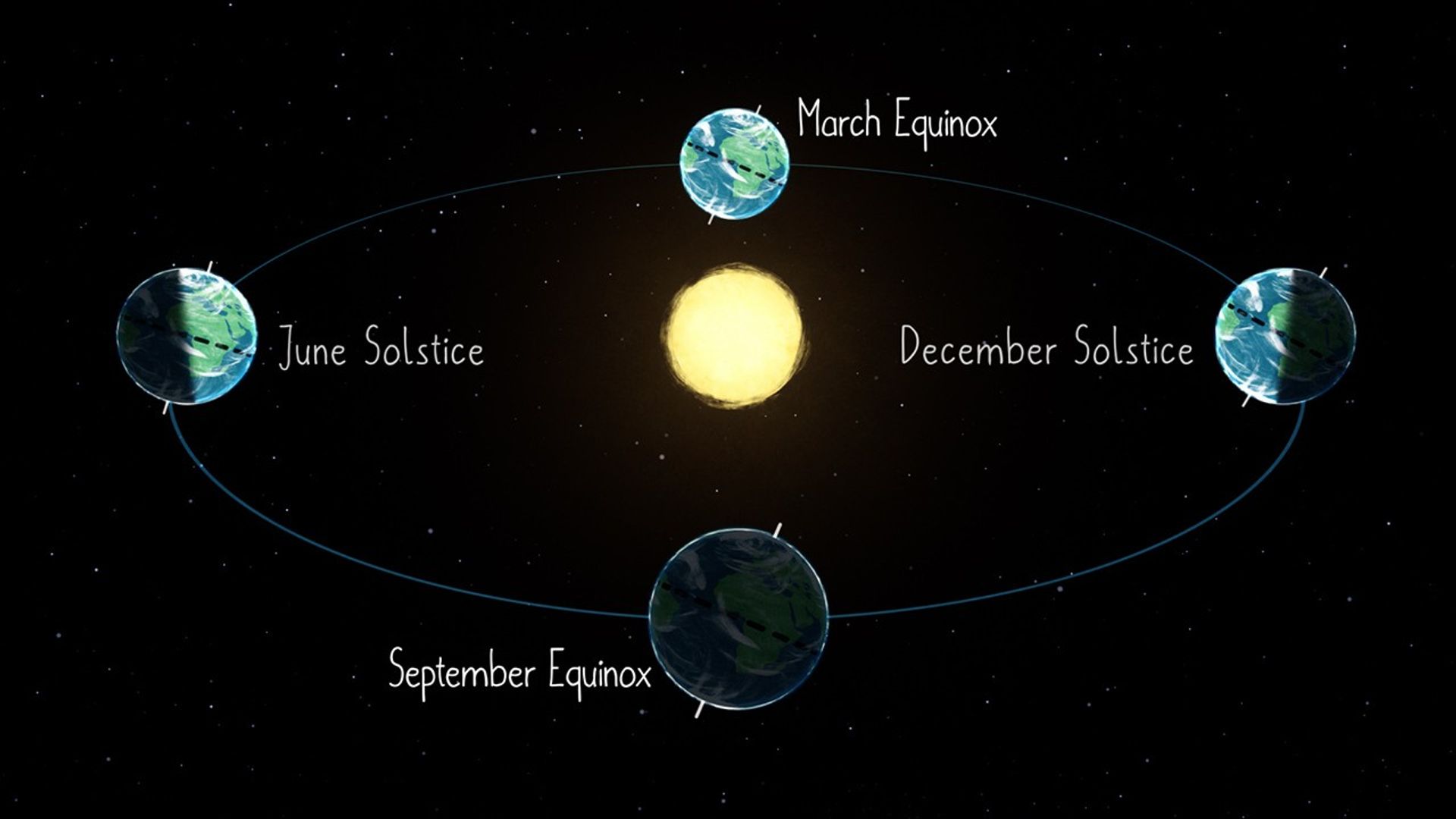
illustration of equinoxes and solstices on Earth in relation to the Sun

Illustration showing how Earth’s tilt leads to the Northern and Southern Hemispheres receiving changing amounts of sunlight over the course of the year. At the equinoxes, neither hemisphere is more tilted toward the Sun, so both hemispheres receive the same amount of sunlight.

Credits:
NASA/JPL-Caltech

Depending on your locale, equinoxes can be seen as harbingers of longer nights and gloomy weather, or promising beacons of nicer temperatures and more sunlight. Observing and predicting equinoxes is one of the earliest skills in humanity’s astronomical toolkit. Many ancient observatories around the world observed equinoxes along with the more pronounced solstices. These days, you don’t need your own observatory to know when an equinox occurs, since you’ll see it marked on your calendar twice a year! The word “equinox” originates from Latin, and translates to equal (equi-) night (-nox). But what exactly is an equinox?

An equinox occurs twice every year, in March and September. In 2026, the equinoxes will occur on March 20, at exactly 14:46 UTC (or 7:46 AM EDT), and again on September 23, at 00:05 UTC (or September 22, 2026, at 5:05 PM PDT). The equinox marks the exact moment when the center of the Sun crosses the plane of our planet’s equator. The day of an equinox, observers at the equator will see the Sun directly overhead at noon. After the March equinox, observers anywhere on Earth will see the Sun’s path in the sky continue its movement further north every day until the June solstice, after which it begins traveling south. The Sun crosses the equatorial plane again during the September equinox, and continues traveling south until the December solstice, when it heads back north once again. This movement is why some refer to the March equinox as the northward equinox and the September equinox as the southward equinox.

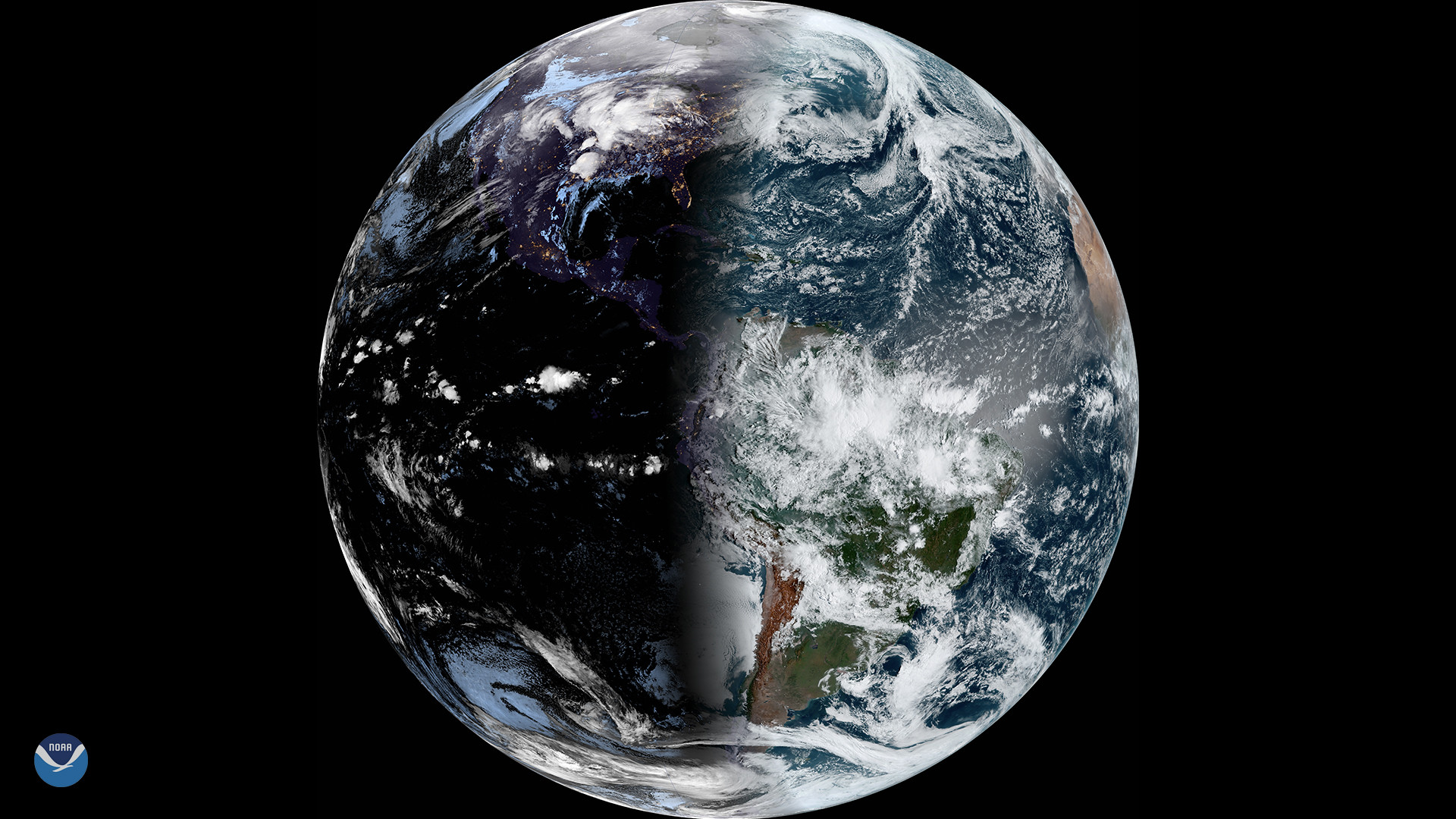
A full disk view of the earth from GOES 16, GOES East on the vernal Equinox.
NOAA/NASA

Our Sun shines equally on both the Northern and Southern Hemispheres during equinoxes, which is why they are the only times of the year when the Earth’s North and South Poles are simultaneously lit by sunlight. Notably, the length of day and night on the equinox isn’t precisely equal; the date for that split depends on your latitude, and may occur a few days earlier or later than the equinox itself. The complicating factors? Our Sun and atmosphere! The Sun itself is a sphere and not a point light source, so its edge is refracted by our atmosphere as it rises and sets, which adds several minutes of light to every day. The Sun doesn’t neatly wink on and off at sunrise and sunset like a light bulb, and so there isn’t a perfect split of day and night on the equinox – but it’s very close.

Equinoxes are associated with the changing seasons. In March, Northern Hemisphere observers welcome the longer, warmer days heralded by their vernal, or spring, equinox, but Southern Hemisphere observers note the shorter days – and longer, cooler nights – signaled by their autumnal, or fall, equinox. Come September, the reverse is true.

Originally posted by Dave Prosper: February 2022

Last Updated by Kat Troche: March 2026

Source: science.nasa.gov

NASA Welcomes Albania as Newest Artemis Accords Signatory  

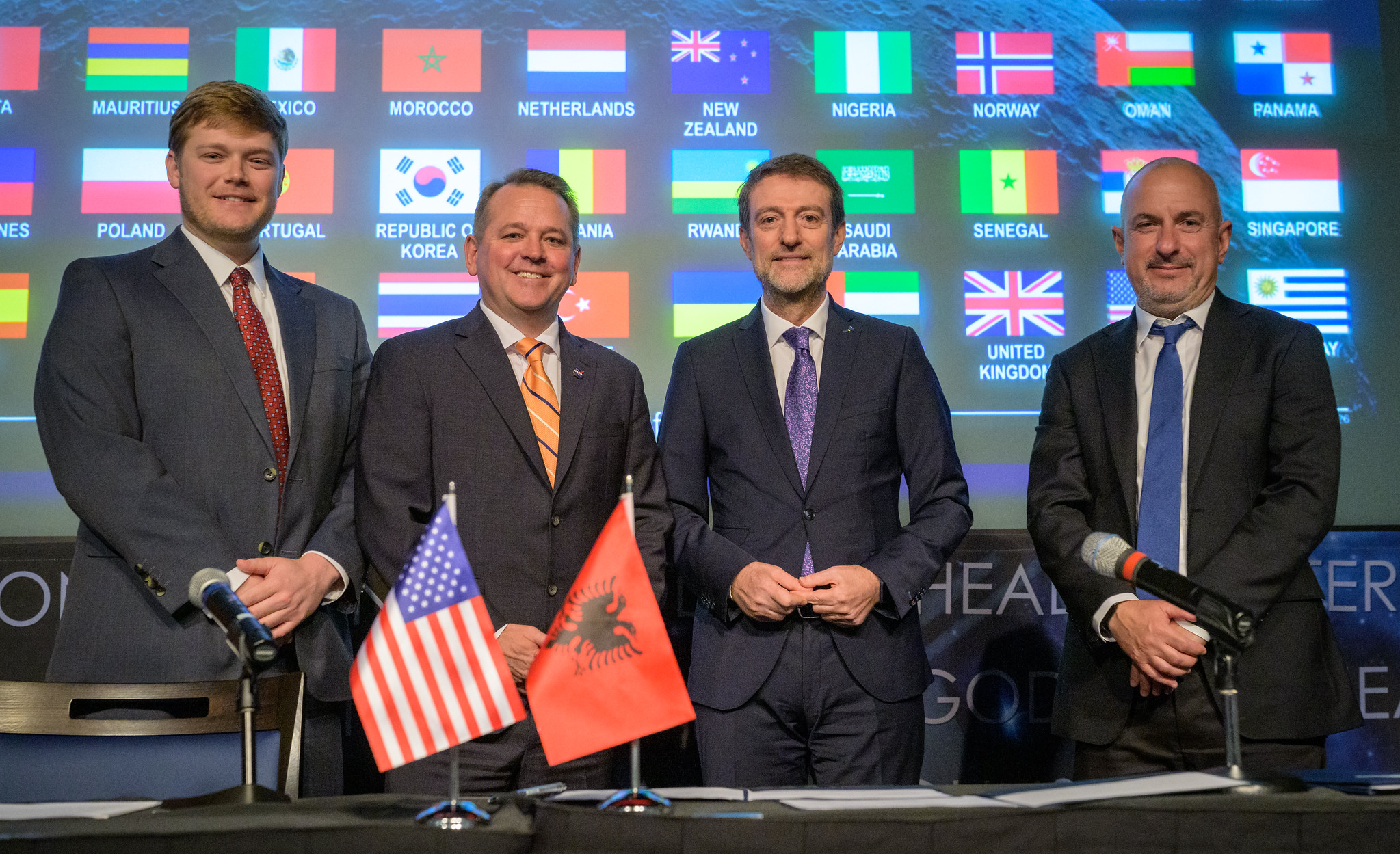
U.S. Deputy Assistant Secretary of State for Space and Environment Connor Tomlinson, left, NASA Deputy Administrator Matt Anderson, Albania’s Minister for Europe and Foreign Affairs Ferit Hoxha, and Ambassador of the Republic of Albania to the United States Ervin Bushati, right, are seen at the conclusion of an Artemis Accords signing ceremony Monday, September 21, 2026, at the Mary W. Jackson NASA Headquarters building in Washington. The Republic of Albania is the 73rd country to sign the Artemis Accords, which establish a practical set of principles to guide space exploration cooperation among nations participating in NASA’s Artemis program.
U.S. Deputy Assistant Secretary of State for Space and Environment Connor Tomlinson, left, NASA Deputy Administrator Matt Anderson, Albania’s Minister for Europe and Foreign Affairs Ferit Hoxha, and Ambassador of the Republic of Albania to the United States Ervin Bushati, right, are seen at the conclusion of an Artemis Accords signing ceremony Monday, September 21, 2026, at the Mary W. Jackson NASA Headquarters building in Washington.
NASA/Bill Ingalls

The Republic of Albania signed the Artemis Accords Monday during a ceremony hosted by NASA at the agency’s headquarters in Washington, joining the coalition of like‑minded nations committed to the responsible and transparent exploration of space.

“It is my privilege to welcome the Republic of Albania as the 73rd signatory of the Artemis Accords,” said NASA Deputy Administrator Matt Anderson. “The relationship between our nations goes back more than a century. Today, we extend that partnership into space.”

Albania’s Minister for Europe and Foreign Affairs Ferit Hoxha signed on behalf of the country. Ambassador of the Republic of Albania to the United States Ervin Bushati and the U.S. Deputy Assistant Secretary of State for Space and Environment Connor Tomlinson also participated in the event.

“It is a great honor for Albania to join the growing community of nations that have signed these important Artemis Accords,” said Hoxha in remarks during the ceremony. “By taking this step, Albania affirms its commitment to peaceful, transparent, sustainable, and cooperative exploration of space. We do so as a country deeply committed to international law, multilateral cooperation, and the belief that humanity’s greatest achievements are realized not in isolation, but through partnerships.”

Marking a significant step in Albania’s efforts to strengthen its use of space‑based data, Albania launched two dedicated Earth‑observation satellites, Albania‑1 and Albania‑2, in January 2023 aboard a SpaceX Falcon 9 rocket from NASA’s Kennedy Space Center in Florida, an example of how the United States is supporting Albania’s capabilities in space.

Albania also has played an active role in NASA’s Space Apps Challenge, hosting local events that connected students, technologists, and innovators with NASA’s openly available Earth and space science data. NASA Space Apps is the world’s largest annual global hackathon, mobilizing participants in more than 150 countries to develop creative solutions to real-world challenges using open data from NASA and partner space agencies to advance exploration for the benefit of all.

In 2020, NASA and the State Department joined with seven other founding nations to establish the Artemis Accords, responding to the growing interest in lunar activities by both governments and private companies. They introduced the first set of practical principles aimed at enhancing the safety and coordination between nations as they explore the Moon, Mars, and beyond, committing nations to: 

  • Explore peaceably and transparently 
  • Render aid to those in need 
  • Enable access to scientific data 
  • Ensure activities do not interfere with those of others 
  • Preserve historically significant sites and artifacts by developing best practices 

By signing the Artemis Accords, nations open the door to opportunities for future lunar exploration with NASA, advancing humanity’s return to the Moon, and shaping the Golden Age of space exploration and innovation. 

Learn more about the Artemis Accords at:  

https://www.nasa.gov/artemis-accords

Source: www.nasa.gov

Perseverance’s View of ‘Turquoise Bay’

1 Min Read

Perseverance’s View of ‘Turquoise Bay’

A panoramic view of a barren, reddish-orange Martian landscape stretching toward distant hills, partially obscured by the jagged black silhouettes of a rover in the foreground.

PIA26815

Credits:
NASA/JPL-Caltech/MSSS

Description

NASA’s Perseverance Mars rover used its Mastcam-Z camera to capture this 360-degree panorama of “Turquoise Bay,” a geologic area of interest in the “Margin Unit.” The 818 images used to create the natural-color panorama were captured between Oct. 5 and Oct. 16, 2023, the 933rd to 944th Martian days, or sols, of the mission.

Figure A is an enhanced-color version, in which color bands were processed to improve visual contrast and accentuate color differences.

NASA’s Jet Propulsion Laboratory, which is managed for the agency by Caltech in Pasadena, California, built and manages operations of the Perseverance rover. Arizona State University leads the operations of the Mastcam-Z instrument, working in collaboration with Malin Space Science Systems in San Diego, on the design, fabrication, testing, and operation of the cameras, and in collaboration with the Niels Bohr Institute of the University of Copenhagen on the design, fabrication, and testing of the calibration targets.

For more about Perseverance: science.nasa.gov/mission/mars-2020-perseverance/

Source: science.nasa.gov

Arctic Melt Season Length Levels Off


2000-2009
2010-2023

Two Arctic maps compare changes in melt season length by decade. Red indicates areas where the season grew longer; blue, where it grew shorter. The 2000–2009 map is mostly dark red. The 2010–2023 map shows a mix of lighter red and blue, indicating smaller changes.
NASA Earth Observatory/Michala Garrison


2000-2009

2010-2023


Since the start of the satellite record, the Arctic sea ice melt season has lengthened in most decades, particularly in the 2000s (left). Since 2010 (right), the melt season appears to have stabilized. NASA Earth Observatory images by Michala Garrison based on data from Boisvert, L., et al.

For decades, Arctic sea ice has been melting earlier in spring and freezing later in fall, extending the melt season and contributing to widespread ice loss. A new NASA-led study has found that while the Arctic melt season has lengthened dramatically since satellite records began, that trend unexpectedly stabilized around 2010.

The Arctic sea ice melt season is now about 40 days longer than it was in 1979, according to the study. Most of the increase occurred before 2010. Since then, the average melt season length has remained relatively unchanged, despite large year-to-year fluctuations.

Researchers analyzed satellite observations between 1979 and 2023 to track when sea ice begins to melt each spring and refreezes each autumn. They found that the change was driven primarily by sea ice freezing later in the year rather than melting earlier in the spring.

“Previously, there was more of this multiyear ice that didn’t melt away each summer,” said Linette Boisvert, a co-author on the study and ice scientist at NASA’s Goddard Space Flight Center. “Now that the ice is thinner and there’s less of it, there’s a lot more variability.” On average, though, the decline in sea ice thickness and extent that occurred during the 2000s appears to have stopped for the time being.

To understand why, the team examined changes in the Arctic’s energy balance—the net difference between incoming heat from the Sun, atmosphere, and ocean and the outgoing infrared radiation emitted back to space.

During the period of rapid ice loss in the 2000s, reduced ice cover exposed darker ocean water, which absorbed more sunlight. The additional solar energy delayed freezing and helped extend the melt season. In the left map above, the reddest areas mark where the melt season grew fastest that decade, by up to 5 days per year. Much of the Arctic ice today is younger and thinner than the multiyear ice that was once more widespread in the Arctic Ocean, leaving it more vulnerable to variations in cloud cover, storms, and winds.

Since 2010, changing cloud patterns have reduced the amount of sunlight reaching parts of the Arctic Ocean. The result has been a melt season that fluctuates from one year to the next but remains relatively stable over longer periods. The right map above reflects this shift, with the lighter blues and reds showing the more modest rates of change during that decade.  

These findings don’t suggest that shifts in Earth’s climate have stopped affecting the Arctic. The region continues to warm nearly four times faster than the global average, and the remaining sea ice is substantially thinner than it was several decades ago. Instead, the study suggests that the Arctic may have entered a new phase, in which annual weather patterns exert a stronger influence on melt season than they once did.

“Melt season length is much more dependent on atmospheric effects,” Boisvert said. “They seem to be playing a bigger role because the ice is generally thinner and more vulnerable to begin with.”

The researchers caution that the apparent stabilization may prove temporary. Thick Arctic ice still exists throughout the year to the north of Greenland and the Canadian Arctic Archipelago. Continued thinning of ice in those regions could trigger another period of rapid sea ice loss, with the potential to further extend the melt season.

For now, the study highlights the importance of continued satellite observations of Arctic sea ice and the energy balance that controls its growth and melting. Whether the recent stabilization represents a lasting change in the melt season or a pause before another period of rapid change remains an open question.

NASA Earth Observatory images by Michala Garrison, using data from Boisvert, L., et al. (2026). Story by James Riordon/NASA’s Earth Science News Team.

References & Resources

You may also be interested in:

Stay up-to-date with the latest content from NASA as we explore the universe and discover more about our home planet.

A Changing World for Emperor Penguins

7 min read

Experts are analyzing decades of images from Landsat satellites for clues about how the iconic birds have responded to sea…

Article

A Bare Summer for Barnes Ice Cap

4 min read

The expanse of glacial ice on Canada’s Baffin Island lost its snow cover quickly and early in summer 2026, revealing…

Article

Pink Penguin Guano Provides Diet Clues

3 min read

The color of Adélie penguin droppings reveals what the birds are eating, offering scientists a way to track how sea…

Article

Source: science.nasa.gov
APOD: 2026 September 21 – Cocoon Nebula Wide Field

APOD

Astronomy Picture of the Day

Discover the cosmos! Each day a different image or photograph of our fascinating universe is featured, along with a brief explanation written by a professional astronomer.

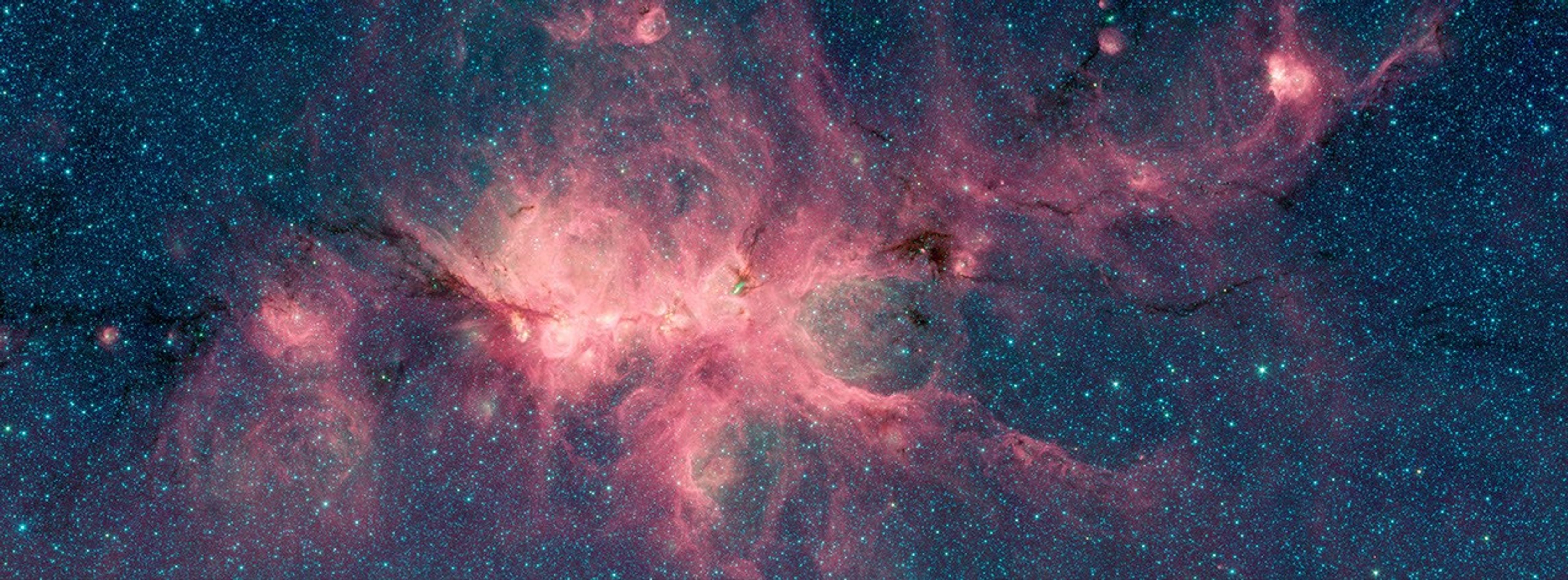
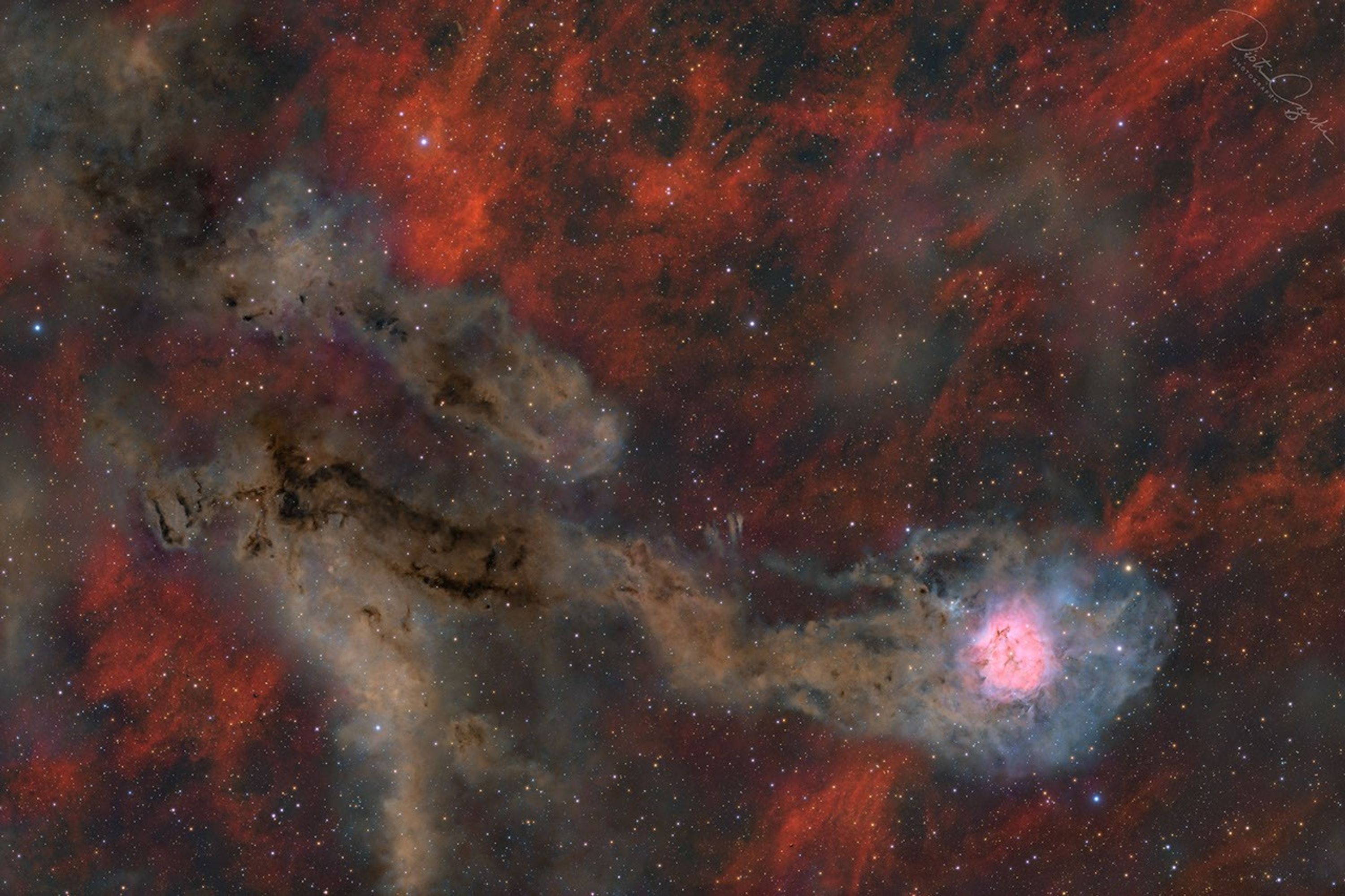
A starfield is shown against a patchy red-glowing background. Two irregular brown trails occur, the lower of which culminates in a bright pink and white region.

Cocoon Nebula Wide Field

Explanation: When does a nebula look like a comet? In this crowded starfield covering over two degrees within the high-flying constellation of the Swan (Cygnus), the eye is drawn to the Cocoon Nebula. A compact star forming region, the cosmic Cocoon punctuates a nebula bright in emission and reflection on the lower right, with a long trail of interstellar dust clouds to the left, making the entire complex appear a bit like a comet. Cataloged as IC 5146, the central bright head of the nebula spans about 10 light years, while the dark dusty tail spans nearly 100 light years. Both are located about 2,500 light years away. A bright star near the colorful nebula’s center likely supplies power and helps clear out a cavity. The long dusty filaments of the tail, although dark in this visible light image, hide stars in the process of formation. The featured image was captured in July from Death Valley, California, USA.

APOD’s main NASA site is moving: From apod.nasa.gov to science.nasa.gov/apod
Tomorrow’s picture: triple eclipse

Date: September 21, 2026
Credit & Copyright: Piotr Czerski
Authors & editors: Robert Nemiroff, Jerry Bonnell, Cecilia Chirenti, Keighley Rockcliffe
A service of: ASD at NASA / GSFC,
NASA Science Activation & Michigan Tech. U.

Source: science.nasa.gov

Johnson Space Center Sparks Curiosity at Houston’s 33rd Annual Japan Festival  

2 Min Read

Johnson Space Center Sparks Curiosity at Houston’s 33rd Annual Japan Festival  

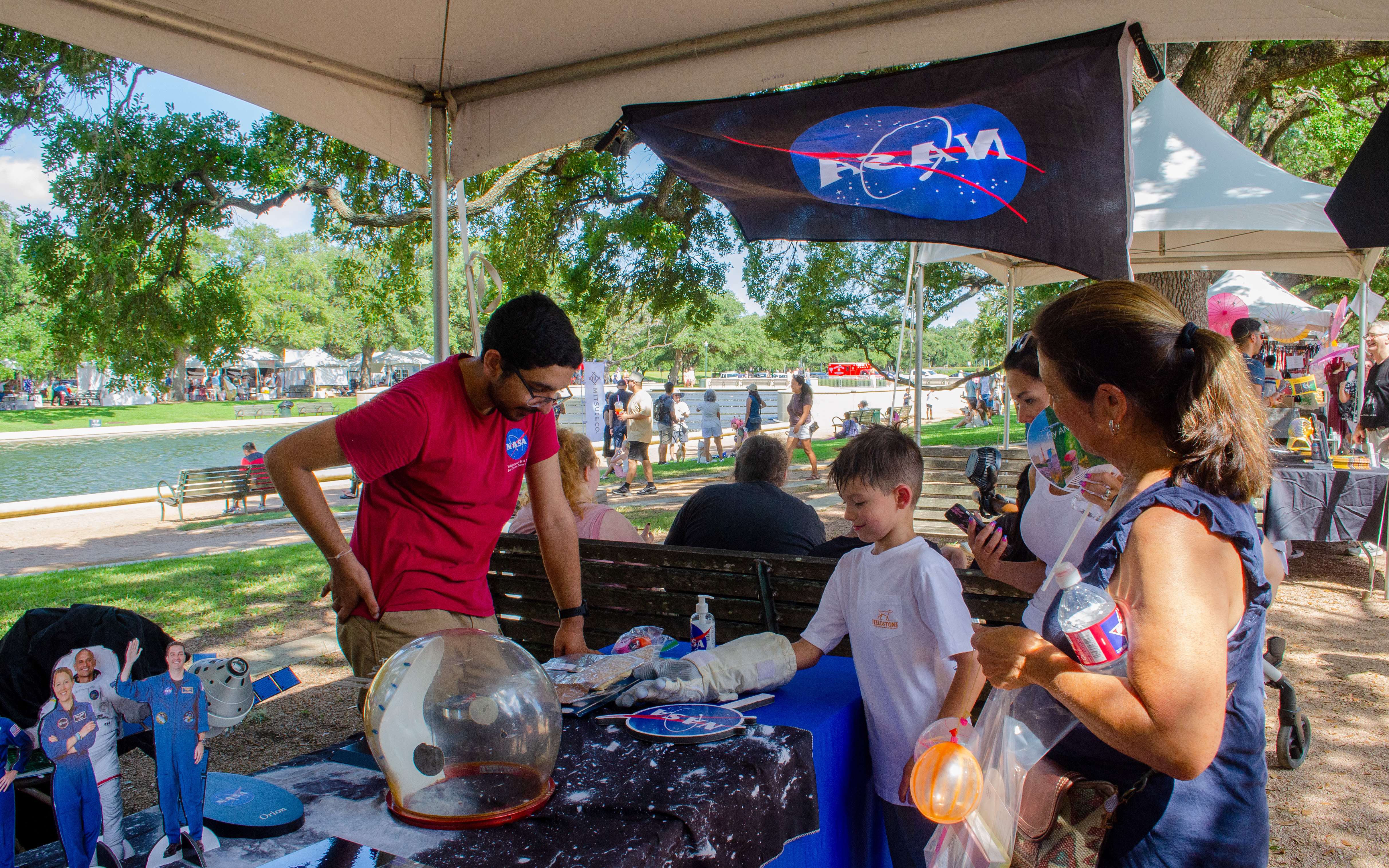
On Sept. 12-13, NASA’s Johnson Space Center employees brought the excitement and wonder of space exploration to Houston’s Japan Festival at Hermann Park. 

Attendees at the Japan Festival in Houston’s Hermann Park try on real astronaut gloves and a helmet while learning about NASA missions on Sept. 12, 2026.
NASA/Hailey Quist

For more than 30 years, the festival has immersed guests in traditional Japanese culture through food, dance, martial arts, music, and more, Johnson has supported the festival as an exhibitor for the past four years.

Johnson’s booth showcased the upcoming Artemis III mission and its crew, as well as NASA’s plans for the Moon Base. Display included models of NASA’s Orion spacecraft and the International Space Station, along with interactive exhibits featuring space food and a real astronaut glove and helmet for attendees to try on.

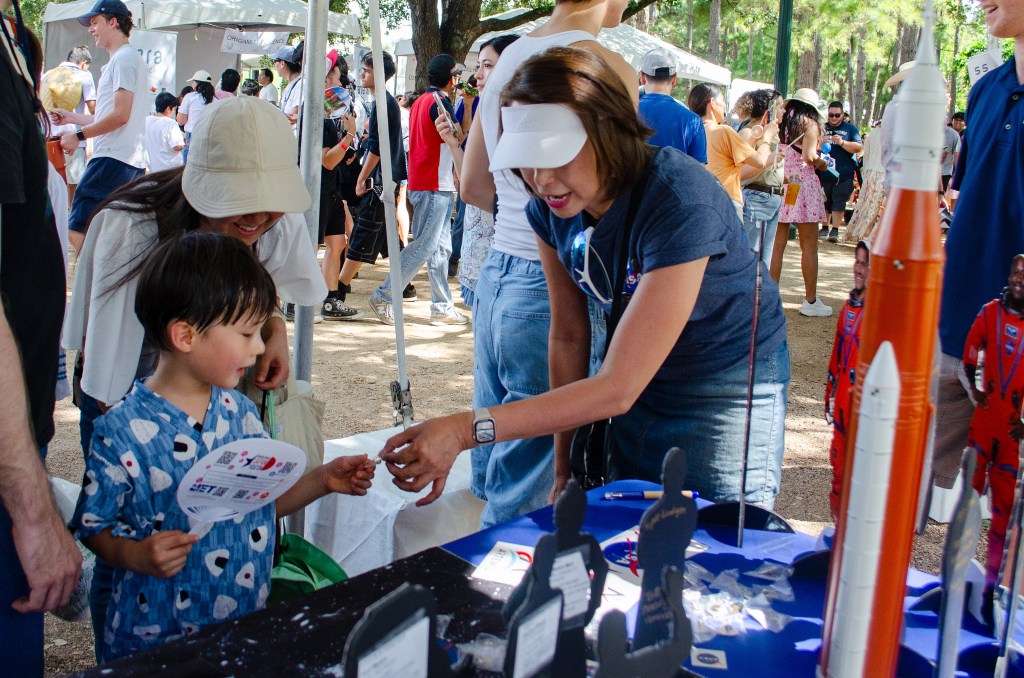
NASA’s Johnson Space Center volunteers share information about NASA missions with festival attendees.
NASA/Hailey Quist

Johnson employees interacted with over 3,000 festivalgoers, informing them about the agency’s current initiatives, handing out NASA stickers and pins, and inspiring the next generation of space explorers. According to Johnson employees, the highlight of the weekend was seeing the joy and excitement on the faces of children and adults as they explored the exhibits.

“It was amazing to see students as early as high school so passionate about NASA and asking questions on how to prepare for a NASA career,” said Brendan King, software engineer for Johnson’s Flight Dynamics Division.

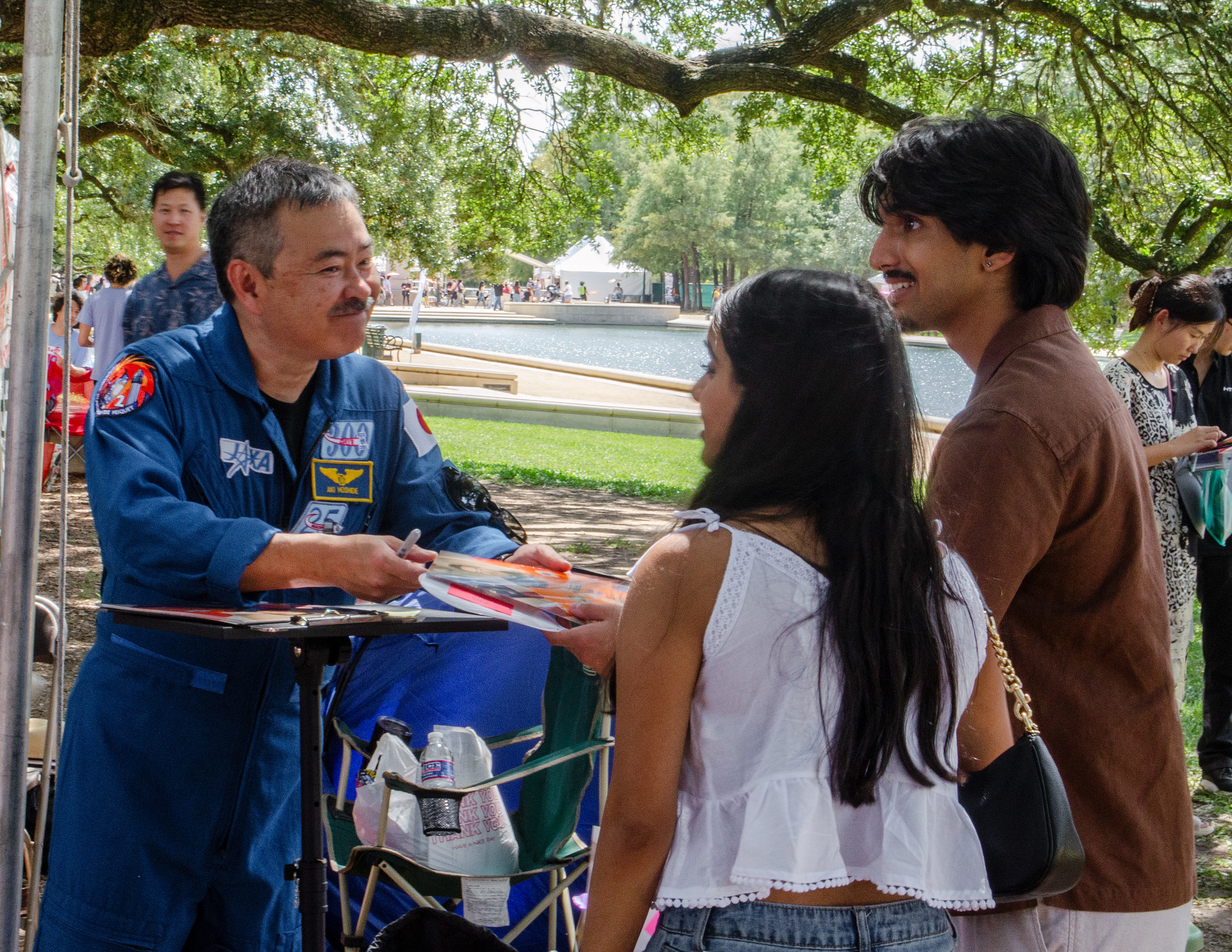
Next to Johnson’s booth, JAXA (Japanese Aerospace Exploration Agency), displayed a model of the HTV-X1 cargo spacecraft, space food, and images of JAXA’s pressurized rover, which could support future crewed and uncrewed exploration on the Moon. JAXA astronaut Akihiko Hoshide also signed autographs and posed for pictures with festival attendees.

JAXA (Japan Aerospace Exploration Agency) astronaut Akihiko Hoshide signs autographs and poses for pictures with festivalgoers.
NASA/Hailey Quist

The proximity of the booths was no mistake, reflecting the long-standing partnership between NASA and JAXA. From the addition of the Kibo laboratory aboard the space station to Japan’s signing of the Artemis Accords and development of lunar surface hardware. NASA and JAXA’s commitment to innovation and international collaboration continues to advance exploration.

As the hub of human spaceflight, Johnson engages with the public through events like Japan Festival. These events give the Johnson community opportunities to share NASA’s history, ongoing work, and future missions. They also remind Houstonians that Giant Leaps Start Here, right in the heart of Houston.

About the Author

Hailey Quist

NASA OSTEM Intern

Details

Last Updated

Sep 21, 2026

Source: www.nasa.gov