Widely Attended Gatherings (WAGs) Determinations

2026

NAHF Enshrinement Ceremony 9.24.26.pdf

An Evening with the Stars EWTS 9.16.26.pdf

Maryland Space Business Roundtable 9.9.26

Virginia Aerospace Business Association (VASBA) Gala 9.24.26.pdf

Roman Space Telescope Event 8.28.26.pdf

The Planetary Society_Celebrating Viking 7.20.26.pdf

Farnborough Airshow Events 7.18-19.26

University of Maryland Acres 7.14.26.pdf

Smithsonian National Air and Space Museum_Blue Origin 7.14.26.pdf

Space Business Roundtable_MSBR 7.22.2026.pdf

USA Rockets Red Glare Reception 6-25-26

Northrop Grumman Event 6.17.26.pdf

FUSE 6.24.26.pdf

Greater Cleveland Partnership 6.10.26.pdf

SSF UC Symposium 6.9.26.pdf

NAA Firefly Aerospace and AE Industrial Partners 6.11.26

AIAA Event 6.3.26

Space Walk III 5.21.26

Maryland Space Business Roundtable (MSBR) 5.20.26.pdf

Congressional Reception for Artemis II Crew 5.12.26.pdf

2026 Skyward Careers Award Luncheon 05.01.26.pdf

US Astronaut Hall of Fama Gala 5.16.26.pdf

RNASA Awards Dinner and Stellar Awards Luncheon 4.26.26.pdf

Space Policy Institute 4.29.26.pdf

Planetary Society APLU and AAU 4.21.26.pdf

41st Space Symposium-suppl 04.13-16.26

Space Symposium 2026 Events 4.13-16.26

2026 NSCFL Space Heroes and Legends Award Banquet 4.18.26

Newport News State of the City Event 4.13.26

Space Policy Institute Event 4.6.26

SpaceX Networking Reception 3.24.26

Maryland Space Business Roundtable (MSBR) 3.26.26

SIA_27th Annual Leadership Dinner 3.23.26

2026 Artemis Suppliers Conference 3.23-25.26

Ansys Government Initiatives Event_AGI 3.19.26

Homeland Security Week 3.17-18.26

Amazon Smithsonian and Space for Humanity Event 3.16.26

HLSR_NASA Night at the Rodeo 3.7.26

WIF Leadership Luncheon 3.4.26

2026 National Space Club Florida Committee Monthly Luncheon

Space Policy Institute Event 2.17.26

Maryland Space Business Roundtable_MSBR 2.11.26

2026 TSC Artemis II Pre-launch Reception 2.5.26

2026 VABA AAAAM Legislative Reception 2.4.26

Chamber of Commerce Summit 2.2.26

Cheniere Energy at the National Portrait Gallery 1.28.26

Leaders for a Better Louisiana at Adams and Reese 1.28.26

California Manufacturers and Technology Association Reception 1.23.26

Goddard Memorial Dinner 3.13.26

ISS 25th Anniversary 1.19.26

2026 Amentum Artemis II Rollout Reception 1.14.26

Maryland Space Business Roundtable 1.14.26

2025

Commercial Space Federation 12.9.25

Ansys Government Initiatives (AGI) 12.16.25

Maryland Space Business Roundtable (MSBR) 12.10.25

Women in Aerospace 12.11.25

Umbra Lab Inc 12.3.25

Space Policy Institute 10.21.2025

MSBR Space Business Roundtable 10.15.2025

76th International Astronautical Congress_IAC 9.29.25

2025 Von Braun Memorial Dinner 10.29.25

Space Foundation Reception 9.16.25

Evening with the Stars 9.10.25

MSBR Rooftop Reception 9.8.25

AIAA Dinner 8.18.25

STScI Event 7.29.25

MSBR Lunch 7.16.25

Rocket Lab Event 7.16.25

MSBR Lunch Reception 6.18.25

2025 Paris Airshow 6.13-19.25

Greater Houston Partnership Reception 6.12.25

Axiom Space X-4 Event

Space Foundation and German Embassy Reception 6.5.25

Mission 2 Moon Landing 6.5.25

H2M Conference and Events 5.28-29.25

Planetary Society 5.19.25

American Rocketry Challenge Reception 5.17.25

Rockets on the Hill Reception 5.16.25

Dayton Development Coalition Event 5.13.25

PA State Day Reception 5.6.25

MSBR STEM Gala 5.2.25

2025 ASF Hall of Fame Gala

AIAA Awards Gala 4.30.25

RNASA Awards Dinner 4.25.25

2025 Space Heroes and Legends Gala

Thunderbird School and Global Management Reception

40th Space Symposium Main Events

GovExec Awards Dinner 4.3.25

AIA Reception.4.2.25

SPI/GWU Dinner.4.2.25

Astrolab and Axiom.3.27.25

SPI/GWU/USRA Symposium.3.27.25

IDGA 18th Annual Event

Artemis VIP Reception.3.24.25

Goddard Memorial Dinner.3.21.25

MSBR Lunch.3.19.25

2025 Satellite Exhibition Event.3.10.25 to 3.13.25

SIA Dinner.3.10.25

67th Laureate Awards Dinner.3.6.25

SPI GWU Dinner.3.5.25

Bae Systems SPHEREx Launch.2.27.25

2025 Artemis Suppliers Conference

Blue Ghost Viewing Event

ServiceNow Forum.2.12.25

MSBR Luncheon.2.19.25

2025 Monthly NSCFL Luncheon

MSBR Lunch.1.22.25

Creole-Queen NOLA Reception.1.13.25

2025 New Glenn Mission 1 Launch Event

2025 Firefly Blue Origin Launch Reception

2024

MeriTalk Reception.12.19.24

Aero Club Award Dinner.12.13.24

Rocket Lab Event.12.13.24

Space Foundation Event.12.13.24

Umbra Lab Inc.12.5.24

Commercial Space Federation Joint Event.12.9.24

AGI Holiday Reception.12.3.24

The Arthur C. Clarke Foundation Event.11.21.24

Planet Labs PBC Reception.11.20.24

Rocket Lab Event.11.19.24

SPI GWU Dinner.11.5.24

Blue Origin and KBR Dinner.10.30.24

JASWDC Gala.10.30.24

SPI GWU Dinner.10.30.24

36th Annual Dr. Wernher von Braun Memorial Dinner

2024 Keystone Space Conference

2024 IAC Event

WIA Reception and Awards Dinner.10.10.24

2024 JPL Europa Clipper Launch Reception.10.8.24

SPI GWU Dinner.9.18.24

2024 VASBA HR AUVSI Gala

Blue Origin Reception.8.27.24

AIA & Amazon Reception.8.26.24

Exolaunch Reception.8.7.24

Farnborough Air Show.7.20-21.24

Artemis II SLS Roll Out Reception.7.15.24

Astroscale Reception Tokyo.7.12.24

Brooke Owens Fellowship Dinner.7.11.24

SpaceX GOES-U Launch

MSBR lunch.6.18.24

NAA Collier Dinner.6.13.24

Greater Cleveland Partnership.6.13-14.24

VAST Space LLC.6.12.24

Coalition for Deep Space Exploration Return to the Moon.6.5.24

The 2024 Infinite Exhibit Grand Opening

AIA and German Embassy Reception.6.4.24

AIA and British Embassy Reception.5.22.24

Space Foundation Event.5.16.24

Foundation Fratelli Tutti Dinners.5.10-11.24

MSBR STEM Gala.5.10.24

H2M Conference and Event.5.7-8.24

SPI/GW Dinner.5.1.24

Astrolab and Axiom.4.30.24

2024 Monthly NSCFL Luncheon

MEI 77th Annual Gala.4.17.24

Crowell & Moring Reception.4.16.24

2024 ASF Hall of Fame Gala

2024 Space Heroes and Legends Awards Dinner

SpaceX Symposium Reception.4.10.24

39th Space Symposium Supplemental

39th Space Symposium Main Events

SPI GWU Dinner.4.5.24

Goddard Memorial Dinner.3.22.24

SPI GW Dinner.3.20.24

AIA and Amazon Reception.3.19.24

MSBR Lunch.3.19.24

AIAA Awards Gala.3.15.24

NASM Event.3.6.24

Planetary Society.3.5.24

Embassy of Australia and Space Foundation.2.29.24

SPI/GWO Dinner.2.27.24

2024 Artemis Suppliers Conference

BDB Engineering Award Event

2024 Aerospace Days Legislative Reception

2024 NG-20 CRS Launch

IDGA 17th Annual Event.1.23 – 24.24

MSBR Lunch 1.16.24

Latino Biden-Harris Appointees Reception.1.11.24

STA Reception.1.11.24

2024 Axiom Space AX-3 Launch Reception

2023

2023 Astrobotic PM1 PreLaunch Reception

AERO Club Awards Dinner.12.15.23

WIA Dinner.12.13.23

MSBR Lunch.12.12.23

SCL and GBM Foundation Reception.12.11.23

LASP and Ball Aerospace Reception.12.11.23

Bayou Classic Brunch

L Oreal USA for Women Event.11.16.23

AAIA Reception.11.15.23

KBR Welcome Reception.11.14.23

SPI GWU Dinner 11.15.23

Museum of Natural History Board Events 11.2.23

USF Reception.10.24.23

Blue Origin KBR Reception

2023 Von Braun Memorial Dinner

Planet Labs PBC Reception.10.26.23

ELI Reception Dinner.10.24.23

OSIRIS REX RECEPTION.10.17.23

WIA Reception and Award Dinner.10.12.23

National Space Club Banquet 2023

Space Foundation and Airbus.10.3.23

IAC Event

NAHF Dinner Ceremony.9.22.23

2023 VASBA HR AUVSI Gala and Symposium

2023 Psyche Mission Team

SPI GWU Dinner 9.13.23

AIA Congress Space Reception.9.7.23

 MSBR Lunch 8.16.23

 WAG NG CRS 7-24-23

 2023 ASF Innovators Gala

 Space Foundation Reception 7.19.23

 Chamber of Commerce Reception.7.13.23

 ECI Fellows Meeting.7.12 to 7.14.23

 Embassy of Italy and Virgin Galactic.7.12.23

 JWST Reception 7.13.23

 Brook Owens Fellowship Dinner 7.13.23

 Comteck and Airbus Space Defense 07.11.23.

 Calgary Stampede.7.7.23

 CLD Reception.6.20.23

 CFA SAO Reception.6.15.23

 Paris Air Show.6.17-20.23

 UCAR Reception 6.7.23

 Space Forum 2023

 Rocket Lab TROPICS.5.18.23

 2023 Axiom Space AX-2 Launch Event WAG

 SW SPI Dinner 5.9.23

 H2M WAG 2023

 MSBR STEM Gala 5.5.23

 AIAA Awards Gala Event 5.18.23

 38th Space Symposium 4.16 to 4.20.23

 Planet Labs PGC Reception.4.13.23

 AL-23-009 RNASA

 2023 TEMPO Pre-Launch Reception

 MSBR Lunch 4.4.23

 Coalition for Deep Space Exploration SLS Orion EGS Gateway Suppliers 3.26.23

 Orion SLS Conference 3.27 to 3.28.23

 EWDC Event.3.23.23

 2023 Agency WAG Debus Award Banquet

 VHMC And Boeing Reception 3.18.23

 Ball Aerospace Kinship Reception 3.15.23

 Airbus Defence Event 3.14.23

 Terran Orbital Event 3.15.23

 SpaceX Satellite Reception 3.13.23

 SPI GWU Dinner 3.9.23

 Goddard Memorial Dinner 3.10.23

 2023 Agency Wag AHOF Gala

Space Foundation Event 2.16.23

BDB National Engineers Week 2023 Banquet
MSBR Lunch 2.28.23
STA Luncheon 2.7.23
WSBR Reception 2.1.23
SPI GWU SWF Reception 1.31.23
Artemis I Splashdown 01.17.23
MSBR Lunch 1.17.23

2022

GRC An Evening With the Stars 8.30.22
JPL 25 Years on Mars Reception 7.27.22
SPI GWU Dinner 7.6.22
Berlin Air Show 6.22-26.22
MSBR Lunch 6.21.22
KSC Gateway VIP Rception 6.14.22
MSBR Dinner Gala 6.10.22
NAA Robert J. Collier Awards Dinner 6.9.22
Advanced Space and Rocket Lab Capstone Event 6.8.22
AIA Challenger Center Reception 6.2.22
2022 H2M Summit 5.17-19.22
MSBR Lunch 5.17.22
FCW GovExec Awards Dinner 5.12.22
Meta Reception 5.4.22
JSC RNASA Luncheon and Dinner 4.29.22
Coalition for Deep Space Reception 4.28.22
SLS Orion EGS Suppliers Conference 4.28-29.22
SPI GWU Dinner 4.27.22
AIAA Awards Gala Dinner 4.27.22
MSBR Luncheon 4.19.2022
Arianespace Northrop Grumman JWST Reception 4.5.22
37th Space Symposium 4.4 to 7.22
Axiom Space Launch Event 3.30.22
Heinrich Boell Foundation Dinner 3.30.22
Aarianespace Reception 3.23.22
SIA Conference Events 3.21-23.22 Revised
Satellite Industry Association Reception 3.21.22
Goddard Memorial Dinner 3.18.22
GOES-T Post-Launch Reception 3.1.22
Goes-T L3 Harris Reception 3.1.22
Christopher Newport University Dinner 02.23.22
NG-17 CRS Launch Events VA 2.19.22
SPI GWU Dinner 02.04.2022
MSBR Dinner 01.18.2022
KSC CCTS Spaceport Summit 1.11-12.22

2021

JWST Launch 12.25.21
Aero Club Awards Reception 12.17.21
KSC NSC Celebrate Space 12.10.21
AGI Ansys Reception 12.10.21
KSC Ball Aerospace IXPE Launch Celebration Reception 12.7.21
WIA Awards Dinner 12.2.21
National Space Council Recognition Reception 12.1.21
SPI Dinner 11.16.21
AIAA ASCEND Event 11.15.21
AIAA Ascend 2021 Reception Dinner Las Vegs 11.14.21
KSC Astronaut Hall of Fame Event 11.13.21
KSC DNC Taste of Space Event 11.5.21
SPI Dinner 11.2.21
IAC Closing Gala 10.29.21
GRC Evening With The Stars 10.27.21
Goddard Memorial Awards Dinner 10.22.21
IAC 2021
Lucy Post Launch Dinner 10.16.21
KSC Lucy Launch Mission Events 10.12-13.21
United Airlines Reception 10.12.21
Blue Origin Launch 10.12.21
SPI Dinner on or about 9.28.21
Goddard Memorial Dinner 9.17.21 CANCELLED
SPI Dinner 9.7.21
RNASA Awards Dinner and Luncheon 9.3.21
GRC Evening With the Stars 8.31.21
FED100 Gala Awards Dinner 8.27.21
Addendum to 36th Space Symposium 8.22-26.21
36th Space Symposium 8.22-26.21
KSC ASF Innovators Gala 8.14.21
NG16 Launch Events 8.10.21
LaRC Virginia Space Reception 7.30.21
KSC 2021 Debus Award Dinner 7.30.21
Coalition for Deep Space 07.22.21
KSC Lockheed WAS Star Center Reception 7.15.21

2020

United Launch Alliance Satellite 2020 Reception 3.10.20
SpaceX Reception 3.9.20
U.S. Chamber of Commerce 2020 Aviation Summit 3.5.20
Maryland Space Business Roundtable Lunch 2.18.20
SLS Orion Suppliers Conference 2.12.20
Coalition for Deep Space Exploration Reception 2.11.20
Northrop Grumman NG-13 CRS Launch Events 2.9.20
VA UAS AeroSpace Legislative Reception 1.29.20
MSBR Lunch 1.21.20
Guidance Keough School of Global Affairs 1.16.20
Boeing Orbital Flight Test Launch Events 12.20.19
Virgin Space Reception 12.17.19
SEA Summit 12.17.19
Wright Memorial Dinner 12.13.19
Analytical Graphics AGI Reception 12.13.19
Ball Reception 12.10.19
MSBR Lunch 12.3.19
Plant Reception 11.20.19
JSC Spacecom Conference VIP Reception 11.20.19
JSC Spacecom Conference Reception 11.19.19
SAIC BSU STEM Roundtable 11.07.19
Apollo UK Productions Ltd 7.10.19
SpaceX Satellite Reception 5.6.19
SPI GWU Dinner 5.1.19
AIAA Reception 4.30.19
MSBR Lunch 1.21.20
MSBR Lunch 1.21.20

Source: www.nasa.gov
Johnson Space Center Sparks Curiosity at Houston’s 33rd Annual Japan Festival  

2 Min Read

Johnson Space Center Sparks Curiosity at Houston’s 33rd Annual Japan Festival  

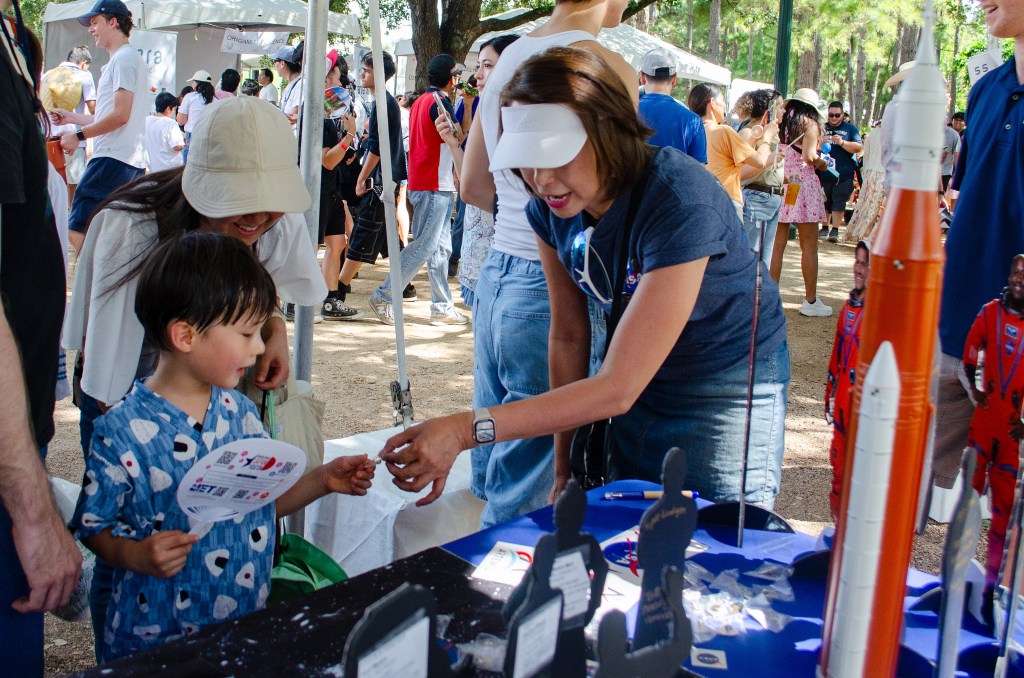
On Sept. 12-13, NASA’s Johnson Space Center employees brought the excitement and wonder of space exploration to Houston’s Japan Festival at Hermann Park. 

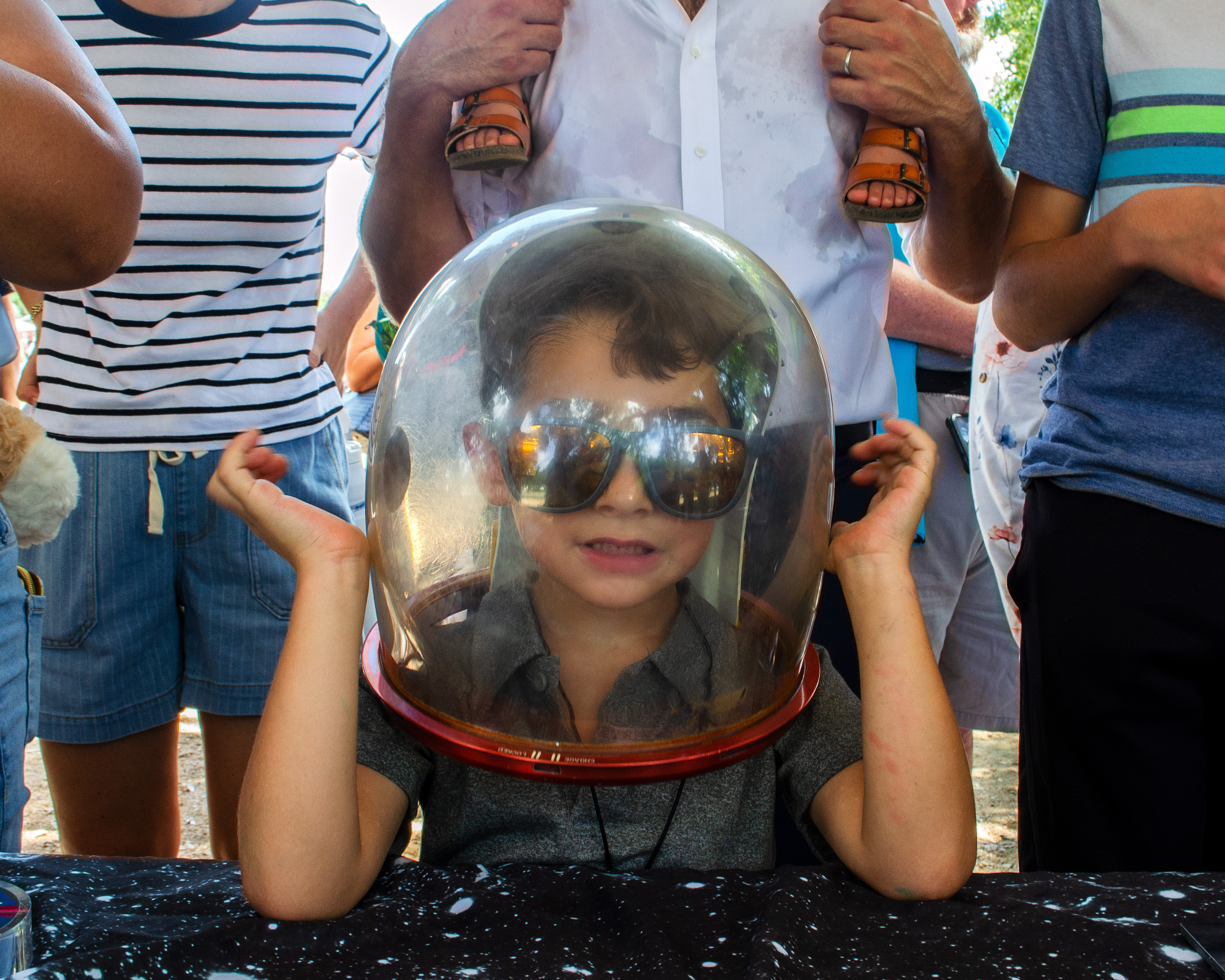
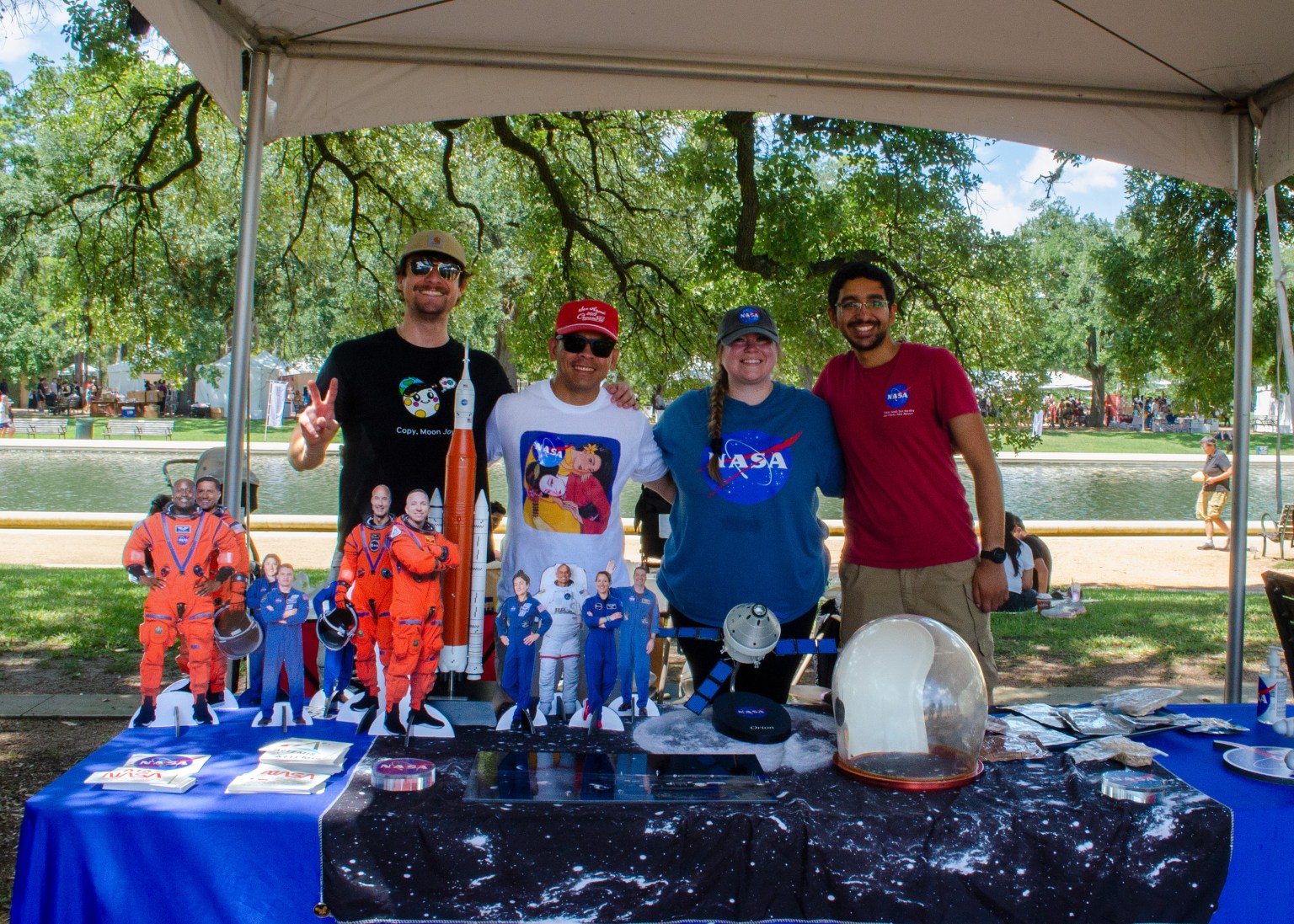
Attendees at the Japan Festival in Houston’s Hermann Park try on real astronaut gloves and a helmet while learning about NASA missions on Sept. 12, 2026.
NASA/Hailey Quist

For more than 30 years, the festival has immersed guests in traditional Japanese culture through food, dance, martial arts, music, and more, Johnson has supported the festival as an exhibitor for the past four years.

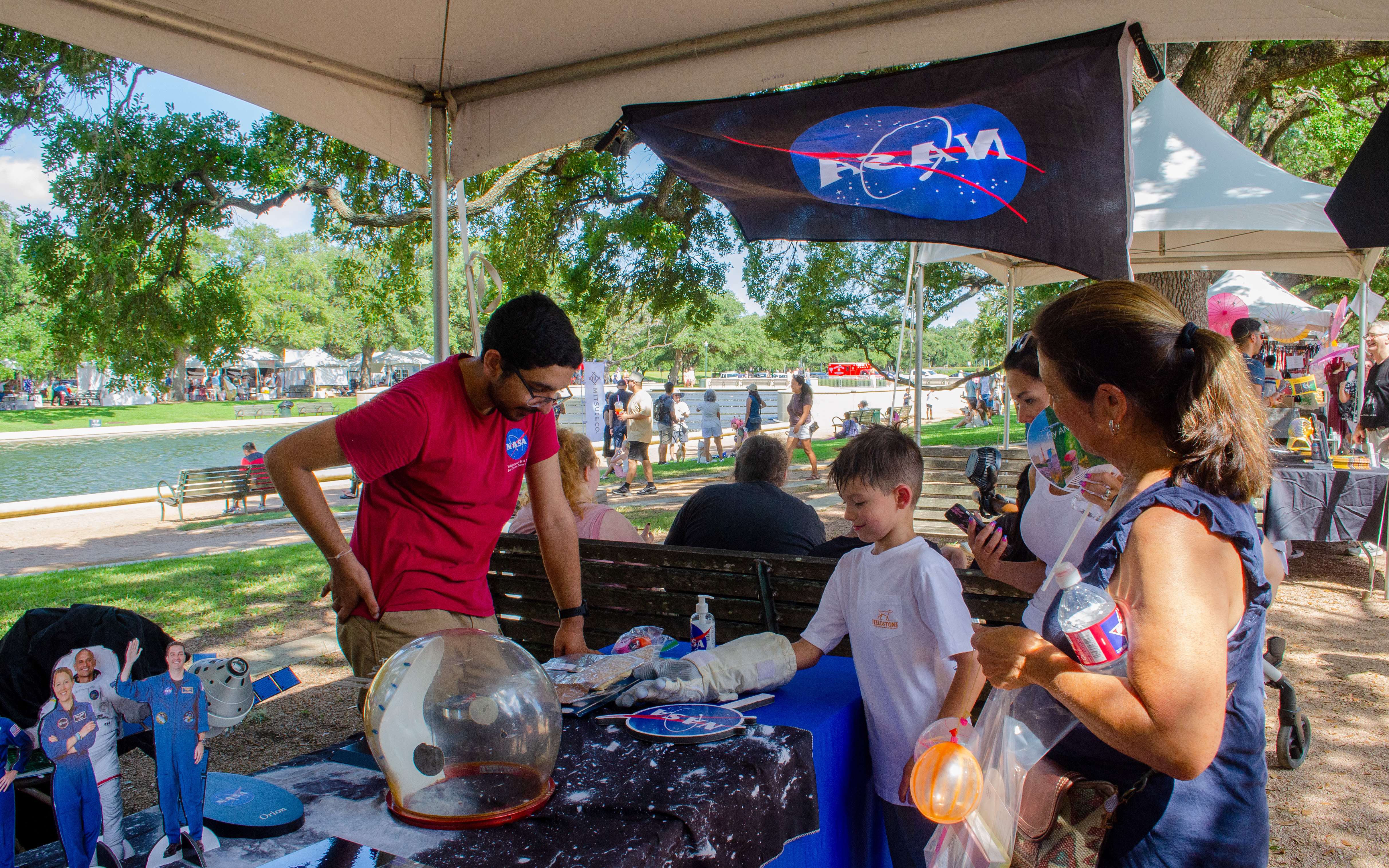
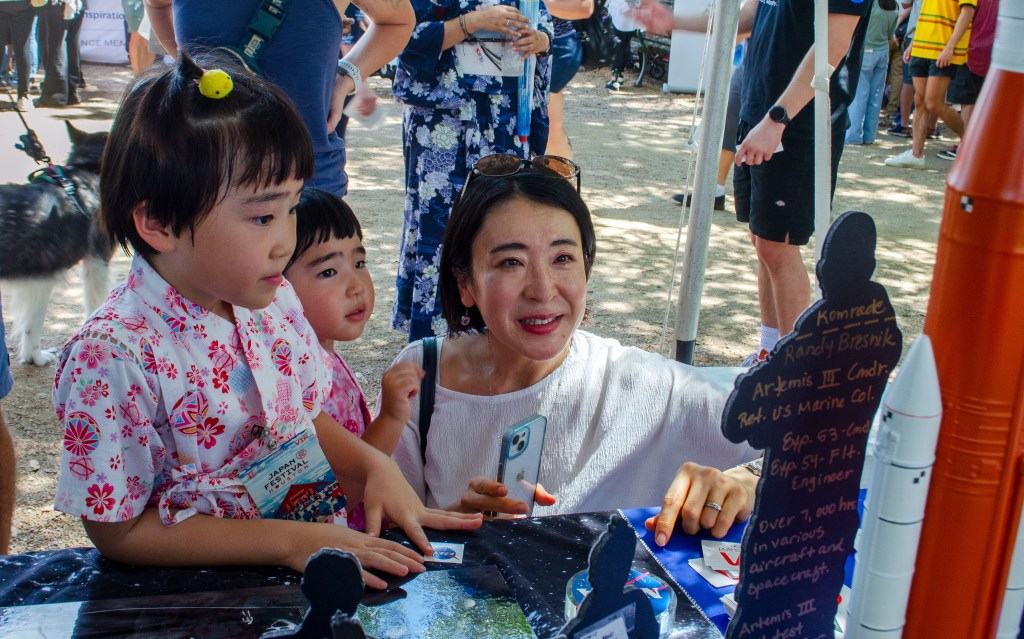
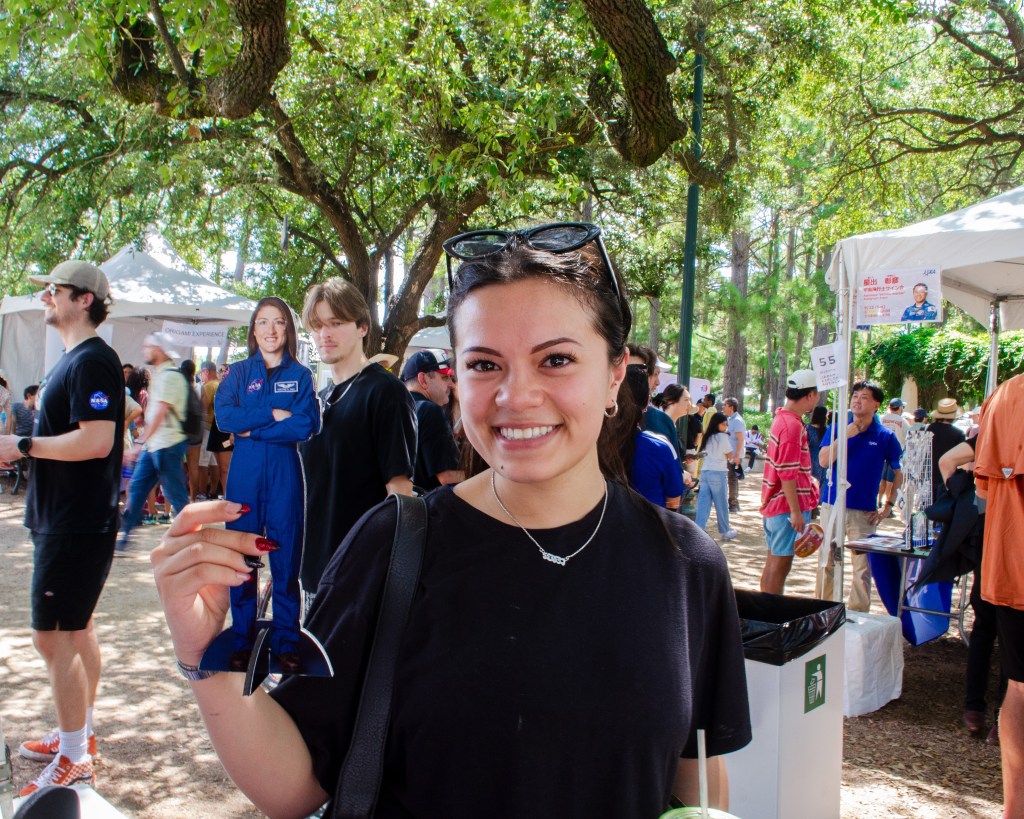
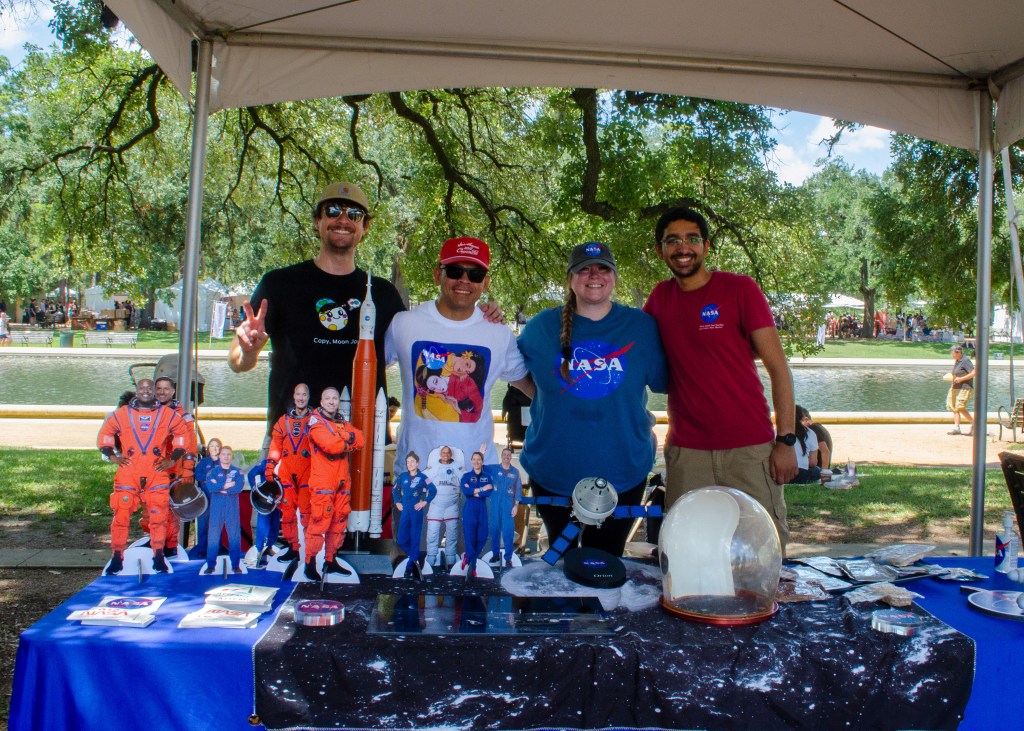
Johnson’s booth showcased the upcoming Artemis III mission and its crew, as well as NASA’s plans for the Moon Base. Display included models of NASA’s Orion spacecraft and the International Space Station, along with interactive exhibits featuring space food and a real astronaut glove and helmet for attendees to try on.

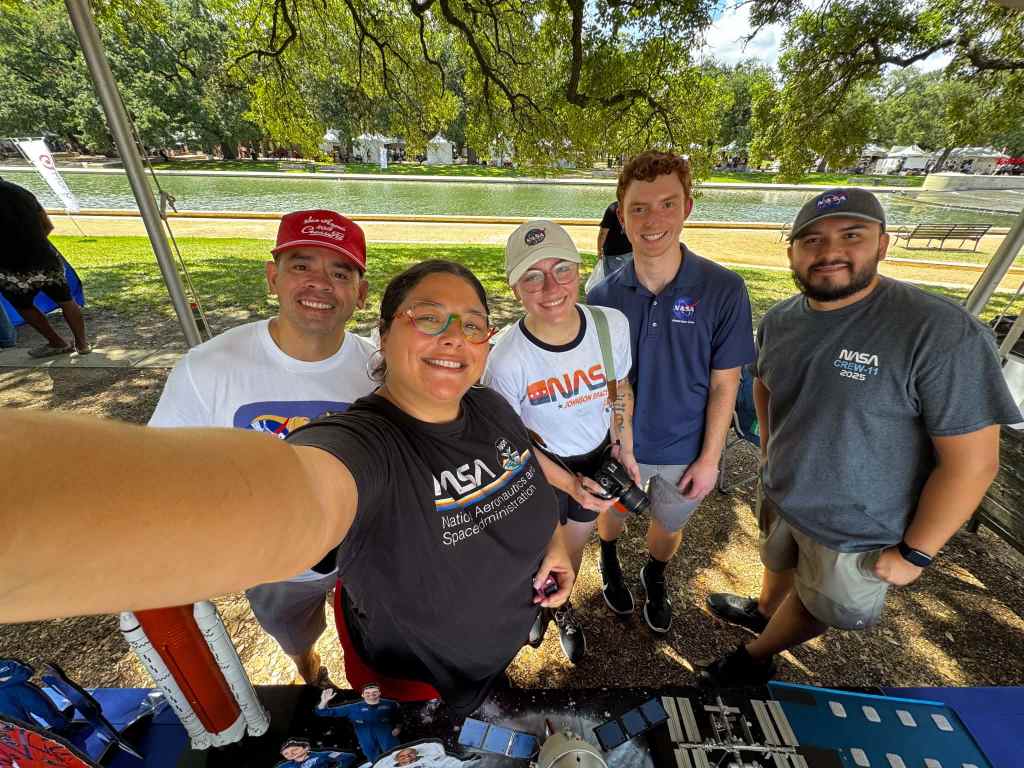
NASA’s Johnson Space Center volunteers share information about NASA missions with festival attendees.
NASA/Hailey Quist

Johnson employees interacted with over 3,000 festivalgoers, informing them about the agency’s current initiatives, handing out NASA stickers and pins, and inspiring the next generation of space explorers. According to Johnson employees, the highlight of the weekend was seeing the joy and excitement on the faces of children and adults as they explored the exhibits.

“It was amazing to see students as early as high school so passionate about NASA and asking questions on how to prepare for a NASA career,” said Brendan King, software engineer for Johnson’s Flight Dynamics Division.

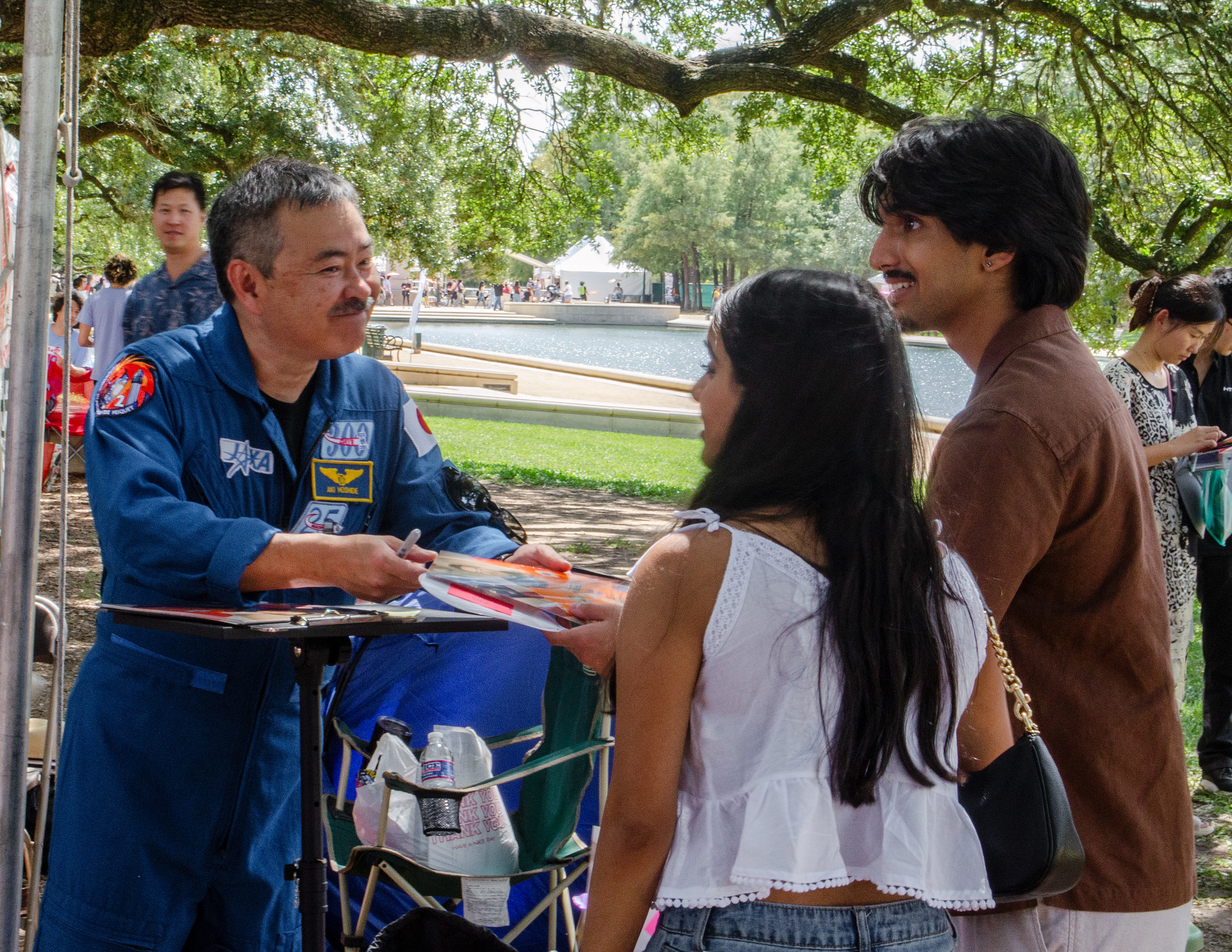
Next to Johnson’s booth, JAXA (Japanese Aerospace Exploration Agency), displayed a model of the HTV-X1 cargo spacecraft, space food, and images of JAXA’s pressurized rover, which could support future crewed and uncrewed exploration on the Moon. JAXA astronaut Akihiko Hoshide also signed autographs and posed for pictures with festival attendees.

JAXA (Japan Aerospace Exploration Agency) astronaut Akihiko Hoshide signs autographs and poses for pictures with festivalgoers.
NASA/Hailey Quist

The proximity of the booths was no mistake, reflecting the long-standing partnership between NASA and JAXA. From the addition of the Kibo laboratory aboard the space station to Japan’s signing of the Artemis Accords and development of lunar surface hardware. NASA and JAXA’s commitment to innovation and international collaboration continues to advance exploration.

As the hub of human spaceflight, Johnson engages with the public through events like Japan Festival. These events give the Johnson community opportunities to share NASA’s history, ongoing work, and future missions. They also remind Houstonians that Giant Leaps Start Here, right in the heart of Houston.

About the Author

Hailey Quist

NASA OSTEM Intern

Details

Last Updated

Sep 21, 2026

Source: www.nasa.gov

Arctic Melt Season Length Levels Off


2000-2009
2010-2023

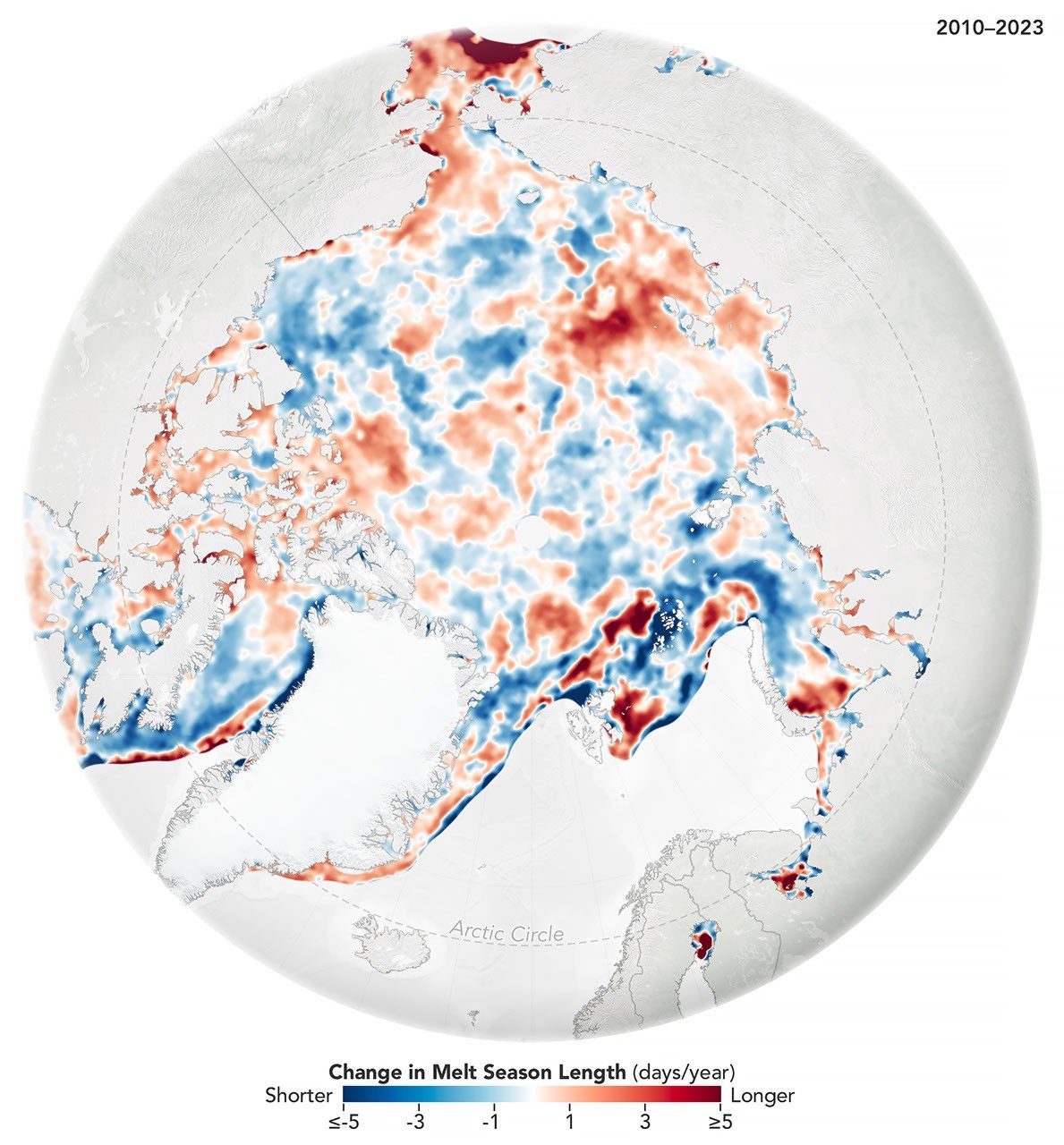
Two Arctic maps compare changes in melt season length by decade. Red indicates areas where the season grew longer; blue, where it grew shorter. The 2000–2009 map is mostly dark red. The 2010–2023 map shows a mix of lighter red and blue, indicating smaller changes.
NASA Earth Observatory/Michala Garrison


2000-2009

2010-2023


Since the start of the satellite record, the Arctic sea ice melt season has lengthened in most decades, particularly in the 2000s (left). Since 2010 (right), the melt season appears to have stabilized. NASA Earth Observatory images by Michala Garrison based on data from Boisvert, L., et al.

For decades, Arctic sea ice has been melting earlier in spring and freezing later in fall, extending the melt season and contributing to widespread ice loss. A new NASA-led study has found that while the Arctic melt season has lengthened dramatically since satellite records began, that trend unexpectedly stabilized around 2010.

The Arctic sea ice melt season is now about 40 days longer than it was in 1979, according to the study. Most of the increase occurred before 2010. Since then, the average melt season length has remained relatively unchanged, despite large year-to-year fluctuations.

Researchers analyzed satellite observations between 1979 and 2023 to track when sea ice begins to melt each spring and refreezes each autumn. They found that the change was driven primarily by sea ice freezing later in the year rather than melting earlier in the spring.

“Previously, there was more of this multiyear ice that didn’t melt away each summer,” said Linette Boisvert, a co-author on the study and ice scientist at NASA’s Goddard Space Flight Center. “Now that the ice is thinner and there’s less of it, there’s a lot more variability.” On average, though, the decline in sea ice thickness and extent that occurred during the 2000s appears to have stopped for the time being.

To understand why, the team examined changes in the Arctic’s energy balance—the net difference between incoming heat from the Sun, atmosphere, and ocean and the outgoing infrared radiation emitted back to space.

During the period of rapid ice loss in the 2000s, reduced ice cover exposed darker ocean water, which absorbed more sunlight. The additional solar energy delayed freezing and helped extend the melt season. In the left map above, the reddest areas mark where the melt season grew fastest that decade, by up to 5 days per year. Much of the Arctic ice today is younger and thinner than the multiyear ice that was once more widespread in the Arctic Ocean, leaving it more vulnerable to variations in cloud cover, storms, and winds.

Since 2010, changing cloud patterns have reduced the amount of sunlight reaching parts of the Arctic Ocean. The result has been a melt season that fluctuates from one year to the next but remains relatively stable over longer periods. The right map above reflects this shift, with the lighter blues and reds showing the more modest rates of change during that decade.  

These findings don’t suggest that shifts in Earth’s climate have stopped affecting the Arctic. The region continues to warm nearly four times faster than the global average, and the remaining sea ice is substantially thinner than it was several decades ago. Instead, the study suggests that the Arctic may have entered a new phase, in which annual weather patterns exert a stronger influence on melt season than they once did.

“Melt season length is much more dependent on atmospheric effects,” Boisvert said. “They seem to be playing a bigger role because the ice is generally thinner and more vulnerable to begin with.”

The researchers caution that the apparent stabilization may prove temporary. Thick Arctic ice still exists throughout the year to the north of Greenland and the Canadian Arctic Archipelago. Continued thinning of ice in those regions could trigger another period of rapid sea ice loss, with the potential to further extend the melt season.

For now, the study highlights the importance of continued satellite observations of Arctic sea ice and the energy balance that controls its growth and melting. Whether the recent stabilization represents a lasting change in the melt season or a pause before another period of rapid change remains an open question.

NASA Earth Observatory images by Michala Garrison, using data from Boisvert, L., et al. (2026). Story by James Riordon/NASA’s Earth Science News Team.

References & Resources

You may also be interested in:

Stay up-to-date with the latest content from NASA as we explore the universe and discover more about our home planet.

A Changing World for Emperor Penguins

7 min read

Experts are analyzing decades of images from Landsat satellites for clues about how the iconic birds have responded to sea…

Article

A Bare Summer for Barnes Ice Cap

4 min read

The expanse of glacial ice on Canada’s Baffin Island lost its snow cover quickly and early in summer 2026, revealing…

Article

Pink Penguin Guano Provides Diet Clues

3 min read

The color of Adélie penguin droppings reveals what the birds are eating, offering scientists a way to track how sea…

Article

Source: science.nasa.gov

APOD: 2026 September 20 – Analemma over the Callanish Stones

APOD

Astronomy Picture of the Day

Discover the cosmos! Each day a different image or photograph of our fascinating universe is featured, along with a brief explanation written by a professional astronomer.

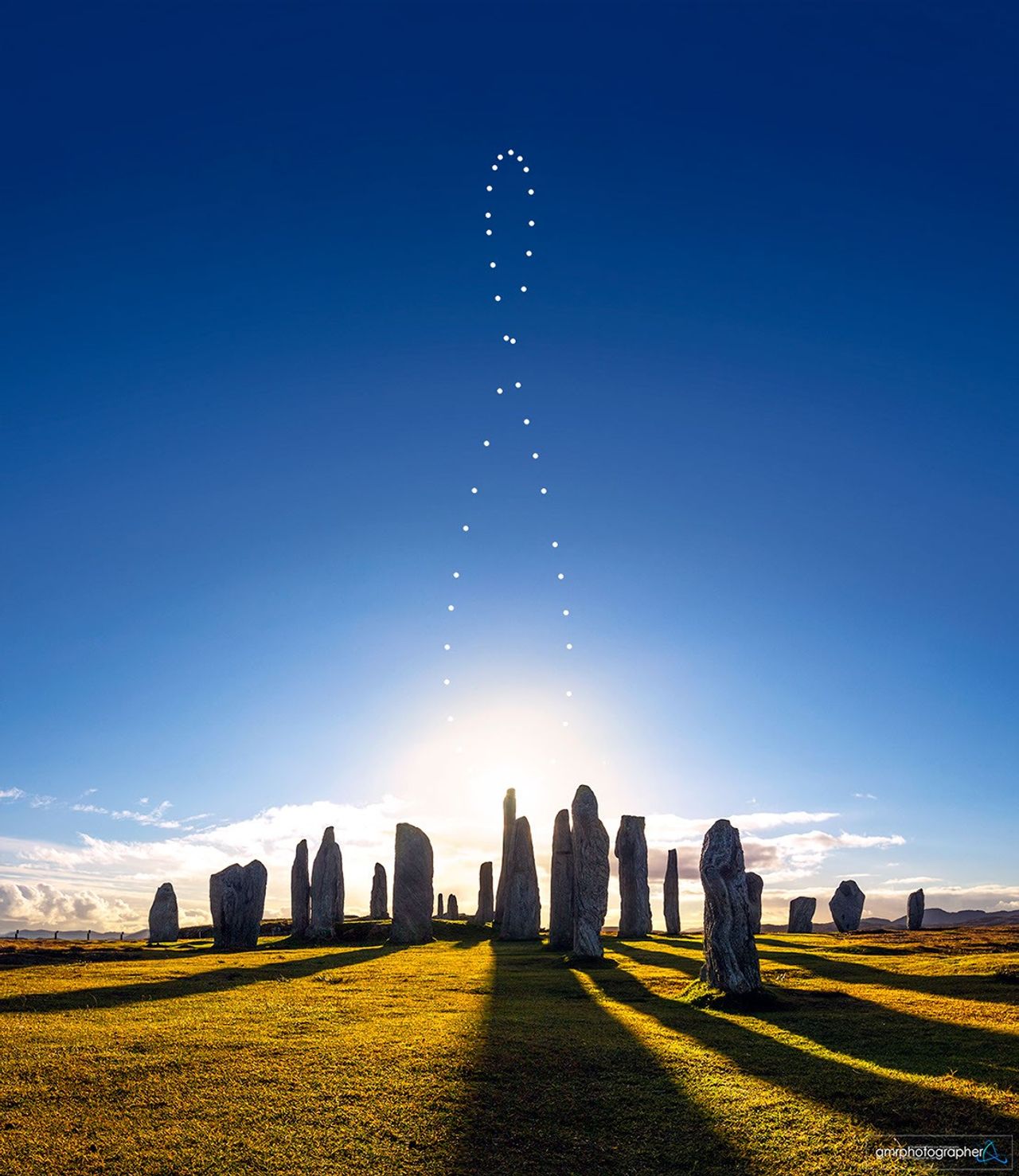
Multiple images of the Sun trace out an analemma curve in the daytime sky above the Callanish stones.

Analemma over the Callanish Stones

Explanation: If you went outside at the same time every day and took a picture that included the Sun, how would the Sun’s position change? A visual answer to that question is an analemma, a composite image taken from the same spot at the same time over the course of a year. The featured analemma was composed from images taken every few days at noon near the village of Callanish in the Outer Hebrides in Scotland, UK. In the foreground are the Callanish Stones, a stone circle built around 2700 BC during humanity’s Bronze Age. It is not known if the placement of the Callanish Stones has or had astronomical significance. The ultimate causes for the figure-8 shape of this and all analemmas are the tilt of the Earth axis and the ellipticity of the Earth’s orbit around the Sun. At the solstices, the Sun will appear at the top or bottom of an analemma. The featured image was taken near the December solstice and so the Sun appears near the bottom. Equinoxes, however, correspond to analemma middle points — not the intersection point. In two days there will be an equinox (“equal night”), when day and night are equal over all of planet Earth. Many cultures celebrate a change of season at an equinox.

APOD’s main NASA site is moving: From apod.nasa.gov to science.nasa.gov/apod
Tomorrow’s picture: open space

Date September 20, 2026
Credit & Copyright: Giuseppe Petricca
Authors & editors: Robert Nemiroff, Jerry Bonnell, Cecilia Chirenti, Keighley Rockcliffe
A service of: ASD at NASA / GSFC,
NASA Science Activation & Michigan Tech. U.

Source: science.nasa.gov

NASA Invites Media to Albania Artemis Accords Signing Ceremony

NASA meatball
Credit: NASA

The Republic of Albania will sign the Artemis Accords during a ceremony at 12 p.m. EDT on Monday, Sept. 21, at NASA Headquarters in Washington, becoming the 73rd country signatory.

NASA Deputy Administrator Matt Anderson will host Albania’s Minister for Europe and Foreign Affairs Ferit Hoxha and Ambassador of the Republic of Albania to the United States Ervin Bushati for the ceremony, together with U.S. Department of State officials.

This event is in person only. Media interested in attending must RSVP no later than 10 a.m. on Sept. 21 to: [email protected]. NASA’s media accreditation policy is online.

In 2020, during the first Trump Administration, the United States, led by NASA and the State Department, joined with seven other founding nations to establish the Artemis Accords, responding to the growing interest in lunar activities by both governments and private companies.

The Artemis Accords introduced the first set of practical principles aimed at enhancing the safety, transparency, and coordination of civil space exploration on the Moon, Mars, and beyond.

Learn more about the Artemis Accords at:

https://www.nasa.gov/artemis-accords

-end-

Camille Gallo / Elizabeth Shaw 
Headquarters, Washington 
202-358-1600 
[email protected] / [email protected] 

Details

Last Updated

Sep 18, 2026

Editor
Jennifer M. Dooren

Source: www.nasa.gov

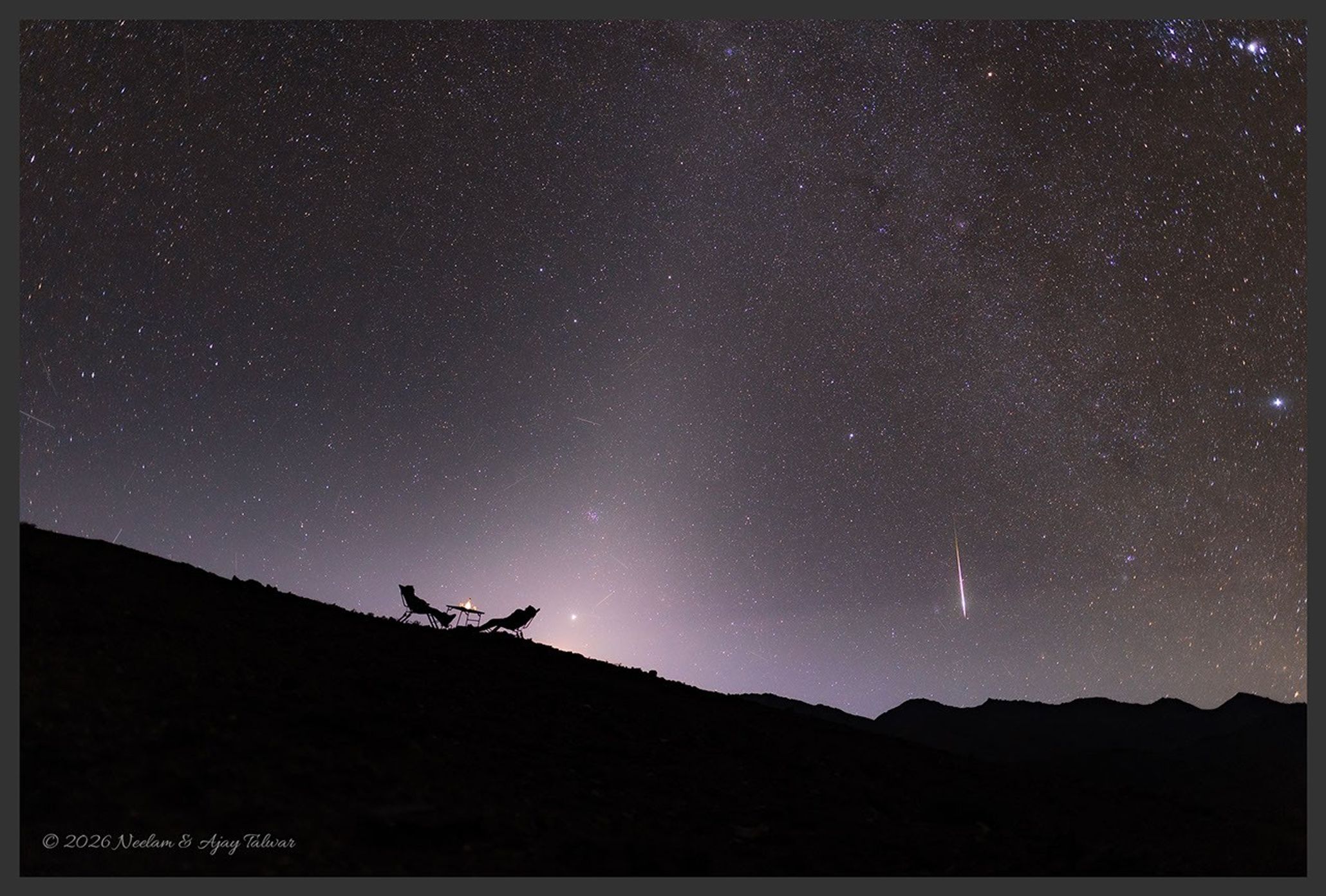
APOD: 2026 September 19 – A Zodiacal Night

APOD

Astronomy Picture of the Day

Discover the cosmos! Each day a different image or photograph of our fascinating universe is featured, along with a brief explanation written by a professional astronomer.

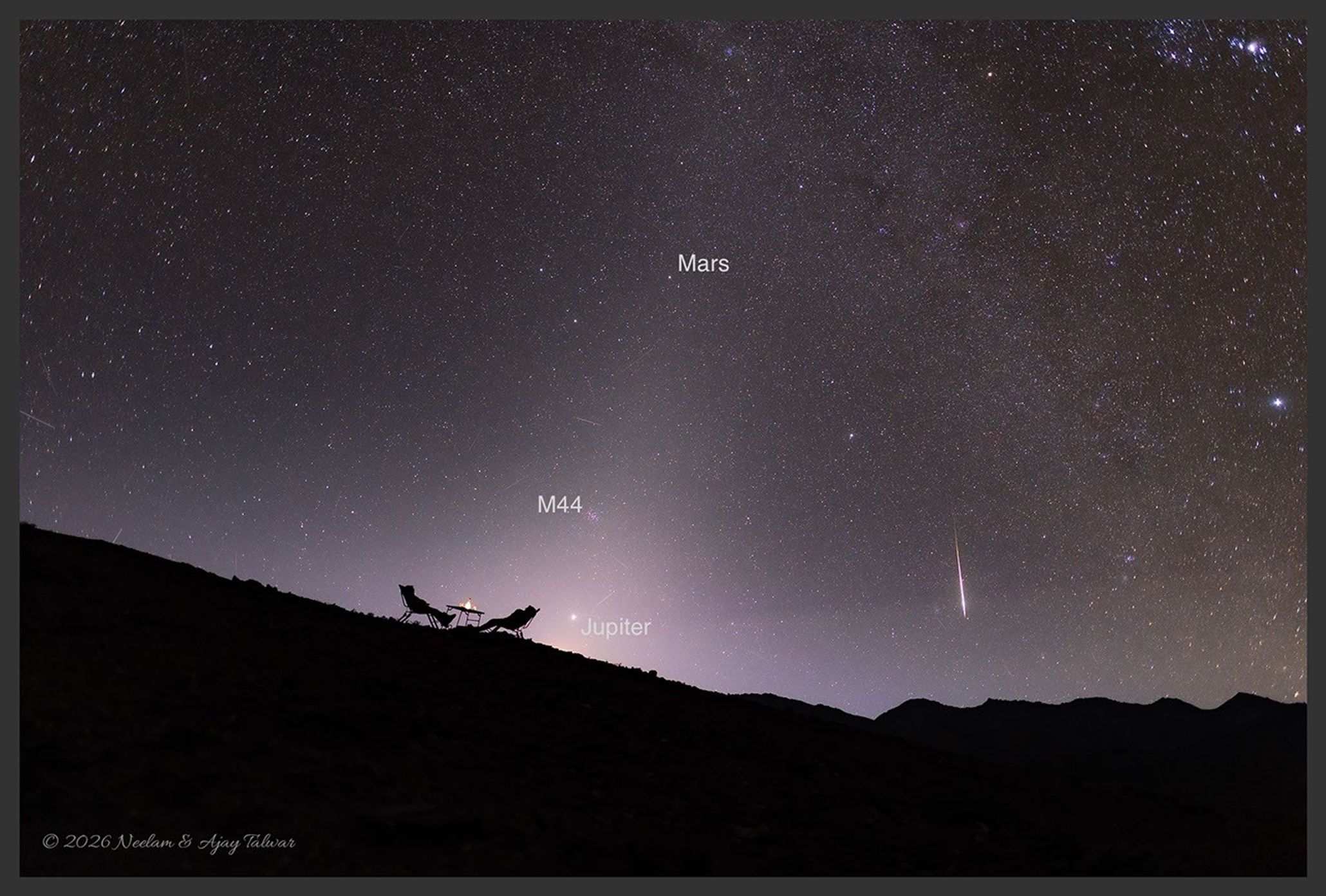
Two people are seated looking up at the night sky.Two people are seated looking up into the night sky. Jupiter, M44, and Mars are indicated with text labels.

A Zodiacal Night

Explanation: Also known as the false dawn, a luminous band of zodiacal light is captured in this dark night skyscape. The serene view was recorded just before the beginning of astronomical twilight during September’s star party at the remote Hanle Dark Sky Reserve, Ladakh, India, planet Earth. At about 4,500 meters altitude, the dark sky reserve presents a haven for hardy stargazing and astrophotography enthusiasts. While meteors streak through the night, bright planet Jupiter appears immersed in the faint zodiacal glow near the eastern horizon. Follow the zodiacal band toward the zenith to find open star cluster M44 and a yellowish tinged planet Mars near the center of the frame. In fact, serendipitous detections of interplanetary dust by NASA’s Juno spacecraft suggest Mars itself is the source of dust that back scatters sunlight and creates zodiacal light in planet Earth’s night.

APOD’s main NASA site is moving: From apod.nasa.gov to science.nasa.gov/apod
Tomorrow’s picture: only sunny days

Date September 19, 2026
Credit & Copyright: Neelam and Ajay Talwar (TWAN)
Authors & editors: Jerry Bonnell, Cecilia Chirenti, Robert Nemiroff, Keighley Rockcliffe
A service of: ASD at NASA / GSFC,
NASA Science Activation & Michigan Tech. U.

Source: science.nasa.gov
Florida, Ohio Guard Units Strengthen Communications Partnership

The Florida Air National Guard’s 125th Fighter Wing recently joined forces with the Ohio Air National Guard’s 220th Engineering Installation Squadron to improve communication infrastructure, strengthen mission readiness and provide hands-on training for airmen.

Source: www.war.gov

NASA Awards Launch Services for StarBurst Gamma-Ray Detector

NASA insignia.
Credit: NASA

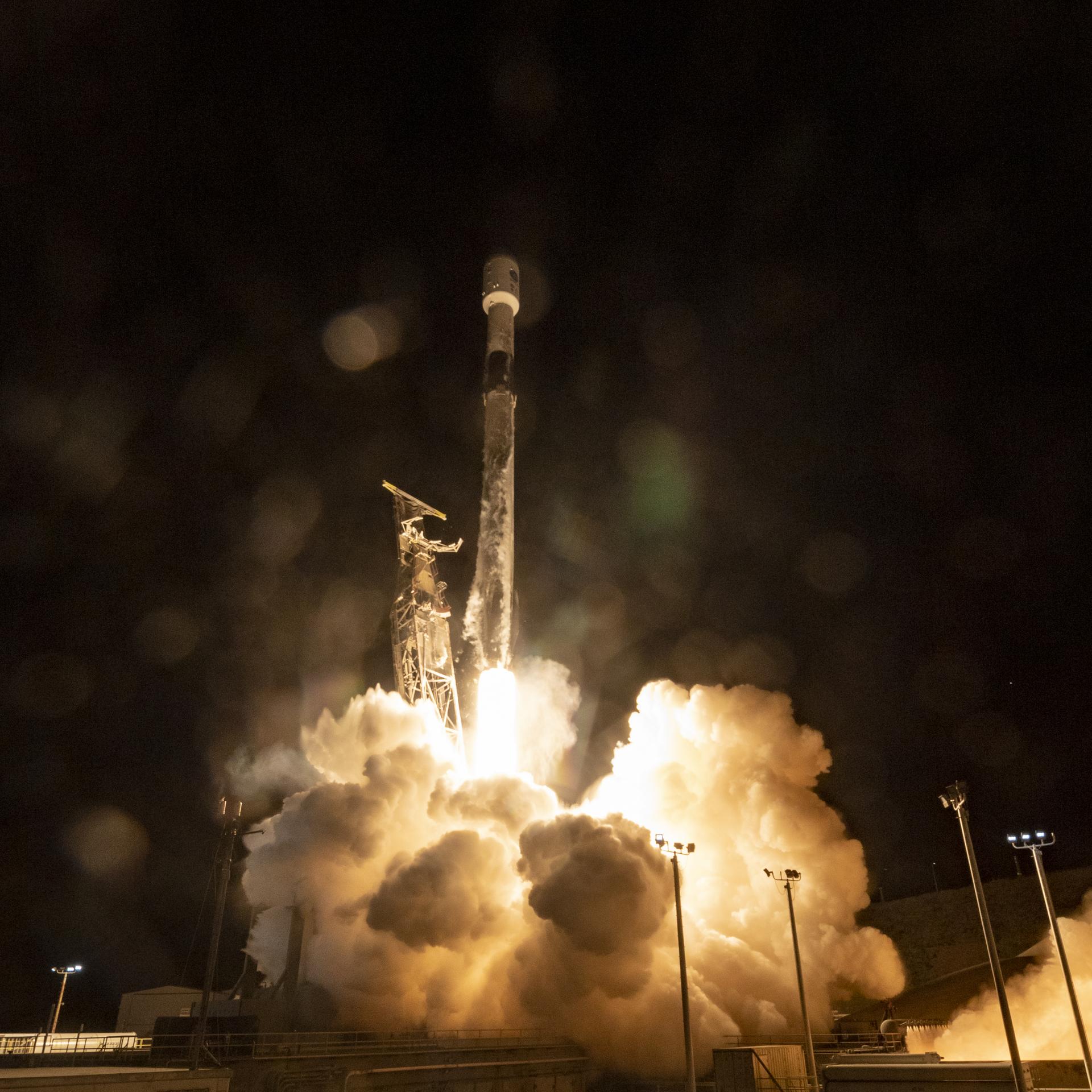
NASA has selected SpaceX to provide launch services for the agency’s StarBurst mission, a small satellite designed to investigate neutron star mergers and the origins of short gamma-ray bursts.

StarBurst will launch aboard a Bandwagon rideshare mission on a Falcon 9 rocket from Space Launch Complex 40 at Cape Canaveral Space Force Station in Florida no earlier than 2028.

The selection is a firm-fixed-price task order under NASA’s VADR (Venture-Class Acquisition of Dedicated and Rideshare) launch services contract. This indefinite-delivery/indefinite-quantity contract allows NASA to acquire launch services during a 10-year ordering period, with a maximum total value of $1 billion across all contracts.

The StarBurst mission is designed to observe the entire portion of the sky not blocked by Earth to search for brief, powerful explosions called gamma-ray bursts. The satellite will focus on detecting the initial high-energy emission from short gamma-ray bursts, which occur when dense stellar remnants called neutron stars merge.

By combining StarBurst’s observations with gravitational-wave measurements and follow-up observations from other telescopes, researchers will study these events through multiple types of signals, an approach known as multimessenger astronomy.

StarBurst is part of NASA’s Astrophysics Pioneers Program, which supports lower-cost investigations using small spacecraft and other platforms.

NASA’s Launch Services Program Office, based at the agency’s Kennedy Space Center in Florida, manages the VADR contract.

For more information about NASA’s StarBurst, visit:

https://science.nasa.gov/mission/starburst

-end-

Joshua Finch / Jimi Russell
Headquarters, Washington
202-358-1100
[email protected] / [email protected]

Leejay Lockhart
Kennedy Space Center, Fla.
321-747-8310
[email protected]

Source: www.nasa.gov