
6 min read
NASA Highlights Lessons Learned From Swift Boost Mission
A commercial mission to boost NASA’s Neil Gehrels Swift Observatory concluded without raising the spacecraft’s orbit, but the agency and industry vendor Katalyst Space have gained valuable experience that will benefit future in-space servicing programs.
“From the beginning, this was a high-risk, high-reward mission,” said Shawn Domagal-Goldman, Astrophysics Division director at NASA Headquarters in Washington. “Without intervention, Swift was going to re-enter the atmosphere by year’s end. And while we’ll be sad to see Swift’s mission come to a close, we knew this boost effort would be valuable to the agency on multiple levels — advancing U.S. spacecraft servicing technology, challenging us to meet unprecedented mission timelines, and testing how we operate satellites to extend their time in low Earth orbit. We’re very proud of how quickly this team got so far, and we’re capturing lessons learned to ensure we’re ready to go even farther.”
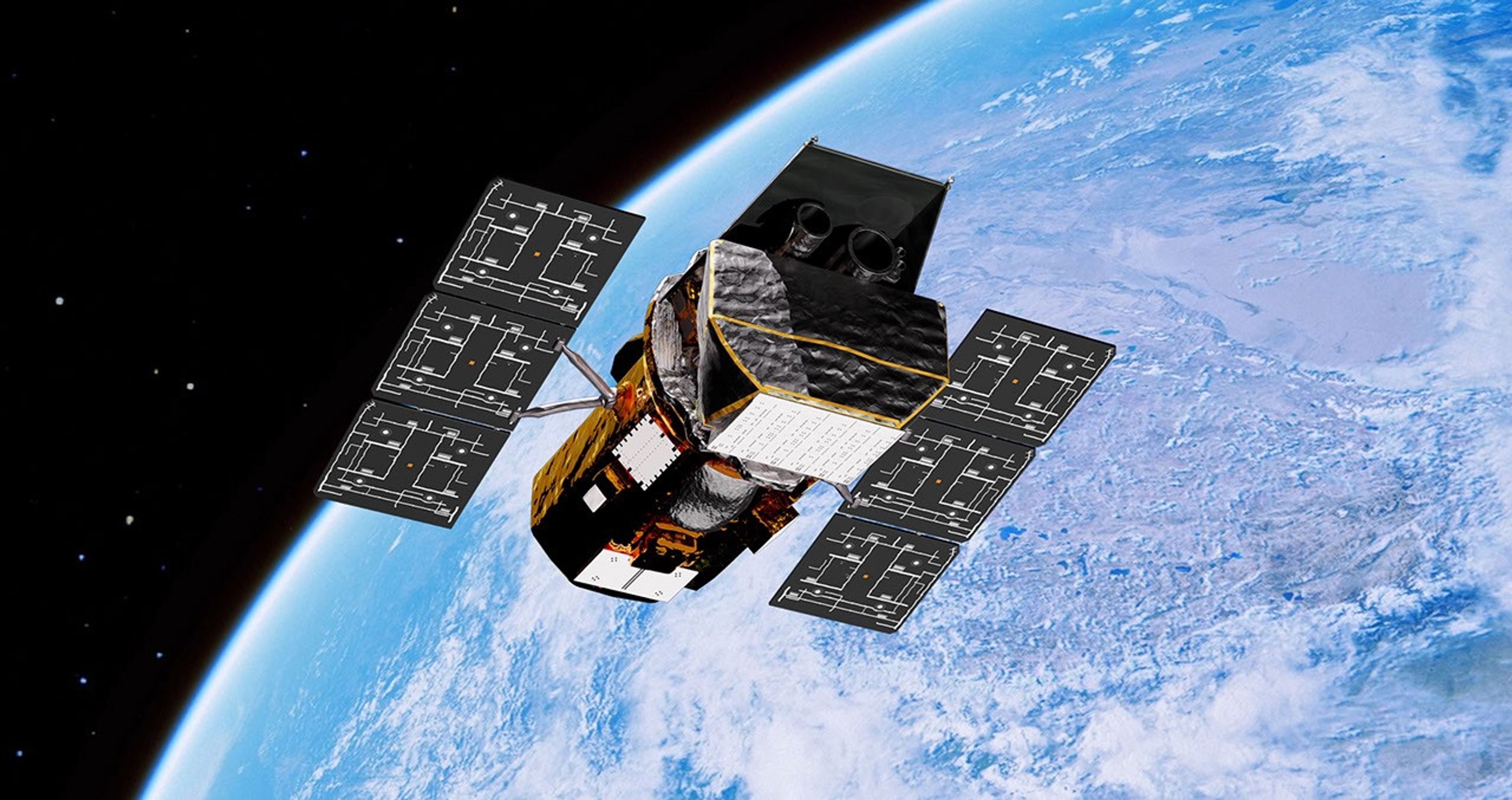
Swift, which launched in November 2004, was designed to study gamma-ray bursts, the most powerful explosions in the cosmos.
Over the last two decades, the observatory has revolutionized our understanding of how the universe works, from studying comets and asteroids in our own solar system and various types of cosmic explosions to flares from black holes in distant galaxies.
All spacecraft in low Earth orbit experience drag from our planet’s atmosphere. If they don’t have propulsion systems, this drag gradually reduces their altitudes. A period of increased solar activity magnified this effect on Swift.
After deciding to investigate the potential for a boost attempt, NASA had only a few months to issue a call for proposals through its Center of Excellence for Collaborative Engineering and fund design concept studies through the agency’s Small Business Innovation Research program.
In September 2025, NASA contracted Katalyst, based in Flagstaff, Arizona, to attempt the mission. The company had around one year to design, build, test, and launch a satellite that would then meet, grab, and lift Swift.
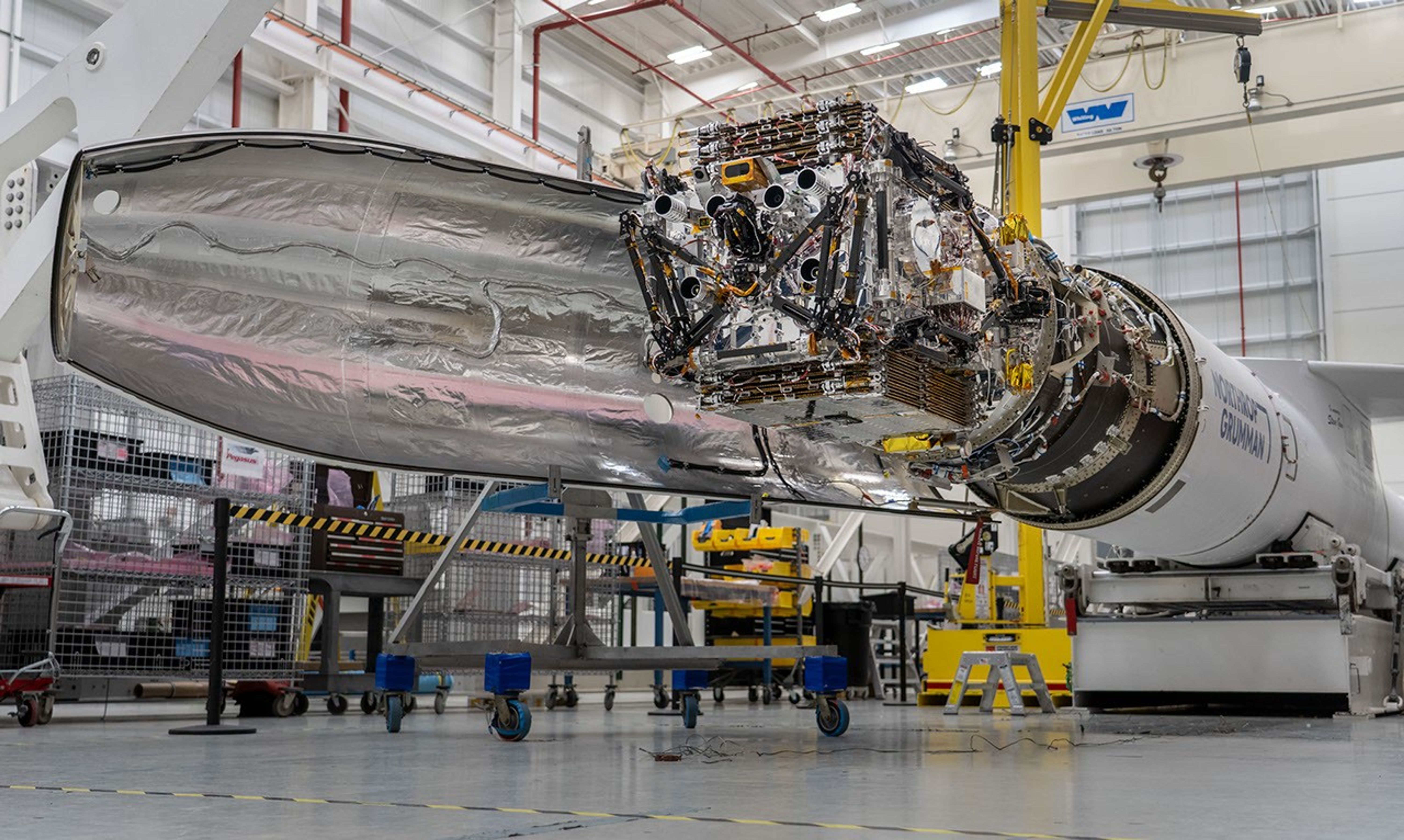
The LINK spacecraft took off from Kwajalein Atoll in the Republic of the Marshall Islands in July aboard a Northrop Grumman Pegasus XL rocket. Katalyst selected the Pegasus as the best launch option for reaching the observatory on the mission’s condensed timeline, based on the mission’s orbital and programmatic needs.
After successfully reaching space and performing initial spacecraft checkouts, LINK began experiencing intermittent communications losses and developed issues with its orientation control.
Following a period of around-the-clock troubleshooting from both teams, NASA and Katalyst agreed to scale back the mission. LINK would no longer attempt to grab or boost Swift but instead attempt to perform a series of technology demonstrations that would advance the capabilities of the U.S. commercial servicing industry.
These included exercising the spacecraft’s xenon-powered propulsion system and three robotic arms, which were designed to provide flexibility regarding where LINK could safely grapple Swift. NASA formally concluded the agency’s involvement in LINK’s mission on Sept. 3. The spacecraft re-entered the atmosphere on Sept. 25.
“LINK was built to take on a problem that did not have an easy solution,” said Ghonhee Lee, CEO of Katalyst Space. “This was an ambitious mission on an aggressive timeline. While we did not accomplish every objective we set out to achieve, in less than a year we went from mission concept to launching and operating the first commercial space robot. This is a foundation we can build on.”
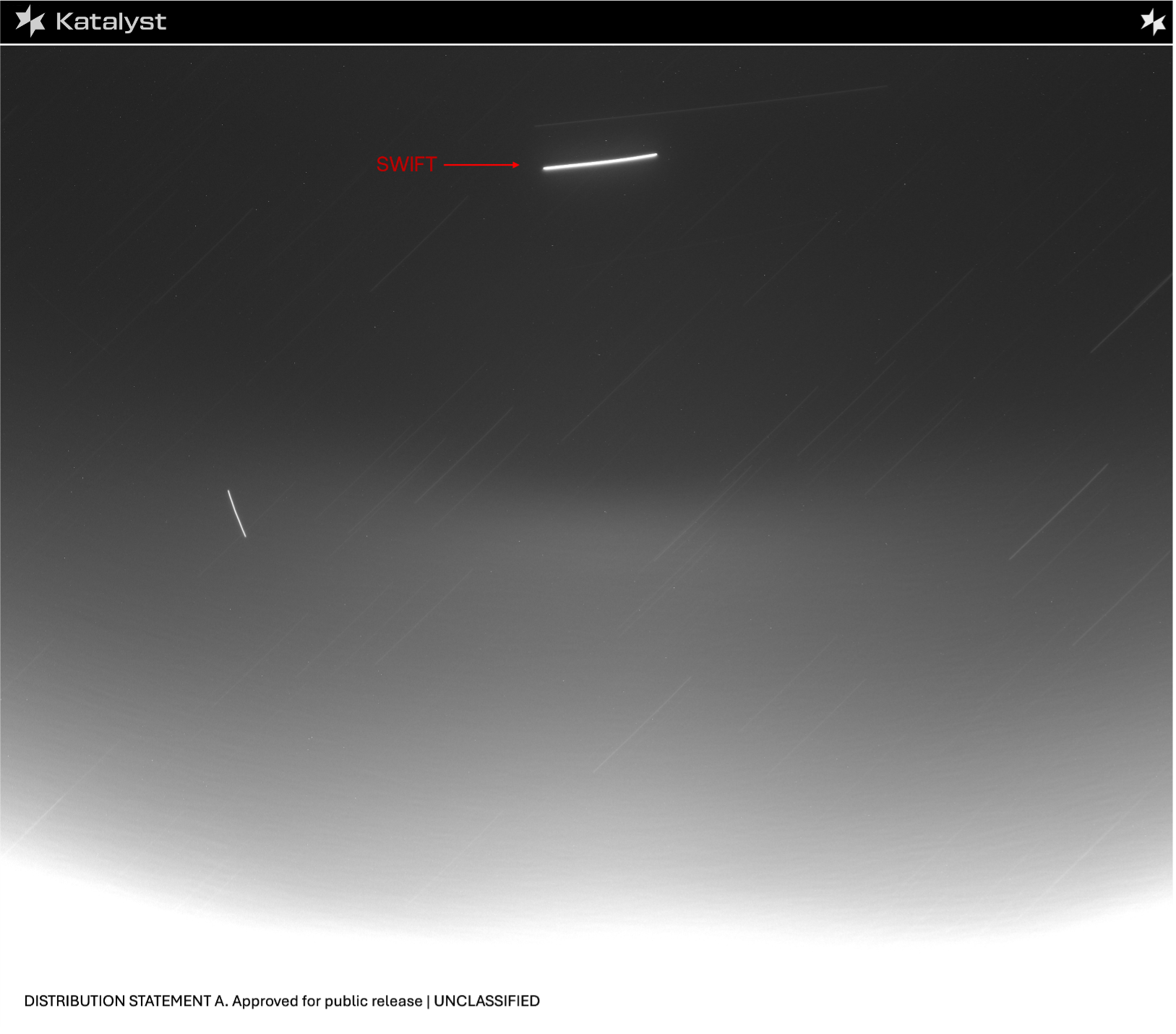
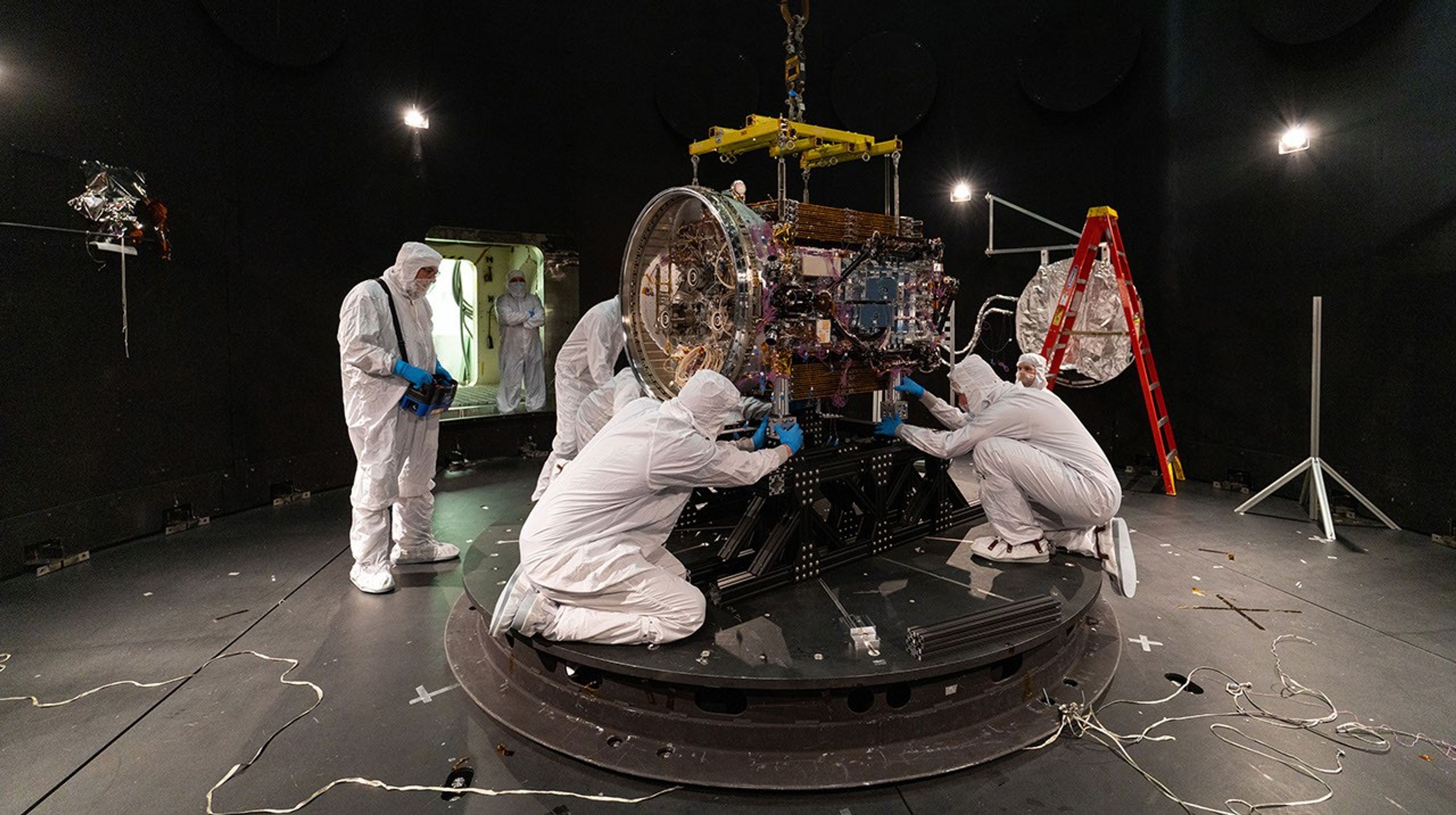
Science missions like Swift take years to develop and then operate in orbit for decades. For the Swift boost, however, the most important factor was the timeline. All decision-making and risk acceptance hinged on predictions showing the observatory sinking to the point of no return — an altitude of around 185 miles (300 kilometers) — in fall 2026. As such, the boost mission required a new form of agile project management for NASA.
Swift team members in SSMO (Space Science Mission Operations) at NASA’s Goddard Space Flight Center in Greenbelt, Maryland, worked with Katalyst to develop milestones and approval processes that gave the mission the best chance of success while being flexible enough to move quickly toward launch.
Both groups received valuable input and feedback from NASA’s Engineering and Safety Center when tackling questions and issues that arose during integration and testing.
“Katalyst was committed to leveraging NASA’s deep experience to give themselves the best possible chance of successfully achieving the unprecedented challenge we gave them,” said Russell Carpenter, project manager in SSMO at NASA Goddard “Missions like these, where public-private teams work tenaciously to overcome obstacles, are an inspiration to the world, reminding us that striving for the near impossible brings out what is exceptional in all of us.”
While teams at NASA and Katalyst were racing to get LINK ready on the ground, flight controllers in Swift’s Mission Operations Center, located at Penn State in University Park in Pennsylvania, were trying to keep Swift above the critical altitude for as long as possible. Below it, any boost attempt would become increasingly difficult.
During normal operations, the Penn State team sends a plan to Swift that tells the observatory which cosmic objects and events to observe each day.
In December 2025, however, the controllers started swapping around 25% of these science targets for points on the sky that would minimize drag when Swift was trained on them. By February, the team had switched over to this approach entirely.
“Even though Swift was not executing pointed science observations from mid-February to late August, we nonetheless continued Penn State’s history of innovative space research and operations, pioneering new methods to minimize drag experienced by the spacecraft,” said John Nousek, the mission director and professor of astronomy and astrophysics in the university’s Eberly College of Science. “These changes bought valuable time for the boost mission and can be carried forward for future NASA missions.”
The team also couldn’t point too close to Earth, the Moon, or the Sun, since the brightness of all three could overheat and damage the observatory’s instruments. Pointing Swift in the most streamlined position also tilted it too close to the atmosphere, where particles could collide with the telescopes and affect future observations. The team struck a balance that managed to maintain Swift’s altitude above the critical threshold for several months.
“We’re grateful to all our collaborators for the incredible amount of time and dedication they’ve put into the boost mission,” said S. Bradley Cenko, Swift’s principal investigator at NASA Goddard. “When Neil Gehrels, Swift’s namesake, designed the observatory, nothing like it had ever launched. He would have celebrated that this boost effort was part of Swift’s legacy, that it allowed NASA to try something new and daring even though the outcome wasn’t guaranteed. That’s how we explore the universe — as a team, learning from each other, constantly pushing forward.”
About the Author

Jeanette Kazmierczak
Jeanette Kazmierczak is a science writer at the University of Maryland, College Park and NASA’s Goddard Space Flight Center in Greenbelt, Maryland, where she covers missions and research in the Astrophysics Science Division.
Share
Details
Related Terms
Source: science.nasa.gov